






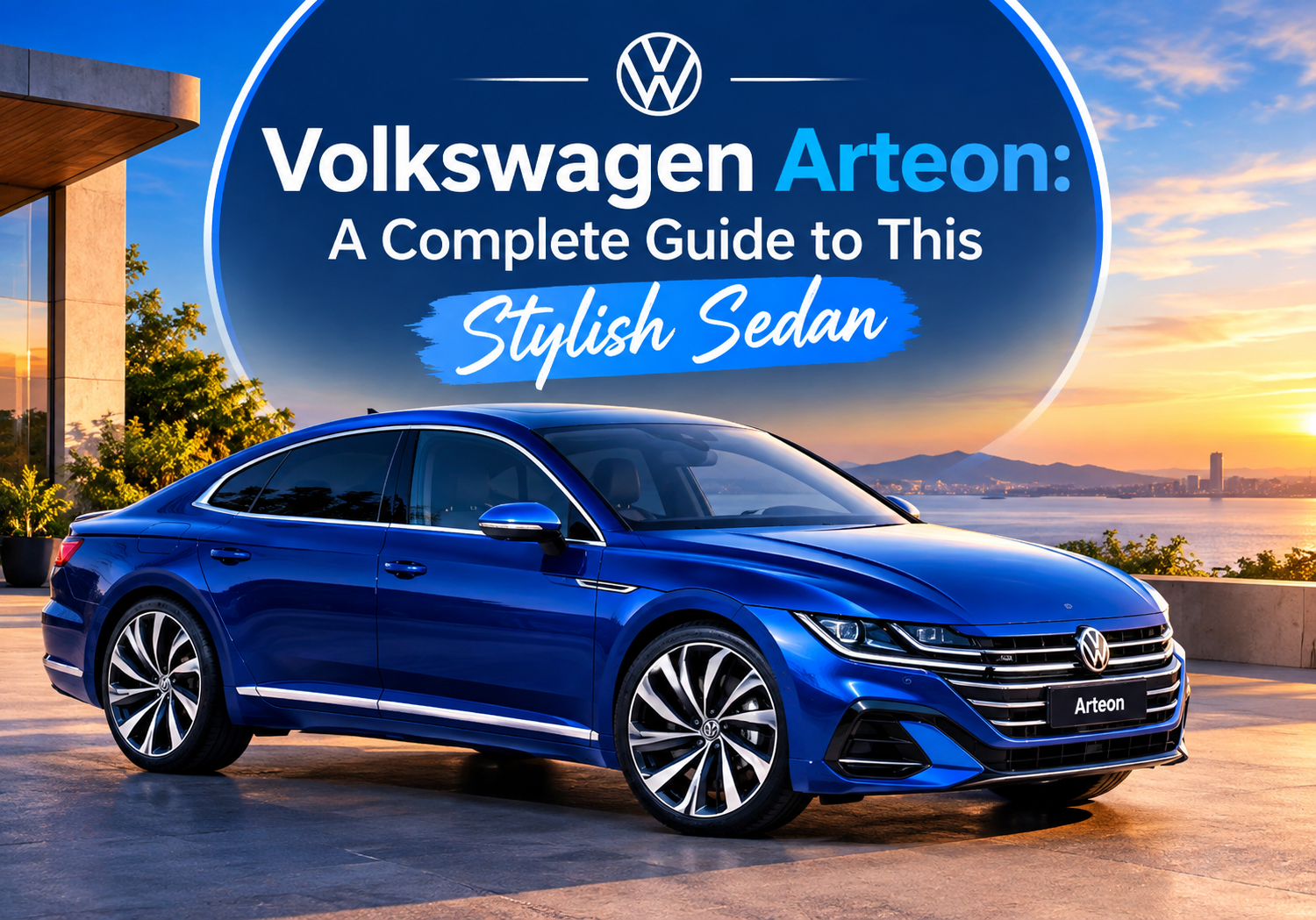
The Volkswagen Arteon stands out as one of the more distinctive cars Volkswagen has produced in the modern era. Instead of following the traditional three-box sedan design, it combines a long, elegant body with a practical fastback shape, giving it a character that sits somewhere between a sedan, grand tourer, and luxury-oriented family car.
Introduced in 2017, the Arteon was positioned as Volkswagen’s stylish Gran Turismo. Its design was more expressive than many conventional Volkswagen models, while its spacious cabin and large rear opening gave it useful everyday practicality. Volkswagen later expanded the range with the Arteon Shooting Brake, adding more cargo-focused versatility to the lineup.
The Arteon also offered a broad selection of engines and equipment depending on the market and model year. Higher-performance versions such as the Arteon R added considerably more power, all-wheel drive, and sportier hardware.
BIO
| Label | Information |
|---|---|
| Model Name | Volkswagen Arteon |
| Brand | Volkswagen |
| Vehicle Type | Fastback sedan |
| Introduced | 2017 |
| Body Style | Fastback and Shooting Brake |
| Main Focus | Comfort, style, and practicality |
| Engine Options | Petrol, diesel, and plug-in hybrid |
| Transmission | Automatic DSG available |
| Drive System | Front-wheel drive or 4MOTION AWD |
| Performance Model | Arteon R |
| Arteon R Power | Up to 320 PS |
| Key Feature | Spacious cabin with fastback design |
What Is the Volkswagen Arteon?
The Volkswagen Arteon is a four-door fastback designed to offer a more upscale alternative to traditional Volkswagen sedans. It was developed as a larger and more design-focused model, with an emphasis on long-distance comfort, technology, space, and distinctive styling.
Volkswagen described the Arteon as its Gran Turismo, reflecting the car’s purpose as a vehicle capable of combining comfortable cruising with responsive performance. The model arrived in 2017 and received a significant update for the 2021 model period.
One of the Arteon’s most recognizable features is its fastback roofline. The roof flows smoothly toward the rear of the vehicle rather than ending in a conventional trunk. This creates a more dramatic appearance while also allowing the car to retain useful cargo space.
In 2020, Volkswagen introduced the Arteon Shooting Brake, giving buyers another body style with additional rear cargo versatility.
Volkswagen Arteon Design
Exterior Styling
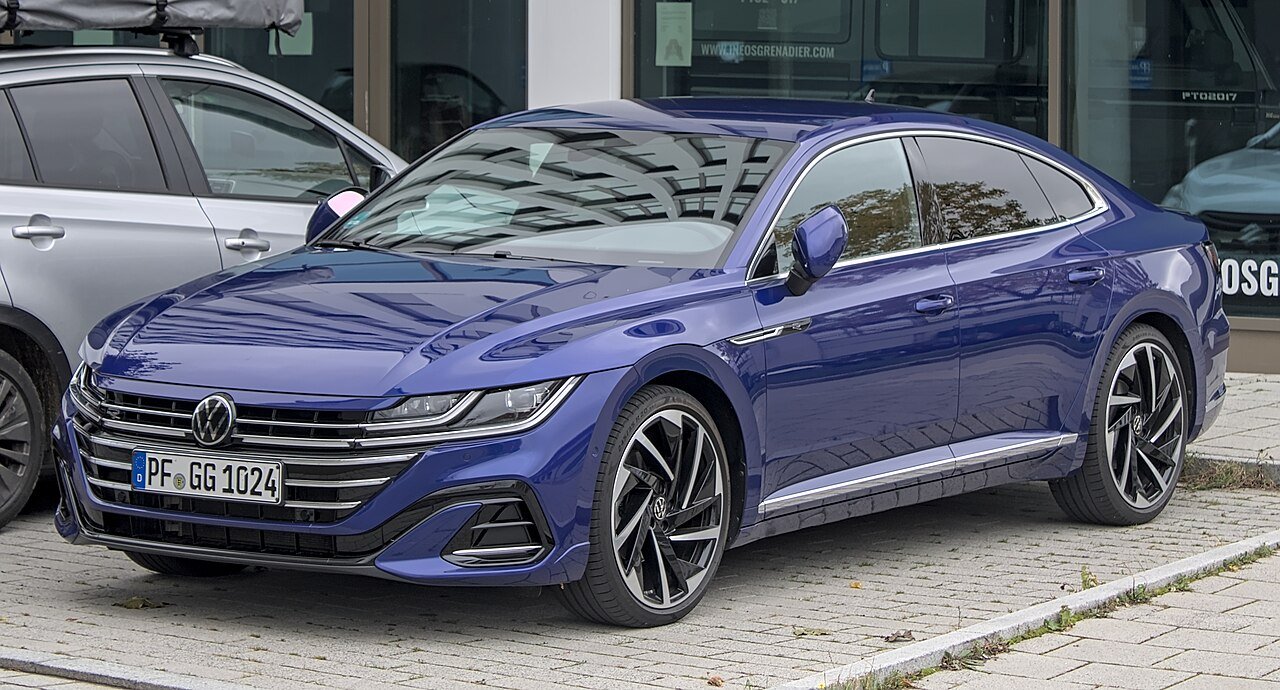
The exterior is probably the first thing that separates the Arteon from other Volkswagen models.
Its long bonnet, wide stance, low roofline, and frameless-looking proportions give the car a more sophisticated appearance. The front end became even more distinctive after the major update, which introduced a wider grille design and a continuous light signature across the front.
Volkswagen’s updated design combined the radiator grille with the bonnet and lighting elements to create a broad visual effect. The result was a car that looked considerably more dramatic than the typical family sedan.
The fastback profile is another major part of the Arteon’s identity. From the side, the roof gradually slopes toward the rear, creating a coupe-like silhouette without giving up the practicality of four doors.
Depending on the trim and market, buyers could also get larger wheels, different exterior finishes, LED lighting, and sportier styling details.
Interior Design
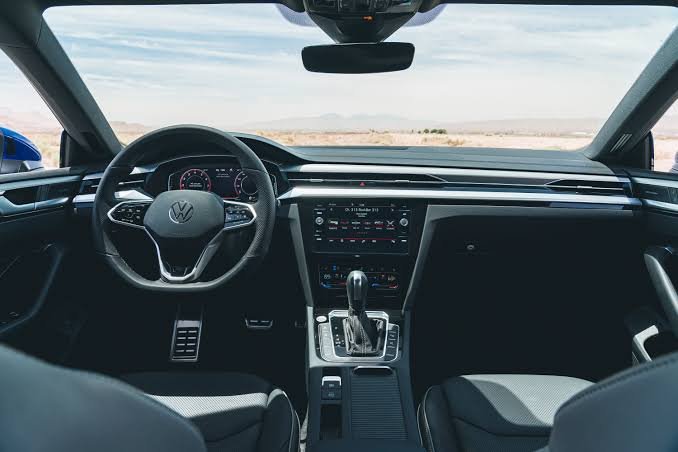
Inside, the Arteon focuses more on comfort and technology than on an overly complicated cabin.
The dashboard has a driver-oriented layout, while digital displays and infotainment technology give the interior a modern feel. Higher trims can add premium materials, upgraded seats, ambient lighting, and additional comfort features.
One of the biggest strengths of the cabin is its space. The long wheelbase contributes to generous passenger room, particularly in the rear. This makes the Arteon suitable for longer journeys where rear-seat comfort matters.
Volkswagen Arteon Performance
Performance varies considerably depending on the engine, model year, and market.
The Arteon was offered with several turbocharged petrol and diesel engines during its production run. Depending on the version, buyers could choose between different power outputs and drivetrains.
The standard versions generally focus on a balance between performance and everyday efficiency. The higher-performance Arteon R takes a different approach.
The Arteon R uses a 2.0-liter turbocharged engine producing 235 kW, equivalent to approximately 320 PS, with 420 Nm of torque. Volkswagen paired it with a seven-speed DSG transmission and all-wheel drive. The official 0–100 km/h time was 4.9 seconds, while the top speed was listed at 250 km/h.
This makes the Arteon R significantly different from the regular Arteon models. It retains the elegant fastback body but adds the performance hardware expected from Volkswagen’s R division.
For most drivers, however, the regular versions are more relevant. They provide enough performance for daily commuting and highway driving without making outright speed the primary focus.
Volkswagen Arteon Interior and Comfort
The interior is one of the reasons the Arteon can appeal to buyers who want more than a conventional family sedan.
The front seats provide a comfortable driving position, while the long body creates useful space for passengers in both rows. Rear-seat legroom is particularly notable for a car with such a sloping roofline.
Volkswagen also designed the Arteon to be useful on longer journeys. The combination of a spacious cabin, supportive seats, highway stability, and available driver-assistance systems makes it well suited to extended trips.
The fastback rear also provides a practical advantage. Instead of having a small conventional trunk opening, the large liftback-style rear door opens together with the glass, making it easier to load larger items.
The Arteon R Shooting Brake technical data, for example, lists a luggage compartment volume of more than 560 liters behind the rear seats, with substantially more space available when the rear seats are folded.
Exact cargo figures can vary according to body style and specification, so buyers should check the figures for the particular model year they are considering.
Technology and Infotainment
Technology became increasingly important to the Arteon as Volkswagen updated the model.
The 2020 update introduced Volkswagen’s MIB3 infotainment system, along with a more modern cockpit environment and additional connectivity features.
Depending on specification, Arteon models can feature digital instrumentation, touchscreen infotainment, smartphone integration, navigation, upgraded audio systems, and other convenience technologies.
The car’s technology is not limited to entertainment. Volkswagen also introduced additional driver-assistance systems with the updated model.
One notable feature was Travel Assist, which could provide assisted steering, acceleration, and braking under the system’s operating conditions and with the driver remaining responsible for the vehicle. Volkswagen stated that the system could operate at speeds of up to 210 km/h on applicable versions.
Equipment can vary substantially by country, trim, and model year, so it is important not to assume that every Arteon has the same technology.
Volkswagen Arteon Safety Features
Safety was an important part of the Arteon’s development.
The original Arteon was tested by Euro NCAP in 2017 and received a five-star overall safety rating. Euro NCAP recorded scores of 96% for adult occupant protection, 85% for child occupant protection, 85% for vulnerable road users, and 82% for safety assistance.
The testing also examined systems such as autonomous emergency braking and lane-support technology. Euro NCAP reported that the Arteon’s autonomous emergency braking system performed well in the scenarios tested.
However, safety ratings should always be viewed in their proper context. The Arteon’s Euro NCAP assessment dates from 2017, and vehicle safety technology has continued to develop since then. A rating from one test year should not automatically be treated as a direct comparison with cars tested under newer protocols.
Safety equipment can also differ between model years and markets.
Volkswagen Arteon Trim Levels
The exact trim structure of the Volkswagen Arteon depends on the country and model year.
Volkswagen offered different equipment grades designed around different priorities. Some versions focused on comfort and technology, while sport-oriented models added more aggressive styling and performance equipment.
Higher trims can include features such as upgraded wheels, premium interior materials, enhanced lighting, larger infotainment displays, advanced driver assistance, upgraded audio, and additional comfort equipment.
The Arteon R sits near the performance end of the range. It combines the practical fastback body with a high-output engine, seven-speed DSG transmission, and all-wheel drive.
When buying a used Arteon, checking the exact equipment list is particularly important. Two cars from different model years may look similar but have noticeably different technology and safety features.
Volkswagen Arteon Driving Experience
The Arteon’s driving character depends on the engine and trim, but comfort is a central part of the car’s appeal.
On normal roads, the suspension is designed to provide a composed ride while maintaining enough control for confident cornering. The long wheelbase also contributes to stability at highway speeds.
The steering is predictable and the car feels substantial without being difficult to drive. Its size is more noticeable in tight urban spaces than in open-road driving, but the available parking and assistance technologies can make everyday use easier.
The performance versions add another layer to the experience.
The Arteon R uses Volkswagen’s performance-oriented all-wheel-drive system with torque-vectoring technology. This allows it to deliver much stronger acceleration and greater traction than the standard versions.
For many drivers, though, the regular Arteon provides a more sensible balance between comfort, performance, and everyday usability.
Volkswagen Arteon Reliability and Maintenance
Reliability is an important consideration when looking at any used European car, and the Arteon is no exception.
Maintenance requirements vary according to the engine, transmission, mileage, age, and service history. Turbocharged engines, DSG transmissions, electronic systems, and advanced driver-assistance equipment can all require specialist knowledge when repairs are needed.
A complete service history is therefore valuable when considering a used Arteon.
Buyers should check that routine servicing has been completed according to the manufacturer’s recommended schedule. It is also sensible to inspect the vehicle for warning lights, unusual transmission behavior, suspension noises, electrical problems, and signs of accident damage.
The condition of an individual vehicle often matters more than simply choosing one particular trim.
Volkswagen Arteon Fuel Economy
Fuel consumption varies widely across the Arteon range.
Diesel versions can be attractive to drivers who regularly cover long distances, while petrol engines offer a different balance of performance and refinement. Plug-in hybrid versions were also introduced as part of the updated Arteon range, giving buyers another option for shorter electric driving and reduced fuel use under suitable conditions.
Official consumption figures should be treated as testing figures rather than guarantees of real-world economy. Traffic, weather, driving style, tire pressure, vehicle load, and road conditions can all influence fuel consumption.
For a used vehicle, the engine choice should therefore be matched to the driver’s typical journey rather than based only on an advertised fuel-economy number.
Volkswagen Arteon Pros and Cons
What the Arteon Does Well
The Volkswagen Arteon has several qualities that make it different from ordinary family sedans.
Distinctive styling is one of its biggest strengths. The long fastback shape gives it a more elegant appearance while keeping four-door practicality.
Interior space is another advantage. Despite the coupe-inspired roofline, the cabin offers generous passenger room, particularly for rear occupants.
Cargo practicality is also impressive for a car with this type of design. The large rear opening makes loading easier than it might be in a traditional sedan.
The Arteon also offers a broad range of engines and equipment, including the high-performance Arteon R and the more practical Shooting Brake body style.
Things to Consider
The Arteon is not necessarily the simplest car to own.
Its sophisticated technology and powertrain options can mean that specialist servicing is useful, particularly as the vehicle ages. Used examples should therefore be inspected carefully before purchase.
Availability can also vary by country because the Arteon was not sold in identical specifications everywhere.
Another important consideration is depreciation and resale demand. Buyers should compare several examples rather than assuming that a particular trim or model year automatically represents better value.
Volkswagen Arteon vs Other Cars
The Arteon occupies an interesting position because it does not fit neatly into just one category.
Compared with a traditional Volkswagen sedan, it offers a more dramatic design and fastback practicality.
Compared with premium fastback models, the Arteon can provide a different approach by combining Volkswagen engineering with a spacious cabin and relatively understated branding.
The Arteon Shooting Brake adds another option for buyers who want the same general character but need more estate-style practicality. Volkswagen introduced this body style in 2020 as a second version of the Arteon.
The right comparison depends heavily on the buyer’s priorities. Performance, interior space, running costs, technology, comfort, and purchase price can all change the equation.
Is the Volkswagen Arteon Good for Everyday Driving?
For many drivers, the Arteon’s combination of comfort and practicality is one of its most appealing qualities.
It can handle normal commuting without feeling like a specialized performance car. At the same time, its long-distance qualities make it suitable for highway travel.
The rear seats provide useful passenger space, while the fastback rear opening makes the cargo area more versatile than a traditional sedan trunk.
The car’s relatively large dimensions are worth considering for urban driving and parking, particularly in areas with narrow streets or limited parking spaces.
Still, its combination of comfort, space, technology, and distinctive design gives the Arteon a strong everyday identity.
Is the Volkswagen Arteon Worth Considering?
Whether a Volkswagen Arteon is worth considering depends on what a buyer expects from a car.
Someone looking for a conventional compact sedan may find the Arteon larger and more sophisticated than necessary. A driver who values distinctive styling, highway comfort, rear passenger space, and practical cargo access may find its design more appealing.
Used-car buyers should pay particular attention to the model year, engine, trim, mileage, service history, accident history, and equipment level.
It is also important to remember that the Arteon was sold in different configurations around the world. Specifications that were available in one market may not have been offered in another.
The Arteon’s position as a stylish fastback is what makes it memorable. It offers more personality than a conventional sedan while retaining the practicality expected from a four-door Volkswagen.
Final Thoughts
The Volkswagen Arteon was created for drivers who wanted something more distinctive than a standard family sedan without moving completely into the world of traditional luxury cars.
Its combination of a sleek fastback design, spacious interior, useful cargo area, modern technology, and available performance versions gives it a broad range of abilities.
The model’s development also shows how Volkswagen experimented with different approaches to the midsize executive segment. The introduction of the Shooting Brake added practicality, while the Arteon R demonstrated how far the platform could be pushed in terms of performance.
For anyone researching a used Arteon, the most important step is to look beyond the exterior. Check the exact model year, engine, equipment, service history, safety features, and overall condition.
Ultimately, the Arteon’s appeal comes from its balance. It looks more dramatic than an ordinary sedan, offers the comfort needed for long journeys, and retains enough practicality for everyday life. That combination is what makes the Volkswagen Arteon an interesting chapter in Volkswagen’s modern passenger-car lineup.
Frequently Asked Questions
Is the Volkswagen Arteon a good car?
Yes. The Volkswagen Arteon combines distinctive styling, a spacious cabin, comfortable driving, useful technology, and practical cargo space.
Is the Volkswagen Arteon reliable?
Reliability depends on the model year, engine, mileage, maintenance, and service history. A well-maintained example is generally the better choice when buying used.
How powerful is the Volkswagen Arteon?
Power varies by version. The performance-focused Arteon R produces up to 320 PS and 420 Nm of torque, with all-wheel drive and a seven-speed DSG.
Is the Volkswagen Arteon spacious?
Yes. Its long body provides generous passenger space, while the fastback design gives the cargo area a large and useful opening.
Is the Volkswagen Arteon good for long trips?
The Arteon is well suited to highway travel thanks to its comfortable cabin, stable ride, supportive seats, and available driver-assistance technology.