






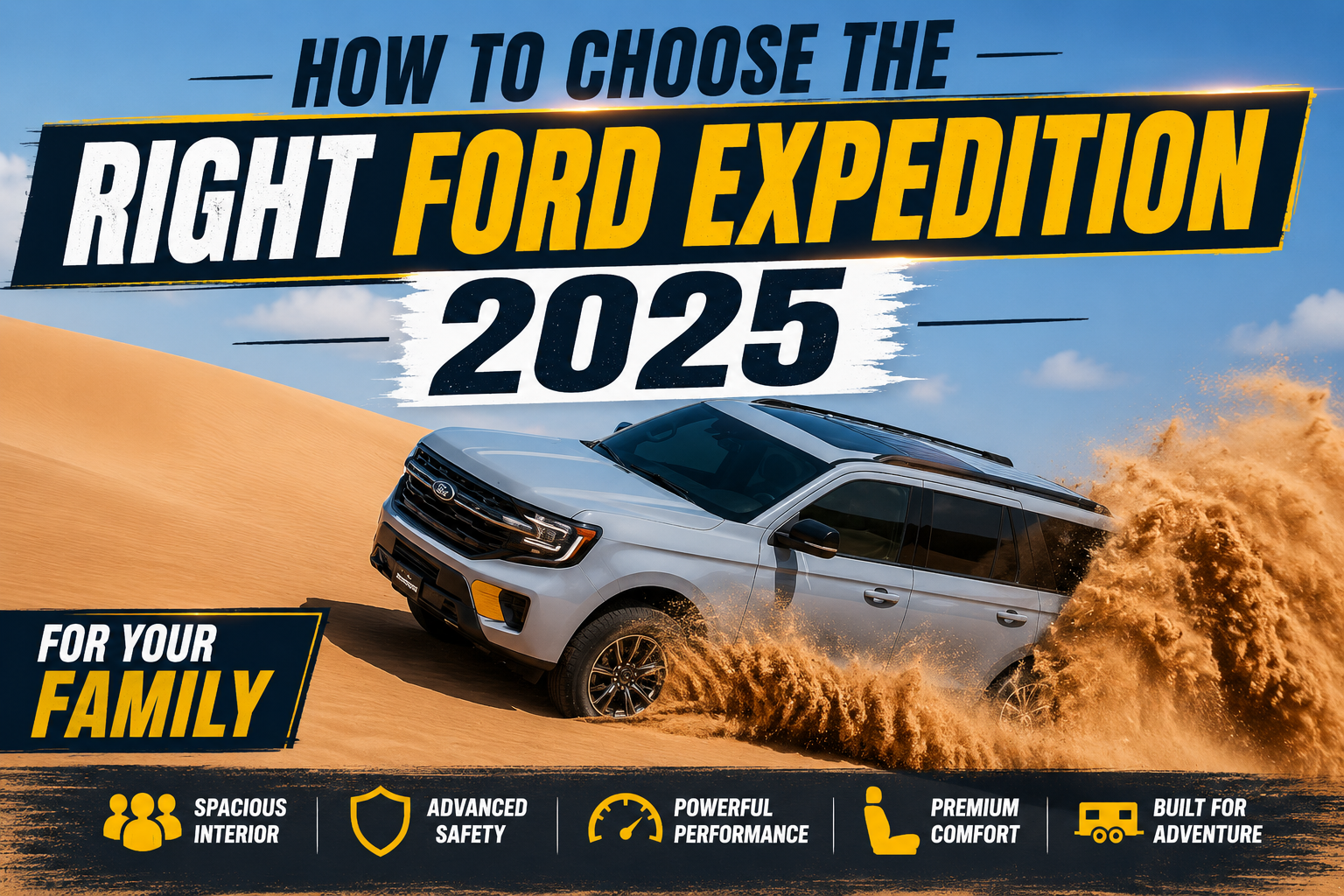
Choosing a large family SUV is about more than finding a vehicle with plenty of seats. You also need to think about cargo space, comfort, safety, fuel costs, everyday driving, and the kind of trips your family takes. The Ford Expedition has long been designed for buyers who want a spacious SUV with strong towing ability and enough room for passengers and luggage.
For families considering a new model, the 2026 Ford Expedition offers several configurations, including the standard-wheelbase Expedition and the longer Expedition MAX. Ford lists seating for up to eight people, depending on the seating configuration, while cargo capacity varies considerably between the standard and MAX versions.
The right choice will depend on your family’s priorities rather than simply choosing the most expensive version. A family that mostly drives around town may have very different needs from one that regularly takes long road trips or tows a trailer.
BIO
| Label | Information |
|---|---|
| Vehicle | Ford Expedition |
| Model Year | 2025 |
| Vehicle Type | Full-size SUV |
| Seating | Up to 8 passengers |
| Body Style | Three-row SUV |
| Engine | 3.5L EcoBoost V6 |
| Transmission | 10-speed automatic |
| Drive Options | RWD or 4WD |
| Main Strength | Space and towing ability |
| Cargo Space | Generous three-row storage |
| Best For | Families and road trips |
| Key Features | Comfort, technology, and safety |
| Notable Version | Expedition MAX |
Why Choose a Ford Expedition?
The biggest reason families consider the Ford Expedition is its combination of space, comfort, and capability. It is a full-size SUV, so it has considerably more room than many midsize family vehicles.
The 2026 model uses a twin-turbocharged 3.5-liter EcoBoost V6 paired with a 10-speed automatic transmission. Ford lists two power outputs: 400 horsepower and 480 lb-ft of torque for the standard engine and up to 440 horsepower and 510 lb-ft of torque for the high-output version.
That power is useful when the SUV is loaded with passengers, luggage, or a trailer. It also gives the Expedition the kind of highway performance many large families appreciate.
Another major advantage is its interior. The standard Expedition provides up to 22.9 cubic feet of cargo space behind the third row, while the Expedition MAX can provide up to 37.4 cubic feet in the same area. With the seats folded, the available space grows substantially.
For a family that carries sports equipment, strollers, suitcases, groceries, or other bulky items, those numbers can make a real difference.
Start With Your Space Needs
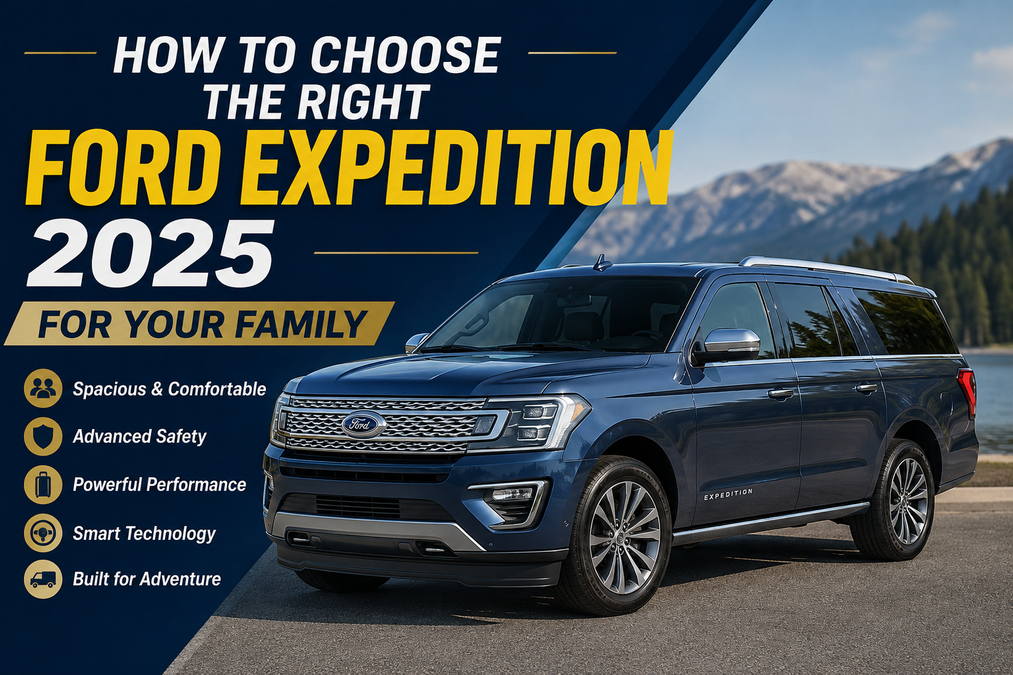
Before comparing trims, decide how much interior space your family actually needs.
The standard Ford Expedition is already a very large SUV. It offers three rows and can seat up to eight people in certain configurations. Ford also offers second-row captain’s chairs on some versions, which reduces seating capacity but creates a more individual seating arrangement.
If your family regularly uses all three rows, pay close attention to the amount of luggage space that remains behind the third row. This is one area where the Expedition MAX has a clear advantage.
The MAX has a longer wheelbase and provides more cargo room. Ford lists up to 37.4 cubic feet behind the third row, compared with up to 22.9 cubic feet for the standard Expedition.
For a family with several children, frequent travelers, or lots of equipment, that additional space can be worth considering.
However, bigger is not always better. The MAX is longer, which can make parking garages, narrow streets, and tight parking spaces more challenging. If your family rarely needs the extra cargo room, the standard Expedition may be the more practical choice.
Choose the Right Trim
The next step is deciding which trim fits your priorities and budget.
The Active is a sensible starting point for families who want the core Expedition experience without automatically moving into the higher-priced versions. It can be configured with rear-wheel drive or four-wheel drive, depending on the setup.
The King Ranch moves the Expedition toward a more upscale experience, with a stronger focus on interior presentation and comfort.
The Platinum sits near the luxury-oriented end of the lineup and adds premium equipment for buyers who want a more refined cabin.
The Tremor is different. Rather than concentrating mainly on luxury, it is designed for buyers who want more off-road capability. It includes features such as specialized tires and off-road driving technology. Car and Driver notes that the Tremor includes a raised suspension, underbody protection, all-terrain tires, and off-road drive modes.
The important point is that families should choose a trim based on how they actually use the SUV. Paying more for features you rarely use may not provide much value.
Think Carefully About Expedition MAX
For many families, the biggest decision may not be the trim level. It may be whether to buy the standard Expedition or the Expedition MAX.
The MAX is particularly useful when all three rows are occupied and you still need meaningful cargo space. Ford lists up to 84.5 cubic feet behind the second row and 123.1 cubic feet behind the first row in the MAX, compared with 69.9 and 108.5 cubic feet respectively for the standard version.
That difference becomes noticeable on vacations.
Imagine loading several passengers, suitcases, backpacks, a cooler, and other travel items. The extra length of the MAX can make packing easier without forcing you to fill the passenger area with luggage.
On the other hand, families who mainly use the vehicle for school runs, commuting, shopping, and occasional road trips may find the regular Expedition easier to live with.
Consider the Engine
The 3.5-liter EcoBoost V6 gives the Ford Expedition plenty of power for a large SUV.
The standard engine produces 400 horsepower, while the available high-output version reaches 440 horsepower. The high-output engine also produces 510 lb-ft of torque.
For most families, the standard engine should provide more than enough performance for everyday driving. The high-output version makes more sense for buyers who want stronger acceleration or have particular towing and performance requirements.
It is also worth remembering that a more powerful configuration can affect the overall purchase price and running costs. Rather than choosing the highest output simply because it is available, consider what your family will actually do with the vehicle.
Pay Attention to Towing
Towing is one of the areas where the Ford Expedition stands out.
Ford says a properly equipped 2026 Expedition 4×4 can tow up to 9,600 pounds, while the Expedition MAX 4×4 can tow up to 9,000 pounds. These figures require the appropriate towing equipment, and actual towing capability depends on factors such as vehicle configuration, passengers, cargo, and accessories.
The standard 4×2 Expedition has a lower maximum rating, while the available Heavy-Duty Trailer Tow Package is important for buyers seeking the higher ratings.
If towing is one of your reasons for buying an Expedition, don’t stop at the headline maximum. Check the exact vehicle’s configuration and the weight of the trailer you plan to tow.
A family towing a small recreational trailer may have very different requirements from someone towing a large boat or camper.
Put Safety First
Safety should be one of the first things families consider when choosing an SUV.
The 2026 Expedition includes driver-assistance technologies such as forward-collision warning and automatic emergency braking, while additional features are available depending on configuration. BlueCruise hands-free driving capability is also available.
However, safety technology should complement attentive driving rather than replace it.
It is also important to check the latest crash-test information for the exact model year you are considering. NHTSA’s 2026 testing program lists the vehicles selected for its 5-Star Safety Ratings program, and the Expedition is not included in the SUV models shown in that particular 2026 selection list.
That means buyers should avoid assuming a safety rating simply because a previous model year or another Ford vehicle received one.
Think About Everyday Comfort
A family SUV can have impressive specifications and still be frustrating if it is uncomfortable to use every day.
Before buying a Ford Expedition, spend time sitting in all three rows. Parents should check how easy it is to reach the third row, while taller passengers should make sure they have enough headroom and legroom.
The second-row configuration also deserves attention. A bench seat can provide maximum seating capacity, while captain’s chairs can make it easier for passengers to access the third row.
For families with young children, think about how easily you can reach child seats, seat belts, storage areas, and the third row. Small details can become important when the vehicle is used every day.
Check the Technology
Modern family vehicles are expected to do more than transport people.
The 2026 Ford Expedition features a large 24-inch dashboard display, along with wireless Apple CarPlay and Android Auto. The vehicle also offers connected technology and over-the-air software updates.
These features can be useful for navigation, music, communication, and keeping passengers entertained during longer trips.
Still, don’t choose a trim solely because it has a bigger screen or additional technology. Make sure the features you are paying for are actually useful to your family.
A good test drive should include trying the infotainment system, adjusting the climate controls, checking phone connectivity, and seeing how easily passengers can access charging ports and storage.
Consider Fuel and Ownership Costs
A full-size SUV naturally requires a larger ownership budget than a smaller family vehicle.
The 2026 Expedition uses a gasoline-powered 3.5-liter EcoBoost V6. Ford lists a 23.6-gallon fuel tank for the standard Expedition and a 27.8-gallon tank for the MAX.
Fuel costs are only part of the picture. Buyers should also consider insurance, tires, scheduled maintenance, registration, and potential repair costs.
Car and Driver reports EPA fuel-economy estimates of up to 17 mpg city and 23 mpg highway for rear-wheel-drive versions, although exact figures depend on configuration.
Before buying, calculate how many miles your family drives each year. A vehicle that fits your budget at the dealership should also fit your budget after several years of ownership.
New or Used?
Buying new gives you access to the latest configuration, features, and warranty coverage. It also lets you choose the exact trim and equipment you want.
A used Ford Expedition can make more financial sense for buyers who want a large SUV without paying the price of a brand-new model.
If you are considering a used Expedition, check the service history carefully. Look at the vehicle’s mileage, previous maintenance, tires, brakes, interior condition, and any available inspection records.
It can also be smart to compare a lightly used previous-generation or recent model with a new vehicle. Car and Driver notes that buyers comfortable with a lightly used vehicle may find value in previous model years, particularly when major changes between years are limited.
Avoid Common Buying Mistakes
One of the easiest mistakes is buying more SUV than your family needs.
If you rarely carry seven or eight passengers, don’t automatically assume you need the largest configuration. Likewise, if you never tow, there may be little reason to prioritize the most towing-focused setup.
Another mistake is ignoring the third row. A quick dealership visit can make the SUV look spacious, but families should actually sit in the rear seats and test access.
It is also easy to focus on the monthly payment rather than the total cost of ownership. Look at the purchase price, financing, insurance, fuel, maintenance, and other expected expenses together.
Finally, don’t choose a trim based only on appearance. A stylish package may look appealing, but practical features such as seating flexibility, cargo space, towing equipment, and safety technology can have a much greater impact on family life.
Take a Proper Test Drive
A test drive should be more than a short trip around the dealership.
Start by adjusting the driver’s seat and checking visibility. Then have family members sit in the second and third rows.
Try folding the rear seats and opening the cargo area. If possible, bring something your family regularly carries, such as luggage or sports equipment, and see how easily it fits.
Practice parking and making tight turns. A full-size SUV can feel very different from a smaller vehicle, and you want to be comfortable with its size before committing to it.
Also spend a few minutes using the infotainment system, climate controls, cameras, and other features you expect to use regularly.
Match the SUV to Your Lifestyle
There is no single Ford Expedition configuration that is perfect for every family.
A smaller family that mostly drives around town may be happiest with a standard Expedition and a practical trim. A larger family that frequently travels may appreciate the additional cargo room of the MAX.
Families that regularly tow should pay close attention to the drivetrain, towing package, axle ratio, and exact vehicle configuration. Those who spend time away from paved roads may want to investigate the Tremor.
Buyers looking for a more luxurious experience may prefer King Ranch or Platinum.
The key is to start with your lifestyle and work toward the vehicle rather than starting with the most expensive model and trying to justify it.
Final Thoughts
Choosing the right Ford Expedition comes down to understanding what your family really needs.
Start with seating and cargo requirements, then compare the standard Expedition with the Expedition MAX. After that, look at trims, engine output, drivetrain, towing equipment, safety technology, comfort features, and ownership costs.
The 2026 Expedition offers substantial interior space, seating for up to eight depending on configuration, strong V6 performance, and impressive towing capability.
For families, however, the best choice isn’t necessarily the biggest or most expensive one. The best Expedition is the configuration that fits your passengers, your daily routine, your budget, and the trips you actually take.
Take time to compare the configurations, sit in all three rows, test the cargo area, and drive the exact version you are considering. That simple approach can make it much easier to choose an Expedition that remains practical and comfortable long after the excitement of buying a new SUV has passed.
Frequently Asked Questions
Is the Ford Expedition a good family SUV?
Yes, the Ford Expedition is a strong option for families needing three rows, generous interior space, and useful cargo capacity. Depending on the configuration, it can seat up to eight passengers.
What is the difference between the Ford Expedition and Expedition MAX?
The Expedition MAX is longer and provides significantly more cargo space. For the 2026 model, Ford lists 37.4 cubic feet behind the third row for the MAX, compared with 22.9 cubic feet for the standard Expedition.
How much can a Ford Expedition tow?
Towing capacity depends on the model and equipment. A properly equipped 2026 Ford Expedition 4×4 can tow up to 9,600 pounds, while other configurations have lower maximum ratings.
How many people can fit in a Ford Expedition?
The Ford Expedition can seat up to eight people, depending on the trim and seating configuration. Models with second-row captain’s chairs generally seat fewer passengers.
Should I buy a new or used Ford Expedition?
A new Expedition offers the latest features and warranty coverage, while a used model may cost less. When buying used, check the vehicle’s condition, service history, mileage, and available features before making your decision.