








Introduction
The idea of futuristic armor has long been associated with science-fiction movies, advanced robots, and powerful suits that seem far beyond modern technology. In reality, some of the technologies that inspire these fictional designs are already being studied and developed. Researchers are working on lighter protective materials, smart textiles, advanced sensors, powered exoskeletons, and new systems designed to help people operate safely in difficult environments.
Modern protective equipment is no longer simply about adding more layers or heavier materials. Engineers are trying to solve a more complicated problem: how can protection become stronger without making it unnecessarily heavy, uncomfortable, or restrictive?
This question is important in areas ranging from emergency response and industrial work to space exploration and personal safety. Organizations such as NASA and the National Institute of Standards and Technology (NIST) are researching materials and systems that could influence the next generation of protective equipment.
Futuristic armor, therefore, is best understood not as one specific suit but as a broad concept involving advanced materials, wearable technology, smart systems, and human-centered engineering.
BIO
| Label | Information |
|---|---|
| Topic | Futuristic Armor |
| Type | Advanced protective technology |
| Main Purpose | Protection and safety |
| Core Focus | Strength, mobility, and comfort |
| Key Materials | Fibers, ceramics, polymers, and composites |
| Smart Technology | Sensors and responsive materials |
| Wearable Systems | Smart clothing and protective gear |
| Exoskeletons | Systems that assist human movement |
| AI Role | Monitoring and information support |
| Space Use | Advanced spacesuits and exploration gear |
| Key Benefit | Lighter and smarter protection |
| Main Challenges | Weight, power, heat, and durability |
| Future Direction | More adaptable and human-centered designs |
What Is Futuristic Armor?
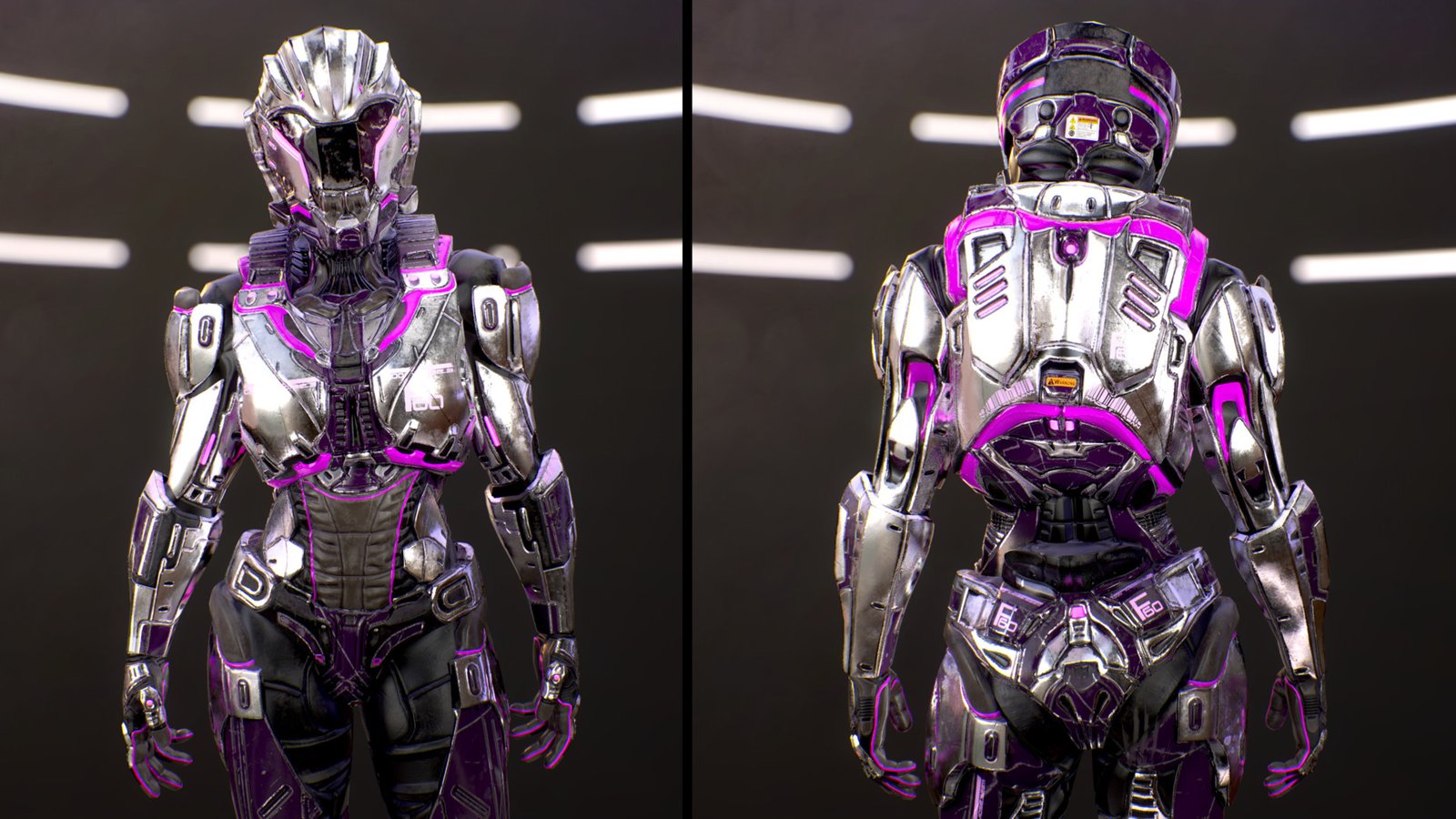
Futuristic armor refers to advanced protective equipment designed around technologies that are newer, experimental, or significantly more sophisticated than conventional protective gear.
A future protective system could combine several functions in one design. Instead of simply protecting the body from physical hazards, it might also monitor environmental conditions, provide information to the wearer, assist movement, regulate temperature, and communicate with other systems.
The most important goal is not necessarily to make armor look more impressive. It is to improve the balance between protection, mobility, weight, comfort, durability, and useful technology.
This distinction matters because real protective equipment has practical limitations. NIST notes that body armor is tested for performance and deformation, and that real armor does not make a person invulnerable. Protective systems must be evaluated carefully under controlled conditions rather than judged by appearance alone.
How Armor Has Evolved
From Ancient Armor to Modern Protection
The history of armor shows a continuous effort to protect the human body while maintaining mobility.
Ancient protective systems often relied on materials such as leather, wood, and metal. Metal armor could provide substantial protection, but its weight and rigidity could limit movement. Over time, armor design became increasingly specialized, with different materials and structures serving different protective purposes.
Modern protective equipment takes a very different approach. Instead of depending on one thick material, engineers can combine multiple layers with different properties.
High-strength fibers, ceramics, polymers, and composite structures can all contribute to modern protective systems. NIST research focuses on understanding the relationship between the properties of high-strength fibers and the performance of complete armor systems.
From Modern Gear to Future Designs
The next stage is likely to involve lighter, smarter, and more adaptable systems.
Researchers are interested not only in stopping physical damage but also in improving how protective equipment interacts with the person wearing it. Weight distribution, flexibility, temperature control, durability, and long-term reliability can be just as important as the strength of the material itself.
The direction is clear: future protection is likely to be designed around the human body rather than simply placed over it.
Key Technologies Behind Futuristic Armor
Advanced Materials
Materials science is at the center of futuristic armor research.
Traditional metals still have important applications, but modern researchers are also investigating high-strength fibers, ceramics, polymers, nanocomposites, and advanced combinations of these materials.
The objective is to achieve useful protection without creating excessive weight. The U.S. Army’s research into advanced armor materials, for example, includes work on improved ceramic and composite materials with the goal of reducing armor weight while maintaining protective performance.
Composite materials are particularly interesting because engineers can combine materials with different characteristics. One component might provide strength, another flexibility, and another resistance to environmental conditions.
This approach could become increasingly important as future protective systems become more specialized.
Smart Materials
One of the most interesting areas is the development of smart materials that respond differently depending on the conditions around them.
Shear-thickening fluids are one example. Under ordinary conditions, some of these materials can behave like liquids, while under rapid deformation their resistance can increase dramatically. NIST has studied shear-thickening fluids as possible additions to textile-based protective systems.
These materials demonstrate an important idea behind futuristic armor: protection does not always have to come from making something permanently rigid.
Flexible materials that respond to sudden forces could potentially make protective clothing more comfortable while still providing additional resistance under certain conditions.
Sensors and Electronics
Future protective equipment could also contain a network of small sensors.
Sensors might monitor temperature, movement, pressure, environmental conditions, or the condition of the equipment itself. Information could then be presented to the wearer through a suitable display or communication system.
This turns protective equipment into something closer to a wearable information platform.
The challenge is keeping electronics small, reliable, energy-efficient, and resistant to harsh environments. Adding technology is useful only when it improves the overall system rather than making it heavier and more complicated.
Exoskeletons and Powered Armor
Powered exoskeletons are among the technologies most closely associated with the idea of futuristic armor.
An exoskeleton is a wearable mechanical structure designed to support or assist human movement. Depending on its purpose, it can help with tasks involving lifting, walking, repetitive motion, or physical endurance.
The concept is different from the fictional idea of a completely autonomous armored suit. Real exoskeleton development is much more focused on assisting human movement and reducing physical strain.
For future protective systems, an exoskeleton could potentially support the weight of equipment or help users maintain mobility while carrying additional systems.
However, major engineering challenges remain. Batteries, motors, heat, weight, control systems, reliability, and user comfort all have to be considered.
A powered system that is impressive in a laboratory may not be practical in everyday conditions. The most useful designs will need to work naturally with the person wearing them.
The Role of Artificial Intelligence
Artificial intelligence could become another part of future protective equipment.
Rather than physically protecting the wearer, AI could help interpret information collected by sensors. A smart system might identify unusual environmental conditions, organize information from multiple sensors, or help present important alerts.
This could be particularly useful when the wearer is operating in a complex environment where large amounts of information are difficult to process manually.
However, AI should be considered a supporting technology, not a substitute for sound engineering. A protective system still needs reliable materials, mechanical design, testing, and human oversight.
The physical protection must work even when electronic systems experience a failure.
Futuristic Armor in Space Exploration
Space exploration provides one of the clearest real-world examples of advanced protective clothing.
NASA describes spacesuits as essentially human-shaped spacecraft because they must provide protection, life support, temperature regulation, mobility, and other functions. Modern spacesuits contain multiple layers designed for different purposes.
This makes spacesuits an excellent example of what futuristic armor could eventually become.
A spacesuit cannot simply be made thicker to become safer. It needs to remain flexible enough for an astronaut to move, operate equipment, and perform complex tasks.
NASA research has also explored advanced textiles and self-healing materials for protecting spacesuits from punctures and micrometeoroid or orbital-debris hazards. The research illustrates how future protective systems may combine flexibility, lightweight construction, advanced composites, and self-repair concepts.
Futuristic Armor Beyond the Military
Emergency and Rescue Work
Protective technology could have major applications for firefighters, rescue personnel, and other emergency workers.
Future protective clothing could combine heat protection with environmental sensors, communication equipment, improved cooling, and ergonomic support.
The challenge is creating systems that protect workers without restricting movement. A firefighter, for example, may need to move quickly, climb, carry equipment, and work in difficult conditions.
NASA’s spacesuit research demonstrates how temperature control, mobility, protective layers, and life-support technologies can be integrated into wearable systems. Some technologies developed for space exploration have also found applications on Earth.
Industrial Applications
Industrial workers may also benefit from advanced wearable protection.
In manufacturing, construction, logistics, and other demanding environments, wearable systems could potentially reduce physical strain or monitor working conditions.
Exoskeleton technology is particularly relevant here because its primary purpose can be assistance rather than protection from physical impacts.
The future may therefore involve protective equipment that feels less like traditional armor and more like smart workwear.
Space Exploration
Space remains one of the most demanding environments for protective technology.
A future lunar or planetary suit may need to address temperature changes, dust, radiation, reduced gravity, limited mobility, and life-support requirements.
NASA’s next-generation spacesuit work emphasizes improved mobility and designs that can accommodate a wider range of human body sizes.
This shows that the future of protective technology is not simply about stronger materials. Human comfort and movement are central engineering requirements.
What Could Futuristic Armor Look Like?
The appearance of future armor may be very different from the bulky suits commonly shown in science fiction.
Instead of a large rigid shell, a practical system could use flexible textiles, lightweight composite structures, compact sensors, modular components, and selectively reinforced areas.
Some parts might be rigid while others remain highly flexible.
This approach would allow engineers to place different materials where they provide the greatest benefit. It could also make maintenance and replacement easier.
The concept of modularity could become especially important. A user might be able to adapt a protective system to different working environments without replacing the entire suit.
Benefits of Futuristic Armor
The potential benefits of advanced protective technology extend beyond simple physical protection.
Lower weight could make equipment easier to wear for long periods.
Improved mobility could allow users to bend, walk, climb, and perform detailed tasks more naturally.
Smart monitoring could provide useful information about the wearer and surrounding environment.
Advanced materials could offer combinations of flexibility and strength that are difficult to achieve with traditional materials.
Better temperature management could make protective clothing more comfortable during demanding work.
Modular designs could allow equipment to be adjusted for different situations.
These advantages explain why researchers continue investigating new materials and testing methods.
Challenges and Limitations
Despite its exciting possibilities, futuristic armor faces significant challenges.
The first is weight. Adding sensors, batteries, mechanical components, protective layers, and communication equipment can quickly make a wearable system heavier.
Energy is another major problem. Powered systems require reliable sources of electricity, and batteries add both weight and complexity.
Heat management is also important. Electronics, motors, and protective layers can make it difficult for the body to release heat.
Durability is another concern. Protective materials can change over time because of repeated use, environmental exposure, folding, temperature, or other conditions. NIST research specifically examines the long-term reliability of polymers and high-strength fibers used in protective equipment.
Testing is equally important. Advanced materials cannot be judged solely by laboratory demonstrations. Researchers need reliable methods for measuring performance, durability, impact response, and long-term behavior. NIST continues developing testing methods for armor and impact-mitigating materials.
Futuristic Armor vs. Science Fiction Armor
Science fiction often portrays armor as a complete solution that provides extraordinary strength, protection, mobility, and technological capabilities in one compact package.
Real engineering is much more complicated.
Every improvement introduces trade-offs. A stronger material may be heavier. More electronics may increase energy requirements. Additional protective layers may reduce flexibility. A powered system may improve movement in one situation while becoming difficult to maintain in another.
This is why real futuristic armor is likely to develop gradually rather than appear as one revolutionary invention.
The most realistic future may not look like a movie suit at all. It could instead be a collection of technologies quietly integrated into clothing, equipment, helmets, exoskeletons, and other wearable systems.
The Future of Armor Technology
The future of futuristic armor will probably depend heavily on materials science.
Researchers are investigating new composite structures, advanced fibers, responsive materials, and even designs inspired by nature. In 2025, NIST researchers reported work on synthetic structures inspired by the microscopic architecture of the mantis shrimp’s exoskeleton, demonstrating how biological structures can inspire impact-resistant materials.
Self-healing materials could also become increasingly interesting. NASA has explored concepts involving self-healing polymers for space applications, where repairing damage could improve reliability in environments where conventional maintenance is difficult.
Another major trend will be better integration.
Future protective equipment may combine materials, sensors, communication systems, cooling technologies, and mechanical assistance in a single coordinated platform.
However, successful designs will still need to meet basic human requirements. They must be comfortable enough to wear, reliable enough to trust, practical enough to maintain, and light enough to allow natural movement.
Frequently Asked Questions
What is futuristic armor?
Futuristic armor is a broad term for advanced protective equipment that uses emerging materials, wearable electronics, smart systems, or mechanical assistance to improve protection and human performance.
What materials are used in futuristic armor?
Research includes high-strength fibers, ceramics, polymers, composites, nanocomposites, and other advanced materials. Different materials can be combined to provide different properties within the same protective system.
Are powered armor suits possible?
Powered exoskeletons already exist as a field of research and development, but fully integrated science-fiction-style suits remain much more complicated. Current work focuses heavily on movement assistance, ergonomics, power requirements, and practical applications.
How does an exoskeleton work?
An exoskeleton is a wearable mechanical structure that can support or assist human movement. Depending on its design, it may use mechanical components, sensors, motors, or other systems to provide assistance.
Could futuristic armor become lightweight and flexible?
That is one of the major goals of advanced protective-material research. Scientists are investigating high-strength fibers, composites, smart materials, and other approaches that could provide useful protection without relying entirely on heavy rigid structures.
Conclusion
Futuristic armor is becoming less about science-fiction appearance and more about practical engineering. The most promising developments involve advanced materials, smart textiles, sensors, exoskeletons, improved spacesuits, and systems designed around the needs of the human wearer.
The biggest challenge is finding the right balance. Protection must work alongside mobility, comfort, durability, energy efficiency, and reliability.
Space exploration demonstrates how complex wearable protection can become when a suit must function as a personal life-support system. Research into advanced body-armor materials shows a similar movement toward lighter, better-characterized, and more reliable protective systems.
The future may not bring the dramatic armored suits imagined in movies. Instead, it may bring something more practical: lighter materials, smarter clothing, responsive protection, wearable assistance, and carefully integrated technology.
That gradual evolution could make futuristic armor an important part of how people work, explore extreme environments, and stay protected in the decades ahead.