






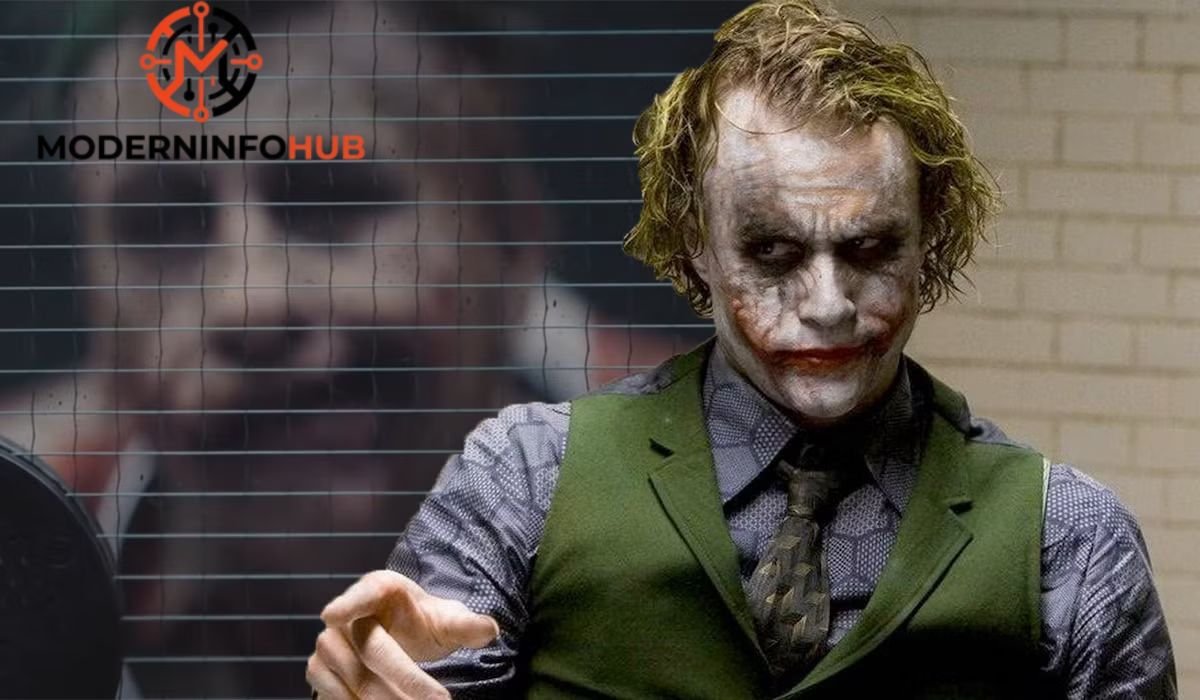
Barry Keoghan Joker has become one of the most intriguing recent interpretations of one of DC Comics’ most recognizable villains. Although Barry Keoghan appears for only a short time in The Batman, his version of the character immediately attracted attention because of its unusual appearance, unsettling personality, and mysterious history.
Directed by Matt Reeves and released in 2022, The Batman introduced Robert Pattinson as Bruce Wayne and built a darker, detective-focused version of Gotham City. The movie mainly revolves around the Riddler, played by Paul Dano, but its final moments quietly introduce another important figure: the Joker.
Keoghan’s character is not presented as a fully developed supervillain. Instead, he is shown as a mysterious inmate at Arkham State Hospital who already has a connection with Batman. That limited introduction leaves many questions unanswered, making his interpretation particularly interesting.
BIO
| Label | Information |
|---|---|
| Actor | Barry Keoghan |
| Character | The Joker |
| Film | The Batman |
| Release Year | 2022 |
| Director | Matt Reeves |
| Batman | Robert Pattinson |
| Riddler | Paul Dano |
| Character Type | Supervillain |
| Main Setting | Gotham City |
| Prison | Arkham State Hospital |
| Joker Debut | The Batman |
| Key Feature | Distinctive facial appearance |
| Continuity | Matt Reeves’ Batman universe |
Who Is Barry Keoghan’s Joker?
Barry Keoghan plays the Joker in Matt Reeves’ The Batman. The character is initially kept deliberately mysterious and is not openly identified as the Joker during his brief appearance.
Near the end of the film, Edward Nashton, better known as the Riddler, is imprisoned at Arkham. While dealing with the failure of his plan, he begins talking to another inmate in the neighboring cell. That inmate is played by Keoghan.
The character’s identity becomes clear through his appearance, behavior, laugh, and conversation with the Riddler. Rather than introducing the Joker with a large action sequence, Reeves presents him as a quiet and disturbing presence inside Arkham.
This approach fits the tone of The Batman. The movie treats Gotham as a dangerous city filled with criminals and damaged individuals, and the Joker feels like another product of that world rather than a sudden fantasy-style addition.
Barry Keoghan Joker in The Batman
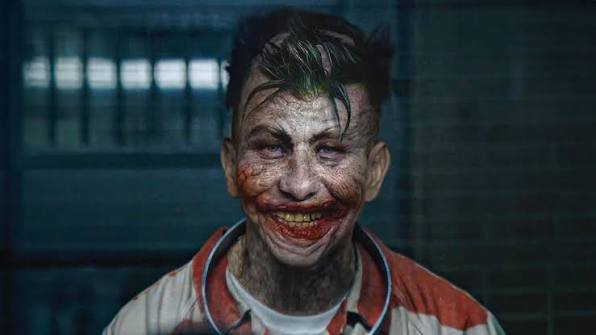
Keoghan’s Joker appears only briefly in the theatrical version of The Batman. His scene takes place after Batman has captured the Riddler and the main mystery of the film has reached its conclusion.
The Riddler is disappointed because his larger plan has not produced the result he expected. While he sits in Arkham, another prisoner begins speaking with him.
The Joker understands the Riddler’s frustration and seems amused by the situation. Their conversation suggests that the two criminals could develop a relationship in the future.
The scene is important because it establishes that Batman’s world already contains another dangerous criminal. At the same time, the movie does not explain everything about him.
That restraint is one of the most interesting aspects of the character.
A Different Kind of Joker Introduction
Previous live-action Joker portrayals have often received dramatic introductions. Heath Ledger’s Joker in The Dark Knight, Joaquin Phoenix’s Arthur Fleck in Joker, and Jack Nicholson’s Joker in Batman all have very different origins and storytelling approaches.
Keoghan’s introduction is much quieter.
There is no lengthy explanation of his past. There is no major crime sequence built around him. Instead, viewers meet him as someone Batman already knows.
That decision gives the character an unusual sense of history.
The audience is left to wonder what happened between Batman and this prisoner before the events of the film. The movie suggests that Batman has encountered him before and played a role in putting him in Arkham.
The Appearance of Barry Keoghan’s Joker
One of the most noticeable features of Keoghan’s Joker is his appearance.
This version does not simply copy the traditional comic-book image of the character. His face is heavily affected, and his smile is a major part of his disturbing appearance.
Director Matt Reeves and the makeup team looked toward older visual influences when creating the design. Reeves has discussed the influence of Conrad Veidt’s Gwynplaine from The Man Who Laughs, a 1928 silent film that also influenced the original visual concept of the Joker.
The design also draws inspiration from the tragic physical appearance of characters such as John Merrick in The Elephant Man.
This gives Keoghan’s Joker a more grounded and unsettling quality.
Instead of relying only on traditional clown makeup, the design makes the character appear physically different from ordinary people. His smile is central to the character, creating the impression that he cannot simply switch between an ordinary expression and a Joker grin.
The Human Side of His Joker
Barry Keoghan has described his interpretation as having a human element beneath the appearance.
In interviews about the role, Keoghan explained that he viewed the character as someone who was hurt and broken. He also wanted the audience to see something human behind the makeup.
That idea separates this interpretation from a simple cartoon villain.
The Joker may be dangerous, but Keoghan’s approach suggests that there is a person underneath the disturbing appearance. The character’s smile is not necessarily something he chooses simply to look frightening. It is part of the physical condition and identity that Reeves created for this version.
This makes the character more tragic while still allowing him to remain unsettling.
Barry Keoghan’s Performance
Keoghan had very little screen time, but he uses that limited opportunity to establish a recognizable personality.
His voice is quiet and conversational rather than constantly aggressive. His facial expressions and laugh do much of the work.
The performance feels controlled. Instead of immediately presenting the Joker as a loud or chaotic criminal, Keoghan portrays someone who appears comfortable inside Arkham.
That calmness makes his interactions with the Riddler more interesting.
He does not need to explain who he is. His confidence suggests that he understands exactly what kind of person he is talking to.
Batman and the Joker’s Connection
One of the biggest questions surrounding the Barry Keoghan Joker is his previous relationship with Batman.
The theatrical movie implies that Batman already knows this prisoner. Reeves has explained that Batman had encountered the character before the events of the film.
This is important because it means the Joker is not necessarily being introduced at the same point in his criminal career as audiences have seen in other Batman stories.
The relationship already exists.
Batman is also willing to visit the prisoner for information about the Riddler. This creates a fascinating dynamic because Batman is effectively asking one criminal to help him understand another.
The setup has similarities to the classic idea of a detective consulting a dangerous criminal for insight into another criminal’s mind.
The Deleted Batman and Joker Scene
The theatrical movie only gives viewers a short look at Keoghan’s Joker, but a longer deleted scene was later released.
The scene provides considerably more information about the relationship between Batman and the Joker.
In the sequence, Batman visits the Joker at Arkham while investigating the Riddler. Batman wants to understand the Riddler’s behavior and motivations.
The Joker studies Batman and discusses the similarities between Batman and the Riddler.
This deleted sequence helps explain why Reeves originally considered including the Joker more directly in the story. It also makes the character feel less like a simple cameo and more like someone who already occupies an important place in Gotham.
Why the Scene Was Cut
Matt Reeves explained that the movie originally included more of the Joker, but the longer scene was eventually removed.
The reason was not that the scene failed. Instead, Reeves felt that other parts of the film were already performing some of the same storytelling work.
The Batman is already a long detective story. Adding another major conversation near the end could have slowed the film or distracted from the conclusion of the Riddler storyline.
The deleted scene still has value because it gives viewers a better understanding of what Reeves and Keoghan were building with the character.
Is Barry Keoghan’s Joker Already Fully Formed?
Not exactly.
One of the most important details about this version is that he does not appear to be the fully established Joker audiences might expect from traditional Batman stories.
The character appears to be in an earlier stage of his development.
The deleted scene especially makes this clear. His face does not have the classic appearance associated with many versions of the Joker. Instead, he looks like a damaged individual who is gradually becoming the character.
That leaves room for the possibility that his appearance and personality could evolve over time.
The Joker’s Possible Backstory
The film does not provide a complete origin story for Keoghan’s Joker.
That is intentional.
There is no detailed explanation of his childhood, his former identity, or the exact events that led him to become a criminal.
Reeves has also avoided presenting the character as a simple repeat of the familiar chemical-accident origin often associated with the Joker.
Instead, this version is rooted in a different physical and psychological concept.
The lack of a traditional origin keeps the character mysterious and allows the audience to focus on who he has become rather than receiving a complete explanation of how he got there.
Joker and the Riddler
The connection between the Joker and Riddler is another major reason the final scene matters.
Both characters feel rejected by Gotham in different ways. Both believe they understand the city better than ordinary people. Both have a complicated relationship with Batman.
However, their personalities are different.
The Riddler is methodical and obsessed with exposing corruption. The Joker is more unpredictable and interested in psychological games.
Their meeting suggests that they may understand parts of each other.
At the same time, the movie does not confirm that they will become a permanent partnership. The scene is better understood as an intriguing introduction to a possible relationship.
How His Joker Differs From Other Versions
Every live-action Joker exists within a different interpretation of Batman’s world.
Heath Ledger’s Joker in The Dark Knight is a criminal mastermind who uses chaos and fear to challenge Batman’s moral beliefs.
Joaquin Phoenix’s Arthur Fleck is the central character of Joker, which explores his personal life and transformation in a separate continuity.
Jared Leto’s Joker belongs to the world of the DCEU and has a very different visual style and history.
Keoghan’s Joker is connected specifically to Matt Reeves’ grounded Gotham.
His version is quieter, physically distinctive, and still developing.
That makes direct comparisons difficult because each portrayal serves a different story.
Why Fans Became Interested in Barry Keoghan’s Joker
The biggest reason is simple: there are many unanswered questions.
Fans saw only a small portion of the character, yet the film suggested a much larger history.
Viewers want to know how Batman captured him, how long he has been in Arkham, what crimes he committed, and whether he has already developed the reputation associated with the Joker.
His unusual appearance also created discussion.
Rather than giving audiences another familiar clown-like design, Reeves created something that feels more closely connected to the grounded horror and crime atmosphere of The Batman.
Keoghan’s performance adds another layer because the character does not behave like a conventional comic-book villain.
Could Barry Keoghan Return as the Joker?
The question of Keoghan’s future as the Joker has remained a major topic among fans.
However, it is important to separate confirmed information from speculation.
Matt Reeves has previously explained that the Joker’s appearance in The Batman was not necessarily designed as a straightforward promise that the character would appear in the next movie.
That means viewers should not treat the cameo itself as confirmation of a specific future storyline.
The character clearly exists in Reeves’ Batman continuity, but the exact role he may play in future films depends on the direction of the story.
As of the available public information, speculation about a larger Joker role should be treated separately from officially confirmed plot details.
The Future of This Joker
If Keoghan’s Joker returns, there are several storytelling possibilities available.
The character could remain a secondary figure who appears occasionally in Arkham. He could become more directly connected to Batman. He could also develop a stronger relationship with other criminals in Gotham.
Another possibility is that Reeves continues to keep him in the background.
That would preserve the mystery that made the character’s introduction effective in the first place.
The strength of this interpretation is partly its uncertainty. The audience knows who he is, but does not know everything about him.
Barry Keoghan’s Approach to the Character
Keoghan’s comments about the role show that he wanted to bring something personal and human to the character.
Rather than simply copying previous Jokers, he focused on the idea of someone who had been deeply hurt and had become disconnected from normal life.
That approach works well with the atmosphere of The Batman.
Reeves’ Gotham is filled with characters shaped by trauma, corruption, loneliness, and anger. The Joker fits naturally into that world because his story can explore another extreme consequence of living in such an environment.
Key Facts About Barry Keoghan’s Joker
| Fact | Details |
|---|---|
| Actor | Barry Keoghan |
| Character | The Joker |
| First appearance | The Batman |
| Film release | 2022 |
| Batman | Robert Pattinson |
| Director | Matt Reeves |
| Riddler | Paul Dano |
| Main setting | Gotham City |
| Prison | Arkham State Hospital |
| Character status | Joker within Reeves’ Batman continuity |
| Notable feature | Distinctive facial appearance and smile |
| Extended material | Deleted Batman-Joker scene |
| Continuity | Separate from other live-action Joker portrayals |
Frequently Asked Questions
Is Barry Keoghan the Joker in The Batman?
Yes. Barry Keoghan plays the Joker in Matt Reeves’ The Batman. His character appears briefly as an inmate at Arkham State Hospital.
How long does Barry Keoghan appear as the Joker?
His theatrical appearance is very short. The movie gives viewers only a brief introduction, while a longer deleted scene provides additional interaction between Batman and the character.
Does Batman already know Barry Keoghan’s Joker?
The film and deleted material indicate that Batman already has a history with the inmate. Reeves has described Batman as having encountered the character before the events of the main story.
Why does Barry Keoghan’s Joker look different?
Reeves and the production team created a distinctive design influenced by older visual sources, including Conrad Veidt’s Gwynplaine from The Man Who Laughs. The design also moves away from simply repeating the traditional Joker origin and appearance.
Is Barry Keoghan’s Joker the same as Joaquin Phoenix’s Joker?
No. They belong to different Batman continuities. Keoghan’s Joker exists within Matt Reeves’ The Batman universe, while Phoenix’s Arthur Fleck belongs to the separate Joker film continuity.
Will Barry Keoghan play the Joker again?
His future as the Joker has been the subject of considerable speculation, but speculation should not be confused with confirmed story information. His next appearance depends on the direction of Reeves’ Batman universe and officially announced plans.
Conclusion
Barry Keoghan Joker is an unusual take on one of cinema’s most recognizable villains. Instead of giving the character a traditional origin story or a long introduction, Matt Reeves chose to present him as a mysterious inmate who already has a history with Batman.
Keoghan’s distinctive appearance and restrained performance make the character memorable despite his limited screen time. The deleted scene adds even more context, showing that the Joker was considered as a deeper part of the film’s psychological detective story.
What makes this interpretation particularly interesting is what the movie does not explain. His past remains largely unknown, his relationship with Batman is only partly revealed, and his future remains a subject of discussion.
For now, Keoghan’s Joker stands as a dark and mysterious part of Reeves’ Gotham — a character whose brief appearance raises almost as many questions as it answers.