




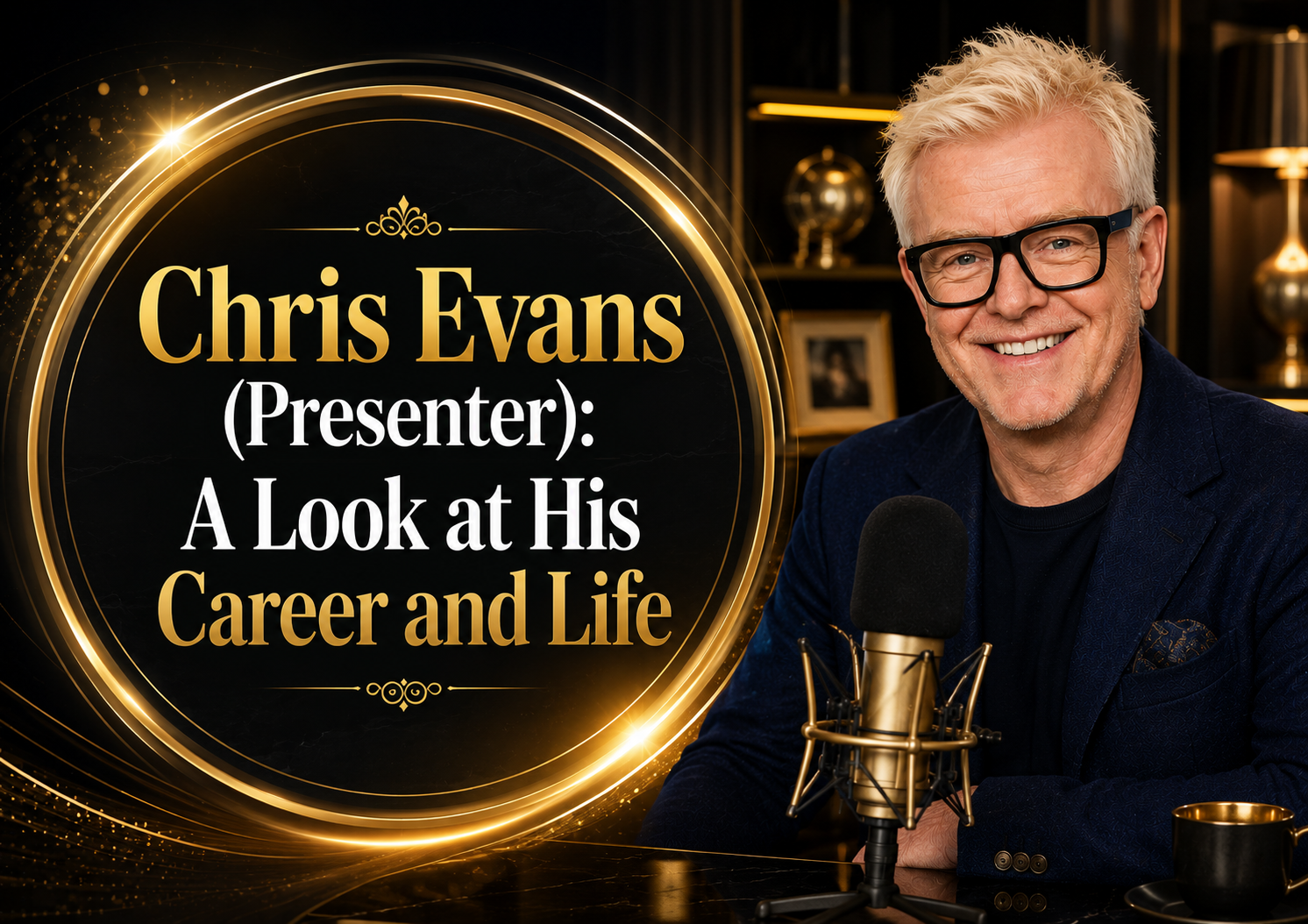
Chris Evans is one of the best-known broadcasters in British radio and television, with a career that has stretched across several decades. From his early days in radio to major television programmes and high-profile breakfast shows, he has built a reputation for energetic presenting, strong audience relationships and an unmistakable personality.
Unlike presenters whose careers remain tied to one format, Chris Evans has moved repeatedly between radio, television and production. His journey includes The Big Breakfast, Don’t Forget Your Toothbrush, TFI Friday, BBC Radio 1, BBC Radio 2, Top Gear and, in more recent years, Virgin Radio UK.
His career has also had its difficult periods. Evans became a major celebrity during the 1990s, experienced professional setbacks, stepped away from broadcasting for a time and later rebuilt his reputation through Radio 2. That mixture of success, controversy, reinvention and longevity makes his story particularly interesting.
BIO
| Label | Information |
|---|---|
| Full Name | Christopher James Evans |
| Known As | Chris Evans |
| Profession | Radio and TV Presenter |
| Date of Birth | 1 April 1966 |
| Birthplace | Warrington, England |
| Nationality | British |
| Early Radio | Piccadilly Radio |
| TV Breakthrough | The Big Breakfast |
| Famous Show | TFI Friday |
| BBC Radio Work | Radio 1 and Radio 2 |
| Top Gear | Presenter in 2016 |
| Current Work | Virgin Radio UK |
| Known For | Energetic broadcasting style |
Who Is Chris Evans?
Chris Evans was born Christopher James Evans on 1 April 1966 in Warrington, England. He developed an interest in broadcasting while still young and eventually found his way into radio, where he learned the fundamentals of entertaining an audience through conversation, music and live interaction.
His early career was not an overnight success. Before becoming a nationally recognised presenter, Evans worked in a variety of jobs and eventually joined Piccadilly Radio in Manchester. His experience there helped him understand how radio worked from the inside, including the importance of timing, humour and connecting with listeners.
He later moved to London and worked at Greater London Radio (GLR). His work in radio attracted increasing attention, and it was not long before television became an important part of his career.
What separated Evans from many conventional broadcasters was his willingness to make the programme feel personal. Rather than simply introducing songs or reading prepared material, he often treated the audience as though they were part of an ongoing conversation.
Early Career
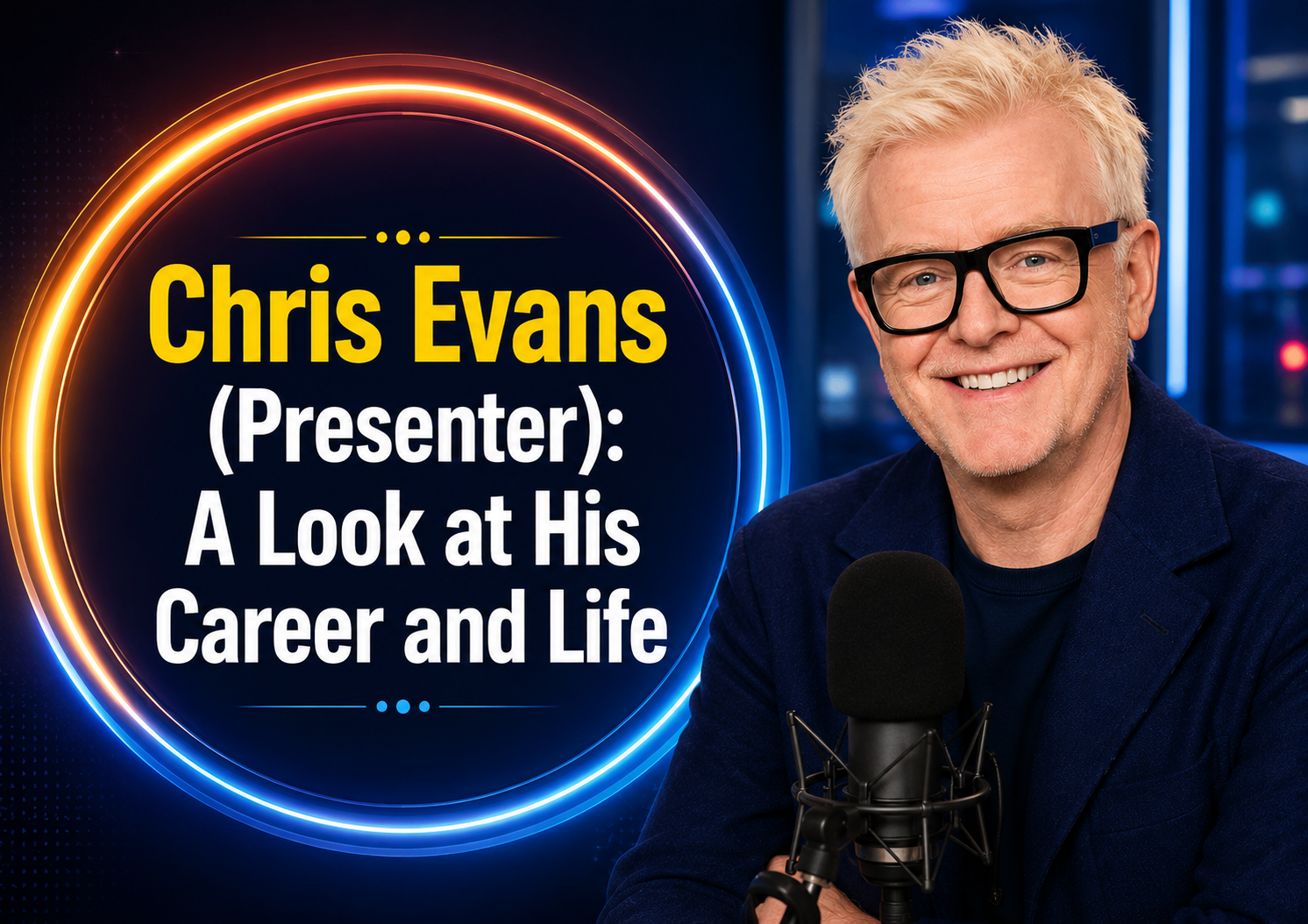
Evans’s route into broadcasting was shaped by practical experience rather than a traditional celebrity path. His early work at Piccadilly Radio gave him an opportunity to experiment with radio production and on-air entertainment.
According to accounts of his career, he worked alongside experienced broadcasters and gradually developed his own approach. His time in Manchester was followed by a move to London, where his work at GLR helped establish him as a distinctive radio personality.
That period was important because it demonstrated a quality that would remain central throughout his career: Evans understood how to turn ordinary conversation into entertainment.
His rise also reflected changes taking place in British broadcasting during the late 1980s and early 1990s. Radio and television were becoming increasingly competitive, and presenters with strong personalities could become major attractions in their own right.
Evans was well suited to that environment.
The Big Breakfast
The major television breakthrough for Chris Evans (Presenter) came in 1992, when he joined Channel 4’s The Big Breakfast. The programme had a deliberately informal approach to breakfast television, and Evans’s energetic style fitted the format extremely well.
His arrival helped turn him into a national television personality. Contemporary accounts describe The Big Breakfast as the point at which Evans moved from being known mainly within broadcasting circles to becoming a mainstream star.
The programme’s appeal came partly from its relaxed atmosphere. Instead of presenting breakfast television as a highly polished news-and-information service, it often felt spontaneous and unpredictable.
Evans was particularly effective in that environment because he was comfortable reacting in the moment.
His success on The Big Breakfast also showed that his radio skills could transfer successfully to television. He could speak quickly, respond to guests and create the feeling that something unexpected might happen at any moment.
Don’t Forget Your Toothbrush
After The Big Breakfast, Evans continued developing his television career with Don’t Forget Your Toothbrush. The Channel 4 programme combined entertainment and competition in a format built around the possibility of winning a holiday and leaving almost immediately.
The show became another significant stage in Evans’s rise. His production company, Ginger Productions, was also involved in creating programmes, giving him an opportunity to work beyond simply appearing in front of the camera.
The programme demonstrated an important part of Evans’s career: he was not only a presenter but also interested in the business and creative side of broadcasting.
That distinction became increasingly important as his career developed. He was able to think about programmes as products, audiences and formats rather than seeing presenting as his only professional role.
TFI Friday
One of Evans’s most recognisable television projects was TFI Friday, which began in the mid-1990s on Channel 4.
The show combined celebrity interviews, music, comedy and live entertainment. It became closely associated with Evans’s personality and with the energetic style of British television during the 1990s.
The programme’s appeal was its sense of occasion. Viewers were not simply watching a presenter introduce a series of items; Evans was effectively the centre of the programme’s atmosphere.
TFI Friday also featured a wide range of musicians and celebrities, helping establish Evans as a presenter who could handle entertainment interviews and live television.
The show ran for several years and became an important part of his television identity. Contemporary coverage noted that it had developed a substantial following and remained closely associated with Evans even as his career moved into other areas.
Radio 1 Success
Television success did not mean Evans abandoned radio. In 1995, he took over the BBC Radio 1 breakfast programme.
The appointment was a major moment in British radio. Evans was already a television star, and his arrival gave Radio 1 a presenter with a strong public profile and a highly distinctive personality.
However, the workload was considerable. Evans was simultaneously involved in television projects, particularly TFI Friday, while presenting breakfast radio.
The pressure eventually contributed to tensions with Radio 1 management. In 1997, Evans left the breakfast show after disagreements over his working arrangements. His departure became another defining episode in a career that had already moved unusually quickly.
Virgin Radio
Evans’s relationship with Virgin Radio became one of the most remarkable business chapters of his career.
After leaving Radio 1, he returned to breakfast radio through Virgin Radio. He later became involved in the ownership of the station through his Ginger Media Group.
The business side of his career was highly successful financially. In 2000, Ginger Media Group sold Virgin Radio to Scottish Media Group in a deal reported at £225 million, making Evans a substantial personal fortune from the transaction.
However, his relationship with the station’s new ownership later deteriorated, and Evans was dismissed from Virgin Radio in 2001 after a period of serious controversy.
This became one of the lowest points in his professional life. Rather than ending his broadcasting career, however, the setback eventually became part of a much longer story of rebuilding.
A Career Reset
After the difficult period surrounding Virgin Radio, Evans was away from regular broadcasting for several years.
His eventual return to the BBC in 2005, initially through a weekend Radio 2 programme, marked an important change in his professional image. Over time, he moved into more prominent roles, including the Radio 2 drivetime programme.
This was not simply a return to the old version of Chris Evans. His style had matured, and his broadcasting persona became more focused on family life, everyday conversation and a broad adult audience.
That transformation was especially visible when he succeeded Sir Terry Wogan on the Radio 2 breakfast programme in 2010.
The appointment demonstrated how far Evans had travelled from the controversies of the 1990s.
BBC Radio 2 Breakfast
The Radio 2 breakfast programme became one of the strongest chapters of Evans’s broadcasting career.
He inherited a hugely established programme and a loyal audience, meaning expectations were high. His ability to maintain a strong connection with listeners helped establish him as one of Britain’s most prominent radio broadcasters.
His Radio 2 years also showed how his presenting style had evolved. The energetic personality remained, but there was greater emphasis on conversation, family, regular features and listener participation.
In 2018, Evans announced that he would leave Radio 2 and return to Virgin Radio. The decision represented another major career move rather than a retirement from broadcasting. The Guardian reported that his Radio 2 audience had reached around 9 million during this period.
Top Gear
One of the most talked-about television chapters in Evans’s later career was his appointment as a presenter of Top Gear.
In 2015, Evans was announced as one of the new presenters following the departure of Jeremy Clarkson. The programme was one of the BBC’s most internationally recognised entertainment properties, so the appointment attracted considerable attention.
Evans himself was a long-time fan of Top Gear. In an interview published by TopGear.com, he explained how the opportunity came about and described the programme as a personal favourite.
He presented the programme in 2016 alongside a new presenting team. The series attracted significant public attention, but the response was mixed, and Evans announced his departure after the first series.
Although the Top Gear chapter was relatively brief, it remains an important part of his career because it demonstrated his willingness to take on a major challenge even after achieving considerable success in radio.
Return to Virgin Radio
In 2019, Evans began a new chapter with Virgin Radio UK. His return was significant because it brought him back to a format in which he had originally made his name.
Virgin Radio’s official material confirms that The Chris Evans Breakfast Show became a central part of the station’s weekday schedule. The programme combines music, interviews, conversation and audience participation.
The current Virgin Radio schedule shows Evans continuing to host the breakfast programme, with the show built around a mixture of music, guests and conversation. The station’s schedule lists the programme as a weekday morning show broadcast from the Top of the Tower.
This return is particularly interesting because it shows the durability of Evans’s broadcasting identity. After moving through local radio, national radio, television, production and several major career changes, he ultimately returned to breakfast radio.
Presenting Style
A major reason Chris Evans (Presenter) has remained relevant is his presenting style.
He does not fit the image of a highly formal broadcaster. His approach is conversational, energetic and often spontaneous. He has traditionally relied heavily on personality rather than a rigid presentation formula.
His radio work demonstrates another important strength: he understands the relationship between presenter and listener.
Breakfast radio is often heard while people are getting ready for school or work, travelling, cooking breakfast or starting the day. A successful presenter therefore needs to create companionship as well as entertainment.
Evans’s career suggests that this has been one of his strongest abilities.
His style has changed over time, but the central idea has remained consistent: make the audience feel as though they are part of the programme.
Personal Life
Chris Evans has also attracted public interest because of his family and personal life.
He has been married three times. His current wife is Natasha Shishmanian, and the couple have children together. Virgin Radio has previously featured Evans and his family in promotional material for his breakfast programme.
His personal life has also influenced the way his public image changed over the years. During the 1990s, Evans was frequently portrayed as a rebellious and unpredictable celebrity. In later years, his public persona became much more closely associated with family life and the responsibilities of being a parent.
That change is important when considering his long career. He did not simply become older while continuing to behave exactly as he had in the 1990s; his broadcasting identity evolved alongside his life.
Career Achievements
Evans’s achievements extend well beyond his work as a television presenter.
He has successfully worked as a radio presenter, television presenter, producer and media entrepreneur. His television credits include several influential entertainment programmes, while his radio career has included breakfast shows for both Radio 1 and Radio 2 as well as Virgin Radio.
His business success is another notable part of the story. The sale of Ginger Media Group and Virgin Radio for £225 million in 2000 demonstrated that his understanding of broadcasting extended into ownership and media management.
He has also received major recognition for his broadcasting work. His career has included multiple Sony Radio Awards, while Don’t Forget Your Toothbrush was reported to have won two BAFTAs in 1995.
Taken together, these achievements explain why Evans remains an important figure in the history of British popular broadcasting.
Net Worth and Income
Chris Evans has accumulated significant wealth through several areas of his career, including broadcasting, television production and media ownership.
However, it is important to distinguish between verified financial information and online net-worth estimates. Websites frequently publish figures for celebrity wealth, but these numbers are not always supported by detailed financial records.
One of the clearest documented examples of Evans’s financial success came from the sale of Ginger Media Group. The reported £225 million transaction in 2000 was a major media deal and gave Evans substantial financial returns.
His broadcasting earnings have also been publicly reported at different points. For example, the BBC’s published salary disclosures for 2017 placed his annual BBC earnings in the range of £2.2 million to £2.25 million.
For that reason, claims about his exact current net worth should be treated as estimates unless they come from reliable financial documentation.
What Is Chris Evans Doing Now?
As of 2026, Chris Evans continues to work in radio with Virgin Radio UK.
The station’s current schedule lists The Chris Evans Breakfast Show with Moneybox as a weekday programme. Recent Virgin Radio listings show Evans continuing to host the show, with celebrity interviews, music and listener interaction forming part of its regular format.
This is significant because it means Evans’s career is still active more than three decades after his first major television breakthrough.
His longevity is particularly notable in an industry where presenters frequently move between formats or disappear from the spotlight altogether. Evans has repeatedly reinvented himself while retaining the core skill that launched his career: live broadcasting.
Why His Career Matters
The story of Chris Evans (Presenter) is more complicated than a simple rise to fame.
He experienced extraordinary success in the 1990s, suffered professional and personal setbacks, stepped away from the spotlight and eventually rebuilt his reputation through Radio 2. He then moved back to Virgin Radio and continued working in the medium where his career began.
That journey illustrates how broadcasting careers can change dramatically over time.
Evans’s greatest contribution may be his ability to make personality-driven broadcasting work across different generations. The young presenter who became famous on The Big Breakfast was very different from the broadcaster who later hosted Radio 2’s breakfast show, yet both relied on the same basic principle: listeners want to connect with the person behind the microphone.
Final Thoughts
Chris Evans has built one of the more distinctive careers in British broadcasting. From Piccadilly Radio and GLR to The Big Breakfast, TFI Friday, Radio 1, Radio 2, Top Gear and Virgin Radio, his professional journey has covered a remarkable range of formats.
There have been major successes, difficult moments and significant changes along the way. His business achievements, television work and radio career all form important pieces of the same story.
Today, his continued presence on Virgin Radio shows that his appeal has not depended solely on nostalgia. He remains an active broadcaster whose career has adapted to changing audiences and changing media.
For anyone interested in British radio and television, Chris Evans’s career offers a useful example of how talent, personality, ambition and reinvention can shape a long-lasting broadcasting career.
Frequently Asked Questions
Who is Chris Evans (Presenter)?
Chris Evans (Presenter) is a British broadcaster and television personality known for his long career in radio and television. He has presented major programmes including The Big Breakfast, TFI Friday, Top Gear, and breakfast shows on BBC Radio 1, BBC Radio 2, and Virgin Radio.
What is Chris Evans best known for?
He is particularly known for his energetic radio style and popular television work during the 1990s. His long-running career with BBC Radio 2 and Virgin Radio has also made him one of Britain’s most recognisable radio presenters.
Did Chris Evans present Top Gear?
Yes. Chris Evans became one of the presenters of Top Gear in 2016, following the departure of Jeremy Clarkson. He presented one series before announcing that he would leave the programme.
Is Chris Evans still a radio presenter?
Yes. As of 2026, Chris Evans continues to host The Chris Evans Breakfast Show with Moneybox on Virgin Radio UK. The station’s current schedule lists the programme on weekday mornings.
What made Chris Evans successful?
His success is closely linked to his distinctive personality, conversational style and ability to build a connection with listeners. His career has also benefited from his willingness to move between radio, television and media production.