







Introduction
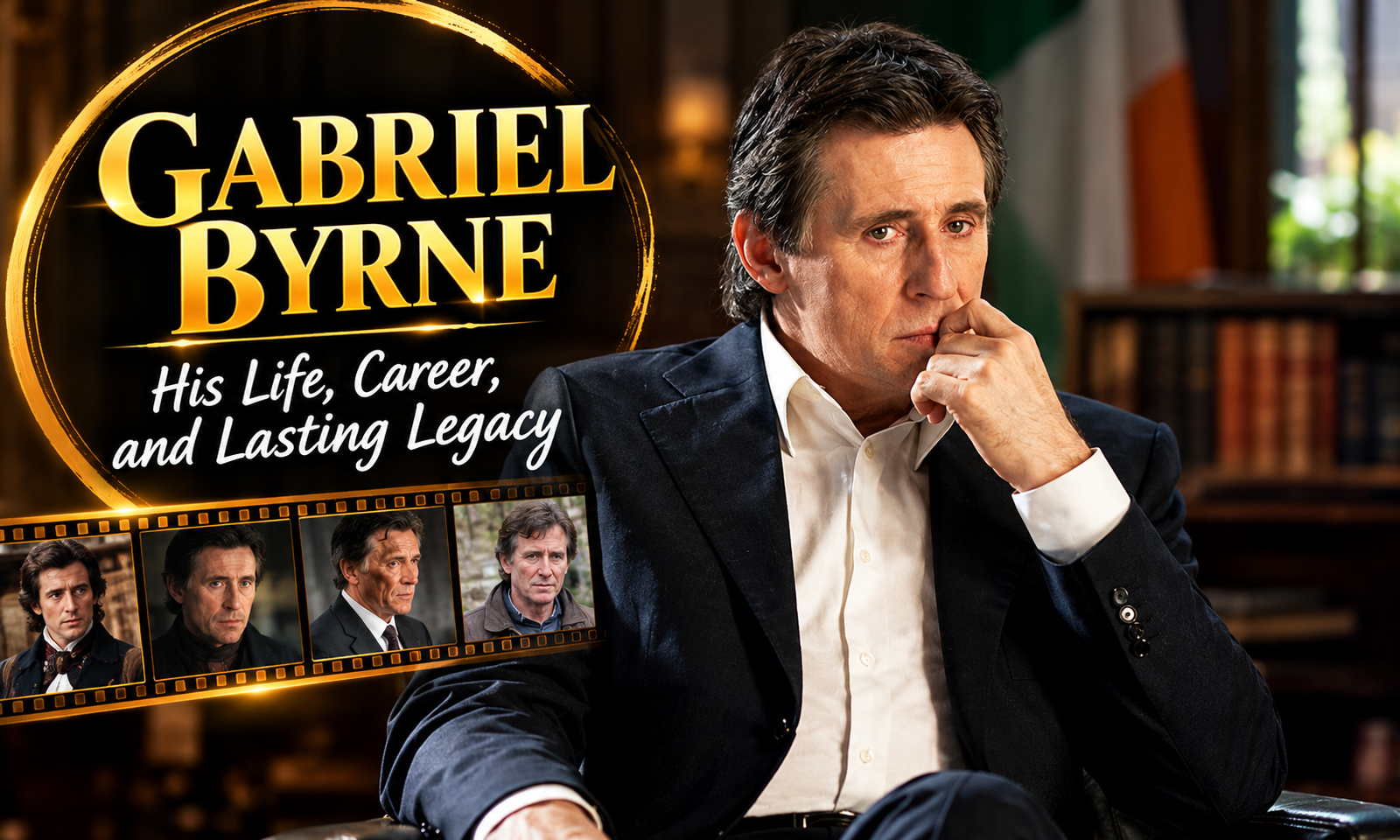
Gabriel Byrne is an Irish actor whose career has reached across film, television, and theatre. Known for his thoughtful performances, distinctive screen presence, and ability to portray complicated characters, he has built a reputation as one of Ireland’s most respected performers. From historical dramas to crime films and emotionally demanding television roles, Byrne has consistently demonstrated a wide acting range.
Born in Dublin, Ireland, he developed his career through a combination of stage experience, Irish television, and international film productions. His performances in Excalibur, Miller’s Crossing, The Usual Suspects, and the television drama In Treatment introduced him to audiences with different tastes and interests.
However, his career cannot be understood through famous films alone. Byrne has also worked as a writer and producer, remained connected to Irish culture, and explored personal memories through his memoir, Walking with Ghosts. His professional journey reflects a commitment to storytelling that extends beyond the boundaries of any single role.
This article explores Gabriel Byrne’s early life, acting career, most memorable performances, personal life, creative interests, and lasting contribution to the entertainment industry.
BIO
| Label | Information |
|---|---|
| Full Name | Gabriel James Byrne |
| Known As | Gabriel Byrne |
| Date of Birth | May 12, 1950 |
| Age | 76 years (as of 2026) |
| Birthplace | Dublin, Ireland |
| Nationality | Irish |
| Profession | Actor, Writer, Producer |
| Years Active | 1970s–present |
| Debut Film | Excalibur (1981) |
| Famous Movies | Miller’s Crossing, The Usual Suspects |
| Famous TV Show | In Treatment |
| Major Award | Golden Globe Award (2009) |
| Memoir | Walking with Ghosts (2020) |
Who Is Gabriel Byrne?
Gabriel Byrne is an Irish actor, writer, and producer born on May 12, 1950, in Dublin, Ireland. Over several decades, he has established himself as an international performer while maintaining a strong connection to his Irish background.
One of the defining characteristics of Byrne’s career is his versatility. Rather than becoming associated with only one type of character, he has appeared in historical adventures, independent films, crime dramas, literary adaptations, and psychological television series. He has played thoughtful professionals, morally complicated individuals, powerful historical figures, and characters whose motivations are not immediately clear.
His performances often rely on subtle expressions and controlled delivery rather than exaggerated gestures. This approach allows him to communicate uncertainty, tension, authority, and vulnerability without making a character’s emotions too obvious.
Byrne has also earned respect for his willingness to work in different creative environments. Film, television, and theatre each demand a different approach, and his career demonstrates an ability to move between them while continuing to develop as a performer.
For many viewers, Gabriel Byrne represents a generation of Irish actors who helped bring Irish talent to a wider international audience. His success, however, is not based on nationality alone. It comes from the variety of roles he has chosen and the depth he brings to his work.
Early Life in Dublin
Gabriel Byrne grew up in Dublin in a family with strong working-class roots. His father, Dan Byrne, worked as a cooper, while his mother, Eileen Gannon, worked as a hospital nurse. His upbringing gave him a perspective on ordinary life that would later inform his interest in human experiences and complex characters.
Before becoming an actor, Byrne explored several possible paths. He studied at the seminary for a period and later attended University College Dublin, where his interests included archaeology and medieval studies. These experiences formed part of his life before acting became his principal profession.
His early interests are worth noting because his later career frequently involved historical settings, literary material, and characters shaped by their social environments. Although it would be too simple to connect every acting choice directly to his education, his background reflects an interest in culture, history, and the world beyond entertainment.
Byrne’s journey was not an overnight success story. Like many performers, he needed time to discover the kind of work that suited him and to develop the skills required for a professional career. His early experiences helped establish a foundation for the varied work that followed.
How His Acting Career Began
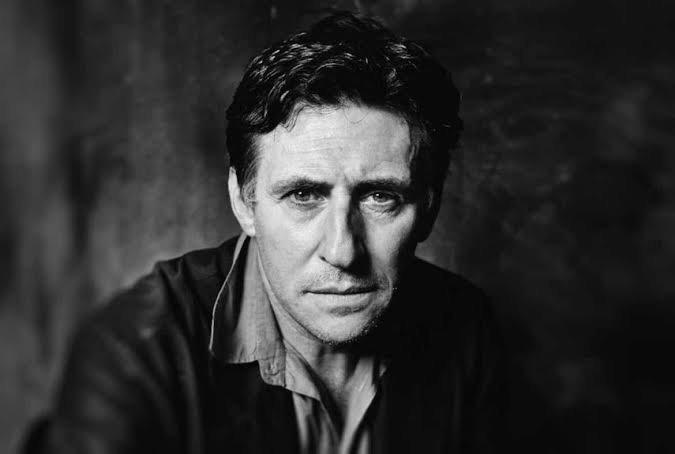
Gabriel Byrne’s professional acting career developed through theatre and Irish television. Working in these environments gave him opportunities to learn the discipline of performance and to understand how different audiences respond to a character.
Theatre requires concentration, preparation, and the ability to sustain a performance in real time. Television, meanwhile, often requires actors to communicate a character’s personality and emotions within shorter scenes. Experience in both environments helped Byrne develop a flexible approach to acting.
He became associated with Ireland’s professional theatre scene and appeared in productions that helped establish his reputation. These early opportunities were important because they allowed him to build experience before taking on the international film roles for which he would later become widely known.
Irish television also provided a valuable starting point. It allowed Byrne to work in front of the camera while remaining connected to the cultural environment in which his career began.
His early progress illustrates an important aspect of acting: recognition often follows years of learning, rehearsing, and taking smaller opportunities seriously. Byrne’s later success grew from this gradual development rather than from one isolated performance.
His Breakthrough in Film
One of Gabriel Byrne’s early major film roles came in John Boorman’s fantasy adventure Excalibur, released in 1981. The film retold the legend of King Arthur and featured a large ensemble cast. Byrne played Uther Pendragon, a significant figure in the story.
The role introduced him to audiences beyond Ireland and demonstrated that he could contribute to a large-scale production involving historical themes, myth, and dramatic conflict. The film’s distinctive visual style and ambitious storytelling also helped it become an enduring title in fantasy cinema.
Excalibur was an important step in Byrne’s film career, but it did not define the limits of his abilities. Instead, it opened the door to projects that required different performances and explored different aspects of human behaviour.
During the years that followed, he continued to appear in films and television productions while developing an international profile. His willingness to move between genres would become one of the most recognizable features of his career.
Memorable Movie Roles
Gabriel Byrne has appeared in many films, but several performances stand out because they demonstrate different aspects of his acting style. His filmography includes major studio productions, critically admired crime films, and stories adapted from literature.
Miller’s Crossing
The Coen brothers’ crime drama Miller’s Crossing, released in 1990, is among Byrne’s best-known films. He plays Tom Reagan, a politically intelligent and emotionally guarded adviser caught in a complicated conflict between rival criminal organizations.
Tom is a character who rarely reveals everything he knows. He makes decisions through calculation, loyalty, and self-interest, often keeping his real intentions hidden from the people around him. Byrne’s restrained performance suits this uncertainty.
Rather than presenting Tom as a straightforward hero, Byrne allows the character’s contradictions to remain visible. His choices create tension because the audience is never entirely certain how much he cares about others or how far he is willing to go.
The film became an important entry in the Coen brothers’ body of work, and Byrne’s central performance remains one of its defining elements.
The Usual Suspects
In The Usual Suspects, the 1995 crime thriller directed by Bryan Singer, Byrne plays Dean Keaton, a former police officer whose past becomes connected to a mysterious criminal investigation.
The film is known for its complex storytelling, unreliable accounts, and carefully constructed suspense. Byrne contributes to that atmosphere through a performance that balances apparent confidence with underlying uncertainty.
His character is part of an ensemble that includes Kevin Spacey, Stephen Baldwin, Benicio del Toro, and Chazz Palminteri. The film’s structure depends on the audience questioning what it sees and hears, making subtle acting choices particularly important.
Although the film is remembered for its larger mystery, Byrne’s performance helps give its central conflict emotional weight. It also strengthened his reputation as an actor capable of working effectively in sophisticated crime stories.
Little Women
Byrne demonstrated a different side of his abilities in Gillian Armstrong’s Little Women, released in 1994. Based on Louisa May Alcott’s classic novel, the film follows the lives, relationships, and ambitions of the March sisters.
Byrne plays Friedrich Bhaer, a thoughtful academic who becomes important to Jo March, portrayed by Winona Ryder. Unlike the guarded figures he played in crime dramas, Bhaer is gentle, reflective, and guided by intellectual curiosity.
The role showed that Byrne could contribute to an emotionally warm literary adaptation without relying on the same qualities that made his crime performances effective. His presence helps ground the romantic and family elements of the story.
The film remains a well-known adaptation of Alcott’s novel and demonstrates the range of material Byrne has explored throughout his career.
The Man in the Iron Mask
In The Man in the Iron Mask, the 1998 historical adventure film, Byrne played D’Artagnan, one of the central figures in a story inspired by Alexandre Dumas’s musketeer characters.
The film combined adventure, political intrigue, and questions of loyalty. Byrne’s role required him to contribute to an established fictional tradition while giving the character a distinct personality.
His performance illustrates how comfortably he could work in large ensemble productions. Instead of limiting himself to contemporary stories or realistic dramas, he continued to explore historical settings and popular literary material.
Other Notable Films
Byrne’s wider filmography includes projects such as Lamb, Into the West, End of Days, Vanity Fair, and Hereditary. These films differ considerably in subject, tone, and style.
Lamb and Into the West connect with Irish storytelling and social experience, while End of Days places him within a supernatural action thriller. Vanity Fair draws on classic literature, and Hereditary explores family relationships through psychological horror.
This variety is central to understanding his career. Byrne has not depended on one successful character type or one genre. Instead, he has repeatedly taken on roles that place him in different dramatic circumstances.
Success on Television
Although Gabriel Byrne became widely recognized through film, television has also played a major role in his career. One of his most significant television performances came in HBO’s psychological drama In Treatment.
The series, which premiered in 2008, follows a psychotherapist as he meets patients during therapy sessions and confronts difficult questions about his own life. Byrne plays Dr. Paul Weston, a therapist whose professional knowledge does not protect him from personal uncertainty.
The role required a different kind of performance from those found in many films. Much of the drama unfolds through conversations in a limited number of locations, meaning the emotional weight depends heavily on dialogue, timing, and subtle changes in expression.
As Paul Weston, Byrne portrays a man who understands the complexities of human behaviour but struggles to apply that understanding to his own circumstances. This tension gives the character depth and makes his professional identity part of the drama rather than simply a background detail.
His performance earned major recognition, including a Golden Globe Award for Best Performance by an Actor in a Television Series – Drama in 2009. The role remains one of the most important milestones in his television career.
In Treatment also introduced Byrne to viewers who may not have followed his earlier films. It showed that his acting strengths translated effectively to a television format built around character development rather than spectacle.
Beyond this series, Byrne has continued to appear in television projects, demonstrating his interest in stories that explore personal relationships, social pressures, and difficult moral choices.
His Work in Theatre
Theatre remains an important part of Gabriel Byrne’s professional background. Before international film recognition, stage work helped him learn the discipline and concentration required of an actor.
A theatrical performance develops differently from a film performance. Actors must sustain a character from beginning to end, respond to fellow performers in real time, and communicate meaning to an audience that may be sitting far from the stage.
These demands encourage careful preparation and an understanding of how a character’s words, movements, and silences contribute to the overall story. Byrne’s career across multiple forms suggests an appreciation for the distinct possibilities of live performance.
His theatre background is also relevant to his work in literary adaptations. Stage experience can help actors interpret dialogue, understand dramatic structure, and identify the emotional purpose behind a scene.
Rather than treating theatre as merely an early stage of his career, it is more useful to see it as part of the broader artistic foundation that supports his work on screen.
His Acting Style
Gabriel Byrne’s acting style is often marked by restraint, observation, and an ability to communicate more than a character openly expresses. He frequently portrays people whose thoughts and intentions are difficult to read, allowing tension to emerge through small details.
In Miller’s Crossing, for example, his controlled performance supports a character who survives through careful judgement and strategic silence. In In Treatment, the same restraint becomes a way to communicate professional confidence alongside personal vulnerability.
This flexibility is one reason his performances can feel distinct even when the characters share certain qualities. A quiet character in a crime drama serves a different purpose from a quiet character in a family story, and Byrne adjusts his approach to suit the surrounding material.
He also demonstrates an ability to make dialogue feel considered rather than mechanical. His characters often seem to be weighing their words, which can create tension even in conversations that appear ordinary on the surface.
Another strength is his comfort with ambiguity. Byrne does not always make a character’s morality or motivations easy to categorize. Instead, he allows viewers to consider conflicting explanations for a person’s behaviour.
That quality makes his work particularly suited to psychological drama, crime stories, and films that depend on uncertainty. It also helps explain why audiences and critics continue to revisit several of his best-known performances.
Awards and Recognition
Throughout his career, Gabriel Byrne has received recognition for his contributions to film and television. One of his most widely noted achievements was winning the Golden Globe for his performance in In Treatment in 2009.
The award recognized the depth and complexity of his portrayal of Paul Weston, a character whose professional role and private struggles are closely connected. The performance also demonstrated how a series built around conversation could sustain compelling television through careful acting.
Byrne has received other award nominations and honours during his career. His work has been recognized across different forms of entertainment, reflecting the variety of projects in which he has participated.
Awards are one way to measure an actor’s professional impact, but they do not tell the entire story. Some performances become influential because they shape an audience’s understanding of a character or remain memorable long after a film’s release.
In Byrne’s case, his recognition is accompanied by a substantial body of work spanning several decades. His career demonstrates that an actor’s contribution can be measured through consistency, range, and the ability to remain creatively active across changing entertainment trends.
Personal Life and Family
Gabriel Byrne’s personal life has received public attention, although he has also maintained boundaries between his private experiences and professional career.
He was married to American actress Ellen Barkin from 1988 until their divorce in 1999. They have two children together, Jack and Romy. His marriage to Barkin connected him with another prominent figure in the entertainment industry, but his professional identity has remained distinct through his own work in film, television, and theatre.
Byrne later married Hannah Beth King in 2014. He has generally kept much of his family life away from the centre of his public image, and details about his relationships should be considered in the context of what has been publicly confirmed.
His Irish background remains an important part of his identity. Although his work has taken him into international productions and brought him audiences around the world, his connection to Ireland is a recurring element in discussions of his life and career.
For readers interested in his biography, it is important to recognize that an actor’s personal relationships are only one part of a much broader story. Byrne’s professional achievements, creative interests, and reflections on life offer a fuller understanding of his work.
Gabriel Byrne as a Writer
Acting is only one aspect of Gabriel Byrne’s creative life. He has also explored writing, giving readers a more personal view of the experiences and reflections behind his public career.
His memoir, Walking with Ghosts, was published in 2020. In it, Byrne reflects on his childhood in Dublin, family experiences, personal memories, and journey into the performing arts.
The memoir offers a different perspective from a conventional account of film credits and awards. Rather than simply listing productions, it explores the memories and experiences that shaped the person behind the performances.
The title suggests the continuing presence of the past in everyday life. Memories of family, childhood, and earlier versions of oneself can influence how a person understands the present, even after circumstances have changed.
Byrne’s writing also provides a connection between his personal history and the themes that appear throughout his career. His interest in human complexity is not limited to the characters he plays; it also appears in his reflections on memory, identity, and experience.
For readers who know him primarily through his films, Walking with Ghosts offers another way to appreciate his creative voice.
His Work as a Producer
Gabriel Byrne has also worked as a producer, extending his involvement in storytelling beyond acting. Producing can involve helping a project develop, supporting creative decisions, and contributing to the process that brings a story to the screen.
The responsibilities of a producer differ from those of a performer. While an actor concentrates on interpreting a particular role, producing involves a broader view of the project and the practical decisions that shape its development.
Byrne’s work across acting, writing, and producing reflects a career that has not been confined to performing in front of a camera. His creative interests extend to different stages of the storytelling process.
These activities are worth including in a biography because they offer a more complete picture of his professional life. They also demonstrate that an established actor can continue exploring new creative responsibilities rather than remaining tied to a single role within the industry.
His Influence on Irish Cinema
Gabriel Byrne’s international career forms part of the wider story of Irish actors working successfully across national borders. Irish performers have long contributed to theatre, television, and cinema, bringing distinctive backgrounds and experiences to international productions.
Byrne’s career connects Irish storytelling traditions with a broad range of global projects. He has appeared in films based on European literary traditions, American crime stories, historical adventures, and contemporary psychological dramas.
His success does not mean that he represents every aspect of Irish cinema. Rather, it demonstrates one way an actor with Irish roots can build an international career while maintaining a connection to the culture in which he grew up.
His work has also helped introduce viewers to different forms of Irish storytelling. Projects such as Lamb and Into the West offer a different perspective from international crime films or Hollywood productions, reflecting the diversity of material available to him.
The lasting importance of Byrne’s career lies partly in this ability to move between cultural settings without losing his individuality as a performer.
What Makes His Legacy Enduring?
Gabriel Byrne’s legacy rests on more than a handful of famous films. It comes from the range of characters he has portrayed, the variety of creative environments in which he has worked, and the consistency of his career over several decades.
His role in Miller’s Crossing remains notable for its subtle portrayal of loyalty, calculation, and moral uncertainty. The Usual Suspects demonstrates his contribution to a carefully constructed crime thriller, while Little Women reveals his ability to work within a literary and romantic story.
His performance in In Treatment is especially important because it brought his skills to a format that depends on sustained emotional detail. The series showed that compelling television does not always require elaborate settings or constant action; a strong character and thoughtful performance can carry an entire episode.
His memoir adds another dimension to his legacy. Through writing, Byrne has shared personal reflections that go beyond the roles audiences have watched on screen.
Taken together, these achievements reveal an actor whose career has been defined by variety rather than a single signature role. His performances continue to offer viewers different ways to understand his abilities, from tightly controlled crime dramas to intimate character studies.
Gabriel Byrne Today
Gabriel Byrne’s career has developed across many decades, and his work continues to be of interest to audiences who follow Irish actors and international cinema.
When discussing his current activities, it is important to distinguish confirmed projects from speculation. Film and television schedules change, and announcements about future appearances may not always lead to completed productions.
His established body of work nevertheless provides plenty for audiences to explore. Viewers can revisit his early performances in Excalibur, examine his portrayal of Tom Reagan in Miller’s Crossing, or watch In Treatment to see how he approaches a character in a more intimate television setting.
Readers interested in his life beyond acting can also explore Walking with Ghosts, which offers insight into his memories and personal reflections.
Rather than judging his career solely by how frequently his name appears in current entertainment news, it is useful to consider the lasting value of the performances and writing he has already contributed.
Conclusion
Gabriel Byrne’s life and career reflect the journey of an actor who has built an international reputation without losing sight of his Irish roots. From his early experiences in Dublin to major film roles and award-winning television work, he has shown an ability to adapt to different genres, characters, and storytelling styles.
His performances in Excalibur, Miller’s Crossing, The Usual Suspects, and Little Women demonstrate his versatility, while In Treatment remains a major achievement in television drama. His theatre background, producing work, and memoir, Walking with Ghosts, reveal a creative life that extends well beyond acting alone.
What makes Byrne memorable is his approach to character. He often brings quiet intelligence and emotional complexity to the people he portrays, allowing audiences to discover meaning through small choices rather than obvious gestures.
His career also illustrates the value of sustained artistic development. Instead of relying on one genre or repeating a familiar formula, he has continued to explore different stories and creative opportunities.
For anyone interested in Irish cinema, respected character actors, or the craft of performance, Gabriel Byrne offers a career worth exploring. His lasting legacy is found not in one single role, but in the depth, variety, and thoughtfulness of the work he has contributed to film, television, theatre, and literature.
Frequently Asked Questions About Gabriel Byrne
1. Who is Gabriel Byrne?
Gabriel Byrne is an Irish actor, writer, and producer known for films such as The Usual Suspects, Miller’s Crossing, and Little Women.
2. How old is Gabriel Byrne?
Gabriel Byrne was born on May 12, 1950. He is 76 years old as of October 2026.
3. What are Gabriel Byrne’s most famous movies?
Some of his best-known films include Excalibur, Miller’s Crossing, The Usual Suspects, Little Women, and Hereditary.
4. Did Gabriel Byrne win a Golden Globe Award?
Yes. He won the Golden Globe for Best Actor in a Television Series – Drama in 2009 for his performance in In Treatment.
5. Is Gabriel Byrne married?
Gabriel Byrne married actress Ellen Barkin in 1988, and they divorced in 1999. He later married Hannah Beth King in 2014.