



The Joker is one of the most recognizable villains in comic book history. Known for his unpredictable behavior, unsettling smile, and complicated rivalry with Batman, the character has been portrayed by several talented actors over the years. Each performance has brought something different to the screen, from dark humor to psychological depth. Among these interpretations, Jared Leto Joker stands out for his modern appearance, distinctive personality, and the debate surrounding his performance.
Jared Leto introduced his version of the Joker in Suicide Squad (2016), a DC film directed by David Ayer. His character featured green hair, visible tattoos, flashy jewelry, and a contemporary criminal style that differed from many earlier portrayals. The performance attracted considerable attention before the film’s release, although the final result received mixed reactions from critics and audiences.
Leto later returned as the Joker in Zack Snyder’s Justice League (2021), giving viewers another opportunity to see his interpretation of the iconic villain.
But what made his Joker different? How did the character fit into the DC film universe, and why did the performance become such a debated topic? Understanding the story behind this portrayal helps explain its place in modern superhero cinema.
BIO
| Label | Information |
|---|---|
| Character Name | The Joker |
| Actor | Jared Leto |
| First Appearance | Suicide Squad (2016) |
| Character Type | DC Comics Supervillain |
| Film Universe | DC Extended Universe |
| Director | David Ayer |
| Character Origin | DC Comics |
| Hair Color | Green |
| Distinctive Features | Tattoos, metallic teeth, and jewelry |
| Main Rival | Batman |
| Key Relationship | Harley Quinn |
| Return Appearance | Zack Snyder’s Justice League (2021) |
| Character Style | Modern, unpredictable criminal |
Who Is Jared Leto’s Joker?
The Joker originated in DC Comics as Batman’s dangerous and unpredictable enemy. Across different comic books, television shows, and films, he has appeared in many forms. Some versions emphasize dark comedy, while others focus on psychological manipulation, criminal ambition, or a desire to create chaos.
Jared Leto’s interpretation was developed for the DC Extended Universe, the interconnected series of films that included Man of Steel, Batman v Superman: Dawn of Justice, and Suicide Squad. Rather than presenting a traditional clown-themed criminal, the filmmakers gave Leto’s Joker a contemporary appearance influenced by flashy fashion, tattoos, and an underworld lifestyle.
This version is particularly notable because he appears in a story centered on a group of imprisoned supervillains rather than a standalone Joker film. His role is connected closely to Harley Quinn, played by Margot Robbie, and the wider criminal world surrounding the film’s characters.
Leto approached the role as a distinct interpretation rather than simply repeating what previous actors had done. That decision gave the character a different visual identity, although it also created expectations that the finished film did not satisfy for every viewer.
Jared Leto Joker in Suicide Squad (2016)
Suicide Squad introduced audiences to a group of dangerous criminals recruited by government official Amanda Waller, played by Viola Davis. The team includes characters such as Deadshot, Harley Quinn, Captain Boomerang, and Killer Croc. They are brought together for a dangerous mission that the government does not want ordinary military forces to handle.
Although the film’s main story focuses on this team, the Joker remains an important presence. His relationship with Harley Quinn provides part of the emotional background to her character, while his criminal activities connect him to the wider world of Gotham City.
The movie does not give the Joker the same central role that a standalone film might provide. Instead, he appears in selected sequences that reveal his personality, his relationship with Harley, and his determination to pursue his own goals.
This limited role became one of the main talking points after the film’s release. The marketing had created substantial anticipation around Leto’s transformation, but audiences ultimately saw less of his character than many had expected.
The result was a performance that generated discussion without giving viewers an extensive opportunity to understand every aspect of this version of the Joker.
What Makes Jared Leto’s Joker Different?
A Modern Appearance
One of the most noticeable features of the Jared Leto Joker is his appearance. Earlier screen versions often used a more traditional clown-inspired design, with bright clothing, distinctive makeup, and a theatrical smile.
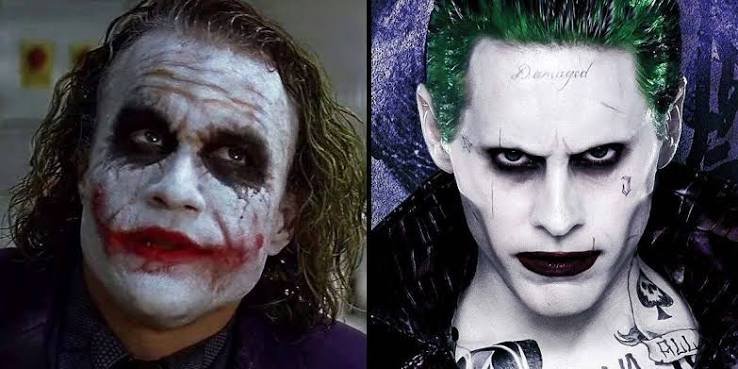
Leto’s version took a different direction. His green hair, pale face, metallic teeth, tattoos, and jewelry created a contemporary look that suggested a criminal who treated his appearance as part of his public identity.
The tattoos were particularly memorable because they became an important part of the character’s visual presentation. They helped distinguish him from previous cinematic versions and reflected the filmmakers’ attempt to create a Joker suited to a modern crime-focused setting.
However, the design divided viewers. Some appreciated the bold departure from tradition, while others preferred a less elaborate appearance that stayed closer to the character’s familiar comic-book image.
Both reactions demonstrate how strongly audiences connect a recognizable character’s appearance with their expectations for the story.
His Personality and Screen Presence
Leto’s Joker is presented as theatrical, unpredictable, and confident. His behavior often feels deliberately exaggerated, and he uses his appearance and mannerisms to make an impression on the people around him.
Rather than relying entirely on the traditional clown persona, this interpretation combines elements of a modern crime boss with the Joker’s familiar love of disorder. His flashy clothing and jewelry reinforce the idea that he enjoys displaying power and attracting attention.
The performance also uses pauses, expressions, and unusual vocal choices to create an unsettling atmosphere. The character rarely feels ordinary, even when he is not directly involved in the film’s main action.
However, a strong visual identity does not automatically guarantee a fully developed character. Because the theatrical version of Suicide Squad gives him limited screen time, viewers receive relatively little information about his broader motivations and personal history.
This makes his portrayal interesting to discuss, but it also explains why some audiences felt that the character needed more room to develop.
A Different Interpretation of an Iconic Villain
Every actor who plays the Joker faces a difficult challenge. The character is already famous, and audiences bring their own expectations based on comics, animation, and earlier films.
Jared Leto’s approach emphasized a modern criminal identity and an intense visual style. It was noticeably different from the more traditional gangster-clown interpretation associated with Jack Nicholson and the psychologically intense portrayal delivered by Heath Ledger.
Instead of trying to reproduce those performances, Leto presented a version with its own look and behavior. Whether viewers enjoyed the result depended largely on what they wanted from the character.
The debate surrounding his performance illustrates an important point about adaptations: a familiar fictional character can be reimagined in many ways, but a bold new direction does not appeal to everyone.
How Jared Leto Prepared for the Joker Role
Preparing to play an established character involves more than learning dialogue. An actor must consider the character’s personality, physical behavior, emotional reactions, and relationship with the fictional world around them.
Leto developed his Joker with a distinctive voice, expressions, movements, and mannerisms. These choices helped establish a recognizable screen presence, even though the film provided limited time to explore his character in depth.
Reports surrounding the production also drew attention to his unconventional approach to acting and his efforts to remain immersed in the role. Some stories about his interactions with cast members became controversial, and accounts of these incidents should be distinguished from the performance itself.
What matters most when evaluating the character is what appears on screen. The makeup, costumes, direction, editing, and acting all contributed to the final result. No single element created the character independently.
The film’s visual team also played an important role. Hair, makeup, costume design, and the placement of tattoos helped transform Leto into a version of the Joker that audiences could recognize immediately.
His preparation therefore formed only one part of a larger creative process involving actors, designers, writers, editors, and the director.
Jared Leto’s Joker and Harley Quinn
The relationship between the Joker and Harley Quinn is an important part of Suicide Squad. Harley, originally known as Dr. Harleen Quinzel, becomes closely connected to the Joker before developing her own identity as a criminal.
In the film, their relationship helps explain some of Harley’s past decisions and provides a personal motivation for several of her actions. The Joker’s interest in her also creates a connection between his criminal activities and the main storyline.
Margot Robbie’s performance gave Harley a personality that could be entertaining, unpredictable, and independent of the Joker. Although their characters are connected, Harley is not simply a supporting figure without her own motivations.
Their relationship is also portrayed as troubling and unequal. The Joker’s behavior frequently reflects manipulation and control rather than a healthy partnership. This distinction matters because dramatic films can depict harmful relationships without presenting them as positive examples.
From a storytelling perspective, the relationship gives audiences insight into the characters’ shared history. However, the limited screen time means that many aspects of their connection are suggested rather than explored fully.
For viewers interested in the Joker’s personality, these scenes provide useful clues about how he interacts with people close to him and how he uses relationships within his criminal world.
Why Jared Leto’s Joker Divided Fans
The reaction to Leto’s performance was mixed. Some viewers appreciated the character’s unusual appearance and the actor’s willingness to take a different approach. Others found the design distracting or felt that the performance did not provide enough depth.
The Debate Over His Appearance
The tattoos, metallic teeth, green hair, and modern styling became some of the most discussed features of the film. They gave this Joker a clear identity, but they also moved him away from the more familiar clown-inspired design.
For some fans, that change made the character feel fresh. For others, the look seemed too far removed from what they expected.
Neither response fully explains the performance on its own. Costume design influences an audience’s first impression, but characterization, dialogue, storytelling, and screen time also affect how a role is received.
Limited Screen Time
The amount of time devoted to the Joker was another significant issue. Although the character featured prominently in promotional material, his role in the theatrical release was relatively brief.
This created a gap between audience expectations and the finished film. Many viewers wanted to understand more about his history, motivations, and relationship with Harley Quinn.
Leto himself commented publicly on the number of scenes that did not appear in the final version. The discussion about removed footage became part of the wider conversation surrounding the film.
A longer role might have offered more opportunities to develop the character, although additional scenes alone would not necessarily have resolved every criticism.
Expectations and Comparisons
The Joker had already been portrayed successfully by several actors. Heath Ledger’s performance in The Dark Knight was particularly influential, while Jack Nicholson’s interpretation in Batman had established another memorable cinematic version.
Comparisons were therefore almost unavoidable when Leto entered the role.
However, judging every portrayal by the same standards can overlook the fact that different films have different goals. Some versions focus on psychological realism, while others emphasize theatrical villainy or comic-book spectacle.
Leto’s Joker belongs to a film that balances a large ensemble of characters, action sequences, and interconnected storylines. His limited presence makes a direct comparison more complicated because audiences see less of his character than they do in films centered on the Joker.
Ultimately, the divided reaction reflects both the choices made in the performance and the way the character was presented in the finished film.
Jared Leto Returns in Zack Snyder’s Justice League
In 2021, Jared Leto returned as the Joker in Zack Snyder’s Justice League. The release offered a new opportunity to see his interpretation in a different context.
Unlike Suicide Squad, this film focuses on Batman, Wonder Woman, Superman, and other heroes as they confront a major threat. Leto’s Joker appears in a brief sequence set in a devastated future, where Batman encounters him under unusual circumstances.
The scene was not part of the original 2017 theatrical release of Justice League. It was added for Snyder’s version, providing an interaction between Leto’s Joker and Ben Affleck’s Batman that audiences had not previously seen in the same way.
A Different Look and Atmosphere
The Joker’s appearance in Zack Snyder’s Justice League differs noticeably from his look in Suicide Squad. The new design features a more disheveled presentation and a darker atmosphere that suits the sequence’s setting.
This change suggests a character shaped by different circumstances. Rather than relying on the flashy criminal image seen in the earlier film, the scene presents a more unsettling figure in a bleak environment.
The change also demonstrates how costume and makeup can communicate a character’s situation without requiring a lengthy explanation.
The Joker and Batman Face Each Other
The interaction between Leto’s Joker and Affleck’s Batman is one of the most notable aspects of the scene. Their conversation allows the Joker to challenge Batman psychologically, creating tension through dialogue rather than a conventional fight.
Their rivalry has long been central to DC storytelling. Batman represents a commitment to fighting crime, while the Joker attempts to undermine the principles and emotional stability of those who oppose him.
The scene brings these contrasting personalities together in a way that had not been fully explored in the earlier films featuring these versions of the characters.
For fans of Leto’s portrayal, the return offered another perspective on his interpretation. For others, it was an interesting additional chapter in a role that had received relatively little development in 2016.
Jared Leto’s Joker Compared With Other Film Versions
Comparing different versions of the Joker helps explain why Leto’s performance feels distinct. Each interpretation reflects the creative priorities of its film and the choices made by its actor and director.
Jared Leto vs. Heath Ledger
Heath Ledger played the Joker in The Dark Knight (2008), creating a character known for psychological manipulation, unsettling humor, and carefully constructed chaos.
Ledger’s performance emphasizes unpredictability and the ability to unsettle people through conversation and carefully planned actions. His Joker feels like a threat who challenges the moral choices of everyone around him.
Leto’s interpretation takes a more visually flamboyant approach. The tattoos, jewelry, and modern criminal styling make his character appear more connected to a contemporary underworld.
The two performances also differ in how much space the films give them. Ledger’s Joker is central to the conflict in The Dark Knight, while Leto’s character appears in a supporting role in Suicide Squad.
As a result, the contrast is not simply a matter of acting style. It also reflects different scripts, storytelling structures, and opportunities for character development.
Jared Leto vs. Joaquin Phoenix
Joaquin Phoenix portrayed the Joker in the 2019 film Joker, which tells a separate story about Arthur Fleck. Unlike the interconnected DC film universe in which Leto appears, Phoenix’s film explores the character through a standalone psychological drama.
Phoenix’s performance focuses on Arthur’s personal circumstances, social isolation, and gradual transformation. The film spends considerable time examining his experiences and the world around him.
Leto’s Joker, by contrast, is already established as a criminal figure when audiences meet him. His appearance in Suicide Squad does not provide the same kind of personal origin story.
The difference is important because the films are designed to tell different stories. Phoenix’s portrayal explores how a character develops, while Leto’s introduces an existing villain whose history is largely left outside the main narrative.
Neither version needs to be treated as the definitive interpretation for every viewer. Each offers a different perspective on a character who has remained adaptable across decades of storytelling.
The Legacy of Jared Leto’s Joker
Jared Leto’s Joker remains a notable example of how difficult it can be to reinvent a famous fictional character. His appearance immediately distinguished him from previous versions, and his casting generated substantial interest before audiences saw the finished film.
The mixed reception also demonstrates that a striking design is only one part of a successful screen character. Viewers often want a compelling personality, meaningful dialogue, and enough time to understand a villain’s motivations.
Leto’s return in Zack Snyder’s Justice League added another dimension to the role. The different appearance and setting offered a new interpretation of the character’s circumstances while providing a memorable interaction with Batman.
Although opinions about the performance continue to differ, the portrayal remains part of the broader conversation about DC’s cinematic history.
Its significance lies not in replacing earlier versions but in showing how the Joker can be adapted to fit different creative visions. The character’s recognizable identity gives filmmakers room to experiment, but each new approach must also work as part of a convincing story.
For viewers exploring the many screen versions of the Joker, Leto’s performance offers an interesting case study in visual reinvention, audience expectations, and the importance of storytelling.
Frequently Asked Questions
Which Movie Did Jared Leto Play the Joker In?
Jared Leto first played the Joker in Suicide Squad (2016), directed by David Ayer. He later reprised the role in Zack Snyder’s Justice League (2021), appearing in a scene with Ben Affleck’s Batman.
Why Does Jared Leto’s Joker Have Tattoos?
The tattoos were part of the filmmakers’ effort to give the character a modern, distinctive appearance. Combined with his green hair, jewelry, and metallic teeth, they helped separate this interpretation from earlier cinematic versions.
Why Was Jared Leto’s Joker Controversial?
The performance received mixed reactions because of its unusual appearance, limited screen time, and differences from previous versions. Some viewers welcomed the new direction, while others felt the film did not develop the character enough.
Did Jared Leto Return as the Joker After Suicide Squad?
Yes. Leto returned in Zack Snyder’s Justice League in 2021. His appearance offered a different look at the character and included a conversation with Batman in a bleak future setting.
How Is Jared Leto’s Joker Different From Heath Ledger’s?
Leto’s Joker has a modern, gangster-inspired appearance and a more flamboyant visual style. Ledger’s version emphasizes psychological manipulation and calculated chaos in The Dark Knight. Their films also give the characters different amounts of screen time and narrative importance.
Conclusion
The story of Jared Leto Joker is about more than a memorable costume or an unusual performance. His portrayal represents an attempt to reinterpret one of DC’s most famous villains for a contemporary cinematic universe.
From his introduction in Suicide Squad to his return in Zack Snyder’s Justice League, Leto brought a distinctive appearance and acting style to the role. The performance attracted criticism as well as interest, particularly because the 2016 film gave the character limited time to develop.
Comparisons with Heath Ledger and Joaquin Phoenix reveal how differently filmmakers can approach the same fictional villain. Each version reflects its own story, creative direction, and interpretation of the Joker’s personality.
Ultimately, Jared Leto’s Joker remains a distinctive chapter in the character’s cinematic history. Whether viewers appreciate his modern design or prefer another interpretation, his portrayal demonstrates the challenges and possibilities involved in bringing an iconic comic-book character to the screen.