






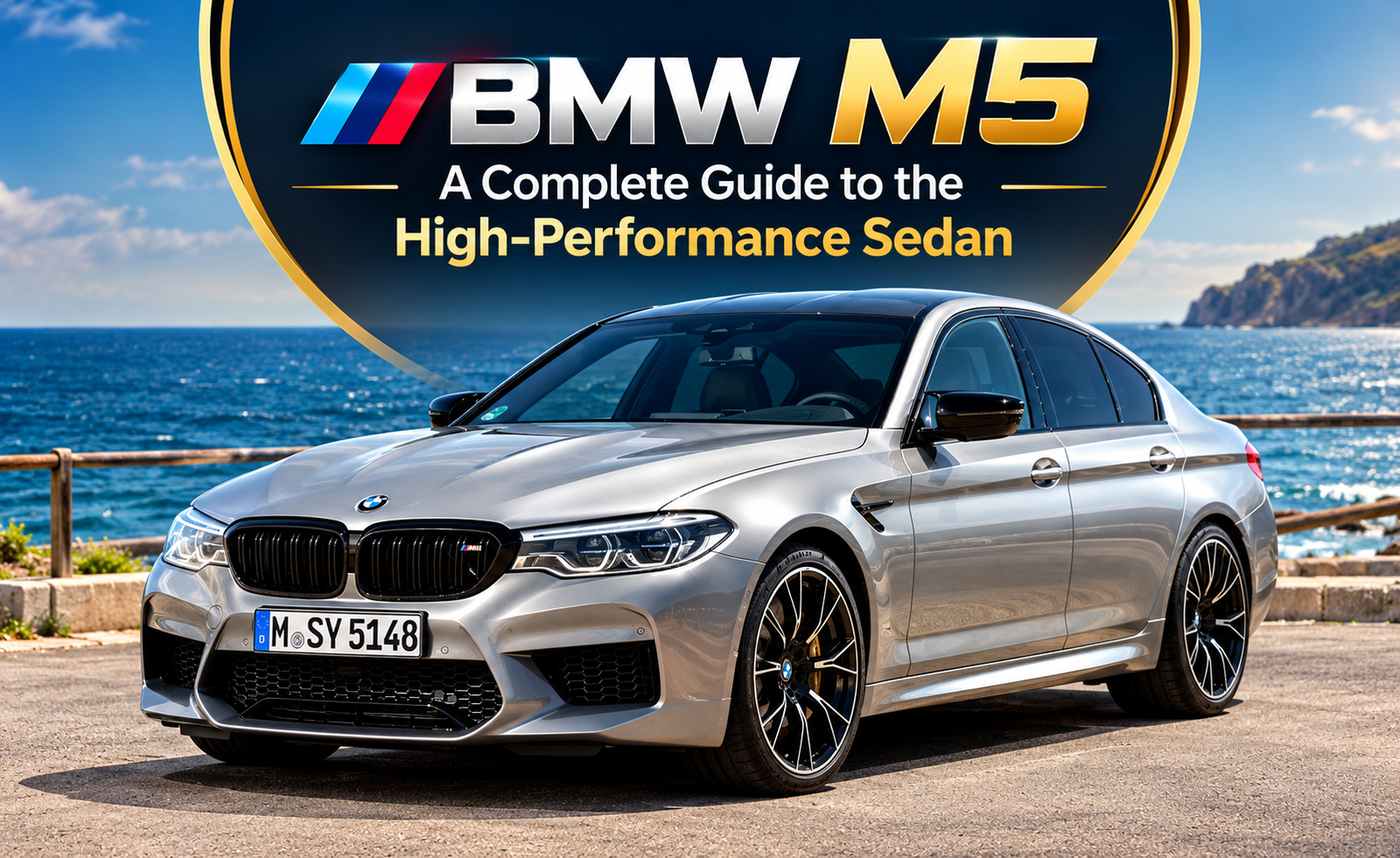
The BMW M5 has spent decades combining the comfort of a luxury sedan with the performance expected from BMW’s M division. It has evolved considerably since its introduction, but the basic idea has remained familiar: create a four-door car that can handle everyday driving while delivering serious performance when the driver wants more.
The latest M5 takes that formula in a new direction. The current generation uses a plug-in hybrid powertrain, combining a twin-turbocharged V8 with an electric motor. BMW lists a system output of 717 horsepower and 738 lb-ft of torque, along with standard all-wheel drive and an eight-speed automatic transmission.
That combination makes the BMW M5 very different from earlier generations. It is more powerful and more technologically advanced, but it is also considerably heavier. This guide looks at the M5’s design, performance, interior, technology, practicality, ownership considerations, and the changes that define the newest generation.
BIO
| Label | Information |
|---|---|
| Model | BMW M5 |
| Brand | BMW |
| Type | High-performance luxury sedan |
| M Division | BMW M |
| Engine | 4.4-liter twin-turbo V8 |
| Power | 717 horsepower |
| Torque | 738 lb-ft |
| Powertrain | Plug-in hybrid |
| Transmission | 8-speed automatic |
| Drivetrain | All-wheel drive |
| Seating | 5 passengers |
| Body Style | 4-door sedan |
| Main Focus | Performance, luxury, and daily comfort |
What Is the BMW M5?
The BMW M5 is the high-performance version of the BMW 5 Series sedan. While a standard 5 Series focuses primarily on luxury, comfort, technology, and everyday transportation, the M5 adds a much more performance-oriented chassis and powertrain.
The model has a long history within BMW’s M lineup. Earlier generations used naturally aspirated V8s, V10s, and later turbocharged engines. The previous generation used a twin-turbocharged V8, while the newest generation adds an electric motor and plug-in hybrid battery system.
This latest change is one of the biggest developments in the M5’s history. BMW has moved from a conventional high-performance gasoline powertrain to a system that combines combustion and electric power. The result is a sedan with substantially more total system output while retaining the character of a V8-powered M car.
The M5 also remains practical in a way that many dedicated performance cars are not. It has four doors, five seats, a useful trunk, and a cabin designed for long-distance travel.
BMW M5 Design and Exterior
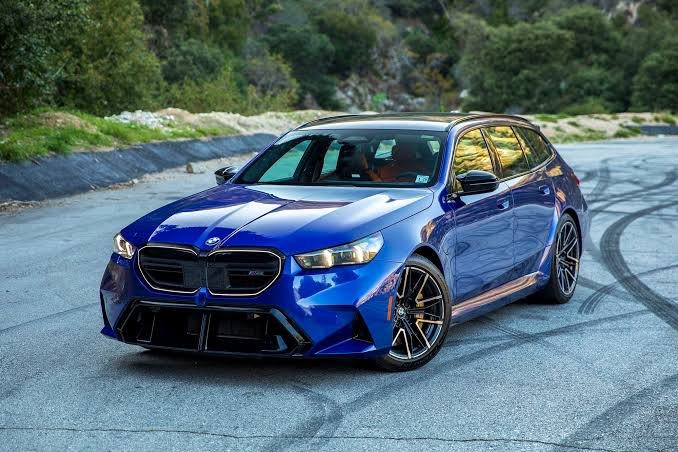
The latest BMW M5 has a much more substantial presence than the ordinary 5 Series. Its wider stance, larger wheels, sculpted bodywork, and M-specific details make it immediately recognizable as the performance version.
The design is not simply about appearance. Several of the exterior changes support the car’s wider tires, cooling requirements, and performance hardware. The broader body provides space for the larger wheels and tires, while the aggressive front design helps give the M5 its distinctive character.
The current M5 is also physically larger than earlier generations. According to Car and Driver’s testing data, it measures about 200.6 inches long, 77.6 inches wide, and 59.4 inches tall, with a 118.3-inch wheelbase.
That size contributes to its spacious cabin and stable high-speed character, although it also means the car does not feel as compact as some older M5 generations.
BMW M5 Engine and Performance
The heart of the current M5 is a 4.4-liter twin-turbocharged V8 working with an electric motor. BMW lists the gasoline engine at 577 horsepower, while the electric motor adds another 194 horsepower. The combined system produces 717 horsepower and 738 lb-ft of torque.
An eight-speed automatic transmission sends the power through an all-wheel-drive system. This setup gives the M5 strong traction while allowing BMW to program different driving characteristics through its various performance settings.
BMW quotes a 0-to-60-mph time of 3.4 seconds for the current M5 in its U.S. technical information. Independent testing by Car and Driver recorded an even quicker 3.0-second run under test conditions.
The difference between manufacturer and independent test figures is normal because acceleration can vary with tires, surface conditions, temperature, equipment, testing methods, and vehicle configuration.
Top speed also depends on equipment. BMW’s standard technical information lists an electronically limited 155 mph, while the available performance package can raise the limit to 190 mph.
BMW M5 Hybrid Technology
Perhaps the biggest story surrounding the modern M5 is its plug-in hybrid system.
The M5 combines its V8 engine with an electric motor integrated into the transmission. A roughly 15-kWh lithium-ion battery supplies energy to the electric motor. BMW’s system allows the car to operate using electric power alone for short distances, while the engine and motor can also work together when maximum performance is required.
The electric system is not simply there to improve fuel economy. It also provides immediate torque and helps fill in the power delivery between engine responses. This gives the M5 a strong and consistent feeling of acceleration.
The EPA-rated electric driving range is around 25 miles, although actual range can vary with temperature, speed, driving style, road conditions, and other factors.
Charging is another part of the new ownership experience. BMW lists Level 2 charging capability, while the exact charging experience depends on the charging equipment and electrical setup being used.
BMW M5 Driving Experience
The driving experience is where the M5’s engineering becomes most noticeable.
In everyday driving, the car can behave like a quiet luxury sedan. The adaptive suspension, comfortable seats, substantial sound insulation, and electric assistance make it suitable for commuting and longer journeys.
Switch into more aggressive settings, however, and the character changes. The throttle response becomes sharper, the transmission holds gears longer, and the chassis is prepared for more demanding driving.
The M5 also uses adaptive dampers and rear-wheel steering, technologies designed to help balance high-speed stability with maneuverability. Car and Driver noted that the rear wheels can steer by up to 1.5 degrees to improve stability or reduce the effective turning circle.
The biggest change compared with older M5 models is weight. BMW lists a curb weight around 5,390 pounds, while independent testing has recorded a somewhat lower figure depending on equipment.
That extra mass is partly related to the hybrid system and battery. Car and Driver reported that the hybrid system itself accounts for a substantial amount of the added weight compared with the previous generation.
The result is a car that emphasizes enormous power, grip, stability, and refinement rather than the lightweight feel associated with some older performance sedans.
BMW M5 Interior and Comfort
Inside, the BMW M5 shares much of its basic cabin architecture with the latest 5 Series, but BMW adds several M-specific details.
The steering wheel, seats, displays, trim, and controls receive performance-oriented touches. Supportive sport seats help keep occupants secure, while premium materials and available luxury equipment maintain the character expected from a high-end BMW.
The cabin is designed around both the driver and passengers. The front seats provide a clear view of the digital displays and controls, while the rear seats offer enough room for regular passenger use.
This balance is an important part of the M5 formula. It is not a stripped-down track car. Instead, it is a luxury sedan that happens to have a very powerful performance system underneath it.
The current M5 also provides a five-seat configuration and approximately 17 cubic feet of trunk space, according to published specifications.
BMW M5 Technology and Features
Technology is a major part of the modern M5 experience.
The cabin uses large digital displays and BMW’s latest infotainment interface. Drivers can access navigation, vehicle settings, media, performance information, and other functions through the central screen and physical controls.
M-specific menus allow drivers to adjust characteristics such as powertrain response, steering, suspension, braking, and traction behavior. This level of customization means the car can be configured for relaxed driving or more focused performance.
The M5 also offers a wide range of driver-assistance technology. Features can include lane-departure warning, lane-keeping assistance, adaptive cruise control, parking assistance, and other systems depending on the market and selected equipment.
For enthusiasts, BMW also includes performance-focused tools such as M Traction Control, M Drive settings, and other systems intended to help drivers understand and adjust the vehicle’s behavior.
BMW M5 Practicality
Despite its performance credentials, the M5 remains a practical sedan.
The four-door layout makes it easier to carry passengers than a traditional sports car. The rear seats provide useful space, while the trunk gives owners room for everyday luggage and shopping.
Its ability to combine comfort with performance is one of the reasons the M5 has remained an important model for BMW. A driver can use it for commuting during the week and still have access to serious performance when conditions allow.
The plug-in hybrid system adds another practical dimension. For short trips, electric driving can reduce the need to use the gasoline engine, provided the battery has sufficient charge.
At the same time, the M5 remains a large and heavy performance sedan. Its dimensions and weight should be considered by anyone who prefers smaller, lighter cars.
BMW M5 Safety Features
The M5 includes modern safety and driver-assistance technologies designed to support the driver.
Depending on configuration and market, available systems can include lane-keeping assistance, adaptive cruise control, parking assistance, and other active safety features.
The car also benefits from its advanced braking, stability, traction, and all-wheel-drive systems. These technologies work together to help the driver maintain control under different road conditions.
Safety equipment can change between model years and markets, so buyers should check the exact specification of the vehicle they are considering rather than assuming every feature is standard everywhere.
BMW M5 Price and Ownership Costs
The BMW M5 sits near the top of the 5 Series range, so its purchase price reflects its performance hardware, luxury equipment, and complex powertrain.
For reference, Car and Driver listed a U.S. base price of roughly $123,000 for the 2025 model, while a heavily optioned test car exceeded $146,000. Prices and equipment can change by model year and market.
Purchase price is only part of the ownership equation. Performance tires, brakes, insurance, servicing, and fuel can all contribute to the cost of owning a high-performance luxury sedan.
The plug-in hybrid system may provide fuel-saving opportunities on short electric trips, but the M5 remains a powerful V8 performance car. Owners should therefore expect running costs that are different from those of a regular family sedan.
BMW M5 Reliability and Maintenance
Like other high-performance vehicles, the M5 benefits from careful maintenance.
The twin-turbocharged V8, automatic transmission, advanced cooling systems, all-wheel-drive hardware, adaptive suspension, braking system, and hybrid components are significantly more complex than those found in an ordinary sedan.
Regular servicing is therefore important. Following BMW’s recommended maintenance schedule and using appropriate replacement parts and fluids can help keep the vehicle operating as intended.
Tires and brakes deserve particular attention because performance driving can increase wear. Buyers considering a used M5 should also look at its service history, previous ownership, mileage, condition, and equipment.
BMW’s published warranty and maintenance coverage vary by market. For the U.S. 2025 model, Car and Driver reported a four-year/50,000-mile limited warranty and three years/36,000 miles of complimentary scheduled maintenance.
BMW M5 Compared With Other Performance Sedans
The BMW M5 competes in a segment that includes other powerful luxury performance cars from Mercedes-Benz, Audi, Cadillac, and other manufacturers.
Each approaches the performance-sedan formula differently. Some emphasize engine character, some focus heavily on handling, while others place greater emphasis on luxury or practicality.
The M5’s distinguishing feature is its combination of a twin-turbo V8, plug-in hybrid assistance, all-wheel drive, luxury equipment, and a five-seat sedan body.
Its hybrid system also separates it from older performance sedans. Rather than treating electrification simply as a fuel-saving feature, BMW uses electric power as part of the car’s overall performance strategy.
Key Strengths and Considerations
The BMW M5 offers several important strengths.
Performance is the most obvious. With 717 horsepower and 738 lb-ft of torque, the current model has extraordinary power for a four-door sedan.
Comfort is another major part of its identity. The M5 can deliver a refined ride and quiet cabin when driven in its more relaxed settings.
Technology is also central to the car. The latest generation combines extensive digital features with adjustable performance systems.
Practicality remains important. The four-door body, five-seat cabin, and useful trunk make the M5 more versatile than many dedicated sports cars.
There are also considerations. The car’s substantial weight changes the way it feels compared with lighter M5 generations. Independent testing has highlighted how much heavier the latest model is than its predecessor.
The complexity of the hybrid system and high-performance hardware can also make ownership more expensive than owning a conventional sedan.
Which BMW M5 Is Right for You?
Choosing an M5 depends largely on what you want from the car.
A newer model provides the latest hybrid technology, modern interior, advanced electronics, and exceptional combined power. An older generation may appeal to someone who prefers a more traditional gasoline-powered M5 and a different balance of size, weight, and driving character.
For buyers considering a used M5, condition and maintenance history are particularly important. A well-documented vehicle can provide much more confidence than one with an unclear service background.
It is also worth considering the equipment fitted to the car. Performance brakes, wheels, tires, interior packages, technology options, and driver-assistance systems can significantly change both the driving experience and ownership costs.
Final Thoughts
The BMW M5 has changed significantly over the years, but its central purpose remains recognizable. It is designed to provide the comfort and practicality of a luxury sedan while offering performance that can rival dedicated sports cars.
The newest generation takes that philosophy further with a plug-in hybrid powertrain. Its twin-turbo V8 and electric motor produce 717 horsepower and 738 lb-ft of torque, while all-wheel drive, adaptive suspension, rear-wheel steering, and advanced electronics help manage that output.
The major trade-off is its size and weight. The latest M5 is considerably heavier than previous generations, largely because of its electrified powertrain and related hardware. Independent testing shows that the car can still deliver exceptional acceleration and grip despite that added mass.
Ultimately, the modern M5 represents BMW’s attempt to combine traditional V8 performance with modern electrification and luxury technology. For drivers looking for a sedan that can serve as both a comfortable daily car and a seriously powerful performance machine, the M5 remains one of BMW’s most distinctive models.
Frequently Asked Questions
1. How much horsepower does the BMW M5 have?
The latest BMW M5 produces 717 horsepower from its twin-turbo V8 and electric motor combined, giving it exceptional acceleration and performance.
2. Is the BMW M5 a hybrid?
Yes. The latest BMW M5 uses a plug-in hybrid powertrain that combines a 4.4-liter twin-turbo V8 with an electric motor and battery system.
3. How fast is the BMW M5?
BMW quotes a 0–60 mph time of 3.4 seconds for the current M5. Its electronically limited top speed can reach 155 mph, or 190 mph with the available performance package.
4. Is the BMW M5 good for daily driving?
Yes. Despite its performance focus, the M5 offers four doors, five seats, a comfortable interior, useful cargo space, and multiple driving modes for everyday use.
5. Is the BMW M5 expensive to maintain?
Maintenance can be higher than for a regular sedan because of its powerful engine, performance brakes, specialized tires, advanced suspension, and complex hybrid system.