







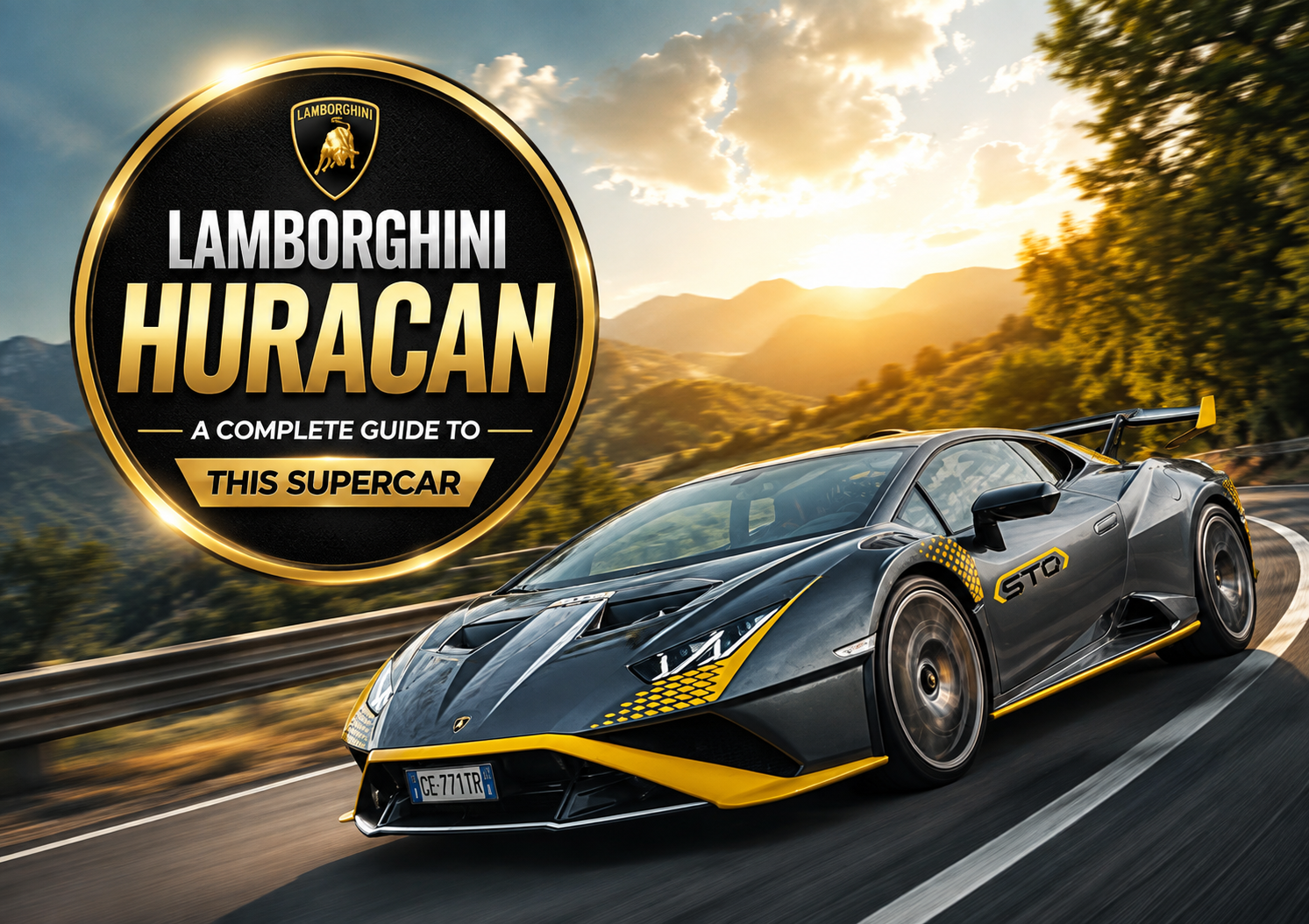
The Lamborghini Huracan is one of the defining supercars of the modern era. Introduced as the successor to the Gallardo, it combined Lamborghini’s dramatic styling with a naturally aspirated V10 engine, sophisticated electronics, and a wide range of driving characteristics. Over its production life, the Huracan developed from a relatively approachable supercar into a remarkably broad family that included road-focused, track-oriented, convertible, and even off-road-inspired versions.
What makes the Huracan particularly interesting is how much it changed without losing its central character. The recipe remained familiar: a mid-mounted 5.2-liter V10, sharp styling, a low driving position, and an unmistakable soundtrack. Yet Lamborghini continued adding technology and refining the chassis throughout the model’s life.
The company says the Huracan was produced from 2014 and became its most versatile super sports car, eventually extending from normal roads to track use and loose surfaces with the Sterrato.
BIO
| Label | Information |
|---|---|
| Name | Lamborghini Huracan |
| Type | Luxury sports car |
| Manufacturer | Lamborghini |
| Origin | Italy |
| Production | 2014–2024 |
| Engine | 5.2-liter V10 |
| Engine Type | Naturally aspirated |
| Transmission | 7-speed dual-clutch |
| Seating | 2 seats |
| Drivetrain | Rear-wheel or all-wheel drive |
| Top Speed | Up to 325 km/h |
| Key Feature | High-revving V10 performance |
What Is the Lamborghini Huracan?
The Huracan arrived in 2014 as Lamborghini’s successor to the highly successful Gallardo. Its name comes from a Spanish fighting bull associated with courage, following Lamborghini’s long tradition of using bull-related names for many of its cars.
The first production version was the Huracan LP 610-4. It used a 5.2-liter naturally aspirated V10 and an electronically controlled all-wheel-drive system. Lamborghini also introduced its seven-speed LDF dual-clutch transmission with the model, replacing the automated manual transmission used in some earlier Lamborghini applications.
From the beginning, the Huracan was designed to offer more than straight-line speed. Its electronic systems could adjust the car’s behavior through different driving modes, allowing the same vehicle to feel more relaxed in ordinary driving or more aggressive when the driver selected a sportier setting.
That combination of traditional engine character and modern electronics became one of the Huracan’s strongest qualities.
Design and Styling
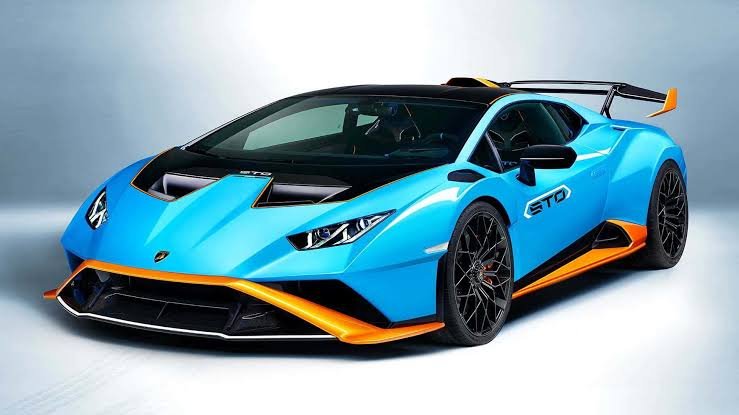
The Huracan has a distinctive shape without relying entirely on excessive decoration. Its body is low, wide, and tightly packaged around the mid-mounted engine.
The front end features sharp surfaces and carefully shaped air openings, while the side profile emphasizes the car’s compact proportions. At the rear, the exhaust outlets, diffuser, and engine cover give the car a technical appearance that matches its performance.
Inside, Lamborghini created a cockpit that feels more like a driver’s environment than a conventional luxury-car cabin. The seating position is low, the controls are concentrated around the driver, and many versions feature a combination of leather, Alcantara, carbon fiber, and other premium materials.
The Huracan EVO brought a significant styling and technology update. Lamborghini describes the EVO as an evolution of its successful V10 platform, with revised aerodynamic details, a redesigned front bumper, new wheel designs, and an 8.4-inch central touchscreen.
The result is a car that looks unmistakably Lamborghini while still having enough design restraint to avoid becoming dated quickly.
The V10 Engine
At the heart of the Lamborghini Huracan is its naturally aspirated 5.2-liter V10. This engine is one of the biggest reasons the model has developed such a strong following.
Unlike a turbocharged engine, a naturally aspirated V10 builds its character through engine speed and throttle response. As the revs rise, the engine becomes increasingly energetic, giving the driver a very direct connection between accelerator input and performance.
Output varies between Huracan versions. For example, the Huracan Tecnica uses a 5,204 cc V10 producing 640 CV at 8,000 rpm and 565 Nm of torque at 6,500 rpm. Lamborghini lists a seven-speed dual-clutch transmission, rear-wheel drive, a 0–100 km/h time of 3.2 seconds, and a top speed of 325 km/h for the Tecnica.
Those figures are impressive, but numbers only explain part of the experience. The engine’s response, sound, and willingness to rev are central to the Huracan’s appeal.
For many enthusiasts, the naturally aspirated V10 is more than an engine specification. It represents a type of supercar character that is becoming increasingly unusual as manufacturers move toward turbocharging, hybrid systems, and other technologies.
Performance
Performance varies depending on the version, drivetrain, tires, aerodynamics, and intended purpose.
The original LP 610-4 established the basic performance formula, while later versions became progressively more specialized. The Performante focused heavily on weight reduction and aerodynamics. The EVO refined the overall package. The STO moved even closer to the track, while the Tecnica aimed to combine everyday road usability with serious performance.
The Huracan STO, for example, uses a 5.2-liter naturally aspirated V10 producing 640 CV and 565 Nm. Lamborghini quotes 0–100 km/h in 3.0 seconds, 0–200 km/h in 9.0 seconds, and a top speed of 310 km/h.
The Tecnica has a higher quoted top speed of 325 km/h, while its 0–100 km/h time is 3.2 seconds. This illustrates an important point: the fastest Huracan is not necessarily the one designed for the most extreme track performance.
Different versions prioritize different aspects of driving.
Huracan Variants
One of the most interesting parts of the Huracan story is the number of versions Lamborghini developed from the same basic platform.
Huracan LP 610-4
The original LP 610-4 established the Huracan formula. It combined the 5.2-liter V10 with all-wheel drive, a seven-speed dual-clutch transmission, and selectable driving modes.
It also introduced important technology for Lamborghini, including a digital dashboard display. The model was presented at the 2014 Geneva Motor Show, while the Spyder convertible followed in 2015.
Huracan LP 580-2
The LP 580-2 changed the formula by sending power to the rear wheels rather than using all-wheel drive. That gave the Huracan a different character and made it particularly appealing to drivers who wanted a more traditional rear-wheel-drive sports-car experience.
The reduction in drivetrain hardware also helped differentiate it from the original model.
Huracan Performante
The Performante took the Huracan toward a more focused performance direction.
Lamborghini used lightweight materials and developed its ALA active aerodynamics system for the model. The company also highlighted its use of Forged Composites technology in components associated with the aerodynamic system.
The Performante demonstrated that the Huracan could be transformed into a genuinely serious track machine without abandoning its road-going identity.
Huracan EVO
The EVO was more than a visual refresh. Lamborghini used the update to improve the car’s electronics, aerodynamics, and overall driving behavior.
Its Lamborghini Dinamica Veicolo Integrata (LDVI) system is designed to coordinate vehicle dynamics according to driver inputs, driving conditions, and selected settings.
The EVO therefore represents an important stage in the Huracan’s development, moving the car toward a more sophisticated relationship between mechanical hardware and software.
Huracan STO
The STO stands for Super Trofeo Omologata and was developed with a clear motorsport influence.
Lamborghini used carbon fiber extensively, including carbon fiber in more than 75% of the body panels. The company also reduced weight through changes to the windshield, wheels, sound insulation, and other components. Lamborghini states that the STO weighs 43 kg less than the Performante.
Its fixed steering ratio, aggressive aerodynamic design, racing-inspired cabin, and track-focused driving modes make the STO one of the most specialized members of the Huracan family.
Huracan Tecnica
The Tecnica sits in an interesting position. It takes much of the performance technology developed for the more extreme versions and packages it into a car intended to be more versatile on the road.
Its rear-wheel-drive layout, 640-CV V10, and 325 km/h top speed make it a serious performance car, while its design and equipment give it a somewhat broader appeal than the STO.
Huracan Sterrato
The Sterrato may be the most unusual Huracan of all.
Instead of focusing exclusively on smooth asphalt, Lamborghini designed it to handle loose surfaces and rougher roads. Its suspension is raised by 44 mm compared with the Huracan EVO, while the track width is also increased.
It uses a 610-CV version of the 5.2-liter V10, seven-speed dual-clutch transmission, electronically controlled all-wheel drive, and a rear mechanical self-locking differential. Lamborghini quotes 0–100 km/h in 3.4 seconds and a 260 km/h top speed.
The Sterrato also introduces a Rally driving mode, giving it a character unlike any conventional Huracan.
Technology
Technology became increasingly important as the Huracan evolved.
The car’s selectable driving modes allow the driver to change how the engine, transmission, steering, stability systems, and other components respond. Lamborghini’s LDVI system takes this concept further by coordinating several dynamic systems according to inputs from the driver and surrounding conditions.
The Huracan also uses a sophisticated digital instrument cluster, while later versions received more advanced infotainment systems. The EVO, for example, introduced an 8.4-inch touchscreen in the center console.
These systems are not simply there to make the car feel modern. In a high-performance vehicle, electronics have an important role in managing the enormous amount of available power.
Driving Experience
The driving experience is where the Huracan makes the strongest case for itself.
The low seating position immediately creates a sense of occasion. Visibility is better than the dramatic exterior might suggest, although the car’s width and low body require attention in tight spaces.
On an open road, the naturally aspirated V10 provides immediate response. The seven-speed dual-clutch transmission can deliver rapid gear changes, while the different driving modes allow the driver to alter the car’s personality.
All-wheel-drive versions emphasize traction and confidence, particularly when accelerating out of corners. Rear-wheel-drive versions feel more focused on driver involvement.
The performance-oriented models take the experience further. The Performante emphasizes aerodynamic efficiency and reduced weight, while the STO places even greater emphasis on track behavior.
The Sterrato demonstrates the opposite philosophy: instead of making the Huracan increasingly specialized for asphalt, Lamborghini adapted it for surfaces where traditional supercars would be far less comfortable.
Interior and Comfort
Despite its performance credentials, the Huracan is not simply a stripped-out race car.
The cabin uses premium materials and offers a level of equipment expected from an exotic road car. Depending on specification, buyers could choose different combinations of leather, Alcantara, carbon fiber, colors, stitching, and other personalization options.
Space is naturally limited. This is a compact two-seat supercar, so practicality is not its strongest quality. Storage is modest, and getting into or out of the low cabin can require more effort than entering a normal passenger car.
Still, the Huracan can be used beyond occasional weekend drives. The more road-oriented versions provide a useful balance between supercar drama and everyday road manners.
Fuel Economy and Ownership
A naturally aspirated V10 supercar was never designed around fuel efficiency.
Fuel consumption depends heavily on driving conditions and driving style, but owners should expect substantially higher running costs than those of ordinary passenger cars. Tires, brakes, servicing, insurance, and specialist maintenance can all add considerably to the cost of ownership.
For a used Huracan, service history is particularly important. A well-documented example is generally more reassuring than a car with an attractive price but an unclear maintenance background.
A professional inspection is also sensible when considering a used high-performance vehicle. Components such as tires, brakes, suspension parts, bodywork, and electronic systems deserve careful attention.
Price and Market Value
The price of a Huracan depends heavily on the specific version, model year, condition, mileage, equipment, and market.
A standard road-oriented model and a limited or highly specialized version can occupy very different parts of the market. Cars with unusual specifications, low production numbers, strong service records, or desirable factory options may attract particular interest.
It is therefore difficult to treat “the Huracan price” as a single figure.
For anyone researching the used market, comparing several examples rather than focusing on the cheapest listing is the smarter approach. Condition and history can matter just as much as mileage.
Huracan vs. Its Rivals
The Huracan competes in a segment filled with exceptional cars, including models from Ferrari, McLaren, Porsche, and other performance-focused manufacturers.
A Ferrari may emphasize a different interpretation of engine response and styling. A McLaren often puts considerable emphasis on lightweight engineering and chassis behavior. A Porsche 911 Turbo S offers a different combination of performance and everyday usability.
The Huracan’s strongest differentiator is its personality.
The naturally aspirated V10, Lamborghini styling, low-slung cockpit, and dramatic presentation give it an identity that cannot be reduced to acceleration figures.
Reliability and Maintenance
No high-performance supercar should be judged by the same maintenance expectations as an ordinary family vehicle.
The Huracan uses sophisticated electronics, high-performance brakes, specialized tires, complex suspension components, and a powerful engine. Proper servicing therefore matters.
For a used example, buyers should pay attention to maintenance records, previous ownership, accident history, tire condition, brake condition, and evidence of professional servicing.
A careful inspection before purchase can help identify issues that may not be obvious during a short test drive.
Is It Good for Everyday Driving?
The answer depends on which Huracan is being considered.
A standard Huracan or EVO is considerably easier to imagine as a regular road car than an STO. The more road-focused versions offer greater comfort and practicality while retaining the central supercar experience.
The Sterrato is another interesting case because its increased ride height and revised suspension give it more flexibility on poor surfaces.
Still, the Huracan remains a low, wide, powerful two-seat supercar. Limited storage, expensive consumables, and its size can make everyday use less convenient than a normal car.
For someone who values the experience as much as practicality, however, those compromises may be part of the appeal.
What Makes the Huracan Special?
The Lamborghini Huracan succeeded because it managed to combine several qualities that do not always appear together.
It has the emotional appeal expected from a Lamborghini, but its electronics make the car far more manageable than older generations of exotic machinery. It offers serious performance, yet Lamborghini developed multiple versions for different driving preferences.
Most importantly, the Huracan preserved its naturally aspirated V10 character throughout its evolution.
Lamborghini itself describes the model as one of the most versatile in its history, with versions capable of focusing on road driving, track performance, and even loose-surface driving.
The Huracan Legacy
The Huracan’s importance goes beyond its sales numbers.
It became a showcase for technologies that Lamborghini would continue developing, including active aerodynamics, advanced vehicle-dynamics systems, lightweight composite materials, and increasingly sophisticated electronic control.
Lamborghini notes that technology introduced with the Huracan influenced later models, while the model family expanded to include road cars and competition versions.
Its later special models also demonstrated how far the platform could be developed. From the road-focused EVO to the racing-inspired STO and unconventional Sterrato, Lamborghini repeatedly found new ways to reinterpret the same basic architecture.
That versatility is perhaps the Huracan’s greatest achievement.
Pros and Cons
Pros
- Naturally aspirated 5.2-liter V10
- Distinctive Lamborghini styling
- Excellent performance
- Strong driver engagement
- Wide selection of variants
- Advanced vehicle-dynamics technology
- Available rear- and all-wheel-drive configurations
- Memorable exhaust and engine character
Cons
- High purchase and ownership costs
- Limited luggage space
- Expensive tires and brakes
- Low ground clearance on many versions
- Two-seat layout
- Specialized versions can be demanding for everyday use
Frequently Asked Questions
What engine does the Lamborghini Huracan have?
The Huracan uses a 5.2-liter naturally aspirated V10. Power varies by version, with the Tecnica and STO producing 640 CV.
How fast is the Lamborghini Huracan?
Performance depends on the model. The Huracan Tecnica has a quoted top speed of 325 km/h, while the STO reaches 310 km/h.
Is the Huracan naturally aspirated?
Yes. Its 5.2-liter V10 is naturally aspirated, which is one of the defining characteristics of the model.
Which Huracan is best for track driving?
The Huracan STO is one of the most track-focused road-legal versions. Lamborghini developed it with extensive motorsport influence, lightweight construction, aggressive aerodynamics, and dedicated driving modes.
Is the Huracan good for daily driving?
The standard and EVO versions are better suited to regular road use than the more extreme variants. However, running costs, limited storage, and the low driving position remain important considerations.
What is the Huracan Sterrato?
The Sterrato is an unusual Huracan developed for driving beyond normal asphalt. It has increased suspension height, specialized dynamics, all-wheel drive, and a Rally mode.
Final Verdict
The Lamborghini Huracan earned its reputation by doing more than simply being fast. It brought together a naturally aspirated V10, striking Italian design, modern electronics, strong chassis engineering, and a wide range of personalities.
For some drivers, the appeal is the original LP 610-4 and its combination of speed and traction. Others may prefer the rear-wheel-drive character of the LP 580-2, the aerodynamic focus of the Performante, the balanced approach of the Tecnica, or the track-ready nature of the STO.
Then there is the Sterrato, which proves just how far Lamborghini was willing to push the platform.
The Huracan ultimately became an important chapter in Lamborghini’s modern history. Its combination of V10 character, dramatic design, technological development, and remarkable versatility gives it a lasting identity in the supercar world. Even as the automotive industry moves toward different powertrain technologies, the Huracan remains memorable because it represents a particular kind of driving experience—one built around a high-revving engine, a focused chassis, and the unmistakable personality of Lamborghini.