






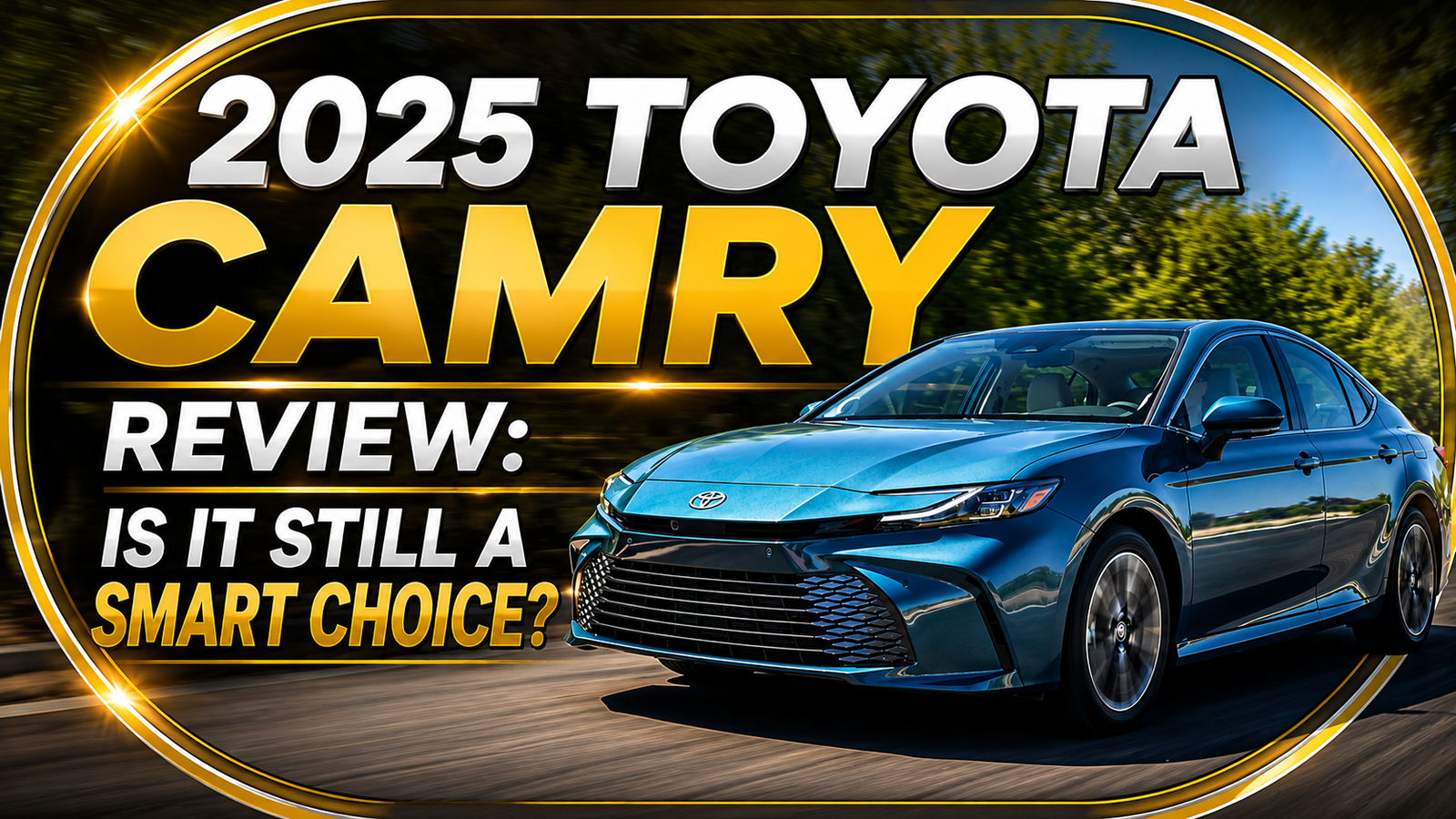
The 2025 Toyota Camry marks an important change for one of the best-known names in the midsize sedan market. Toyota redesigned the Camry for 2025 and made a major decision at the same time: every version now uses a hybrid powertrain.
That change gives the Camry a different character from earlier generations. Instead of choosing between a conventional gasoline engine and a hybrid, buyers now get Toyota’s hybrid system as standard. The result is a sedan that puts fuel efficiency, everyday comfort, and practical performance at the center of the ownership experience.
The 2025 Camry also brings updated styling, revised technology, available all-wheel drive, and a more modern cabin. It is still recognizable as a Camry, but it feels more contemporary than the outgoing model.
So, is the 2025 Toyota Camry still a smart choice? For many drivers, the answer is yes. However, the new hybrid-only strategy means there are a few things buyers should understand before making a decision.
BIO
| Label | Information |
|---|---|
| Model | 2025 Toyota Camry |
| Vehicle Type | Midsize Sedan |
| Model Year | 2025 |
| Powertrain | Hybrid |
| Engine | 2.5-liter 4-cylinder |
| Front-Wheel Drive | Available |
| All-Wheel Drive | Available |
| Combined Output | Up to 232 hp |
| Top Fuel Economy | Up to 51 mpg combined |
| Seating | Up to 5 passengers |
| Main Trims | LE, SE, XLE, XSE |
| Safety | Toyota Safety Sense |
| Best For | Commuting and family driving |
2025 Toyota Camry at a Glance
The 2025 Camry is a five-passenger midsize sedan available in several trim levels. Toyota offers the car with a 2.5-liter four-cylinder engine paired with its fifth-generation hybrid system.
Front-wheel drive is available across the lineup, while all-wheel drive can be selected on applicable versions. Toyota says the standard front-wheel-drive hybrid system produces up to 225 net combined horsepower, while available all-wheel-drive versions increase output to 232 net combined horsepower.
Fuel economy is one of the biggest reasons to consider the new Camry. Toyota lists an EPA-estimated rating of up to 51 mpg combined for the most efficient configuration.
The basic formula is straightforward: comfortable sedan, hybrid efficiency, modern technology, and optional AWD.
What Changed for 2025?
The biggest change is under the hood.
Previous Camry generations gave buyers a choice between gasoline and hybrid powertrains. For 2025, Toyota moved to an all-hybrid lineup. That makes the Camry a much more direct competitor to other fuel-efficient sedans while simplifying the powertrain choices for buyers.
The exterior was redesigned as well. The front end has a sharper appearance, while the overall shape keeps the familiar proportions that have helped make the Camry practical for everyday use.
Inside, Toyota introduced a more modern dashboard and updated multimedia technology. Depending on the trim, buyers can also get larger displays, upgraded audio, and additional convenience features.
The change is significant, but Toyota did not try to turn the Camry into something completely different. It remains a practical sedan first.
Exterior Design
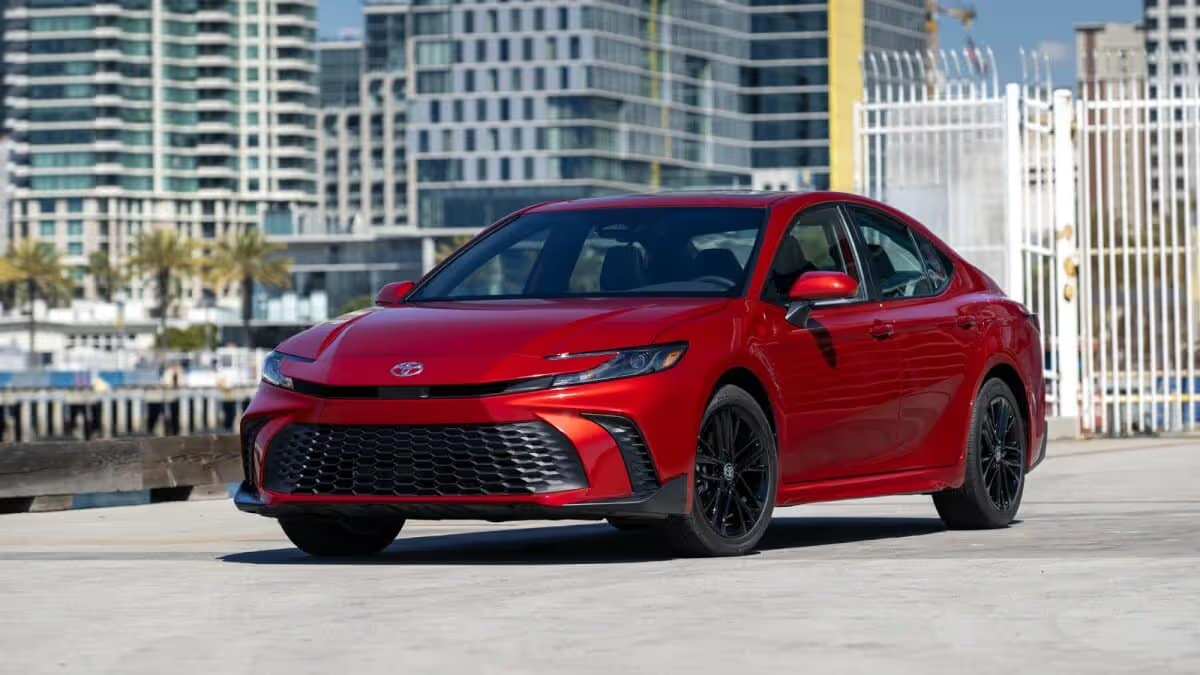
The 2025 Camry looks more confident than the previous generation.
Its front end uses a larger grille area and slimmer lighting elements, giving the sedan a more contemporary appearance. The body lines are also more pronounced, particularly on sport-oriented versions.
Toyota offers different visual treatments depending on the trim. The SE and XSE versions add sportier styling touches, while the LE and XLE focus more heavily on traditional comfort and everyday usability.
One of the strengths of the design is that it does not go too far. The Camry still looks like a conventional sedan rather than an experimental concept car.
For buyers who want something understated but modern, that balance should work well.
Interior and Comfort
Inside, the 2025 Camry takes a noticeable step forward.
The dashboard is cleaner, and the placement of the main controls feels more modern. Higher trims provide a more upscale atmosphere through upgraded materials, larger displays, and additional comfort equipment.
The driving position remains easy to understand, which is important in a car designed for daily use. Visibility is also a key part of the Camry’s appeal because the sedan does not try to sacrifice practicality for dramatic styling.
The seats are designed around long-distance comfort rather than aggressive driving. That makes sense for the Camry’s target audience.
Whether the car is being used for commuting, family trips, or highway travel, comfort is one of its strongest qualities.
Passenger and Cargo Space
The Camry continues to make a good case for itself as a practical family sedan.
The front seats provide plenty of room for most adults, while the rear seats are suitable for passengers who need to travel comfortably on longer journeys.
The sedan body style also provides a useful trunk. Buyers who regularly carry large boxes or bulky equipment may still prefer an SUV or crossover, but for luggage, shopping, school bags, and everyday cargo, the Camry remains practical.
This is one area where the traditional sedan layout still makes sense.
Technology
Technology is another area where the 2025 model feels more current.
The Camry offers a modern multimedia system with smartphone connectivity and available larger screens depending on the trim. Higher versions can add upgraded audio and additional convenience features.
The technology is not simply there for appearance. Good infotainment should make navigation, music, phone calls, and vehicle settings easier to manage.
Toyota has also continued to emphasize connected features and digital displays throughout the lineup.
The exact equipment varies by trim, so buyers should check the feature list carefully rather than assuming every Camry includes the same technology.
Performance
The 2025 Toyota Camry is not designed to be a sports sedan, but that does not mean it feels slow or incapable.
The 2.5-liter engine works with Toyota’s hybrid system to provide 225 net combined horsepower in front-wheel-drive configurations. All-wheel-drive versions can produce 232 net combined horsepower.
The hybrid system is particularly useful during everyday driving. Electric motor assistance can provide immediate response when pulling away from a stop, while the gasoline engine handles longer stretches of driving.
For city traffic, this combination makes sense.
The Camry also feels more settled at highway speeds, where ride comfort becomes one of its biggest advantages. It is the kind of car that can handle a daily commute without demanding much attention from the driver.
Driving Experience
Behind the wheel, the 2025 Camry prioritizes smoothness.
Steering is easy to manage, the ride is comfortable, and the hybrid system works without requiring special driving techniques. Drivers can simply get in and drive.
The sportier SE and XSE trims provide a different character through their styling and available sport-oriented tuning. These versions can appeal to buyers who want the Camry’s practicality but prefer a more athletic feel.
Still, the main purpose of the car remains everyday transportation.
That is not a weakness. In fact, it is one of the reasons the Camry has remained relevant for so long.
Fuel Economy
Fuel economy is arguably the biggest selling point of the new model.
Toyota says the 2025 Camry’s most efficient configuration can achieve an EPA-estimated 51 mpg combined.
Actual fuel economy will depend on the configuration and driving conditions. Highway speed, traffic, weather, tire pressure, driving habits, and climate-control use can all affect real-world results.
The important point is that the Camry no longer requires buyers to choose a separate hybrid model to get this type of efficiency. The entire lineup is built around hybrid technology.
For someone who drives many miles every week, that can make a meaningful difference in fuel costs over time.
Trim Levels
Toyota offers the 2025 Camry in four main grades: LE, SE, XLE, and XSE.
The LE is the logical choice for buyers who want the core Camry experience without paying for every available upgrade. Its emphasis is on efficiency, comfort, and value.
The SE takes a sportier approach. It adds styling and equipment intended to give the sedan a more youthful appearance.
The XLE moves toward comfort and premium features. It is a better match for buyers who want the Camry to feel more upscale.
The XSE combines many of the sportier design elements with higher-level equipment. It can be appealing to someone who wants a Camry that feels less traditional.
Choosing between them ultimately comes down to priorities. For many buyers, the LE and SE will offer the strongest balance of price and equipment, while the XLE and XSE make more sense for those willing to spend more on comfort or style.
All-Wheel Drive
One useful feature is the availability of all-wheel drive.
Toyota’s electronic on-demand AWD system adds a rear electric motor to provide additional traction when needed. Toyota says AWD versions also receive a higher system output of 232 net combined horsepower.
AWD can be useful for drivers who regularly encounter rain, snow, or other low-traction conditions.
It is not necessary for every buyer, though. Drivers who live in areas with mostly dry roads may prefer the lower complexity and potentially better fuel economy of a front-wheel-drive configuration.
Safety
Safety is another strong point for the 2025 Camry.
Toyota equips the model with its latest driver-assistance technology, including systems designed to help with collision avoidance, lane awareness, and adaptive cruise control.
Independent testing also gives the new Camry a strong safety reputation. The Insurance Institute for Highway Safety awarded the 2025 Camry Top Safety Pick+, its highest award under the applicable 2025 criteria.
That does not mean technology can replace attentive driving. Driver-assistance systems are designed to support the driver, not take responsibility away from them.
Still, having a strong collection of standard safety technology is a meaningful advantage for a family-oriented sedan.
Reliability and Ownership
Reliability has traditionally been one of the biggest reasons people choose a Camry.
The 2025 model introduces a new generation of the Camry’s hybrid-focused setup, so long-term reliability data for this exact generation will naturally take time to develop.
However, Toyota has extensive experience with hybrid vehicles. The company has been producing hybrids for decades, and its hybrid technology is used across numerous models.
Routine maintenance is still important. Following the manufacturer’s recommended service schedule, keeping tires properly maintained, and addressing warning signs early are all part of responsible ownership.
The Camry’s reputation also helps when it comes time to sell. Strong demand for efficient, practical used cars can contribute to good resale prospects, although actual resale value depends on mileage, condition, location, trim, and market conditions.
Camry vs. Honda Accord
The Honda Accord remains one of the Camry’s most obvious competitors.
Both cars offer comfortable interiors, strong fuel economy, modern technology, and a practical midsize-sedan layout.
The Camry’s major advantage is its standard hybrid strategy and available AWD. The Accord also offers hybrid powertrains, but the two models take slightly different approaches to their lineups.
For buyers who want Toyota’s hybrid system and AWD availability, the Camry deserves serious consideration.
For someone who prefers the Accord’s interior design or driving character, Honda’s sedan remains a strong alternative.
Camry vs. Hyundai Sonata
The Hyundai Sonata competes with the Camry through bold styling, a well-equipped cabin, and a broad selection of technology.
The Sonata may appeal more strongly to buyers who put design and available features at the top of their list.
The Camry, however, has a long-established reputation and now combines that reputation with a standard hybrid powertrain.
The better choice depends on what matters most: styling and equipment or Toyota’s hybrid-focused approach and established reputation.
Camry vs. Kia K5
The Kia K5 is another sedan worth considering.
It brings distinctive styling and a sporty character to the midsize segment. Buyers looking for a sedan that looks different from the traditional family car may find the K5 appealing.
The Camry counters with excellent fuel-efficiency potential, available AWD, and a hybrid powertrain across the lineup.
Again, there is no single winner for every driver. The right choice depends on whether efficiency, comfort, styling, performance, or long-term ownership priorities matter most.
Pros and Cons
Pros
Excellent fuel economy: The hybrid system can deliver impressive EPA-estimated mileage, with up to 51 mpg combined in the most efficient configuration.
Hybrid powertrain standard: Buyers do not need to move to a separate hybrid model to access the fuel-saving technology.
Available AWD: All-wheel drive adds another layer of versatility for drivers who need additional traction.
Comfortable ride: The Camry remains well suited to commuting and longer road trips.
Strong safety credentials: The 2025 model earned an IIHS Top Safety Pick+ award.
Updated technology: The redesigned interior provides a more modern digital experience.
Cons
No traditional gasoline-only option: Some buyers may still prefer a conventional powertrain.
Higher trims can become expensive: Moving into the XLE or XSE can significantly increase the purchase price.
Sedan practicality has limits: An SUV or crossover remains more useful for carrying very large items.
Hybrid character may not suit everyone: Drivers looking for a traditional performance-oriented engine experience may prefer another type of vehicle.
Is It Good for Everyday Driving?
This is where the 2025 Camry makes the strongest argument for itself.
It is comfortable enough for commuting, efficient enough for frequent driving, spacious enough for a small family, and technologically modern without becoming unnecessarily complicated.
The hybrid system is particularly well suited to stop-and-go traffic. Instead of treating fuel efficiency as a secondary benefit, Toyota has made it a central part of the Camry’s identity.
On longer trips, the comfortable ride and quiet cabin help make the sedan easy to live with.
That combination is difficult to ignore for buyers who want a practical car rather than a vehicle built around one particular performance feature.
Who Should Buy the 2025 Camry?
The 2025 Toyota Camry makes the most sense for drivers who want a comfortable and efficient midsize sedan.
It is especially attractive for commuters who cover a lot of miles and want to reduce fuel consumption without moving to a smaller car.
Families may also appreciate the straightforward interior, rear-seat space, safety technology, and trunk.
Drivers who live in regions where AWD is useful can consider an all-wheel-drive version without giving up the Camry’s hybrid identity.
The car also makes sense for buyers who plan to keep their vehicle for several years and value efficiency, comfort, and practicality over aggressive performance.
Who Should Look Elsewhere?
The Camry will not be perfect for everyone.
If you specifically want a traditional gasoline engine, the 2025 lineup will not provide that choice.
Likewise, someone who wants a high-performance sedan may find the Camry too focused on smoothness and efficiency.
And if maximum cargo flexibility is more important than sedan handling and fuel economy, a crossover or SUV may be a better fit.
The important thing is to choose based on how you actually use your vehicle rather than simply following the popularity of a particular model.
Final Verdict
The 2025 Toyota Camry is more than a mild update. Toyota has taken a familiar sedan and changed its powertrain strategy, refreshed its styling, upgraded its technology, and retained the qualities that have made the Camry popular for decades.
Its hybrid-only lineup is the biggest story.
For many drivers, that change is actually a benefit. The combination of strong efficiency, useful power, comfortable driving manners, and available AWD makes the new Camry well suited to everyday life.
The redesigned cabin and modern safety technology also help it compete in a segment where buyers have plenty of alternatives.
It is not the most exciting sedan for every driver, and buyers looking for a traditional gasoline engine or a more aggressive performance experience may want to consider other options.
But if the goal is a comfortable, efficient, practical, and well-rounded midsize sedan, the 2025 Toyota Camry remains a very convincing choice.
For most buyers, the smartest approach is to compare the trims carefully and choose the version that provides the features they actually need. The Camry does not have to be flashy to be appealing. Its strength is that it quietly does many important things well.
Frequently Asked Questions
Is the 2025 Toyota Camry a hybrid?
Yes. Toyota redesigned the Camry for 2025 and made the model lineup exclusively hybrid. The car uses a 2.5-liter four-cylinder engine with Toyota’s fifth-generation hybrid system.
How much horsepower does the 2025 Toyota Camry have?
Front-wheel-drive versions produce up to 225 net combined horsepower, while available all-wheel-drive models produce up to 232 net combined horsepower.
How fuel-efficient is the 2025 Toyota Camry?
The most efficient 2025 Camry configuration is rated at up to 51 mpg combined by the EPA. Exact fuel economy varies according to trim and drivetrain.
Does the 2025 Toyota Camry offer AWD?
Yes. Toyota offers an electronic on-demand all-wheel-drive system on applicable Camry configurations. AWD models also receive additional hybrid-system output.
Which Camry trim is best?
There is no single answer for every buyer. The LE is focused on value and efficiency, the SE adds a sportier character, the XLE emphasizes comfort, and the XSE combines sportier styling with higher-level equipment.
Is the 2025 Toyota Camry safe?
The 2025 Camry earned an IIHS Top Safety Pick+ award under the organization’s 2025 testing criteria, making safety one of the model’s strongest attributes.
Is the 2025 Toyota Camry worth buying?
For buyers who value fuel efficiency, comfort, safety, and everyday practicality, the 2025 Camry is a strong option. Its hybrid-only powertrain makes it particularly appealing to drivers who want sedan practicality without giving up fuel economy.