

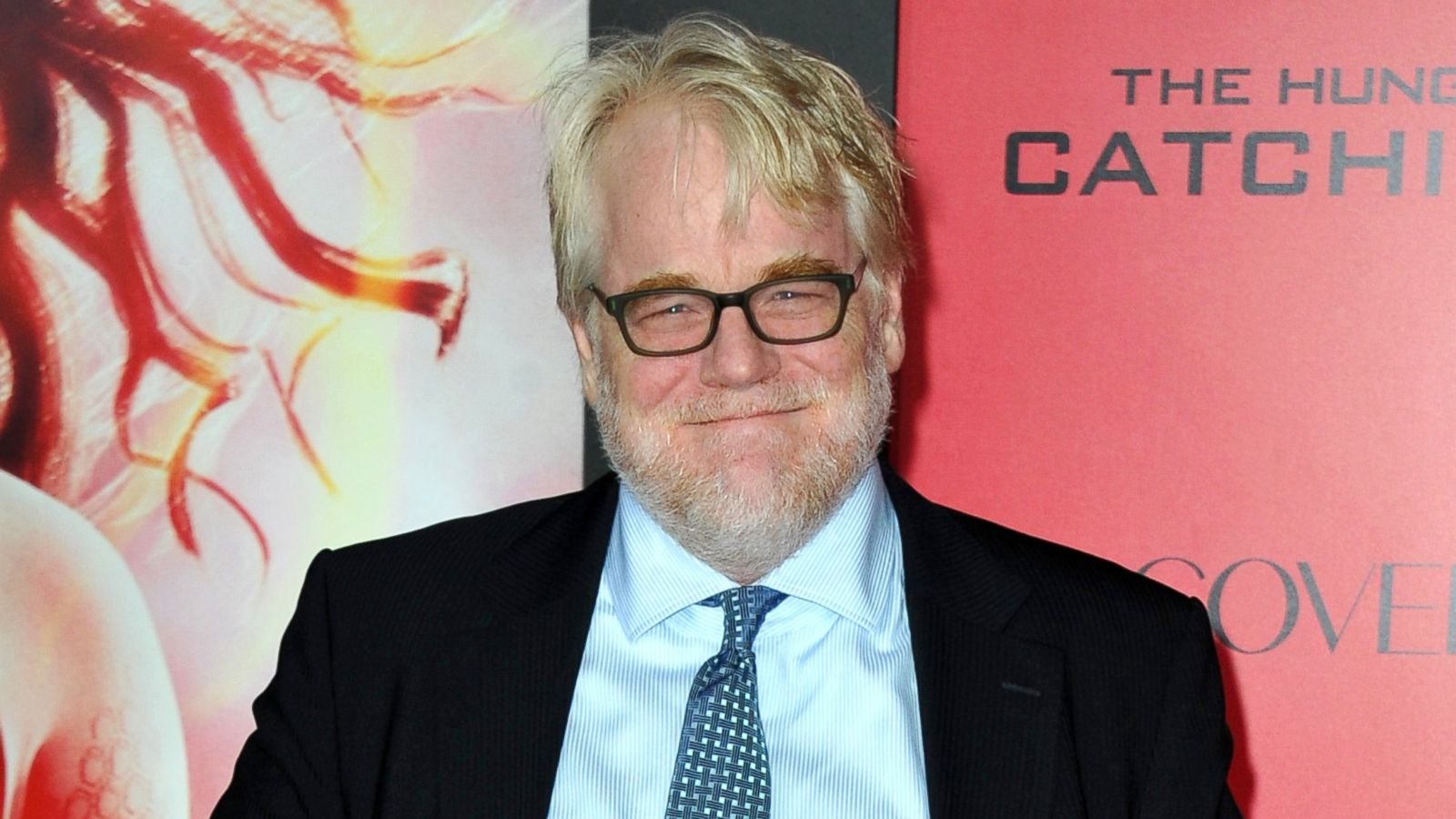

Philip Seymour Hoffman was one of the most respected American actors of his generation. He had a rare ability to make even small supporting roles feel important, often giving his characters an unusual depth that stayed with audiences long after the movie ended. Whether he was playing a troubled man, a devoted assistant, a powerful leader, or a complicated historical figure, Hoffman approached each performance with remarkable concentration and honesty.
His career included acclaimed films, Broadway productions, independent movies, and mainstream Hollywood projects. He worked with some of the most respected directors and actors of his era and earned an Academy Award for his portrayal of writer Truman Capote. He also received further Oscar nominations for his performances in Charlie Wilson’s War and Doubt.
Although his career ended far earlier than anyone expected, the quality of his work continues to make Philip Seymour Hoffman an important name in modern American cinema.
BIO
| Label | Information |
|---|---|
| Full Name | Philip Seymour Hoffman |
| Born | July 23, 1967 |
| Birthplace | Rochester, New York, USA |
| Profession | Actor, Director |
| Acting Debut | 1991 |
| Education | New York University |
| Known For | Film, theater, and character roles |
| Breakthrough Film | Boogie Nights |
| Oscar-Winning Role | Truman Capote in Capote |
| Academy Award | Best Actor, 2006 |
| Notable Films | Magnolia, Doubt, The Master |
| Theater Work | Broadway and stage productions |
| Died | February 2, 2014, aged 46 |
Early Life
Philip Seymour Hoffman was born on July 23, 1967, in Rochester, New York. He was one of four children, and his mother worked as a lawyer while his father worked for Xerox. His early life did not immediately suggest that he would become a major film actor.
As a teenager, Hoffman developed an interest in acting after seeing theatrical productions. One performance that affected him deeply was All My Sons. The experience helped him understand the emotional power of theater and encouraged him to take acting more seriously.
Hoffman also had an interest in sports when he was younger. A wrestling injury eventually helped redirect his attention toward theater. At 17, he was accepted into the New York State Summer School of the Arts, and he later studied acting at New York University.
That training gave Hoffman a strong foundation, but his later success came from something more personal: his ability to observe people closely and build believable characters from small details.
Finding His Way
Hoffman began his professional career during a period when American independent cinema was becoming increasingly influential. Rather than immediately becoming a conventional leading man, he built his reputation through supporting and character roles.
One of his early significant film appearances came in Scent of a Woman in 1992. Working alongside Al Pacino and Chris O’Donnell gave Hoffman an opportunity to gain experience in a major production.
During the following years, he appeared in films including Nobody’s Fool, Twister, and Boogie Nights. Each role added another layer to his reputation as a dependable and versatile performer.
What made Hoffman particularly interesting was that he never seemed interested in making every character likable. He could play awkward, arrogant, lonely, funny, frightening, or emotionally vulnerable people without forcing the audience to see them in a particular way.
Breakthrough Roles
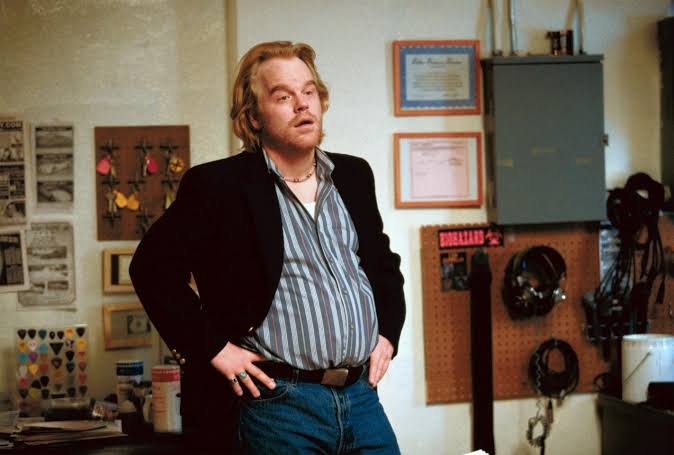
The late 1990s were especially important for Hoffman. He appeared in several films that are still closely associated with his career.
In The Big Lebowski, he played Brandt, the highly controlled assistant to the wealthy Jeffrey Lebowski. The role was not large, but Hoffman made the character memorable through precise timing and understated humor.
He also appeared in Happiness, The Talented Mr. Ripley, and Magnolia. In The Talented Mr. Ripley, he played Freddie Miles, a wealthy and confident acquaintance whose personality brings tension to the story.
Magnolia was another important collaboration with filmmaker Paul Thomas Anderson. Hoffman played Phil Parma, a compassionate nurse who becomes emotionally invested in the people around him.
These performances showed that Hoffman could make supporting characters feel like complete human beings rather than simple additions to the main story.
His Best Films
Boogie Nights
Boogie Nights was one of Hoffman’s early standout films. Directed by Paul Thomas Anderson, the movie explored the adult-film industry through a large ensemble cast.
Hoffman played Scotty J., a shy and emotionally vulnerable character. The role demonstrated his willingness to explore uncomfortable emotions without turning them into easy comedy.
His performance also helped establish a creative relationship with Anderson that would continue throughout his career.
The Big Lebowski
Hoffman’s appearance in The Big Lebowski was relatively brief, but it became one of his recognizable supporting performances.
As Brandt, he used careful pauses, facial expressions, and controlled body language to create humor. The character’s politeness and nervous energy made his scenes memorable.
The movie later developed a strong cult following, giving Hoffman’s performance an even longer life.
Magnolia
In Magnolia, Hoffman played Phil Parma, a nurse caring for an elderly man. The character could have easily become a background figure, but Hoffman gave him warmth and emotional importance.
His performance demonstrated one of his greatest strengths: the ability to make kindness interesting.
Capote
The most important performance of Hoffman’s career came in Capote.
Released in 2005, the film focused on writer Truman Capote during the period when he was researching In Cold Blood. Hoffman approached the role with extraordinary preparation. He studied Capote’s voice, mannerisms, interviews, and public appearances before filming.
Rather than simply imitating Capote, Hoffman attempted to understand the person underneath the recognizable voice and appearance. The result was a performance that received widespread critical acclaim.
At the 78th Academy Awards, Hoffman won the Oscar for Actor in a Leading Role for Capote.
The award confirmed what many critics and fellow actors had already recognized: Hoffman was capable of carrying a major film through the strength of his performance alone.
Doubt
In 2008, Hoffman appeared in Doubt opposite Meryl Streep, Amy Adams, and Viola Davis.
He played Father Brendan Flynn, a Catholic priest whose behavior becomes the center of suspicion at a school. The film deliberately leaves important questions unresolved, making Hoffman’s performance particularly demanding.
He had to communicate confidence, uncertainty, warmth, and possible deception without giving the audience an obvious answer.
His performance earned him another Academy Award nomination for Supporting Actor.
The Master
Hoffman reunited with Paul Thomas Anderson for The Master in 2012.
He played Lancaster Dodd, the charismatic leader of a developing belief system. The character required Hoffman to balance charm and authority with unpredictability.
His performance was powerful because Dodd was not presented as a simple villain. Hoffman allowed the character to appear intelligent, funny, persuasive, insecure, and controlling at different moments.
The role became another major example of his ability to create complicated personalities.
Theater Work
Although many audiences knew Hoffman primarily through movies, theater remained an important part of his career.
He appeared on Broadway in productions including True West, Long Day’s Journey into Night, and Death of a Salesman. His work on stage earned him three Tony Award nominations.
In True West, Hoffman performed alongside John C. Reilly. The two actors famously alternated the roles of the brothers during different performances, allowing both performers to experience the contrasting characters.
In 2012, Hoffman took on the demanding role of Willy Loman in a Broadway revival of Death of a Salesman. The performance received strong critical attention and another Tony nomination.
His theater career helps explain why his film performances often felt so carefully constructed. He had a deep understanding of dialogue, timing, silence, movement, and the relationship between actors.
His Acting Style
The phrase “character actor” is often used to describe Hoffman, but his career was more complicated than that label suggests.
He could disappear into supporting characters, but he could also lead a film. He could be funny without playing a traditional comic character and intimidating without relying on physical aggression.
One of his greatest strengths was attention to detail.
Hoffman understood that a character could reveal himself through the way he walked, paused, listened, spoke, or reacted to another person. Instead of announcing emotions, he often allowed them to emerge naturally.
That approach made his performances feel less like performances and more like observations of real people.
Directing
Hoffman also explored filmmaking from behind the camera.
In 2010, he directed Jack Goes Boating, a film based on the stage play in which he had previously performed. The project allowed him to combine his experience as an actor with his interest in storytelling and directing.
The film focuses on relationships, loneliness, and the possibility of change. Hoffman also appeared in the movie, giving him the unusual challenge of directing while simultaneously performing.
His work as a director was smaller in scale than his acting career, but it demonstrated that his creative interests extended beyond acting.
Later Career
Hoffman’s later career continued to move between independent dramas, major productions, and theater.
He appeared in Moneyball, where he played baseball manager Art Howe. The film showed another side of his range because the character was more restrained than some of his earlier roles.
He also appeared in A Most Wanted Man, based on the novel by John le Carré. The film became one of his notable late-career performances.
For a wider mainstream audience, Hoffman became especially recognizable through The Hunger Games series. He played Plutarch Heavensbee, a strategic and influential figure within the story.
His appearance in The Hunger Games: Catching Fire introduced his work to another generation of moviegoers, while later installments demonstrated how comfortable he could be within a large commercial production.
Awards
Hoffman’s most significant individual award was the Academy Award he won for Capote.
He was also nominated for the Academy Award for Supporting Actor for Charlie Wilson’s War and Doubt.
His awards recognition extended beyond the Oscars. His theater work earned three Tony Award nominations, while his film performances brought numerous critical honors and nominations throughout his career.
These achievements reflected something important about Hoffman’s reputation: he was respected not simply for one memorable performance but for consistency across many different kinds of roles.
Personal Life
Hoffman generally kept much of his personal life away from the center of his public career.
He had a long-term relationship with costume designer and artist Mimi O’Donnell, and they had three children together. His family remained an important part of his life outside acting.
Hoffman died in New York City on February 2, 2014, at the age of 46. His death brought an abrupt end to a career that still appeared to have many years ahead of it.
Because he left behind such a substantial body of work, audiences have continued to discover his performances long after his death.
Lasting Legacy
The legacy of Philip Seymour Hoffman is not based on celebrity alone. It rests on the quality and variety of his work.
He could enter a movie for only a few minutes and make an unforgettable impression. He could also carry a demanding drama for two hours and make the audience forget they were watching an actor.
His collaborations with filmmakers such as Paul Thomas Anderson became especially important to his career. Their work together produced several performances that remain among Hoffman’s most admired.
At the same time, films such as Capote, Doubt, and The Master demonstrated that his abilities extended well beyond one director or one style of filmmaking.
Perhaps the most lasting part of Hoffman’s legacy is his commitment to believable characters. He did not appear to chase conventional movie-star roles. Instead, he looked for people with contradictions, weaknesses, ambitions, humor, and emotional complexity.
That choice helped make his performances feel unusually human.
Why His Work Still Matters
Years after his passing, new viewers continue to watch Hoffman’s films and discover why critics respected him so deeply.
His performances do not depend entirely on spectacle or easy emotional moments. They reward attention. A small expression or a change in tone can reveal something about a character that was not obvious a moment earlier.
That is particularly valuable in an era when audiences can quickly move from one piece of entertainment to another. Hoffman’s best performances encourage viewers to slow down and observe.
His career also demonstrates that an actor does not need to fit a traditional Hollywood image to become one of the most admired performers of his generation.
Frequently Asked Questions
What was Philip Seymour Hoffman best known for?
Philip Seymour Hoffman was best known for his highly detailed character performances in films such as Capote, Boogie Nights, The Big Lebowski, Magnolia, Doubt, and The Master. He was also respected for his work on Broadway.
Did Philip Seymour Hoffman win an Oscar?
Yes. Hoffman won the Academy Award for Actor in a Leading Role for his performance as Truman Capote in Capote at the 78th Academy Awards in 2006.
What are Philip Seymour Hoffman’s best movies?
Among his most acclaimed films are Capote, Boogie Nights, Magnolia, The Big Lebowski, Doubt, The Master, The Talented Mr. Ripley, Moneyball, and Charlie Wilson’s War.
Was Philip Seymour Hoffman a theater actor?
Yes. Theater was an important part of his career. He received three Tony Award nominations for True West, Long Day’s Journey into Night, and Death of a Salesman.
What was Philip Seymour Hoffman’s last film?
One of his final completed film performances was in The Hunger Games: Mockingjay – Part 2, while A Most Wanted Man was also released after his death. His late work showed that he remained active across both major studio productions and serious dramas.
Conclusion
Philip Seymour Hoffman left behind a career that was remarkably rich despite ending far too soon. From early supporting roles to his Oscar-winning performance in Capote, he consistently demonstrated an ability to find something truthful in every character.
His work in Boogie Nights, The Big Lebowski, Magnolia, Doubt, The Master, and The Hunger Games series shows the extraordinary range he developed over more than two decades.
More than a decade after his death, his performances continue to attract new audiences because they feel personal, complicated, and genuine. Hoffman understood that memorable acting is not always about being the loudest person in a scene. Sometimes it is about listening, reacting, and allowing a character’s inner life to emerge naturally.
That understanding made him one of the most distinctive performers of his generation, and it is why Philip Seymour Hoffman remains such an important figure in the history of modern film and theater.