







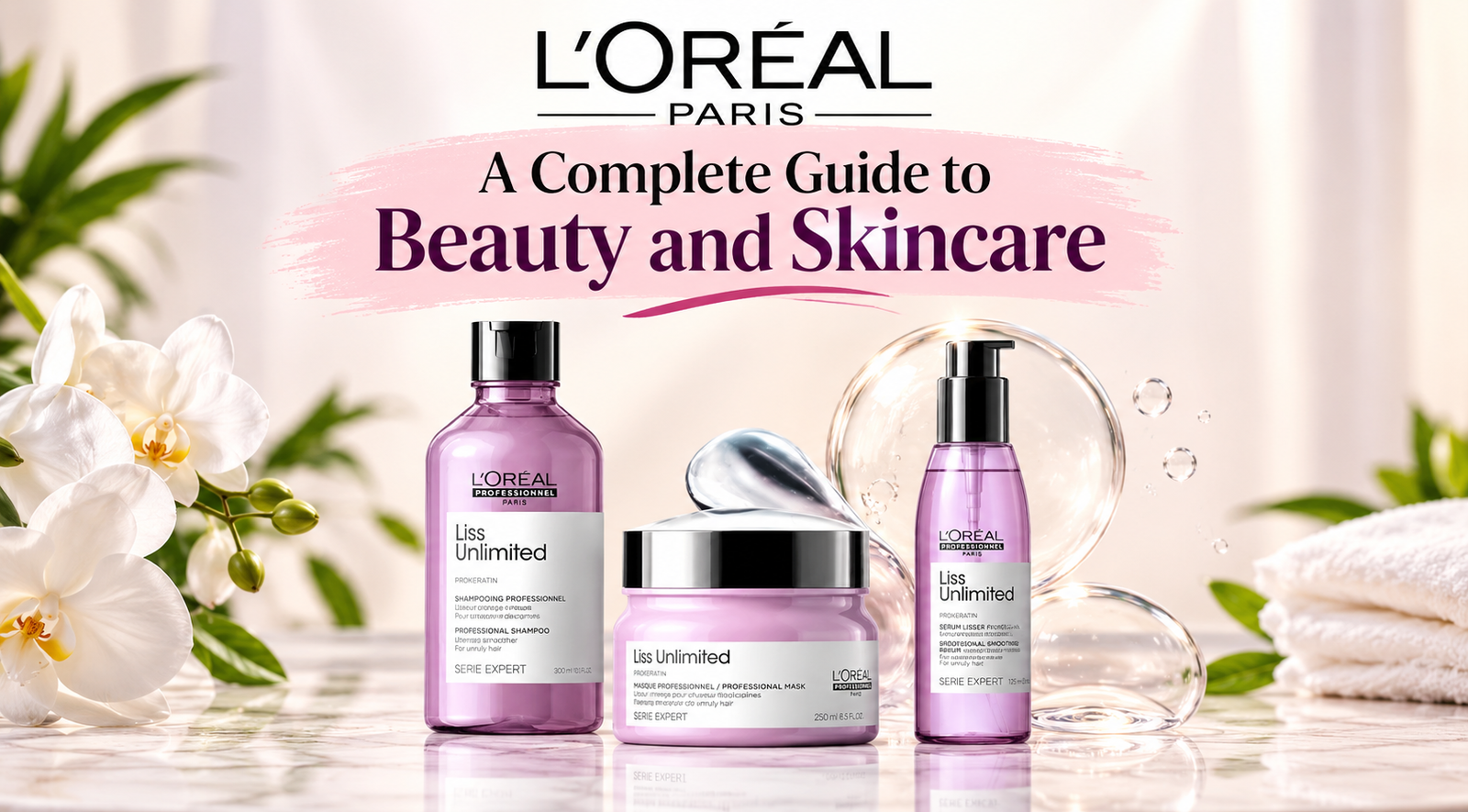
L’Oréal has become one of the most recognizable names in the beauty industry, with products covering skincare, makeup, hair care, hair color, professional beauty, and dermatological care. What began as a company built around scientific innovation has developed into a global beauty group with brands serving very different needs and preferences.
Today, L’Oréal operates through four major divisions: Professional Products, Consumer Products, L’Oréal Luxe, and Dermatological Beauty. The group says its portfolio includes 40 international brands and reaches consumers in more than 150 countries.
For someone looking at L’Oréal for the first time, the sheer variety can be both useful and confusing. There are everyday products designed for simple routines, while other offerings focus on specific skincare concerns, professional hair care, makeup, or more specialized dermatological needs.
This guide takes a closer look at L’Oréal, its history, approach to beauty science, skincare categories, makeup and hair-care offerings, ingredients, sustainability efforts, and practical ways to choose products that fit an individual’s routine.
What Is L’Oréal?
L’Oréal traces its origins to 1909, when chemist Eugène Schueller established the company around scientific approaches to hair care and beauty. Research has remained an important part of the company’s identity as it has expanded into new categories and markets.
The modern L’Oréal Group is much broader than a single cosmetics label. Its portfolio includes brands positioned at different price points and serving different parts of the beauty market. This structure allows the group to offer products through supermarkets, pharmacies, beauty retailers, department stores, salons, e-commerce, and other channels.
The company’s purpose centers on creating beauty that is accessible to people with different preferences, backgrounds, and needs. Its own description places emphasis on quality, efficacy, safety, sincerity, and responsibility, rather than treating beauty as a single standard.
That broad approach helps explain why the name L’Oréal appears across so many areas of personal care.
Why Is L’Oréal So Popular?
One reason for L’Oréal’s popularity is simply the range of products available. Someone looking for a basic moisturizer can find options within the wider portfolio, while another consumer may be interested in professional hair treatments, luxury cosmetics, or dermatological skincare.
Research and development is another important part of the company’s identity. L’Oréal reports having more than 4,000 people working in Research & Innovation and operating research centers around the world. In 2025, the company says it invested more than €1.3 billion in research and innovation and registered 725 patents.
Accessibility also matters. Some L’Oréal products are positioned for everyday consumers, making it possible to build a beauty routine without relying entirely on premium products.
At the other end of the portfolio, specialized brands address professional and dermatological needs. This combination gives the group a presence across many different parts of the beauty market.
L’Oréal Skincare: What Does It Offer?
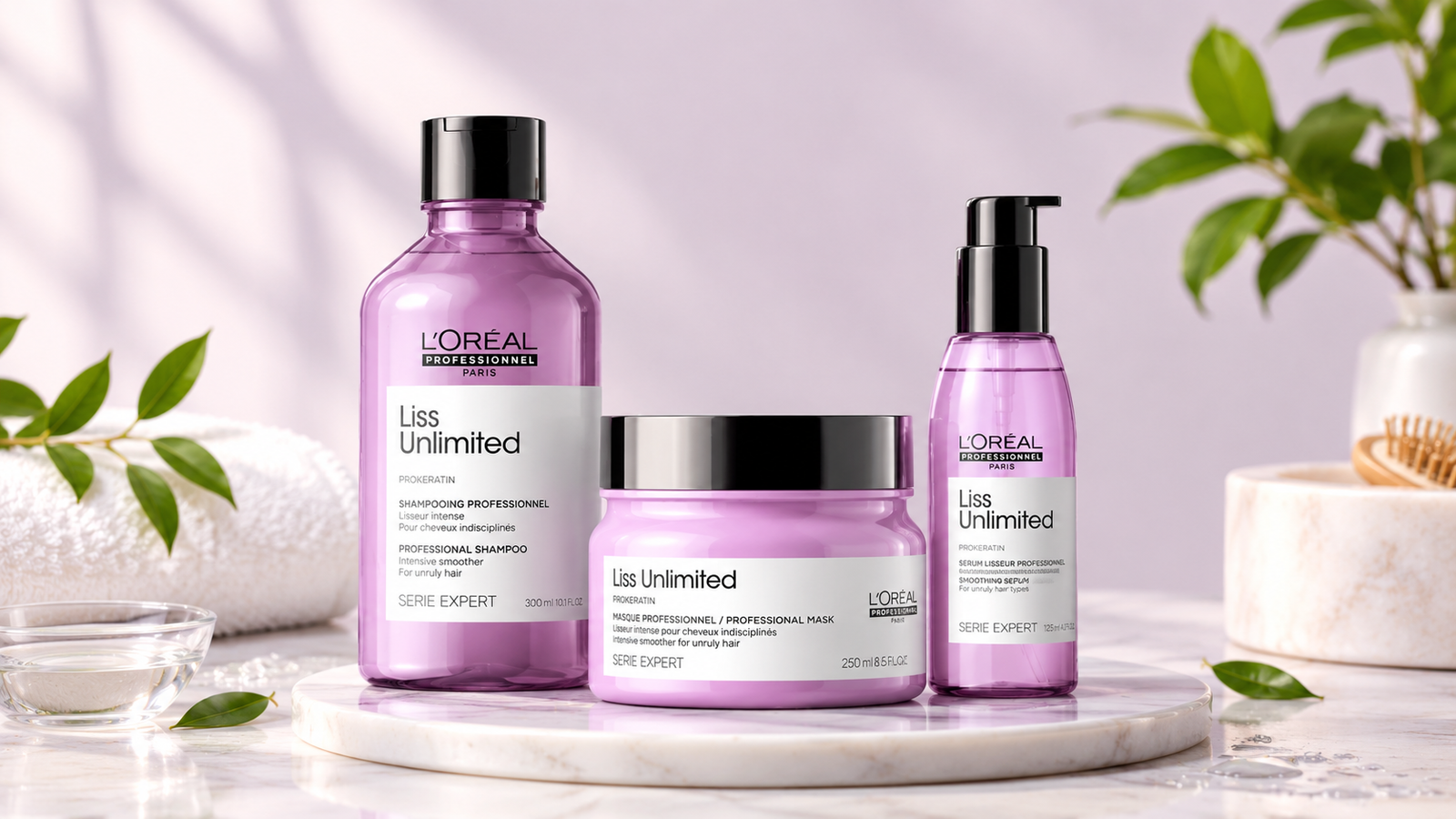
Skincare is one of the most important areas associated with the wider L’Oréal portfolio. Products can include cleansers, moisturizers, serums, eye-care products, sunscreens, treatments, and products aimed at particular skin concerns.
The most useful way to understand these products is not simply by brand name but by their purpose. A cleanser is generally used to remove dirt, excess oil, makeup, and other surface impurities. A moisturizer helps support the skin’s moisture balance. Serums are often designed to deliver particular active ingredients in a more targeted formula.
L’Oréal’s Dermatological Beauty division includes well-known skincare brands such as La Roche-Posay, CeraVe, and SkinCeuticals, alongside other specialized names. The division reported strong growth in 2026, with skincare and sun care among its important areas.
This part of the portfolio shows how broad L’Oréal’s approach to skincare has become. Rather than relying on one type of formula, the company operates brands with different philosophies, price levels, and target consumers.
How to Choose L’Oréal Skincare Products
Choosing skincare should start with understanding what your skin actually needs.
Skin type can provide a useful starting point. Dry skin may feel tight or rough, while oily skin can produce more visible shine. Combination skin can have both oily and drier areas. Sensitive skin may react more easily to certain formulas or environmental factors.
However, skin type is only one part of the decision. A person may also be concerned about dryness, uneven appearance, visible signs of aging, blemishes, or sun exposure.
It is usually better to build a routine around a few useful products rather than adding many products at once. Introducing several new formulas simultaneously can make it difficult to know which product is responsible if irritation occurs.
Reading the product label is equally important. Ingredients, directions, warnings, and recommended usage can tell you more about whether a product fits your routine than marketing language alone.
When trying an unfamiliar skincare product, following its instructions and considering a small-area test can be a sensible precaution, particularly for people who know they have sensitive skin.
A Simple L’Oréal Skincare Routine
A skincare routine does not have to contain a long list of products.
A simple morning routine can begin with a gentle cleanser or another appropriate cleansing step, followed by moisturizer if needed and sun protection. Sunscreen is particularly important when spending time outdoors because ultraviolet exposure can contribute to long-term skin damage.
An evening routine can focus on cleansing and moisturizing. A targeted product can be added if there is a specific concern that the formula is intended to address.
Consistency is generally more useful than constantly changing products. A simple routine that someone can comfortably maintain is often easier to manage than an elaborate routine filled with products that overlap.
The key is to understand what each product is supposed to do. More products do not automatically mean better skincare.
L’Oréal Makeup Products
L’Oréal’s beauty portfolio extends well beyond skincare. Makeup is another major part of the consumer beauty business, with products designed for complexion, eyes, lips, and everyday beauty routines.
Foundation and concealer can help create an even-looking complexion, while mascara and other eye products can add definition. Lip products range from subtle everyday shades to more noticeable finishes.
The best makeup choice depends heavily on personal preference. Someone who wants a lightweight everyday look may prefer a different formula from someone preparing for a special occasion.
Shade selection is also important. Foundation and concealer should be selected with attention to skin tone and undertone rather than simply choosing the shade that looks attractive in its packaging.
L’Oréal’s Consumer Products Division includes L’Oréal Paris, Maybelline New York, Garnier, and NYX Professional Makeup among its four major global brands.
This gives consumers access to several different approaches to makeup within the wider group.
L’Oréal Hair Care and Beauty
Hair care is where L’Oréal’s history has particularly strong roots.
Today, the wider group offers shampoos, conditioners, treatments, masks, styling products, hair color, and professional salon products. Its Professional Products division includes brands serving salon professionals, while consumer-facing brands offer products for everyday home care.
Different hair types naturally require different approaches. Curly, straight, fine, thick, dry, chemically treated, or color-treated hair can respond differently to products.
Instead of choosing a product simply because it is popular, it makes more sense to look at its intended use. Someone with dry or damaged-feeling hair may prioritize conditioning and treatment products, while someone with an oily scalp may have different priorities.
L’Oréal’s professional portfolio also demonstrates the company’s focus on salon expertise. Brands such as Kérastase and Redken are positioned within the professional beauty side of the business.
Understanding L’Oréal Product Ingredients
Ingredients are worth paying attention to because they help explain what a skincare product is designed to accomplish.
Different formulas may contain ingredients intended to hydrate, condition, cleanse, exfoliate, protect against environmental exposure, or support the appearance of healthier-looking skin.
However, an ingredient name by itself does not tell the whole story. Concentration, formulation, combination with other ingredients, and how frequently a product is used can all influence the overall experience.
This is why it is useful to read the complete ingredient list and product directions rather than judging a formula based on one ingredient alone.
L’Oréal says its research teams work across areas including green chemistry, biology, biotechnology, and formulation science. The company also emphasizes ingredient quality, safety, and sustainability as part of its product development process.
For consumers, that scientific background can provide useful context, but individual skin responses still vary. A formula that works comfortably for one person may not be suitable for another.
L’Oréal for Different Skin Types
There is no single skincare routine that works equally well for everyone.
Dry Skin
People with dry-feeling skin may prefer products focused on hydration and moisture support. A gentle cleanser and suitable moisturizer can form the foundation of a simple routine.
Oily Skin
Those with oily skin may prefer lightweight formulas and products that help manage excess oil without leaving the skin feeling unnecessarily stripped.
Combination Skin
Combination skin often requires a balanced approach because different areas of the face may behave differently. Using appropriately lightweight products can help avoid making one area feel too dry while another feels overly oily.
Normal Skin
People with relatively balanced skin may benefit from keeping their routine simple: cleansing, moisturizing when needed, and using sun protection.
Sensitive Skin
Sensitive skin deserves extra care when introducing new products. Fragrance, active ingredients, or certain formulations may not suit everyone. Reading labels and introducing products gradually can make the process easier to manage.
If a skincare concern is persistent, painful, severe, or difficult to understand, a qualified healthcare professional or dermatologist can provide advice that a general beauty guide cannot replace.
How to Build a L’Oréal Beauty Routine on a Budget
A good beauty routine does not need to include every product available.
Start with the essentials. For skincare, that might mean a cleanser, moisturizer, and appropriate sun protection. Additional products can be considered when there is a clear reason to use them.
The same principle applies to makeup and hair care. Instead of purchasing several similar products, think about what you actually use on a regular basis.
Value is not simply about buying the cheapest product. It is about choosing something suitable, using it correctly, and getting meaningful use from it.
L’Oréal’s broad portfolio makes this approach practical because consumers can find products across different categories and price levels.
L’Oréal vs. Other Beauty Brands
Comparing L’Oréal with other beauty companies is not always straightforward because the group operates across so many different segments.
One advantage is variety. The group has consumer brands, luxury brands, professional brands, and dermatological brands under its broader portfolio.
Another difference is its investment in research. L’Oréal says scientific research has been part of its identity since its founding and continues to influence product development today.
At the same time, being a large beauty company does not mean every product will suit every person. A smaller specialist brand may sometimes appeal more to someone looking for a particular ingredient philosophy, texture, packaging style, or niche product.
The right comparison therefore depends on the specific product rather than the company name alone.
Are L’Oréal Products Right for Everyone?
No beauty brand can realistically be described as perfect for everyone.
Individual preferences, skin characteristics, hair type, budget, climate, lifestyle, and tolerance for particular ingredients can all affect whether a product is a good fit.
L’Oréal’s size does mean there is a broad selection to choose from, but that variety also means consumers should pay attention to the exact product rather than assuming that every item within the portfolio has the same formulation or purpose.
A thoughtful approach is to identify the need first and then select the product.
Sustainability and Responsible Beauty
Sustainability has become an increasingly visible part of L’Oréal’s business strategy.
Through its L’Oréal for the Future program, the company has outlined goals involving climate, nature, circularity, and support for communities. The program was launched in 2020 and is designed around longer-term environmental and social commitments.
Packaging is one area where these efforts are particularly noticeable. The company has expanded work around refillable formats and reported a global refill campaign involving multiple divisions, brands, and products in 2026.
L’Oréal also reports efforts to improve the environmental and social profile of new and updated products. According to its product commitments information, 96% of new or updated products in 2023 had an improved environmental or social profile.
Sustainability claims should always be considered in context, but these initiatives show that environmental impact has become part of the company’s product-development conversation.
The Role of Science at L’Oréal
Science is one of the strongest themes running through L’Oréal’s history.
The company says its Research & Innovation organization works across multiple scientific disciplines and operates research centers internationally. Its goal is to develop products that combine performance, quality, and safety while responding to changing consumer needs.
That focus continues to evolve. In 2026, L’Oréal announced a research partnership with the Institut Pasteur focused on skin health science, including areas such as skin biomarkers and the microbiome.
For consumers, this matters because modern beauty products are increasingly influenced by research into skin biology, formulation technology, biotechnology, and personalization.
Tips for Getting Better Results From Your Beauty Routine
The most useful beauty routine is one that is simple enough to maintain and appropriate for your individual needs.
Start slowly when introducing new products. Give yourself time to understand how your skin or hair responds before adding something else.
Follow the instructions provided with each product. Using more of a formula than recommended does not necessarily improve its results.
Protecting the skin from excessive sun exposure is also an important part of a long-term skincare routine. Sun protection should not be treated as an occasional step reserved only for holidays.
Finally, remember that beauty products are tools rather than guarantees. Healthy-looking skin and hair are influenced by many factors, and no single product can solve every concern.
Frequently Asked Questions About L’Oréal
Is L’Oréal a good skincare brand?
L’Oréal has a large skincare portfolio spanning consumer, luxury, and dermatological categories. Its wider group also invests heavily in research and innovation, but whether a specific product is suitable depends on the individual’s skin and needs.
Which L’Oréal products are best for beginners?
Beginners can generally start with basic products that serve clear purposes, such as a suitable cleanser, moisturizer, and sun protection. Additional products can be introduced when there is a specific reason for using them.
How do I choose L’Oréal products for my skin type?
Begin by identifying whether your skin tends to be dry, oily, combination, balanced, or sensitive. Then consider the specific concern you want to address and review the product’s intended use and ingredients.
Can L’Oréal skincare be used every day?
Many skincare products are designed for regular use, but frequency varies by formula. Always follow the directions on the specific product and reduce or stop use if a product causes persistent irritation.
Does L’Oréal offer makeup and hair-care products too?
Yes. The wider L’Oréal Group operates across makeup, hair care, hair color, professional beauty, skincare, fragrances, and other beauty categories. Its four major divisions cover consumer, luxury, professional, and dermatological beauty.
Final Thoughts
L’Oréal is much more than a single beauty brand. It is a global beauty group with a remarkably broad portfolio, ranging from everyday consumer products to luxury cosmetics, professional hair care, and dermatological skincare.
Its long history is closely connected to scientific research, and that emphasis remains visible in the company’s current investment in research, formulation, biotechnology, and skin science. At the same time, its large portfolio gives consumers many different choices rather than one universal beauty routine.
For anyone exploring L’Oréal skincare or beauty products, the smartest approach is to focus on individual needs. Understand your skin or hair type, read product information carefully, introduce new products thoughtfully, and prioritize consistency over complexity.
Ultimately, the best beauty routine is not necessarily the one with the most products. It is the one that fits your needs, your preferences, and your everyday life.