







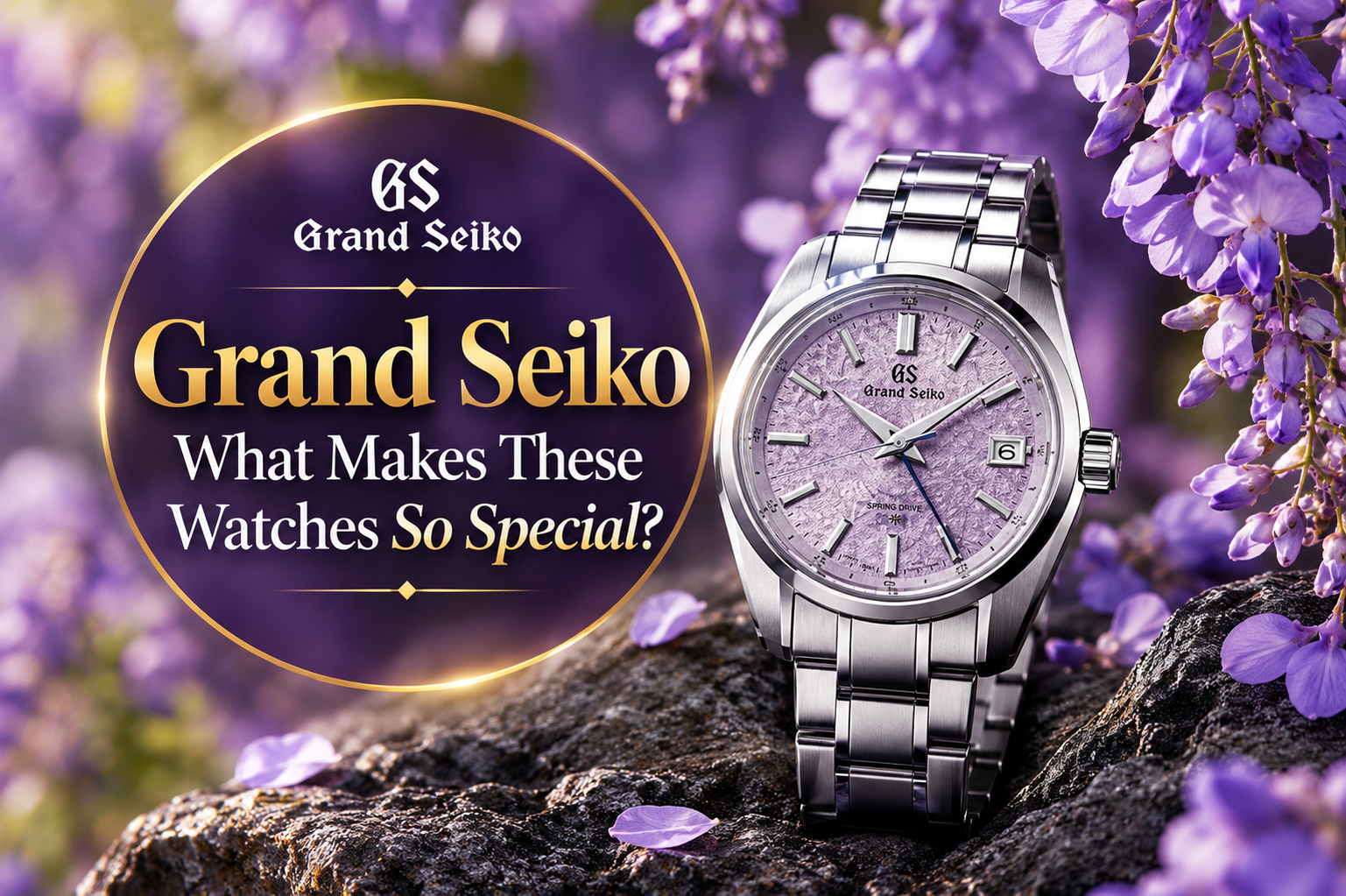
When people talk about fine watches, names from Switzerland often dominate the conversation. Yet Japan has produced a watchmaker with a very different approach to luxury: Grand Seiko. The brand has built its reputation around precision, careful finishing, distinctive design, and an unusual willingness to combine traditional watchmaking with advanced technology.
Grand Seiko was introduced in 1960 with an ambitious goal: to create a watch that could compete at the highest level for accuracy, durability, legibility, and beauty. Over the decades, that idea developed into a recognizable philosophy rather than simply a collection of expensive watches.
What makes Grand Seiko particularly interesting is the balance between things that are easy to measure and things that are difficult to explain with numbers. Its movements can be highly precise, but the appeal also comes from the way light moves across a polished case, the texture of a dial, the shape of an index, and the amount of hand-finishing involved.
For many enthusiasts, that combination is what makes Grand Seiko special.
BIO
| Label | Information |
|---|---|
| Brand | Grand Seiko |
| Founded | 1960 |
| Origin | Japan |
| Type | Luxury wristwatch |
| Known For | Precision and craftsmanship |
| Key Technology | Spring Drive |
| Movement Types | Mechanical, quartz, Spring Drive |
| Signature Finish | Zaratsu polishing |
| Design Style | Refined Japanese design |
| Famous Feature | Textured, detailed dials |
| Notable Collection | Evolution 9 |
| Main Appeal | Precision, finishing, and heritage |
The Story Behind Grand Seiko
The story began in Japan in 1960. At the time, Seiko wanted to demonstrate that Japanese watchmaking could produce watches capable of competing with the finest mechanical watches available internationally.
The first Grand Seiko was created at Suwa Seikosha, and the development philosophy focused on practical qualities such as precision, durability, legibility, and beauty. These ideas remained important as the collection evolved.
The company continued to test and improve its movements, including participation in prestigious observatory competitions in Switzerland during the 1960s. By the end of that decade, Grand Seiko had established a strong reputation for mechanical accuracy.
Then the watch industry changed dramatically.
Quartz technology became increasingly important during the 1970s, and mechanical watches lost much of their mainstream appeal. Grand Seiko’s mechanical production eventually went into a period of absence before returning with the 9S mechanical series in 1998.
That return marked the beginning of the modern Grand Seiko story.
What Makes Grand Seiko Different?
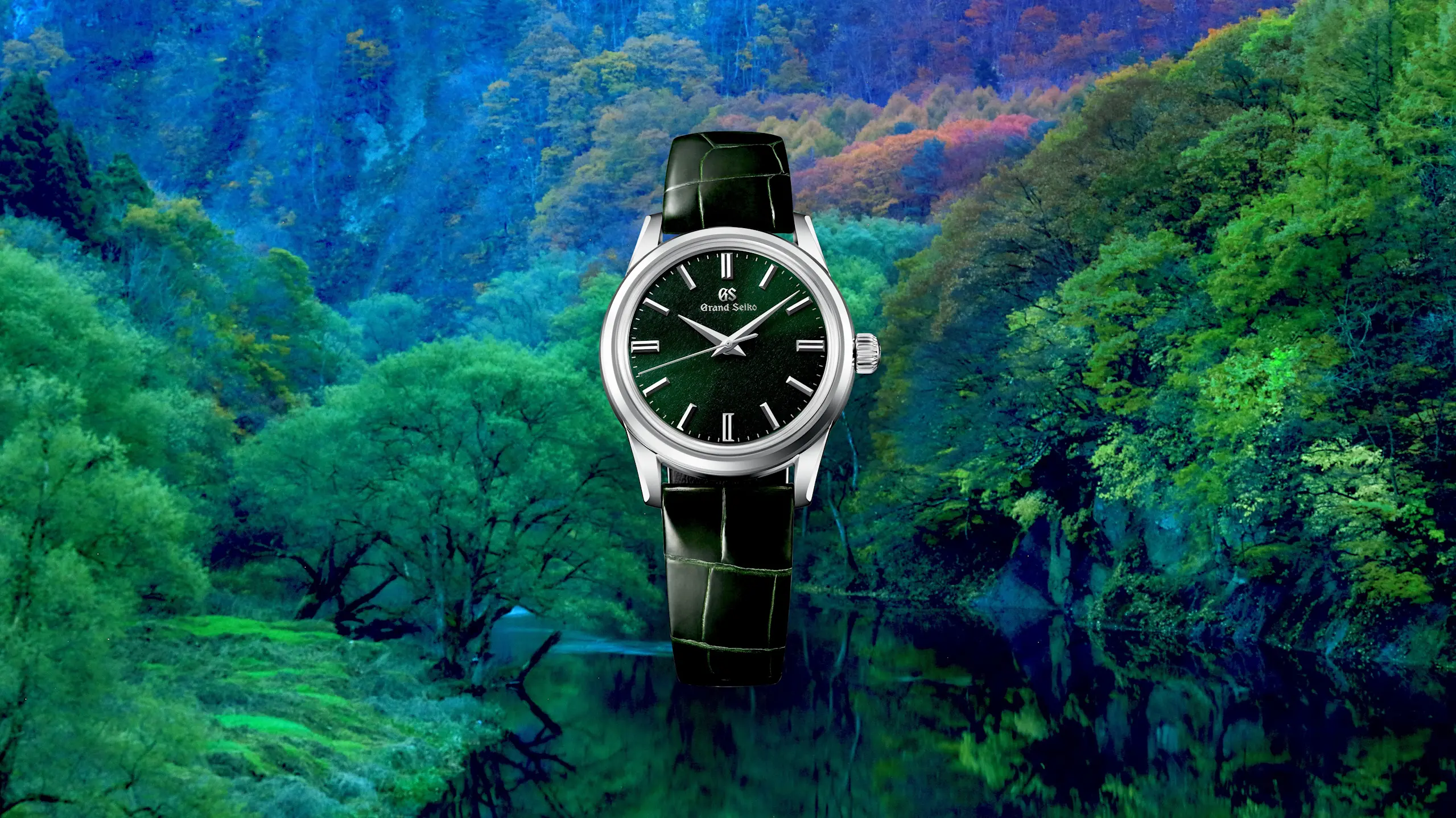
Grand Seiko does not rely on one feature to define its watches. Instead, the brand brings together several areas of watchmaking that are normally appreciated separately.
Precision is one part of the equation. Craftsmanship is another. Design is another.
The watches are designed to be highly legible, carefully finished, and technically sophisticated without relying entirely on extravagant styling.
This gives Grand Seiko a somewhat restrained character. A watch may look simple when viewed from across a room, but a closer look can reveal sharply defined case surfaces, polished hands, detailed indexes, textured dials, and carefully executed movement finishing.
That sense of discovery is an important part of the brand’s appeal.
The Grand Seiko Design Philosophy
One of the most important moments in Grand Seiko’s design history came with the 44GS in 1967.
The 44GS helped establish what became known as the Grand Seiko Style. Rather than simply copying existing luxury-watch designs, the approach emphasized sharp geometry, flat surfaces, strong lines, and controlled reflections.
The idea was to create a watch that could immediately communicate quality through its appearance.
The hands and indexes were designed with broad, highly finished surfaces. The case used contrasting polished and brushed areas. Sharp transitions between surfaces created a distinctive play of light.
That philosophy continues to influence Grand Seiko designs today.
The result is a recognizable style that can appear understated at first glance but becomes more impressive as the watch is examined closely.
Why Zaratsu Polishing Matters
The word Zaratsu is closely associated with Grand Seiko’s case finishing.
It refers to a demanding polishing technique used to create smooth, distortion-free surfaces while retaining the sharp edges and defined lines that are central to the Grand Seiko Style.
This is not simply a matter of making metal shiny.
A conventional polishing process can soften edges and introduce slight distortions into a surface. Grand Seiko’s approach is intended to preserve the geometry of the case while creating a highly reflective finish.
The technique requires the craftsperson to control pressure, movement, speed, and positioning against the polishing wheel. According to Grand Seiko’s own explanation of the process, developing the necessary sense of touch takes substantial training.
That human element is important.
Modern manufacturing can produce extremely precise components, but finishing a visible watch case still requires experience and judgment. This combination of technology and hand skill is one of the characteristics that separates Grand Seiko from watches that depend almost entirely on automated production.
Polished and Brushed Finishing
Grand Seiko’s cases often combine mirror-like polished surfaces with fine brushed areas.
This contrast is more than decoration. It gives the case visual depth.
A polished surface catches light dramatically, while a brushed surface creates a softer appearance. When the two meet at a sharp boundary, the difference becomes particularly noticeable.
Creating an even brushed pattern also requires considerable care. Grand Seiko explains that hairline finishing must be performed with controlled pressure and movement because inconsistencies can become visible under close examination.
This attention to finishing helps explain why a Grand Seiko can look different under natural daylight, indoor lighting, and direct illumination.
Grand Seiko Movements
Another major reason Grand Seiko attracts enthusiasts is its approach to movements.
The modern Grand Seiko lineup has three major movement families: mechanical, quartz, and Spring Drive.
Each represents a different solution to the problem of accurate timekeeping.
Mechanical movements use stored energy in a mainspring and regulate that energy through a traditional mechanical system.
Quartz movements use a battery and quartz oscillator to provide highly stable timekeeping.
Spring Drive takes a different approach, using a mainspring as its source of energy while applying an electronic regulation system to control the release of that energy.
That variety means Grand Seiko is not committed to only one definition of traditional watchmaking.
Why Spring Drive Is So Important
For many people, Spring Drive is the technology most strongly associated with modern Grand Seiko.
The idea behind it is fascinating because the movement is powered by a conventional mainspring but regulated electronically. It does not use a battery as its power source, yet it achieves accuracy far beyond what is normally expected from a traditional mechanical watch.
The development process was extraordinarily long. Grand Seiko’s published history traces the technology through decades of research before the automatic Spring Drive caliber 9R65 was introduced in 2004.
One of Spring Drive’s most recognizable features is the motion of its seconds hand.
Instead of the familiar ticking or stepping motion found on many watches, the seconds hand moves in a smooth, continuous glide. Grand Seiko describes this movement as a natural expression of the flow of time.
For watch enthusiasts, it is a small detail with a surprisingly strong visual effect.
Modern Spring Drive Technology
Spring Drive has continued to develop.
Grand Seiko introduced the 9RA5 movement in 2020 as a newer generation of Spring Drive technology. It offers a five-day power reserve and an accuracy specification of approximately ±10 seconds per month, while also being thinner than earlier Spring Drive designs.
At the higher end, Grand Seiko has also developed Spring Drive movements with extended power reserves.
The Caliber 9R01, introduced in 2016, was created by the Micro Artist Studio and offered an eight-day, or 192-hour, power reserve.
These developments show that Spring Drive is not simply an old novelty. It remains an important area of technical development for the brand.
Grand Seiko Mechanical Movements
Mechanical watch enthusiasts have plenty to explore as well.
The 9S series, reintroduced in 1998, represented Grand Seiko’s return to mechanical watchmaking after its long absence. The company combined traditional mechanical techniques with modern manufacturing and materials to create a new generation of movements.
Grand Seiko later developed high-beat movements such as the 9S85, which operates at 36,000 vibrations per hour.
The newer 9SA5 movement continued this high-beat approach while incorporating technologies such as a Dual Impulse Escapement and twin barrels. Grand Seiko states that the movement provides approximately 80 hours of power reserve.
These movements appeal to people who appreciate the traditional mechanical side of watchmaking while still wanting modern engineering.
Grand Seiko Quartz Is Different Too
It may seem strange for a luxury mechanical-watch brand to put so much attention into quartz, but Grand Seiko has always treated quartz as a serious form of watchmaking.
The brand’s quartz history includes the 9F series, introduced in the 1990s. Grand Seiko designed the movement specifically for its watches rather than treating quartz as simply an inexpensive alternative to mechanical technology.
The philosophy makes sense when viewed through the brand’s original goal of producing highly practical watches.
Quartz can provide excellent accuracy and reliability. Grand Seiko’s approach is to give that technology the same attention to construction, finishing, and usability that it gives to its mechanical movements.
The Beauty of Grand Seiko Dials
A Grand Seiko dial can be one of its most memorable features.
Rather than relying only on bold colors or decorative complications, the brand often uses texture and light to create visual interest.
Some dials draw inspiration from Japanese landscapes, seasons, forests, snow, mountains, and changing natural light. The patterns can be subtle enough to appear almost plain from a distance, but much more complex when viewed closely.
This approach fits naturally with Japanese aesthetic traditions that value restraint and detail.
The dial does not always need to demand attention. Sometimes its appeal comes from what you notice after spending more time with it.
The Hands and Indexes
The hands and indexes deserve attention as well.
Grand Seiko’s design philosophy calls for surfaces that are carefully formed and polished to provide strong legibility. The combination of sharp edges and reflective surfaces allows the hands and markers to interact with light without becoming difficult to read.
This is an important distinction.
Luxury watches can sometimes prioritize decoration over practical readability. Grand Seiko’s philosophy attempts to make beauty and legibility work together.
That balance has been part of the brand’s identity from its early years.
The Collections
Grand Seiko’s collections provide different interpretations of the same underlying philosophy.
The Heritage Collection is closely connected to the brand’s historical designs. It often uses traditional Grand Seiko shapes and design elements while incorporating modern movements.
The Sport Collection takes the same attention to finishing and precision into watches intended for a more active setting. Larger cases, stronger water resistance, and sport-oriented functions are common themes.
The Elegance Collection focuses more heavily on formal proportions and refined styling.
The Evolution 9 Collection represents a more contemporary interpretation of Grand Seiko’s design language. It develops the established principles of strong geometry, carefully controlled surfaces, and excellent legibility in a more modern form.
Together, these collections demonstrate that Grand Seiko is not limited to one particular type of watch.
Grand Seiko Compared With Other Luxury Watches
Comparing Grand Seiko with brands such as Rolex or Omega is not simply a question of which watch is better.
Each brand has a different identity.
Rolex has enormous recognition and a strong connection with iconic sports and professional watches. Omega has a long history of technical innovation and well-known collections. Grand Seiko takes a more understated path, emphasizing Japanese craftsmanship, finishing, movement technology, and design details.
One of the biggest differences is the way Grand Seiko communicates luxury.
Rather than making the logo or brand recognition the primary attraction, many Grand Seiko watches encourage the owner to look more closely at the object itself.
The polished case, textured dial, hand-finished details, and movement technology become the focus.
For some buyers, that quiet approach is exactly what makes the brand appealing.
Are Grand Seiko Watches Worth the Price?
Whether a Grand Seiko is worth its price depends on what the buyer values.
If someone is primarily interested in brand recognition, there may be other watches that make a stronger statement.
But if the buyer appreciates case finishing, movement technology, Japanese craftsmanship, precision, and subtle design, Grand Seiko becomes much more compelling.
The price reflects more than the basic ability to tell time. It also reflects research, movement development, skilled finishing, manufacturing, quality control, and the labor involved in creating the final watch.
Grand Seiko’s history shows that the company has spent decades developing these capabilities rather than treating them as recent marketing ideas.
Choosing a Grand Seiko
Choosing the right Grand Seiko starts with understanding what type of movement you want.
A mechanical model is ideal for someone who enjoys traditional watchmaking and the mechanical character of a manually or automatically wound movement.
Spring Drive is particularly interesting for someone who wants the energy and visual character of a mechanical watch but values exceptional precision and the smooth glide of the seconds hand.
Quartz makes sense for someone who prioritizes accuracy, practicality, and low-maintenance ownership while still wanting the finishing and design associated with Grand Seiko.
The case and dial should also be considered carefully.
A Grand Seiko that looks perfect in a photograph may feel completely different on the wrist. Case size, thickness, lug shape, bracelet or strap choice, and dial color can all change the experience.
Caring for a Grand Seiko
A finely finished watch deserves careful handling.
Keeping the case clean, avoiding unnecessary contact with hard surfaces, and storing the watch safely when it is not being worn can help preserve its appearance.
Polished surfaces can show scratches more readily than brushed surfaces, so everyday care matters.
Mechanical and Spring Drive watches also require appropriate servicing over time. The exact service requirements depend on the caliber and model, so owners should follow the manufacturer’s recommendations rather than relying on a universal schedule.
The goal is simple: preserve both the mechanical performance and the visual condition of the watch.
Why Collectors Appreciate Grand Seiko
Collectors often become interested in Grand Seiko because the brand rewards close observation.
A watch may not immediately announce everything that went into making it. The details reveal themselves gradually.
You might first notice the overall case shape. Then the sharp transition between polished and brushed surfaces. Then the texture of the dial. Then the finishing of the hands and indexes. Finally, the movement can provide another layer of interest.
This creates an experience that is quite different from buying a watch mainly because of its name.
There is also the appeal of Japanese watchmaking itself.
Grand Seiko demonstrates that high-end horology does not have to follow a single European formula. Its approach combines Japanese design ideas, traditional handcraft, advanced manufacturing, and unusual movement technology.
The Lasting Appeal of Grand Seiko
The strongest quality of Grand Seiko may be its consistency of purpose.
From the first watch in 1960 to today’s mechanical, quartz, and Spring Drive models, the brand has continued to emphasize precision, durability, legibility, and beauty.
Its modern watches can be technologically advanced without looking overly complicated.
Its traditional designs can feel familiar without becoming outdated.
And its finishing can be impressive without relying on excessive decoration.
That combination gives Grand Seiko a distinctive position in the luxury-watch world.
Final Thoughts
So, what makes Grand Seiko watches so special?
The answer is not just one movement, one polishing technique, or one famous model. It is the way many different elements come together.
The brand has a long history of pursuing accuracy. It has developed mechanical, quartz, and Spring Drive technologies. It has built a distinctive design language around sharp geometry and controlled reflections. Its Zaratsu polishing demonstrates the importance of human skill, while its Spring Drive movements show how traditional mechanical energy can be combined with electronic regulation.
Most importantly, Grand Seiko has developed an identity that feels distinctly its own.
For someone who values the details that become visible only after looking closely, that may be the greatest attraction. Grand Seiko is not simply about owning a luxury watch; it is about appreciating the craftsmanship, engineering, and design behind one.
1. What makes Grand Seiko watches special?
Grand Seiko is known for its precise movements, distinctive Japanese design, detailed dial work, and carefully finished cases. Its combination of traditional craftsmanship and modern technology gives the watches a distinctive character.
2. What is Grand Seiko Spring Drive?
Spring Drive is a unique movement technology that uses energy from a mainspring while regulating time with a quartz-based electronic system. This produces highly accurate timekeeping and a smooth, continuous seconds-hand motion.
3. What is Zaratsu polishing?
Zaratsu is a demanding case-finishing technique associated with Grand Seiko. It creates highly reflective, distortion-free surfaces while preserving the sharp edges that are central to the brand’s design language.
4. Is Grand Seiko a luxury watch brand?
Yes. Grand Seiko occupies the high-end luxury-watch segment, with an emphasis on movement development, precision, case finishing, dial craftsmanship, and Japanese watchmaking traditions.
5. Why do collectors appreciate Grand Seiko?
Collectors often appreciate Grand Seiko for its combination of technical innovation, refined finishing, distinctive designs, and Japanese craftsmanship. Its Spring Drive technology is particularly notable within the brand’s history.