







Introduction
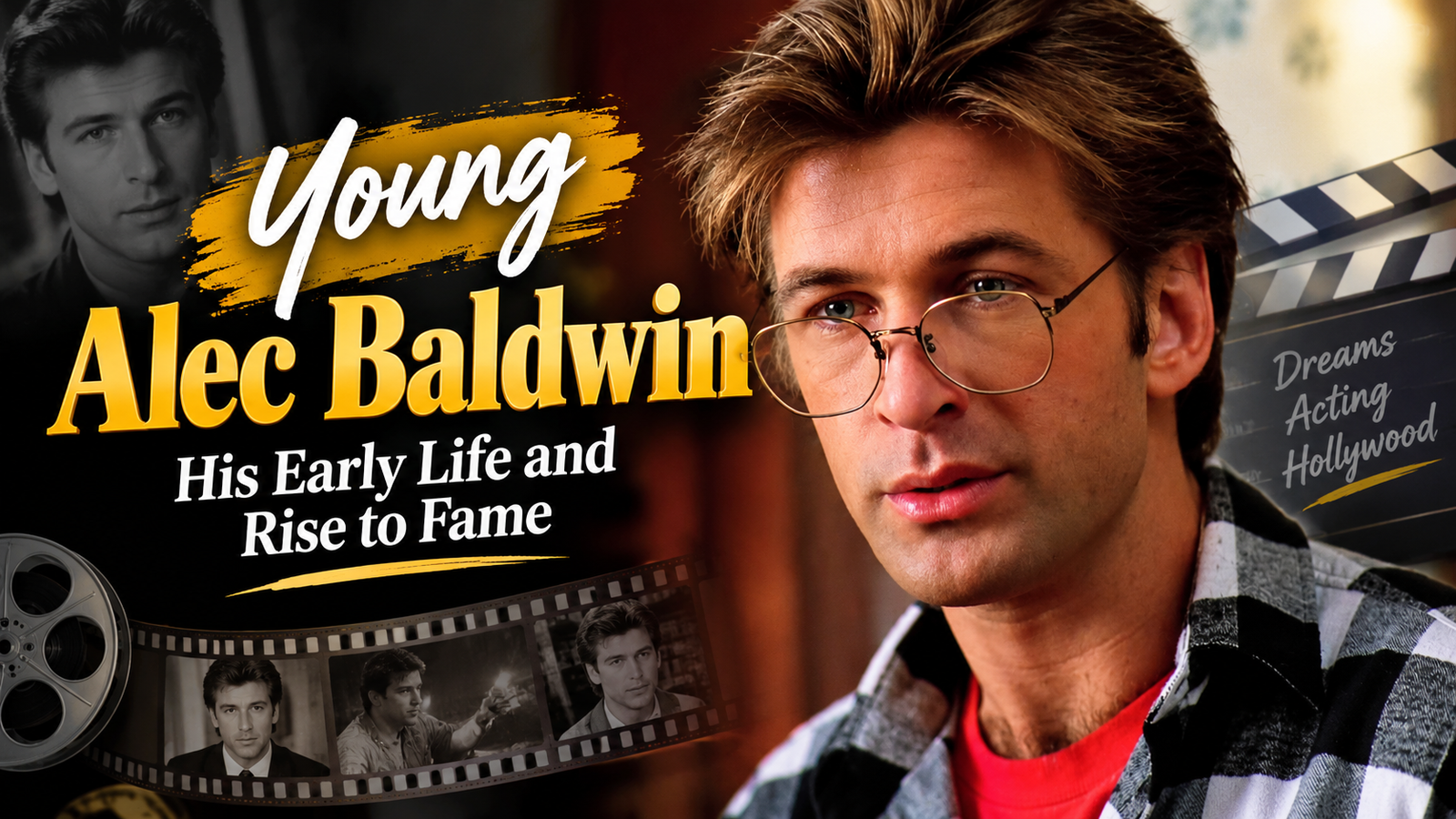
Before becoming one of Hollywood’s most recognizable actors, Alec Baldwin was a young performer working to establish himself in television, theatre, and film. His early career was shaped by formal acting training, a willingness to take on different characters, and a series of opportunities that gradually brought him to the attention of a wider audience.
The story of young Alec Baldwin is particularly interesting because his rise to fame did not happen overnight. He began with a role in a daytime television drama, gained experience in prime-time television, and eventually moved into films that demonstrated his versatility. By the late 1980s, he had become a familiar face in several notable productions.
His performances in Beetlejuice, Working Girl, and Married to the Mob helped introduce him to movie audiences. In 1990, his portrayal of Jack Ryan in The Hunt for Red October further established his reputation as a leading man.
Looking back at Baldwin’s early years offers a clearer understanding of how education, professional experience, and carefully chosen roles contributed to his development as an actor.
BIO
| Label | Information |
|---|---|
| Full Name | Alexander Rae Baldwin III |
| Known As | Alec Baldwin |
| Date of Birth | April 3, 1958 |
| Birthplace | Amityville, New York, USA |
| Nationality | American |
| Profession | Actor, Producer |
| Father | Alexander Rae Baldwin Jr. |
| Mother | Carol Newcomb Baldwin |
| Siblings | Five, including Daniel, William, and Stephen Baldwin |
| Education | George Washington University and NYU Tisch School of the Arts |
| Acting Debut | The Doctors (1980) |
| Early Breakthrough | Beetlejuice (1988) |
| Famous Early Film | The Hunt for Red October (1990) |
Who Is Alec Baldwin?
Alec Baldwin, whose full name is Alexander Rae Baldwin III, was born on April 3, 1958, in Amityville, New York. He grew up in Massapequa, a community on Long Island, in a family that would later become well known in the entertainment industry.
Baldwin developed a long career across several areas of entertainment, including movies, television, and theatre. His performances have ranged from dramatic characters and romantic leads to comedy roles that rely on sharp dialogue and confident delivery.
Although many modern viewers recognize him from the television comedy 30 Rock, his professional journey began decades earlier. His work during the 1980s established the foundation for the career that followed.
Baldwin also belongs to a family with several actors. His brothers Daniel, William, and Stephen Baldwin pursued careers in the same industry. However, Alec developed his own professional identity through a combination of television appearances, stage performances, and major film roles.
His early career is worth exploring because it shows how an actor can develop gradually, learning through smaller opportunities before becoming associated with major productions.
Young Alec Baldwin’s Childhood and Family
Alec Baldwin grew up in Massapequa, Long Island, as one of six children. His father, Alexander Rae Baldwin Jr., worked as a teacher and football coach, while his mother, Carol Newcomb Baldwin, raised the family alongside her other responsibilities.
His childhood was spent outside the entertainment world, and acting was not initially the only possible direction for his future. Like many students, he explored different interests while attending school and considering what he wanted to do professionally.
Baldwin was interested in sports and movies during his younger years. His experiences growing up in a large family also meant that he shared his home life with several siblings, some of whom would later become actors themselves.
The Baldwin family eventually became associated with American film and television, but each brother followed his own path. Alec’s career began before all of his brothers had established themselves as performers.
Although family connections are often discussed when considering the Baldwin brothers, Alec’s early success came through his own auditions, television work, acting education, and growing experience in the profession.
His childhood provides useful context for understanding the person he became, but the most important turning point in his professional life came when he began taking acting seriously.
Young Alec Baldwin’s Education and Early Ambitions
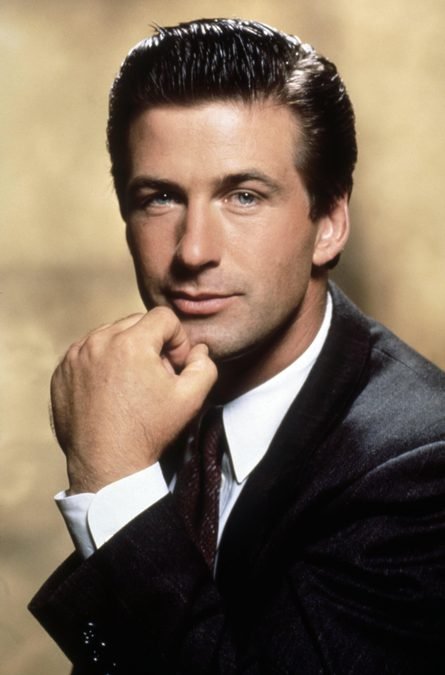
Before pursuing acting professionally, Baldwin attended George Washington University in Washington, D.C. He studied political science and considered the possibility of attending law school.
This period of his life is an important part of his story because it demonstrates that his career direction was not always fixed. His original academic interests pointed toward a different profession, but his interest in performance eventually became more significant.
Baldwin later transferred to New York University, where he studied acting at the Tisch School of the Arts. He also received training associated with the Lee Strasberg Theatre Institute, which is known for its connection to method acting and character development.
Formal training gave him opportunities to work on voice, movement, emotional expression, and the interpretation of scripts. These skills would become important throughout his career, particularly when performing characters with complicated personalities or demanding dialogue.
Studying acting also placed Baldwin closer to the professional theatre and television industries in New York. The city offered opportunities to meet people working in entertainment and to learn how productions operated.
His education did not guarantee success, but it provided a foundation that helped him prepare for professional work. His later performances showed an interest in character details and dialogue that extended beyond his early reputation as a promising young actor.
How Alec Baldwin Started His Acting Career
Alec Baldwin’s professional acting career began in 1980 when he joined the cast of the NBC daytime soap opera The Doctors. He played Billy Aldrich, a character he portrayed until 1982.
For a young actor, a recurring television role offered valuable experience. Daytime dramas require performers to learn scripts quickly, maintain character consistency, and work within demanding production schedules.
Baldwin’s work on The Doctors allowed him to develop these skills while gaining exposure to the professional entertainment industry. Rather than immediately becoming a movie star, he built his experience through regular television work.
He subsequently appeared in the short-lived television series Cutter to Houston in 1983. In 1984, he joined the prime-time drama Knots Landing, playing Joshua Rush.
His work on Knots Landing brought him to a broader television audience. The series was already established, and his role gave him an opportunity to work in a different kind of dramatic production.
These early credits helped him move beyond daytime television. They also demonstrated that he could adapt to different formats and characters, an ability that would become a recurring feature of his career.
His first few years were an apprenticeship in the practical sense: learning the industry, gaining confidence, and discovering how his acting style could work across different stories.
Young Alec Baldwin in the 1980s
The 1980s were a formative decade for Baldwin. He moved from television into theatre and film, gradually building a portfolio that showed more range than a single recurring role could offer.
His early television work gave him a professional starting point, but the film industry presented different challenges. Film performances often require more controlled expressions, subtle reactions, and a precise understanding of how a character fits into a larger story.
Baldwin made his feature-film debut in Forever, Lulu, released in 1987. Although the film did not immediately make him a major star, it marked an important transition from television performer to film actor.
The following year proved particularly significant. Baldwin appeared in several different movies, including Beetlejuice, Working Girl, Married to the Mob, and Talk Radio.
These films gave audiences the chance to see him in different settings. He could play a gentle husband in a fantasy comedy, a confident professional in a romantic comedy, or a more intense character in a drama.
This variety mattered because it helped prevent his early career from being defined by a single type of performance. Directors and audiences could see that he was capable of working across genres.
By the end of the decade, Baldwin had established a promising place in Hollywood and was moving toward more prominent leading roles.
The Movies That Helped Young Alec Baldwin Become Famous
Beetlejuice (1988)
One of Baldwin’s best-known early films is Beetlejuice, directed by Tim Burton. The fantasy comedy follows a recently deceased couple who attempt to deal with the new occupants of their former home.
Baldwin played Adam Maitland, alongside Geena Davis as Barbara Maitland. The characters are central to the film’s unusual premise, and their comparatively ordinary personalities provide a contrast to the strange events surrounding them.
Adam is thoughtful and somewhat reserved, making him different from the more eccentric characters in the story. Baldwin’s performance helped establish the emotional centre of a film known for its imaginative visual style and unusual humour.
The movie became an enduring favourite among audiences and remains an important part of his early filmography.
For people searching for young Alec Baldwin, Beetlejuice is especially relevant because it captures him near the beginning of his rise to wider recognition.
Working Girl (1988)
In Working Girl, directed by Mike Nichols, Baldwin played Mick Dugan, a romantic interest in a story about ambition, professional opportunity, and workplace competition.
The film follows Tess McGill, played by Melanie Griffith, as she attempts to advance her career in New York City’s financial world. Baldwin’s character contributes to the personal and professional complications that develop throughout the story.
Unlike his role in Beetlejuice, this character is more closely connected to the film’s workplace and relationship dynamics. The performance showed his ability to fit into a contemporary romantic comedy while working alongside an established cast.
Working Girl was an important release in Baldwin’s career because it placed him within a major studio production and exposed him to a broad audience.
Married to the Mob (1988)
Another notable film from this period was Jonathan Demme’s Married to the Mob. The crime comedy starred Michelle Pfeiffer and explored the complicated world surrounding a woman trying to move beyond her connections to organized crime.
Baldwin played Frank de Marco, a character whose behaviour contrasts with the more conventional roles he had played elsewhere.
The film demonstrated his willingness to take on characters who were not necessarily admirable. Rather than relying exclusively on likable leading-man roles, he could contribute to stories involving flawed personalities and comic situations.
Alongside Beetlejuice and Working Girl, the movie helped make 1988 a defining year in Baldwin’s early film career.
Talk Radio (1988)
Baldwin also appeared in Oliver Stone’s Talk Radio, a drama based on the play by Eric Bogosian. The story examines the pressures surrounding a provocative radio host and the reactions his broadcasts create.
Although Baldwin was not the central character, the film offered him experience in a more serious dramatic setting. It was different in tone from the fantasy and romantic comedies that had helped introduce him to movie audiences.
Taken together, these four films showed that Baldwin’s early success was not based on one performance alone. He was building experience across several genres and working with directors who brought different approaches to storytelling.
Young Alec Baldwin in The Hunt for Red October
In 1990, Baldwin took on one of the most important roles of his early career in The Hunt for Red October. The political thriller, based on Tom Clancy’s novel, follows a Soviet submarine captain whose actions create an international crisis during the Cold War.
Baldwin portrayed Jack Ryan, a CIA analyst who believes he understands the captain’s intentions and attempts to prevent a dangerous misunderstanding.
The role required a different kind of performance from his work in Beetlejuice. Instead of playing a comparatively ordinary husband caught in supernatural circumstances, Baldwin portrayed an intelligent professional operating under intense pressure.
His character relies on observation, reasoning, and communication rather than physical action alone. Baldwin’s performance helped establish Ryan as a central figure in the film’s suspenseful narrative.
The movie also starred Sean Connery and became a major commercial success. Baldwin’s appearance alongside an experienced international cast raised his profile and demonstrated his ability to carry a prominent role in a large production.
For many viewers, The Hunt for Red October represents the point at which young Alec Baldwin became a recognizable Hollywood leading man.
He did not continue playing Jack Ryan in the later film adaptations, but his performance remains an important part of the character’s screen history.
Alec Baldwin’s Broadway Career
Film and television were not the only areas in which Baldwin developed his acting skills. Theatre played an important role in his professional life, giving him opportunities to work with dialogue and characters in a live setting.
He made his Broadway debut in 1986 in a production of Joe Orton’s play Loot. The experience placed him within the demanding environment of professional theatre, where actors must sustain performances without the multiple takes available in film production.
Theatre requires concentration, timing, vocal control, and an ability to respond to other performers in real time. These demands can help actors develop a deeper understanding of character and dramatic structure.
Baldwin continued to work on stage as his film career developed. In 1992, he portrayed Stanley Kowalski in a Broadway revival of A Streetcar Named Desire. His performance earned him a Tony Award nomination for Best Actor in a Play.
His theatre work demonstrates that he was interested in more than screen recognition. He continued to pursue roles that challenged him in different ways, and his stage performances became a significant part of his broader career.
From Young Actor to Established Hollywood Star
By the early 1990s, Baldwin had moved beyond the stage of his career when he was mainly known for television appearances. He had accumulated film credits, developed experience in theatre, and demonstrated an ability to perform in both leading and supporting roles.
One of his most memorable performances from this period came in Glengarry Glen Ross (1992), a drama about real estate salespeople facing professional pressure and fierce competition.
Baldwin played Blake, a confident and intimidating representative who delivers a forceful speech to the sales team. Although his screen time was limited, the scene became one of the film’s most discussed moments.
The role illustrated an important feature of Baldwin’s acting style: he could make a strong impression even without being the central character throughout a film.
His performance also helped establish a pattern that would continue in later years. Baldwin could work as a leading man, but he could also bring energy and authority to supporting roles that required a commanding presence.
During this period, his career included films, stage productions, and other television projects. This variety gave him a professional foundation that would later support his transition into comedy, voice acting, and long-running television roles.
What Made Young Alec Baldwin Stand Out?
Several qualities contributed to Baldwin’s growing recognition during his younger years.
First, he developed a versatile acting style. His performances in Beetlejuice, Working Girl, and Talk Radio differed considerably in tone. He was not limited to one genre, which helped him gain opportunities in a range of productions.
Second, he had formal acting training. His education at New York University and training at the Lee Strasberg Theatre Institute gave him a foundation in performance that he could continue developing through practical work.
Third, he understood the importance of dialogue. Many of Baldwin’s notable performances depend on timing, vocal delivery, and the ability to communicate a character’s personality through conversation. These qualities later became especially valuable in comedy and television.
Fourth, he gained experience in different production environments. Daytime television, prime-time drama, Broadway theatre, and feature films each presented different challenges. Working across these formats helped him become a more adaptable performer.
Finally, Baldwin’s early career benefited from a series of roles that allowed audiences to see him in different contexts. His success was not the result of one defining performance, but of several opportunities that gradually expanded his professional reputation.
Young Alec Baldwin Compared With His Later Career
Looking back at Baldwin’s younger years reveals how much his professional identity changed over time.
In the 1980s and early 1990s, he was frequently cast as a romantic interest, a confident professional, or a serious dramatic character. His early screen appearances often emphasised his presence as a conventional leading man.
As his career continued, he took on more comedic and character-driven roles. He became particularly well known for playing Jack Donaghy in the television comedy 30 Rock, a performance that earned him major awards and introduced his work to another generation of viewers.
His later career also included voice acting, film production, theatre appearances, and political satire on television.
The contrast between his younger roles and later work illustrates how an actor’s career can develop beyond the image that first attracts attention. Baldwin’s early filmography shows the foundation of his career, while his later performances reveal how he adapted to different audiences and changing opportunities.
Interest in young Alec Baldwin is therefore about more than appearance. It also reflects curiosity about the early performances, professional choices, and experiences that helped shape a long career in entertainment.
Conclusion
The story of young Alec Baldwin is a journey from a Long Island childhood to the professional stages of New York and the film sets of Hollywood. After initially studying political science and considering law school, he pursued acting and began building his career through television.
His role in The Doctors provided an early professional opportunity, while Knots Landing helped him gain further television experience. His performances in Beetlejuice, Working Girl, Married to the Mob, and Talk Radio made the late 1980s an important period in his development.
With The Hunt for Red October in 1990, Baldwin took a major step toward becoming an established leading man. His continuing work in theatre and films such as Glengarry Glen Ross further demonstrated his range.
What makes his early career notable is the steady progression from one opportunity to another. Young Alec Baldwin built his reputation through training, experience, and a willingness to take on different kinds of roles. Those early years laid the groundwork for the varied television, film, and stage career that followed.