



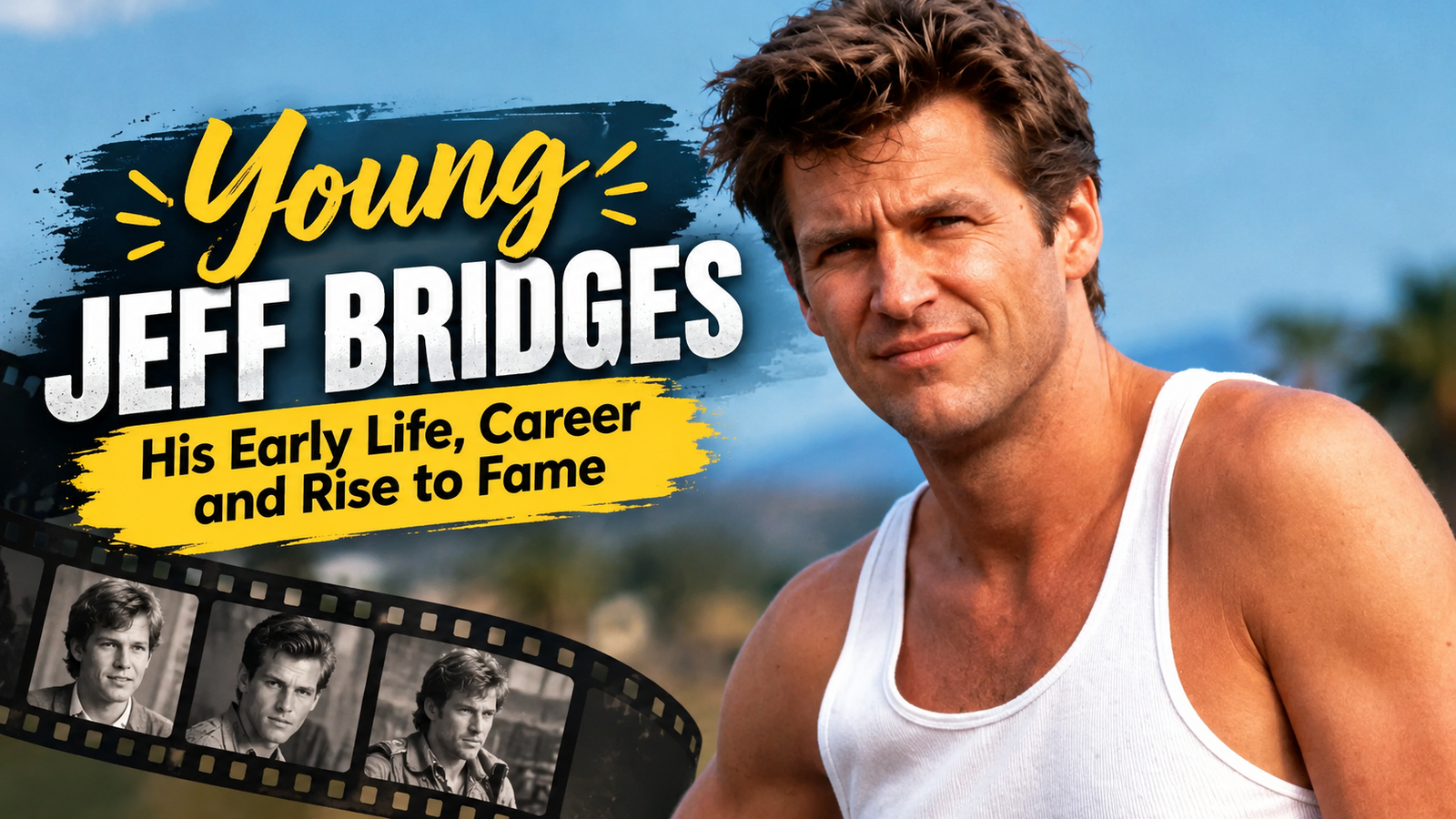

Jeff Bridges is one of those actors whose career seems to have grown naturally rather than overnight. Long before audiences knew him for memorable characters such as The Dude in The Big Lebowski or Bad Blake in Crazy Heart, he was a young actor learning his craft in a Hollywood family.
The story of young Jeff Bridges is especially interesting because acting was part of his life from an early age. His father, Lloyd Bridges, was already an established actor, while his mother, Dorothy Bridges, was a writer and actress. Jeff grew up around the entertainment industry, but his eventual success came from developing an acting style and career identity of his own.
From early television appearances to his acclaimed performance in The Last Picture Show, Bridges gradually moved from being a familiar Hollywood family name to becoming a respected young performer. His early career also showed something that would remain important throughout his life: a willingness to choose interesting characters instead of simply chasing conventional stardom.
BIO
| Label | Information |
|---|---|
| Full Name | Jeffrey Leon Bridges |
| Known As | Jeff Bridges |
| Birth Date | December 4, 1949 |
| Birthplace | Los Angeles, California |
| Profession | Actor, Singer, Producer |
| Father | Lloyd Bridges |
| Mother | Dorothy Bridges |
| Brother | Beau Bridges |
| Early Screen Work | Began acting as a child |
| Breakthrough Film | The Last Picture Show |
| First Oscar Nomination | The Last Picture Show |
| Notable Early Film | Thunderbolt and Lightfoot |
| Career Style | Known for versatile, natural performances |
Jeff Bridges’ Early Life
Jeffrey Leon Bridges was born on December 4, 1949, in Los Angeles, California. He was the son of Lloyd Bridges and Dorothy Bridges, and his older brother Beau Bridges would also become a successful actor.
Growing up in Los Angeles gave Jeff an unusual childhood. His father was regularly working in film and television, so the world of acting was not something Jeff discovered later in life. It was already part of his surroundings.
The Bridges family was particularly close. Jeff and Beau were raised in an environment where their parents encouraged creativity, while the brothers also shared interests outside acting, including sports and outdoor activities. The Academy of Motion Picture Arts and Sciences has highlighted the strong family connection between Jeff, Beau and their parents when discussing the Bridges family’s long history in entertainment.
For Jeff, however, having an actor for a father did not automatically make the profession easy. He still had to find his own reasons for becoming an actor and eventually develop a style that audiences could recognize as his own.
Growing Up Around Hollywood
One of the most interesting things about young Jeff Bridges is that his introduction to acting happened at an unusually early age.
His first screen appearance came as an infant in The Company She Keeps, released in 1951. It was an uncredited appearance, but it technically placed him in front of a movie camera before he was old enough to understand what an acting career meant. Turner Classic Movies records that early appearance and also notes his later television work with his father.
His childhood acting experiences became more substantial during the late 1950s and 1960s. Jeff and Beau appeared in episodes of their father’s television series Sea Hunt, giving both brothers firsthand experience of professional production.
The Academy has preserved material from the Bridges family’s television history, including Sea Hunt, The Lloyd Bridges Show and other productions that featured the family’s earliest acting work.
Those experiences mattered because Jeff was not simply watching his father work. He was learning what happened on a set, how performers interacted with directors and other actors, and how a scene came together.
Learning From Lloyd Bridges
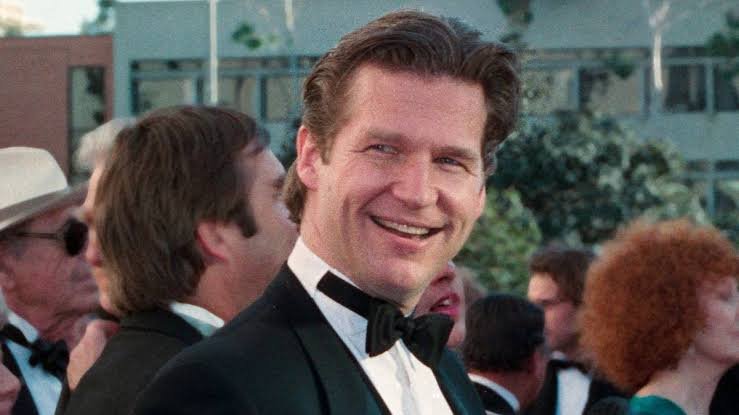
Lloyd Bridges was an important influence on his son’s development. He had built a substantial career across film and television, and his experience gave Jeff an unusually close look at professional acting.
Jeff’s early appearances with his father also helped him understand that acting involved more than memorizing lines. There was timing, physical expression, listening and reacting to other performers.
The Academy has recalled an amusing story from Jeff’s childhood in which actress Jane Greer pinched his cheeks to bring out an emotional reaction for the camera. Years later, when Bridges worked with Greer again, he remembered the incident.
Stories like this show how early Jeff’s relationship with acting began. At the same time, his parents did not simply push him toward becoming a movie star. His eventual career developed through a combination of family influence, personal interest and professional experience.
His Brother Beau Bridges
Beau Bridges also played an important role in Jeff’s early life.
The two brothers shared an interest in acting and eventually became successful performers in their own right. Their careers developed separately, but their relationship remained close.
The Academy has described Jeff and Beau as having a strong professional and personal bond. The brothers have also spoken about growing up together, encouraging one another and sharing experiences in entertainment.
That family connection became part of Jeff’s story without defining his entire career. As he became more established, audiences increasingly recognized him simply as Jeff Bridges rather than only as Lloyd Bridges’ son.
Young Jeff Bridges and His Education
As Bridges moved toward adulthood, acting became more than a childhood experience.
He graduated from University High School in Los Angeles in 1967. During his teenage years, he also became involved in stage work and further acting training. Sources documenting his early life note that he later studied at the Herbert Berghof Studio in New York.
This period was important because it marked a transition. Bridges was beginning to treat acting as a serious craft rather than simply something he had experienced as a child.
He was also interested in experiences outside Hollywood. At age 18, he joined the United States Coast Guard Reserve, following a family connection to the service through his father and brother. His military service lasted several years.
These experiences gave him a life beyond movie sets and may help explain why his later screen presence often felt relaxed and grounded.
His First Serious Acting Roles
By the late 1960s, Bridges was moving toward professional roles that could establish him as an adult actor.
His early television work included appearances connected with his father’s productions, while his film career began to take shape around the end of the decade. His credited film work in the early 1970s included Halls of Anger and other projects before his major breakthrough. His official filmography records these early roles and the rapid development of his career during this period.
What stands out about these early choices is the variety. Bridges did not immediately settle into one fixed screen identity.
Instead, he appeared in dramas, Western-influenced stories, character-driven films and more unconventional projects. This flexibility became one of the strongest features of his career.
The Last Picture Show Changed Everything
For young Jeff Bridges, the major turning point came with Peter Bogdanovich’s The Last Picture Show in 1971.
Bridges played Duane Jackson, a young man growing up in a small Texas town. The film was adapted from Larry McMurtry’s novel and featured a remarkable ensemble cast.
The movie received widespread critical recognition, and Bridges earned his first Academy Award nomination for his supporting performance. At the 44th Academy Awards, he was officially listed among the nominees for Actor in a Supporting Role.
The nomination was especially significant because Bridges was only in his early twenties. He had moved from childhood appearances and supporting work to being recognized by the film industry’s most prestigious awards organization.
More importantly, his performance showed that he could carry emotional complexity without relying on exaggerated acting.
Why Duane Jackson Was Important
Duane Jackson was not a conventional larger-than-life movie hero.
He was a young man dealing with friendship, relationships, uncertainty and the limitations of a small-town environment. Bridges played him with a natural quality that made the character feel believable.
That naturalism became a defining part of his screen personality.
Rather than constantly trying to show the audience that he was acting, Bridges often allowed a scene to develop through small reactions and understated expressions. This approach would become increasingly valuable as he took on more complicated roles.
The Last Picture Show also demonstrated that Bridges could work effectively within a strong ensemble. He did not need to dominate every scene to make an impression.
The Early 1970s
Following The Last Picture Show, Bridges quickly built an impressive series of credits.
He appeared in Fat City and Bad Company in 1972. The following year brought Lolly-Madonna XXX, The Last American Hero and The Iceman Cometh. In 1974, he starred opposite Clint Eastwood in Thunderbolt and Lightfoot.
This was an important period because Bridges was proving that his Academy Award nomination was not a one-time success.
He was taking on different types of characters and working with respected filmmakers. Instead of allowing himself to be placed into a single Hollywood category, he continued experimenting.
Thunderbolt and Lightfoot
Thunderbolt and Lightfoot became another important achievement for the young actor.
Bridges played Lightfoot, a younger and more impulsive character opposite Clint Eastwood’s more experienced figure. The contrast between the two performers gave the movie much of its energy.
Bridges’ performance earned him his second Academy Award nomination for Supporting Actor. His official filmography places the movie among the key projects of his early career, while the Academy’s records document his growing recognition during this period.
Receiving two Oscar nominations so early in his career was a strong indication that Bridges was no longer simply a promising young actor. He had become an established talent.
A Young Actor Who Avoided One Image
Hollywood often tries to turn successful young performers into recognizable types. Bridges took a different route.
During the 1970s, he moved between serious dramas, Western-flavored stories, action films and unusual character pieces.
He appeared in Rancho Deluxe, Hearts of the West, Stay Hungry and the 1976 version of King Kong. His filmography from this period shows how quickly his range expanded.
Even when a film itself was not universally regarded as a classic, Bridges’ performances helped demonstrate his willingness to take risks.
That willingness would become one of the central themes of his career.
Young Jeff Bridges and King Kong
The 1976 version of King Kong gave Bridges a much larger commercial platform.
Playing Jack Prescott, he appeared in a major studio production opposite Jessica Lange. The film was considerably different from the quieter character dramas that had established his reputation.
For a young actor, taking a role in a major spectacle could have been a chance to become a conventional Hollywood leading man. Bridges instead continued to balance large productions with more personal and unusual films.
That balance became one of the reasons his career remained interesting.
Developing His Own Acting Style
As Bridges matured during the 1970s, his performances became increasingly recognizable.
He often brought a relaxed quality to characters who could easily have been played in a more conventional manner. His screen presence rarely felt overly polished or artificial.
This did not mean that he avoided difficult material. Quite the opposite. His early film choices included emotionally complicated characters and stories that required him to work with strong directors and ensemble casts.
The Academy has noted his later interest in improvisation and his willingness to approach performances in an open, exploratory way. Those qualities can be traced back to the flexibility he showed during his early career.
The Challenges of the Late 1970s
The path to stardom was not completely smooth.
Bridges appeared in several films toward the end of the 1970s, including Winter Kills, before taking on the ambitious Heaven’s Gate in 1980.
The production became notorious for its difficult production history and commercial failure. For Bridges, however, the experience was part of a larger career in which success and risk existed side by side.
Rather than allowing one difficult project to define him, he continued making distinctive choices.
From Young Star to Established Actor
The early 1980s marked another stage in Bridges’ development.
He appeared in Cutter’s Way in 1981 and then starred as Kevin Flynn in Tron in 1982. He followed that with projects including Starman, which brought another Academy Award nomination for Best Actor. His official filmography shows how quickly his work expanded during this period.
By then, Bridges had successfully moved beyond the label of promising young actor.
He had become a leading performer who could move between mainstream entertainment and more unconventional projects.
Why Young Jeff Bridges Still Interests Fans
Interest in young Jeff Bridges is not simply about old photographs or nostalgia.
His early years tell the story of how a performer develops a lasting career. He began with extraordinary access to the entertainment world because of his family, but he still had to establish his own identity.
His work in The Last Picture Show showed early maturity. His performances in Fat City, Bad Company, The Iceman Cometh and Thunderbolt and Lightfoot demonstrated range. Later projects such as King Kong, Cutter’s Way and Tron showed that he could also work successfully in larger commercial productions.
That combination makes his early career especially valuable to study.
The Legacy of His Early Career
Looking back, the young Jeff Bridges was already displaying many of the qualities that would define him decades later.
He was versatile, willing to experiment and comfortable playing imperfect characters. He also had a natural screen presence that did not depend on constant dramatic gestures.
His family gave him an early introduction to acting, but his career became much more than a Hollywood family story.
The Academy’s records show the remarkable longevity of the Bridges family in entertainment, while Jeff’s own career demonstrates how he developed an individual identity within that tradition.
What Made Young Jeff Bridges Stand Out?
Several qualities helped Bridges separate himself from other young actors of his generation.
First, he felt natural on screen. His performances often had an easy quality that made characters seem lived-in rather than manufactured.
Second, he was willing to take chances. His filmography from the 1970s contains a mixture of genres and filmmakers rather than a predictable sequence of studio roles.
Third, he understood character. Even early in his career, Bridges could communicate uncertainty, humor, confidence and vulnerability without making those qualities feel forced.
Finally, he appeared genuinely interested in the craft itself. His later reflections on acting and improvisation suggest that his approach continued to evolve rather than becoming fixed after his first success.
From Young Jeff Bridges to Hollywood Icon
The journey from young Jeff Bridges to one of America’s most respected actors was gradual.
His childhood introduced him to Hollywood. His family gave him an early understanding of performance. His teenage years brought additional experience, while his professional work in the late 1960s and early 1970s began establishing him as an actor in his own right.
Then came The Last Picture Show, which changed the scale of his career and earned him his first Oscar nomination. More challenging roles followed, including Thunderbolt and Lightfoot, which brought another nomination.
Over time, Bridges continued to reinvent himself. Decades later, his performance in Crazy Heart finally earned him the Academy Award for Best Actor, demonstrating just how long his development as a performer had continued.
Conclusion
The story of young Jeff Bridges is ultimately a story about finding an individual voice.
He was born into a famous Hollywood family, but his career was not built simply on his surname. From early appearances alongside his father to acclaimed performances in some of the most respected films of the 1970s, Bridges gradually established himself through talent, versatility and thoughtful career choices.
The Last Picture Show revealed a young performer with unusual maturity. Thunderbolt and Lightfoot confirmed that his early success was no accident, while films such as King Kong showed his ability to work on a much larger scale.
What makes his younger years so fascinating is that many of the qualities audiences would later associate with Jeff Bridges were already visible. The relaxed presence, emotional subtlety and willingness to explore different characters were there from the beginning.
His rise to fame was therefore not a sudden transformation. It was the result of years of experience, experimentation and steady growth. That is what makes the story of young Jeff Bridges more than a look back at an early Hollywood career—it is the beginning of one of the most enduring acting journeys of his generation.
Frequently Asked Questions
1. When did Jeff Bridges start acting?
Jeff Bridges began appearing on screen as a child and later developed a professional acting career during the late 1960s.
2. What was Jeff Bridges’ breakthrough role?
His role as Duane Jackson in The Last Picture Show (1971) was a major breakthrough and earned him his first Academy Award nomination.
3. Who is Jeff Bridges’ father?
Jeff Bridges is the son of actor Lloyd Bridges, a well-known film and television performer. His brother Beau Bridges also became an actor.
4. How old was Jeff Bridges in The Last Picture Show?
Jeff Bridges was 21 years old when The Last Picture Show was released in 1971, making his acclaimed performance particularly notable.
5. What made young Jeff Bridges stand out as an actor?
His natural screen presence, versatility, and willingness to take on different types of characters helped him stand out among young actors of his generation.