






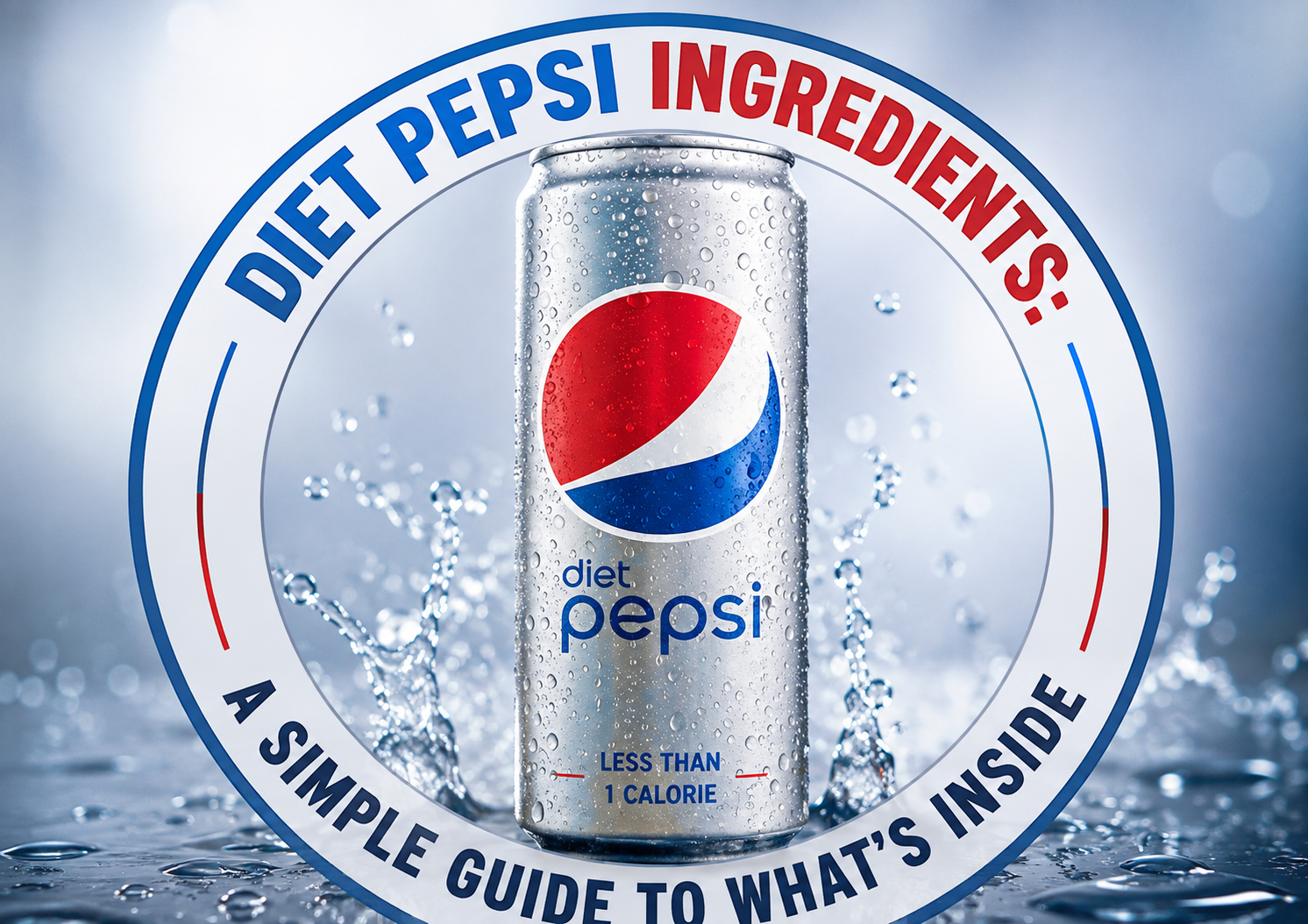
Diet Pepsi has been a familiar choice for people who enjoy cola flavor without the sugar and calories found in a traditional soft drink. Its taste comes from a combination of carbonation, sweeteners, acids, color, flavoring, and other ingredients that each have a specific purpose.
Looking at the ingredient list for the current U.S. version of Diet Pepsi, you will find carbonated water, caramel color, aspartame, phosphoric acid, potassium benzoate, caffeine, citric acid, natural flavor, and acesulfame potassium. Pepsi also notes that product formulations can change, so the package in your hand remains the best source for the most current information.
Understanding what these ingredients do makes the label much easier to read. Rather than treating the ingredient list as a collection of unfamiliar names, it helps to look at each ingredient according to its role in the drink.
BIO
| Label | Information |
|---|---|
| Product | Diet Pepsi |
| Type | Diet cola soft drink |
| Brand | Pepsi |
| Main Purpose | Sugar-free cola option |
| Calories | 0 per 12 fl oz serving |
| Sugar | 0 grams |
| Sweeteners | Aspartame and acesulfame potassium |
| Caffeine | 35 mg per 12 fl oz |
| Base | Carbonated water |
| Color | Caramel color |
| Acidity | Phosphoric and citric acids |
| Preservative | Potassium benzoate |
What Is Diet Pepsi?
Diet Pepsi is a cola-style soft drink designed to provide Pepsi flavor without traditional sugar. The current U.S. product page describes it as containing zero sugar and zero calories per serving. A 12-fluid-ounce serving also lists zero grams of total carbohydrate and zero grams of sugar.
The absence of ordinary sugar is one of the biggest differences between Diet Pepsi and conventional sugar-sweetened cola. Instead of relying on sugar for sweetness, Diet Pepsi uses high-intensity sweeteners. These ingredients can provide a strong sweet taste in very small quantities.
The result is a drink that keeps the familiar sweet-and-tangy cola character while avoiding the calories that would normally come from a substantial amount of added sugar.
Diet Pepsi Ingredients at a Glance
The current U.S. ingredient list identifies nine main ingredients:
- Carbonated water
- Caramel color
- Aspartame
- Phosphoric acid
- Potassium benzoate
- Caffeine
- Citric acid
- Natural flavor
- Acesulfame potassium
The order is important because food ingredients are generally listed according to their presence in the product, with ingredients used in greater amounts appearing earlier in the list.
There can also be differences between regular packaged Diet Pepsi and fountain formulations. PepsiCo’s product information, for example, lists a different ingredient formulation for certain fountain products. This is one reason it is better not to assume that every Diet Pepsi product has an identical formula.
Carbonated Water
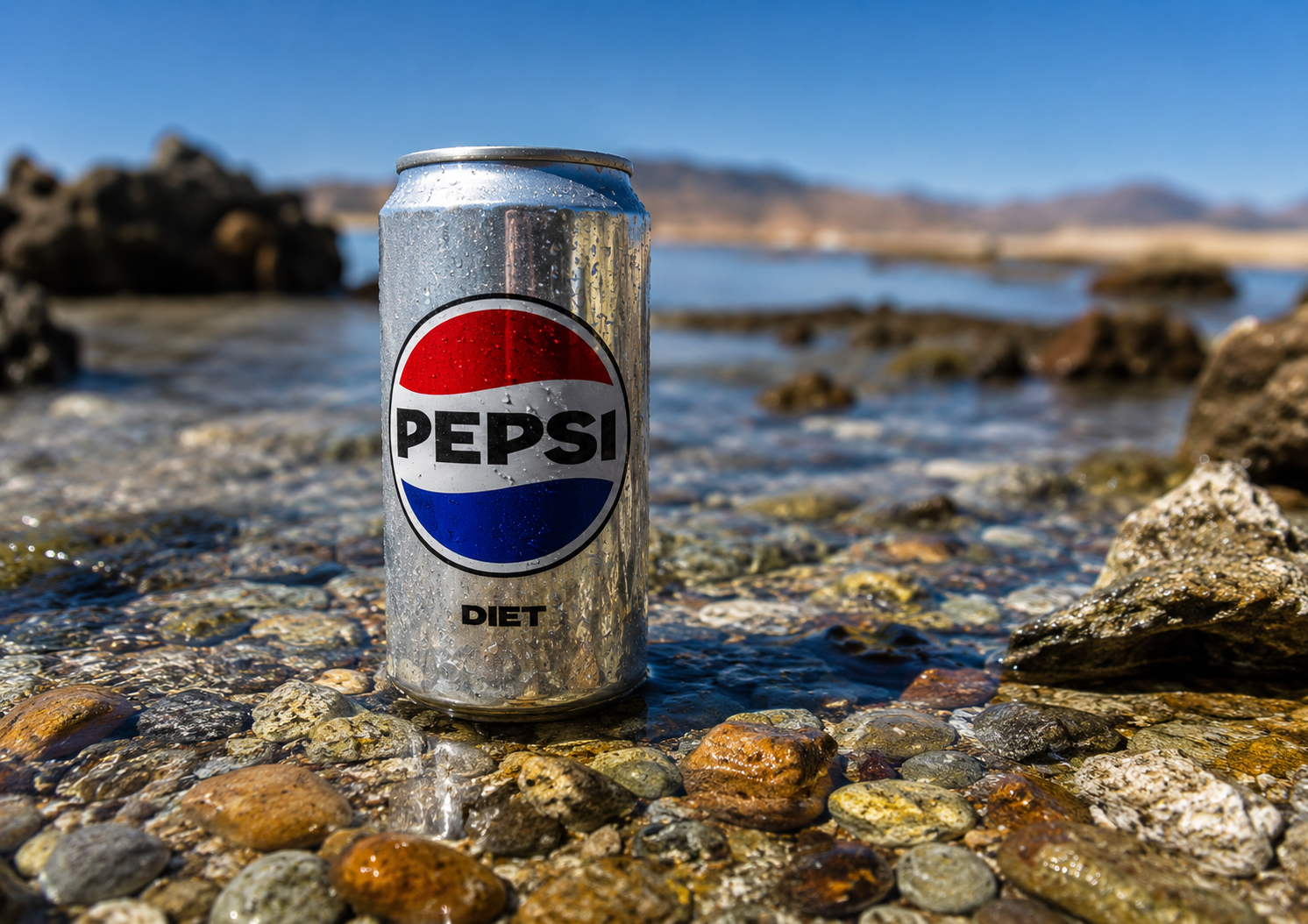
Carbonated water is the foundation of Diet Pepsi.
It is ordinary water containing dissolved carbon dioxide. When the beverage is opened, the pressure is released and the carbon dioxide escapes as bubbles. That familiar fizz is a major part of the drinking experience.
Carbonation does more than create bubbles. It contributes to the sharp sensation people associate with cola and helps give the beverage a lively mouthfeel.
Without carbonation, the same combination of sweeteners, acids, colors, and flavors would taste noticeably different. The bubbles help create the crisp character expected from a carbonated soft drink.
Caramel Color
Caramel color gives Diet Pepsi its dark cola appearance.
The color of a soft drink can influence how people perceive it before they even take a sip. Diet Pepsi’s deep brown appearance comes from caramel color rather than from the sweeteners themselves.
Color additives are commonly used in foods and beverages for appearance. The FDA explains that color additives can be used to provide color to products or enhance colors that occur naturally. Soft drinks are among the types of products in which color additives may be used.
In Diet Pepsi, caramel color helps create the recognizable visual appearance associated with cola.
Aspartame
Aspartame is one of the main sweeteners used in the current U.S. Diet Pepsi formula.
Because aspartame is intensely sweet compared with table sugar, only a relatively small quantity is needed to provide sweetness. This allows the beverage to have a sweet taste without using the amount of sugar normally required in a conventional soft drink.
Aspartame has been the subject of extensive scientific and regulatory review. The U.S. Food and Drug Administration says that scientific evidence continues to support its conclusion that aspartame is safe for the general population when it is used under approved conditions.
There is one important labeling consideration. Aspartame contains phenylalanine, which is relevant to people with phenylketonuria, commonly called PKU. The FDA advises people with this rare genetic condition to avoid or restrict aspartame.
That is why Diet Pepsi packaging carries the appropriate phenylalanine statement.
Phosphoric Acid
Phosphoric acid helps provide the characteristic acidic edge of cola.
Soft drinks are generally acidic beverages, and acids play an important role in their overall flavor. In a cola, acidity helps balance sweetness and contributes to the crisp taste that many people expect.
Without enough acidity, a sweetened carbonated beverage could taste flat or overly sweet. Phosphoric acid works as part of the flavor system to create a more balanced profile.
It is also worth remembering that an ingredient’s presence does not tell you how much of it is in a beverage. The ingredient list identifies what is included, while the nutrition and product information provide additional details where applicable.
Potassium Benzoate
Potassium benzoate is used to help preserve freshness.
Diet Pepsi’s ingredient list specifically identifies potassium benzoate as a preservative.
Preservatives have practical jobs in food and beverages. The FDA explains that preservatives can help prevent spoilage caused by microorganisms and can also help slow unwanted changes in qualities such as color, flavor, and texture.
In a packaged soft drink, maintaining the product’s quality during storage is important. A preservative such as potassium benzoate is therefore part of the broader formulation rather than an ingredient added simply for taste.
Caffeine
Caffeine is another ingredient found in standard Diet Pepsi.
According to Pepsi’s current U.S. product information, a 12-fluid-ounce can of Diet Pepsi contains 35 milligrams of caffeine.
Caffeine is naturally associated with a stimulating effect, which is one reason many people pay attention to its presence in soft drinks. The amount in Diet Pepsi is clearly identified on the product information for consumers who want to monitor their caffeine intake.
For people who prefer to avoid caffeine, Pepsi also sells Diet Pepsi Caffeine Free, which is formulated without caffeine.
Because serving sizes vary, checking the container is useful when estimating how much caffeine you are getting from a particular amount of the beverage.
Citric Acid
Citric acid contributes additional acidity and helps shape the flavor.
Although phosphoric acid is especially associated with the acidic profile of cola, citric acid also has a role in the current Diet Pepsi formula.
Acidity can make a sweet beverage taste brighter and less heavy. In a carefully balanced soft drink, the acids work alongside carbonation, sweeteners, and flavoring rather than functioning independently.
This is a good example of why ingredient lists can be more informative when each ingredient is considered according to its purpose.
Natural Flavor
Natural flavor is responsible for part of the beverage’s flavor profile.
The phrase “natural flavor” can sound vague because it does not identify every individual flavor compound on the front of the label. However, it is a recognized category of flavoring ingredient used in foods and beverages.
In Diet Pepsi, natural flavor is part of the system that creates the recognizable cola character. It works together with the sweeteners, acids, carbonation, and other ingredients.
The exact flavor formula is not something consumers can determine simply by reading the ingredient list. Manufacturers can describe certain flavoring components under the appropriate regulatory labeling category rather than listing every individual flavor substance.
Acesulfame Potassium
Acesulfame potassium, often called Ace-K, is another high-intensity sweetener in Diet Pepsi.
It works alongside aspartame to provide the beverage’s sweet taste. Using more than one sweetener can help manufacturers create a particular flavor profile rather than depending on a single sweetening ingredient.
The FDA recognizes acesulfame potassium as an approved food sweetener. According to the agency, it is about 200 times sweeter than table sugar and has been evaluated through safety studies before and during its approved uses.
Like other approved sweeteners, its use is subject to regulatory conditions.
Does Diet Pepsi Contain Sugar?
The current U.S. version of Diet Pepsi lists zero grams of sugar and zero grams of added sugar per 12-fluid-ounce serving.
This does not mean the beverage lacks sweetness. Instead, its sweetness comes from high-intensity sweeteners, primarily aspartame and acesulfame potassium in the current U.S. packaged formula.
This distinction is important when comparing diet soft drinks with traditional sugar-sweetened beverages. Sugar contributes both sweetness and calories, while high-intensity sweeteners can provide substantial sweetness with little or no contribution to calories at the quantities used.
The FDA notes that sweeteners such as aspartame and other approved sugar substitutes are widely used in foods and beverages marketed as “diet” or “sugar-free.”
How Many Calories Are in Diet Pepsi?
A 12-fluid-ounce serving of the current U.S. Diet Pepsi is listed at 0 calories. It also contains zero grams of total carbohydrate, zero grams of sugar, and zero grams of added sugar.
This is one of the product’s defining characteristics.
It is still important to pay attention to serving size. A larger bottle may contain more than one serving even though the nutrition information is presented per serving. Pepsi’s product information lists several package sizes, ranging from smaller cans and bottles to larger containers.
Why Does Diet Pepsi Taste Different From Regular Pepsi?
The biggest reason is the sweetening system.
Regular Pepsi uses sugar or another caloric sweetening ingredient depending on the market and formulation, while Diet Pepsi relies on high-intensity sweeteners. Sugar has physical properties that affect more than sweetness; it also contributes to the body and mouthfeel of a beverage.
High-intensity sweeteners behave differently. They can provide sweetness at very low quantities, but the overall sensory experience does not have to be identical to a sugar-sweetened drink.
Carbonation, acids, flavoring, and temperature also influence how a cola tastes. That is why two drinks can have similar-looking ingredient categories but still taste noticeably different.
Diet Pepsi vs. Regular Pepsi
The easiest way to understand the difference is to focus on sweetness and nutrition.
Diet Pepsi is formulated without traditional sugar and is listed at zero calories per 12-fluid-ounce serving. Its sweetness comes from ingredients such as aspartame and acesulfame potassium.
Regular Pepsi, by contrast, uses sugar in its standard U.S. formulation and therefore contains substantially more calories and carbohydrates.
The two beverages can share familiar characteristics such as carbonation, caramel color, acids, caffeine, and cola flavoring, but their sweetening systems create a significant difference in nutrition and taste.
Are Diet Pepsi Ingredients Safe?
Ingredient safety is a reasonable question whenever a product contains unfamiliar names.
In the United States, food additives and sweeteners are subject to regulatory requirements. The FDA explains that approved sweeteners must meet safety standards for their intended uses, and the agency establishes acceptable daily intake levels for certain sweeteners.
For aspartame specifically, the FDA states that it has reviewed extensive scientific information and continues to consider the sweetener safe for the general population when used under approved conditions.
That does not mean every person has the same dietary needs or preferences. Someone with PKU, for example, needs to pay particular attention to products containing phenylalanine from aspartame.
For individual dietary concerns, the ingredient and nutrition label should always take priority over a general description found online.
Can Diet Pepsi Ingredients Change?
Yes, product formulations can change.
This is particularly important when researching an article because an ingredient list found several years ago may not match the current formulation. Pepsi’s own product information warns that product formulation, packaging, and promotions may change and recommends referring to current packaging for the latest information.
Regional differences can matter as well. Products sold in different countries may use different sweeteners, preservatives, acidity regulators, or other ingredients because formulations and labeling requirements can vary.
Fountain versions can also have different formulations from packaged products. PepsiCo’s fountain product information demonstrates that some fountain formulations include ingredients that do not appear in the current U.S. packaged Diet Pepsi ingredient list.
For that reason, it is better to describe Diet Pepsi ingredients with a clear reference to the specific product and market being discussed.
What Should You Check on the Label?
If you want the most accurate information about a can or bottle of Diet Pepsi, look at several parts of the package.
Start with the ingredient list. This tells you which ingredients are included.
Check the serving size. A large bottle may contain multiple servings.
Look at calories, carbohydrates, and sugars. These numbers give you a quick picture of the drink’s nutritional profile.
Check caffeine information when available. Standard U.S. Diet Pepsi contains 35 milligrams of caffeine per 12-fluid-ounce serving.
Look for allergen-related statements. In particular, products containing aspartame carry information relevant to people with PKU.
Finally, check the package date and formulation information when available. Product recipes can change, so a current label is more reliable than an old ingredient list copied from another website.
Frequently Asked Questions
What are the main ingredients in Diet Pepsi?
The current U.S. packaged formula lists carbonated water, caramel color, aspartame, phosphoric acid, potassium benzoate, caffeine, citric acid, natural flavor, and acesulfame potassium.
Does Diet Pepsi contain sugar?
The current U.S. Diet Pepsi nutrition information lists 0 grams of sugar and 0 grams of added sugar per 12-fluid-ounce serving.
What sweeteners are used in Diet Pepsi?
The current U.S. packaged formula uses aspartame and acesulfame potassium as its listed high-intensity sweeteners.
Does Diet Pepsi contain caffeine?
Yes. Pepsi states that a 12-fluid-ounce serving of standard Diet Pepsi contains 35 milligrams of caffeine. A separate caffeine-free version is also available.
How many calories are in Diet Pepsi?
The current U.S. product information lists 0 calories per 12-fluid-ounce serving.
Is the ingredient list the same everywhere?
Not necessarily. Formulations can vary by product type, market, and package. PepsiCo’s own information shows differences between some packaged and fountain formulations.
Final Thoughts
Diet Pepsi has a relatively straightforward purpose behind its ingredient list: create a familiar cola experience without traditional sugar.
Carbonated water provides the base and fizz, caramel color supplies the recognizable appearance, acids help shape the sharp cola profile, preservatives help maintain freshness, and natural flavor contributes to the overall taste. Aspartame and acesulfame potassium provide the sweetness, while caffeine gives standard Diet Pepsi its caffeine content.
The current U.S. version contains zero calories and zero sugar per 12-fluid-ounce serving, while providing 35 milligrams of caffeine.
Perhaps the most useful takeaway is that an ingredient name tells only part of the story. Its purpose, amount, regulatory status, and the specific product formulation all matter. Since recipes and packaging can change, checking the label on the product you actually have is the best way to confirm the current ingredients.
For anyone curious about what is inside Diet Pepsi, the ingredient list becomes much less mysterious once each component is viewed for what it actually does: sweeten, flavor, color, preserve, acidify, or carbonate the drink.