







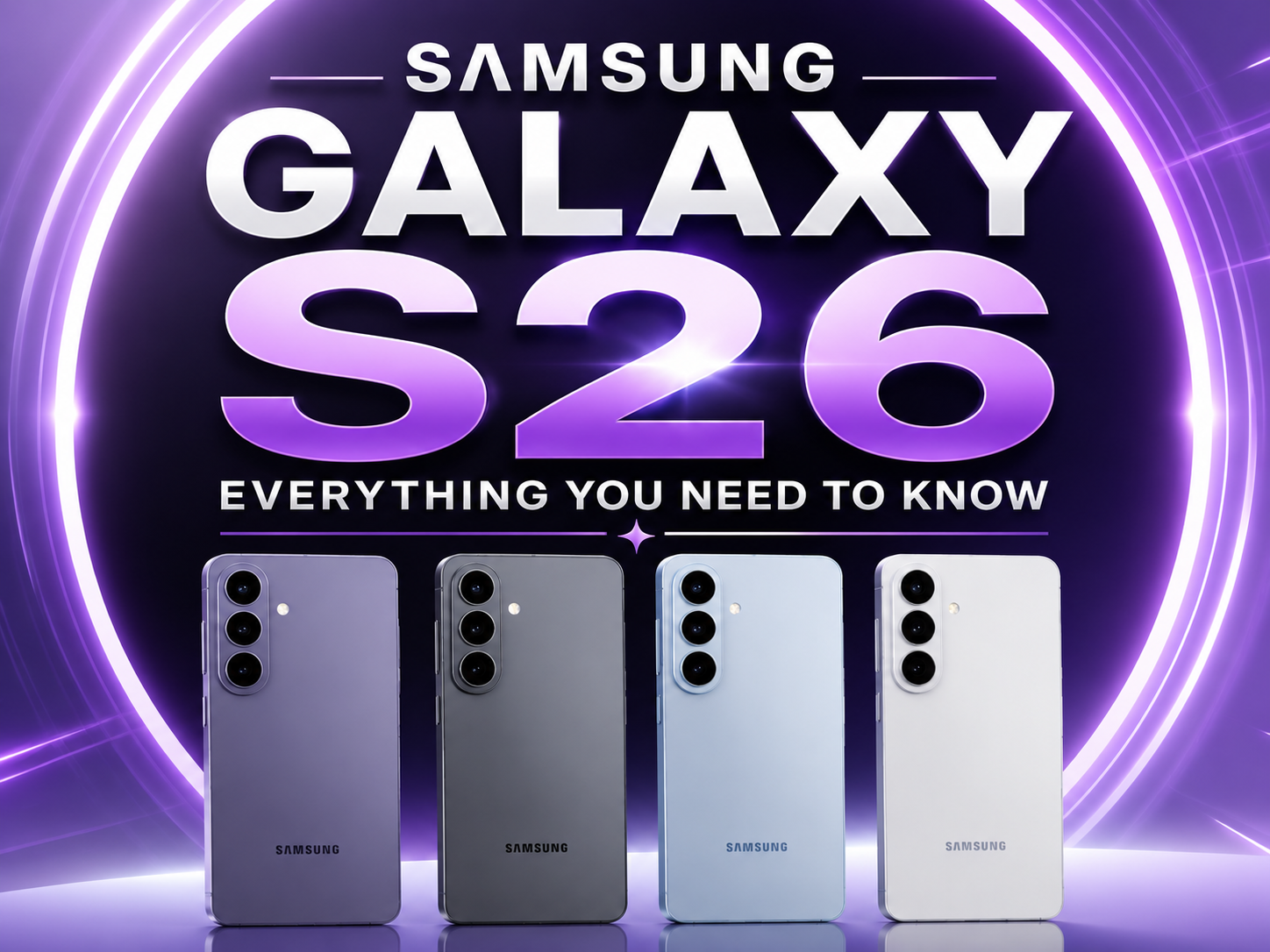
Samsung’s Galaxy S line has become one of the most recognizable names in premium Android phones, and the Samsung Galaxy S26 continues that tradition with a stronger focus on performance, photography, display quality, and artificial intelligence.
The Galaxy S26 was officially introduced as part of the Galaxy S26 series alongside the Galaxy S26+ and Galaxy S26 Ultra. Samsung unveiled the lineup in February 2026, with general availability beginning in March in major markets. The standard Galaxy S26 is positioned as the more compact option in the family, while still offering flagship-level hardware and many of Samsung’s latest software features.
What makes this generation particularly interesting is Samsung’s approach to Galaxy AI. Rather than treating AI as a collection of isolated features, Samsung has designed the Galaxy S26 series around more integrated and context-aware assistance. At the same time, the standard S26 keeps a relatively manageable size, making it an appealing choice for people who want premium specifications without moving to a larger phone.
BIO
| Label | Information |
|---|---|
| Name | Samsung Galaxy S26 |
| Series | Galaxy S26 Series |
| Type | Premium Android Smartphone |
| Launch | February 2026 |
| Display | 6.3-inch Dynamic AMOLED 2X |
| Refresh Rate | Up to 120Hz |
| RAM | 12GB |
| Storage | 256GB / 512GB |
| Main Camera | 50MP |
| Battery | 4,300mAh |
| Operating System | Android with One UI |
| Key Feature | Galaxy AI |
| Starting Price | $899.99 (U.S.) |
Samsung Galaxy S26 at a Glance
The Samsung Galaxy S26 is the entry model in Samsung’s 2026 flagship S-series lineup. It combines a compact 6.3-inch display with 12GB of RAM, 256GB or 512GB of storage, a triple-camera system, and a 4,300mAh battery. The phone uses a 120Hz display refresh rate and is powered by the Snapdragon 8 Elite Gen 5 for Galaxy in the specifications reported for the global lineup.
The starting price in the United States is $899.99, while Samsung lists the Galaxy S26 with 256GB and 512GB storage configurations. Prices and availability can differ by country, carrier, and retailer, so buyers should always check their local market before making a decision.
The bigger story, however, is how these specifications work together. The S26 is not simply about having a faster processor or a higher-resolution camera. Samsung has focused on creating a phone that can handle demanding everyday tasks while using AI to make certain interactions quicker and more convenient.
Design and Build
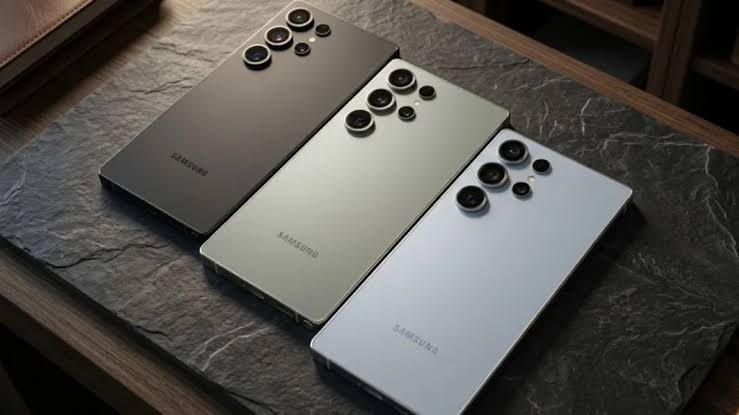
Samsung has given the Galaxy S26 series a unified design language. The company describes the new generation as having a refined appearance with more rounded curvature and a slimmer, lighter approach across the family. Available colors include Cobalt Violet, Black, Sky Blue, and White, with additional colors offered through Samsung’s online channels in some markets.
The standard S26 is particularly interesting for people who prefer smaller smartphones. Its 6.3-inch screen gives it considerably less physical footprint than the Galaxy S26 Ultra, while retaining the premium character expected from a Galaxy S-series device.
That compact format can be useful for everyday activities such as messaging, browsing, photography, and social media. It can also make the phone easier to handle with one hand compared with larger flagship models.
Samsung’s design strategy is fairly straightforward here: give users a premium-looking smartphone without making the standard model feel like a stripped-down version of the more expensive phones.
Display
The Galaxy S26 features a 6.3-inch OLED display with a 120Hz refresh rate. That combination gives the phone a strong foundation for everyday viewing, gaming, scrolling, and video playback.
A 120Hz refresh rate allows the screen to update more frequently than a conventional 60Hz panel. In practical use, this can make scrolling through websites, menus, and supported applications feel smoother.
The relatively compact screen also gives the S26 a different character from the S26+ and S26 Ultra. Users who regularly watch movies or work with large documents may prefer a larger display, but people who value portability may find the standard S26 more comfortable.
Samsung’s AMOLED technology is another important part of the experience. OLED displays can produce deep blacks and strong contrast because individual pixels can be controlled independently. This is particularly noticeable when watching dark scenes or using darker interface elements.
Performance
Performance is one of the strongest areas of the Samsung Galaxy S26. The series is powered by the Snapdragon 8 Elite Gen 5 for Galaxy in the specifications reported by Samsung and industry coverage.
The processor is important not only for traditional smartphone performance but also for AI processing. Modern flagship phones increasingly perform tasks locally on the device, including image processing, language-related functions, and other intelligent features.
The S26 also comes with 12GB of RAM, giving it enough memory for demanding multitasking. Users can move between applications, keep multiple browser tabs open, edit photos, and use productivity tools without the phone feeling designed only for basic tasks.
For gamers, the combination of a high-end processor, fast display, and substantial RAM should make the phone capable of handling demanding mobile titles. Actual gaming performance will naturally depend on the game, graphics settings, temperature, and software optimization.
For everyday users, however, the bigger advantage is headroom. A powerful phone can remain responsive as applications become more demanding over time.
Storage Options
Samsung offers the Galaxy S26 in 256GB and 512GB storage configurations in the U.S. specifications.
The 256GB version should be enough for many users who mainly stream music and video while keeping a moderate collection of photos and applications. People who record a lot of video, download large games, or prefer keeping files locally may appreciate the additional space offered by the 512GB model.
Storage is worth considering carefully because the amount of space available can influence how long a phone remains convenient. Running out of storage can become frustrating, particularly for users who frequently capture high-resolution photos and videos.
Camera System
The Samsung Galaxy S26 uses a triple-camera setup on the back. It includes a 50MP main camera, 12MP ultra-wide camera, and 10MP telephoto camera, according to specifications reported for the standard model.
The main camera is the most important sensor for everyday photography. It is designed to handle common situations such as outdoor photographs, portraits, food, pets, and general snapshots.
The ultra-wide camera provides a wider perspective, making it useful for landscapes, architecture, group photographs, and situations where stepping backward is difficult.
The telephoto camera adds another useful option. Instead of relying entirely on digital enlargement, a dedicated telephoto lens can provide a more natural way to photograph subjects farther away.
Samsung is also placing significant attention on computational photography. The Galaxy S26 series uses Samsung’s ProVisual Engine and AI-based image processing to improve the way photographs are captured and edited, particularly in challenging lighting conditions.
Galaxy AI
Galaxy AI is arguably one of the biggest themes surrounding the Samsung Galaxy S26.
Samsung describes the S26 generation as its third-generation AI phone, with a focus on more proactive and adaptive experiences. The company says the system can help users manage plans, find information, capture content, and refine photos with fewer steps.
One of the interesting aspects of this approach is that AI is not limited to a single application. Samsung is trying to integrate intelligent features into everyday parts of the phone.
For example, Samsung has expanded Photo Assist, allowing users to make changes to images through AI-powered editing. The system can remove unwanted objects and make other context-aware adjustments. Samsung has also introduced Creative Studio features that can turn text prompts into creative content such as stickers.
These tools may be particularly useful for people who regularly edit photographs or create social content but do not want to spend time learning complicated editing software.
Software Experience
The Galaxy S26 runs Samsung’s modern Android-based software experience, centered around One UI and Galaxy AI.
One UI has traditionally focused on making Android easier to navigate while adding Samsung-specific features and customization options. On the S26, the software experience becomes even more important because many of the phone’s new capabilities depend on the interaction between hardware, applications, and AI.
Samsung’s approach is less about making users manually operate every feature and more about reducing the number of steps needed to complete certain tasks.
AI features can vary by market, device, operating-system version, and account requirements. Samsung itself notes that availability can differ depending on region, software version, device, and carrier.
That is an important detail for buyers because a feature advertised in one country may not necessarily work in exactly the same way elsewhere.
Battery Life
The standard Galaxy S26 has a 4,300mAh battery.
Battery capacity is only one part of battery life. Processor efficiency, display brightness, refresh rate, mobile-network conditions, application activity, and software optimization all affect how long a phone lasts.
Because the S26 is smaller than the S26+ and S26 Ultra, its battery is also smaller. This is one of the compromises involved in choosing the compact model.
For moderate everyday use, the phone is designed to provide an all-day experience, but heavy gaming, prolonged camera use, high brightness, and continuous mobile data can reduce endurance.
Users who regularly spend long periods away from a charger may want to consider the larger Galaxy S26+ or Ultra, which offer larger batteries.
Connectivity and Everyday Features
As a modern flagship smartphone, the Galaxy S26 is designed around fast mobile connectivity and current wireless standards. It also supports features such as Bluetooth, NFC, USB connectivity, biometric security, and other standard smartphone functions.
The exact connectivity configuration can vary depending on market and carrier, which is another reason regional specifications matter.
Samsung also continues to position security as an important part of the Galaxy experience. Biometric authentication and Samsung’s broader security ecosystem are designed to protect personal information stored on the device.
For most users, these features are easy to overlook because they work quietly in the background. However, they become increasingly important as smartphones are used for banking, schoolwork, communication, photography, and personal files.
Galaxy S26 vs Galaxy S26+
The Galaxy S26 and S26+ share much of the same core philosophy, but their physical sizes are different.
The standard S26 has a 6.3-inch display and 4,300mAh battery, while the S26+ increases the display to 6.7 inches and the battery to 4,900mAh. Both models are offered with 256GB and 512GB storage options in the U.S. lineup.
This makes the decision relatively simple.
Choose the standard S26 if you prefer a smaller phone that is easier to handle. Choose the S26+ if a larger display and bigger battery are more important to you.
For many users, the standard S26 may actually be the more balanced option because it offers flagship hardware without requiring a large handset.
Galaxy S26 vs Galaxy S25
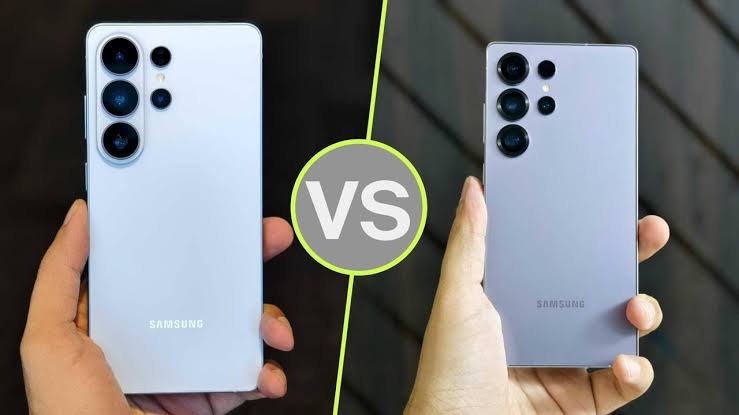
The biggest reason to consider the Galaxy S26 over an older Galaxy model is not necessarily one specification. It is the combination of updated hardware, improved processing, camera software, and new AI capabilities.
The S26 generation introduces newer silicon and a more advanced approach to Galaxy AI. Samsung also refined the physical design across the lineup.
However, owners of a recent Galaxy flagship do not automatically need to upgrade. If an existing phone already provides the performance, camera quality, battery life, and software features a user needs, the practical difference may not justify replacing it immediately.
For someone using an older Galaxy device, the upgrade can be much easier to appreciate.
Price and Availability
Samsung announced the Galaxy S26 series in February 2026, with general availability beginning in March in the United States. The standard Galaxy S26 starts at $899.99 in the U.S. with 256GB of storage.
In the United Kingdom, Samsung listed the Galaxy S26 at a starting recommended retail price of £879 for 256GB. Regional pricing naturally differs, and promotions can change the effective price considerably.
In Japan, Samsung listed the SIM-free 256GB model at ¥136,400 at launch, with a 512GB version at ¥163,900.
These differences highlight why buyers should look at local pricing rather than converting a U.S. price directly into their own currency.
Pros and Cons
The Galaxy S26 has several clear strengths.
Pros
- Compact flagship design for users who prefer smaller phones
- 120Hz OLED display for smooth everyday use
- 12GB RAM for demanding multitasking
- Triple-camera system covering standard, ultra-wide, and telephoto photography
- Modern flagship processor with strong AI capabilities
- Advanced Galaxy AI features
- 256GB and 512GB storage options
- Strong integration between Samsung hardware and software
There are also some considerations.
Cons
- The 4,300mAh battery is smaller than the batteries in the larger S26 models
- The standard model has fewer premium camera capabilities than the Ultra
- Larger phones may be better for users who prioritize media consumption
- Regional AI and connectivity features can vary
- The starting price places it firmly in the premium smartphone category
Who Should Buy It?
The Samsung Galaxy S26 makes the most sense for someone who wants a premium Android phone in a relatively compact size.
It is particularly appealing to users who care about camera versatility, smooth performance, modern software, and AI-assisted features but do not want a huge handset.
It is also a strong option for people upgrading from an older smartphone. The combination of faster hardware, modern cameras, a high-refresh-rate display, and newer software gives the S26 a broad appeal.
Students, professionals, photographers, gamers, and everyday smartphone users can all find useful features here, although their priorities will naturally differ.
Who Should Consider Another Model?
The Galaxy S26 may not be the best choice for everyone.
Someone who wants the largest possible screen could prefer the S26+ or Ultra. Users who want Samsung’s most advanced camera system and S Pen functionality will also find the Ultra more suitable.
Similarly, someone who already owns a recent Galaxy flagship may find that their current phone still meets their needs comfortably.
The right choice depends less on having the newest model and more on whether the new features solve a real problem for you.
Frequently Asked Questions
What is the Samsung Galaxy S26?
The Samsung Galaxy S26 is Samsung’s standard flagship smartphone in the 2026 Galaxy S26 lineup. It features a 6.3-inch 120Hz OLED display, 12GB RAM, up to 512GB storage, a triple rear-camera system, and a 4,300mAh battery.
How much does the Samsung Galaxy S26 cost?
The Galaxy S26 starts at $899.99 in the United States for the 256GB model. Pricing varies by country, storage configuration, carrier, and promotional offers.
What cameras does the Galaxy S26 have?
The standard Galaxy S26 has a 50MP main camera, 12MP ultra-wide camera, and 10MP telephoto camera.
How big is the Galaxy S26 display?
The Galaxy S26 has a 6.3-inch display with a 120Hz refresh rate.
How much battery capacity does it have?
The Galaxy S26 features a 4,300mAh battery. Samsung positions the device for all-day use, although actual battery life depends heavily on usage patterns.
Is the Galaxy S26 worth upgrading to?
For users coming from an older smartphone, the combination of newer performance, cameras, display technology, and Galaxy AI can make the S26 a compelling upgrade. Owners of recent Galaxy models should consider whether the new features are important enough to justify the cost.
Final Verdict
The Samsung Galaxy S26 is a well-rounded flagship that focuses on balance rather than simply chasing the biggest specifications.
Its compact design, 120Hz display, capable triple-camera system, powerful processor, generous RAM, and expanding Galaxy AI features make it a strong choice for people who want premium performance without moving to an oversized smartphone.
The most interesting part of the S26 may ultimately be how Samsung combines hardware and software. Galaxy AI is becoming a central part of the experience, while the traditional strengths of the Galaxy S series—display quality, cameras, performance, and polished software—remain important.
For buyers who want a compact premium Android phone with modern AI capabilities and flagship hardware, the Galaxy S26 deserves serious consideration. The larger S26+ and Ultra remain better suited to people who prioritize screen size, battery capacity, or the most advanced camera features, but the standard S26 offers a particularly balanced package for everyday use.