






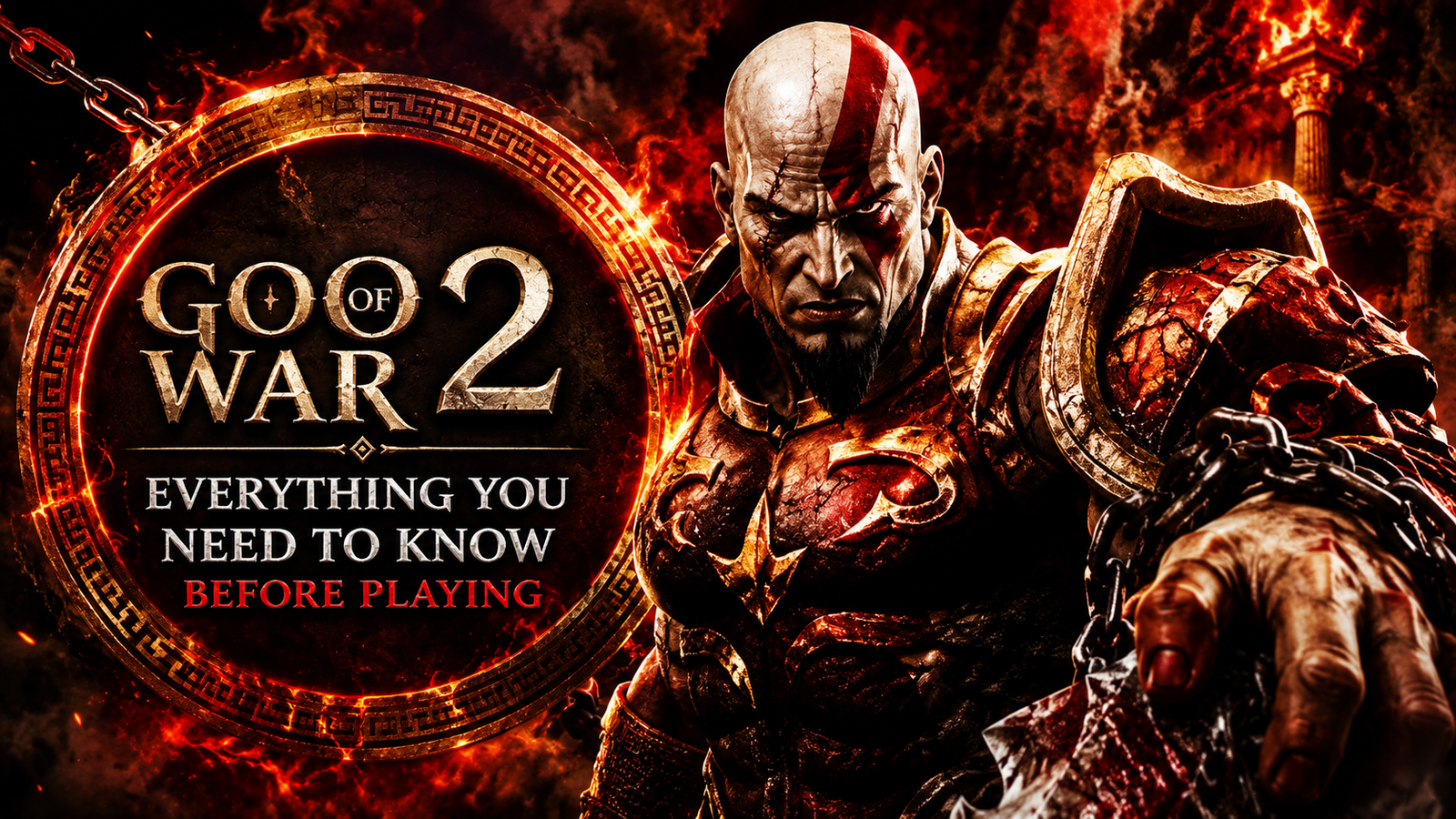
God of War 2 is one of the most memorable action-adventure games from the PlayStation 2 era. Released in March 2007, the game continues Kratos’ story after the events of the original God of War. Instead of simply repeating the formula of its predecessor, the sequel expands the world, introduces new abilities and weapons, and places a much greater emphasis on large-scale mythology, exploration, puzzles, and dramatic set pieces.
Developed by Santa Monica Studio, God of War 2 became known for making impressive use of the PlayStation 2 hardware. Its combination of fast combat, mythology-inspired environments, puzzles, platforming, and cinematic presentation helped it receive widespread critical acclaim. It currently holds a 93 Metascore, while its user score is also highly positive.
If you are thinking about playing the game for the first time, or simply want to understand why it remains important to the series, this guide covers its story, gameplay, characters, abilities, challenges, and lasting appeal.
BIO
| Label | Information |
|---|---|
| Game Name | God of War 2 |
| Release Date | March 13, 2007 |
| Developer | Santa Monica Studio |
| Publisher | Sony Computer Entertainment |
| Original Platform | PlayStation 2 |
| Genre | Action-adventure |
| Main Character | Kratos |
| Setting | Ancient Greek mythology |
| Game Style | Single-player |
| Core Gameplay | Combat, puzzles, and exploration |
| Main Conflict | Kratos vs. the Olympian gods |
| Key Theme | Fate, revenge, and power |
God of War 2 at a Glance
God of War 2 was originally released for the PlayStation 2 on March 13, 2007. It is a linear action-adventure game developed by SCE Santa Monica Studio and published by Sony Computer Entertainment. The game was later made available as part of the God of War Collection for PlayStation 3.
The game continues the Greek mythology setting established by the first title. Players once again take control of Kratos, who is now the God of War. His position, however, does not bring him the peace he expected.
The story quickly becomes a struggle involving gods, Titans, destiny, betrayal, and Kratos’ determination to change the course of his life.
Rather than functioning as a completely separate adventure, God of War 2 is an important chapter in the larger Greek-era storyline.
The Story
The story begins after Kratos has defeated Ares and taken his place as the new God of War. Although he has achieved the position he once wanted, becoming a god does not erase the memories and suffering that continue to follow him.
His relationship with Olympus becomes increasingly complicated. Kratos eventually finds himself in conflict with Zeus, setting him on a new journey that goes far beyond a simple personal battle.
One of the most interesting aspects of the story is its focus on fate. Kratos is not satisfied with accepting what the gods or prophecy have decided for him. Much of the adventure revolves around his attempt to change the future.
This gives the game a strong sense of momentum. Each major location and encounter feels connected to the larger question of whether Kratos can escape the path that has been set before him.
The official Sony announcement described the game as a continuation of Kratos’ journey through the world of Greek mythology, with the character seeking to alter his fate.
Kratos
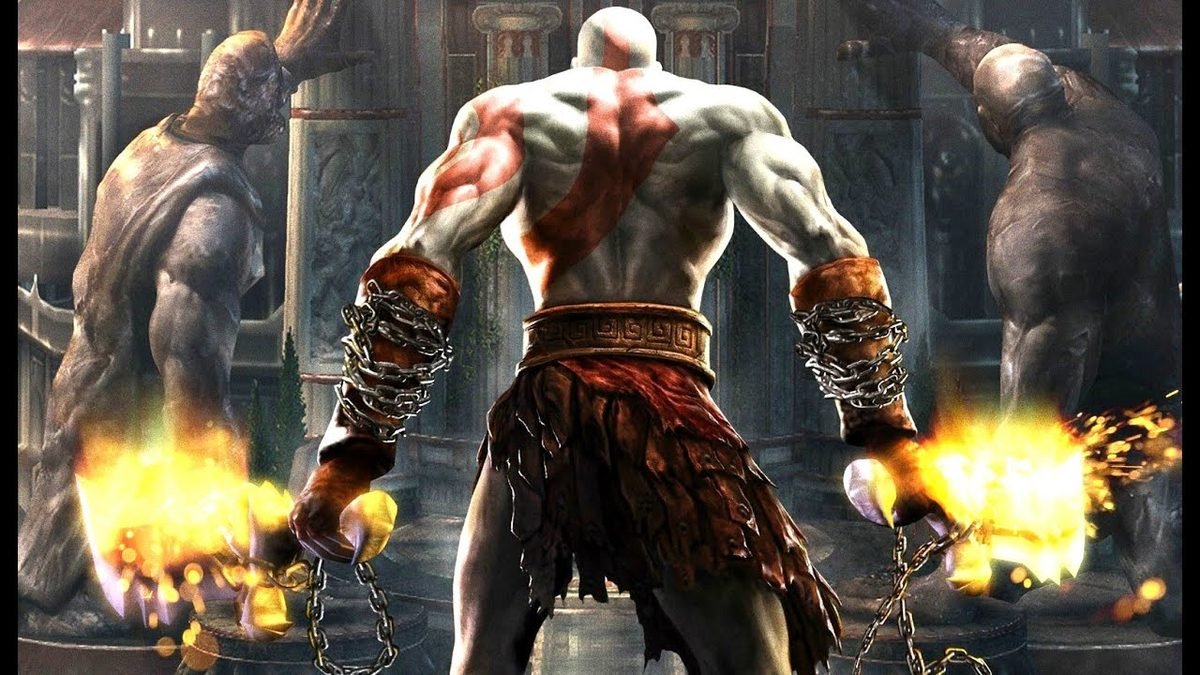
Kratos is at the center of everything in God of War 2. At this stage of the series, he is already a powerful warrior and has become the new God of War.
However, his strength does not make him satisfied.
His anger, distrust of the gods, and desire to control his own destiny influence nearly every decision he makes. This makes Kratos different from a traditional heroic character. He is driven by personal motives, and the story frequently explores the consequences of his choices.
For players coming from the first game, God of War 2 shows an increasingly ambitious version of the character.
His journey also helps establish several ideas that become important throughout the original Greek-era trilogy.
Major Characters
The game introduces or expands several important characters from Greek mythology.
Zeus is one of the most important figures in the story because of his relationship with Kratos and the conflict that develops between them.
Athena remains an important presence in Kratos’ story and represents his complicated connection with the Olympian gods.
Gaia and the Titans also become central to the larger conflict. Their involvement expands the scale of the story beyond Kratos’ personal struggles.
The Sisters of Fate are particularly important because the game’s central themes revolve around destiny and whether the future can be changed.
These characters give the game a broader mythological identity while still keeping Kratos’ personal journey at the center.
Gameplay
The basic gameplay combines action, exploration, platforming, puzzles, and boss encounters.
Combat is still the heart of the experience, but the sequel provides more options than the original game. Kratos can use different weapons, magical abilities, and special attacks to deal with different situations.
The combat system is designed around movement and combinations rather than simply attacking one enemy repeatedly. Players can switch between attacks, defensive actions, abilities, and weapons as situations change.
Outside combat, the game regularly asks players to explore their surroundings. Some areas contain mechanisms, environmental puzzles, hidden rewards, or paths that are not immediately obvious.
This combination helps prevent the adventure from feeling like a series of battles connected by loading screens.
Weapons and Abilities
One of the major improvements in God of War 2 is the expanded selection of weapons and abilities.
Kratos begins with his familiar blades, but the adventure introduces additional equipment that changes how certain encounters can be approached.
Among the notable weapons are the Barbarian Hammer, Spear of Destiny, and Blade of Olympus.
Magic is also an important part of the combat system. Abilities such as Typhon’s Bane, Cronos’ Rage, Head of Euryale, and Atlas Quake provide different ways to approach enemies and situations.
The variety is useful because different abilities work better in different circumstances. Some are particularly useful against groups, while others can help when dealing with opponents at a distance or controlling the battlefield.
The game’s official release information specifically highlighted its new combat moves, magic abilities, and weapons alongside the returning gameplay systems.
Tips for New Players
If you have never played God of War 2, there are a few simple things worth remembering.
Learn the combat system early. Do not rely on one attack throughout the entire game. Experiment with combinations and different abilities.
Pay attention to your surroundings. Some puzzles become easier when you stop focusing on combat and examine the environment.
Explore carefully. Not every useful item is placed directly along the main path. Looking around can reward players with additional resources and upgrades.
Use abilities thoughtfully. Special abilities can make difficult situations easier, but learning when to use them is just as important as unlocking them.
Do not rush puzzle sections. The game often gives visual clues through its environments. Taking a moment to observe the area can save considerable time.
Most importantly, allow yourself to learn the game’s rhythm. God of War 2 moves between action and exploration regularly, so becoming comfortable with both sides of the experience makes the adventure much smoother.
Boss Battles
Large encounters are an important part of the game’s identity.
Rather than treating every major enemy as a simple version of a normal fight, the game often builds encounters around unique environments, movement patterns, and specific mechanics.
Some battles are memorable because of their enormous scale, while others are interesting because they require players to recognize patterns and react at the right time.
The game was widely praised by critics for its set pieces and variety. Contemporary reviews frequently highlighted its combination of combat, puzzles, presentation, and large-scale encounters.
The best approach is usually patience. Instead of attacking constantly, observe what the encounter is asking you to do and adjust your strategy accordingly.
Puzzles and Exploration
Puzzles are another important part of the experience.
The game uses environmental mechanisms, switches, platforms, objects, and timing-based challenges to break up the action. Some puzzles are straightforward, while others require more experimentation.
This design gives the game a useful change of pace.
Exploration also matters because the environments are designed to be more than simple backgrounds. Large mythological locations provide opportunities to discover additional resources and optional areas.
For modern players, some of these puzzles may feel simpler than puzzles in newer action-adventure games. However, they remain an important part of the game’s original identity.
Difficulty
God of War 2 offers different difficulty choices, allowing players to select an experience that matches their preferred challenge level.
If you are new to older action games, starting at a more approachable difficulty can help you learn the controls and combat mechanics without becoming frustrated.
Experienced players may prefer a higher difficulty because it places more emphasis on timing, enemy patterns, resource management, and careful use of abilities.
There is no need to choose the hardest option simply because it is available. The most enjoyable difficulty is the one that allows you to appreciate the game’s exploration and story while still giving combat enough challenge.
How Long Is God of War 2?
The exact amount of time required to finish God of War 2 depends on the player’s pace and how much optional content they explore.
A player who focuses mainly on progressing through the story can complete it considerably faster than someone who searches for additional items and explores every available area.
The game’s structure also helps its length feel substantial for a PlayStation 2 action title.
Contemporary criticism was overwhelmingly positive, although some reviewers felt that the extended length could make parts of the later adventure feel less tightly paced.
For most players, the better approach is not to worry too much about the clock. The game works best when you give yourself time to explore its environments and learn its mechanics.
Modern Availability
The original game launched exclusively on PlayStation 2 in 2007 and was later released for PlayStation 3 as part of the God of War Collection.
This is worth knowing if you are discovering the game today because it was designed around the hardware and controller conventions of its generation.
Its visual presentation was particularly impressive for the PlayStation 2 era. The scale of some environments and encounters helped create the feeling that players were experiencing something much larger than the console’s technical limitations might suggest.
God of War 2 vs. the First Game
The biggest strength of God of War 2 is that it does not completely abandon what made the first game successful.
Instead, it builds on those foundations.
The sequel offers more abilities, additional weapons, larger environments, more ambitious encounters, and a broader story. The core combat remains recognizable, which means players familiar with the first game can quickly settle into the sequel.
At the same time, the sequel feels more confident in its presentation.
This is one reason the game received such strong reviews. Metacritic lists a 93 critic score from 70 reviews, with 69 of those reviews categorized as positive.
The sequel’s success was therefore not simply based on having more content. It was also about refining the formula and making the individual parts work together more effectively.
What to Know Before Starting
You do not necessarily need to remember every detail from the first God of War before starting the sequel, but understanding Kratos’ previous journey makes the story easier to appreciate.
The most important thing to understand is that Kratos’ relationship with the gods is complicated. His position as the new God of War has not solved the problems that existed before.
The game also assumes that players are comfortable with an older action-adventure design.
That means you may encounter fixed camera angles, environmental puzzles, straightforward progression, and combat mechanics that differ from modern God of War titles.
Players coming directly from the 2018 God of War or God of War Ragnarök should especially keep this in mind. The modern games use a very different structure, while the Greek-era titles are much more focused on linear progression and traditional action-adventure mechanics. PlayStation itself describes the 2018 game as the beginning of a new Norse journey for Kratos, marking a major change from the earlier Greek setting.
Why It Still Matters
Nearly two decades after its original release, God of War 2 continues to receive attention from players and critics.
Its reputation is not based on nostalgia alone. The game’s strong review history shows that it was highly regarded when it originally launched, while its user reception remains positive years later.
Its greatest achievement is probably the balance between different types of gameplay.
There is enough action to keep the adventure moving, but there are also puzzles and exploration sections that give players a reason to slow down. The mythology provides a distinctive setting, while Kratos’ personal conflict gives the story a clear direction.
The game also demonstrates how far developers could push the PlayStation 2 near the end of its life cycle.
Is God of War 2 Still Worth Playing?
For anyone interested in the history of action-adventure games, God of War 2 is still worth experiencing.
Its controls and presentation naturally reflect the era in which it was created, so players accustomed to modern games may need a little time to adjust. However, the strong combat foundation, memorable environments, mythology-inspired story, and ambitious set pieces remain appealing.
It is especially worthwhile for players who want to understand the origins of Kratos’ Greek-era story before exploring how the character eventually changed in the later games.
The critical response remains a strong indicator of its historical importance. GameSpot rated it 9.2/10, while Metacritic records a 93 critic score.
Final Verdict
God of War 2 is much more than a straightforward sequel. It takes the ideas introduced in the original game and expands them into a larger, more ambitious adventure.
Its story gives Kratos a stronger personal conflict, while the gameplay adds new abilities, weapons, puzzles, exploration, and memorable encounters. The Greek mythology setting also gives the adventure a distinctive identity that separates it from many other action games.
For new players, the most important advice is simple: give yourself time to adjust to the older design and enjoy the journey rather than rushing through it.
For longtime fans, the game remains an important part of Kratos’ history and a key chapter in the original God of War trilogy.
Released in 2007, God of War 2 showed what a polished action-adventure game could accomplish on the PlayStation 2. Its lasting reputation, strong critical reception, and continued interest from players make it an important game to revisit for anyone interested in the series or the history of PlayStation gaming.
FAQs About God of War 2
1. What is God of War 2 about?
God of War 2 continues Kratos’ journey after he becomes the new God of War. The story follows his struggle against the gods and his attempt to change his fate.
2. When was God of War 2 released?
God of War 2 was released for the PlayStation 2 in North America on March 13, 2007. It was developed by Santa Monica Studio.
3. What type of game is God of War 2?
It is a single-player action-adventure game featuring combat, exploration, puzzles, platforming, and large encounters inspired by Greek mythology.
4. Do you need to play the first God of War?
Playing the original game is helpful because it explains Kratos’ background and his relationship with the Greek gods. However, new players can still follow the main story of the sequel.
5. Is God of War 2 still worth playing?
Yes. Its strong combat, mythology-based story, memorable environments, and ambitious presentation have helped it remain an important entry in the series. PlayStation still lists it as part of the original God of War lineup.