






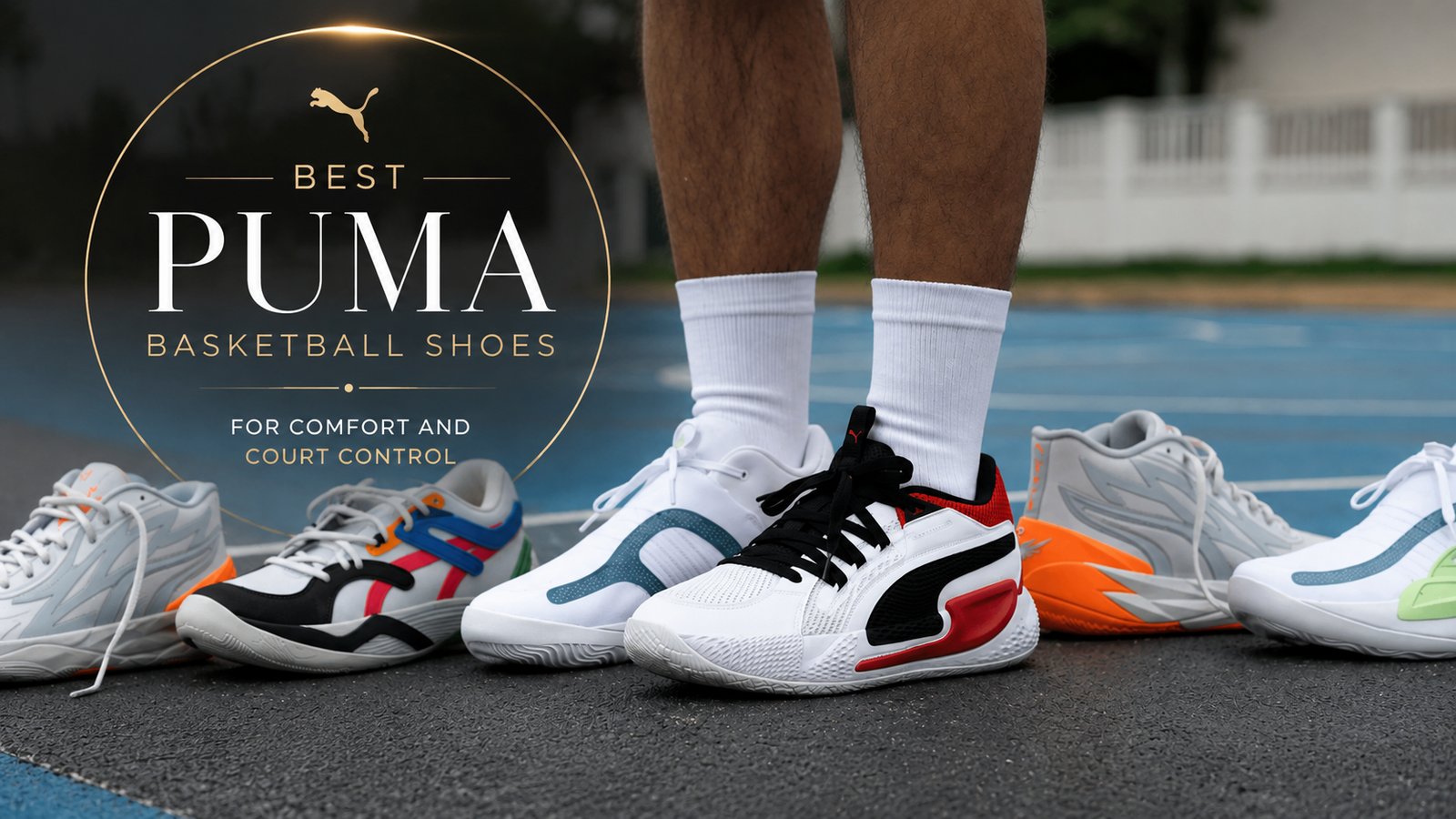
Basketball shoes have to do much more than look good. A player can spend hours running, stopping, jumping, cutting, and changing direction, so the right footwear can make a noticeable difference in how comfortable and confident they feel on the court. Puma basketball shoes have become a strong option for players who want a combination of cushioning, traction, stability, and a relatively lightweight feel.
PUMA has invested heavily in basketball footwear technology, particularly through its NITROFOAM cushioning and supportive upper systems. The company’s footwear technology portfolio focuses on four important areas: cushioning, rebound, support, and grip.
But choosing a basketball shoe is not simply about picking the newest model. Different players have different needs. A quick guard may value traction and responsiveness, while another player may put greater importance on cushioning and stability. Your playing surface, foot shape, position, and personal preference all matter.
This guide looks at what makes Puma basketball shoes worth considering and explains the features that can help you choose a pair that suits your game.
BIO
| Label | Information |
|---|---|
| Brand | PUMA |
| Product Type | Basketball shoes |
| Main Purpose | Court performance |
| Key Focus | Comfort and control |
| Cushioning | NITROFOAM technology |
| Stability | Built for lateral movement |
| Traction | Rubber court outsole |
| Fit | Secure and comfortable |
| Upper | Lightweight support |
| Best For | Basketball players |
| Playing Style | Guards, forwards, and centers |
| Court Use | Indoor and selected outdoor play |
| Buying Tip | Choose based on fit and playing style |
What Makes a Good Basketball Shoe?
A good basketball shoe should provide a balance between several features rather than focusing on just one.
Cushioning helps make repeated running and jumping more comfortable. Basketball involves constant movement, so the midsole needs to provide enough protection without making the shoe feel disconnected from the court.
Traction is equally important. Players regularly stop suddenly, change direction, defend laterally, and accelerate toward the basket. A dependable outsole can help provide the grip needed for those movements.
Stability is another major consideration. Basketball movement is not limited to forward and backward motion. Players move from side to side and rotate quickly, which means the shoe needs to keep the foot secure.
Finally, there is fit and comfort. Even an impressive performance shoe can become frustrating if it does not fit your foot properly.
Puma All-Pro NITRO 2
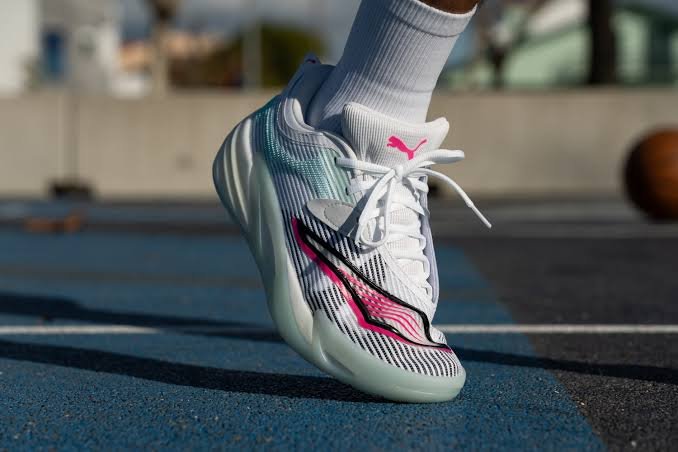
The Puma All-Pro NITRO 2 is one of the most interesting models in the brand’s current basketball lineup. It is designed around the idea of combining cushioning, responsiveness, and lateral stability in one performance shoe.
One of its defining features is NITRO SQD foam. PUMA describes the setup as a soft inner layer that provides cushioning and responsiveness, combined with a firmer outer layer designed to provide targeted lateral stability during multidirectional movement.
That combination makes sense for basketball because players rarely move in a straight line for long. A shoe needs to feel comfortable when running but also remain supportive when a player suddenly cuts toward the side.
The upper is another important part of the design. PUMA uses a PWR Print upper intended to provide stability without creating an unnecessarily heavy construction. The shoe also features a cord lockdown lacing system designed to support lateral stability in the forefoot.
The result is a model aimed at players who want a balanced performance shoe rather than something designed around one characteristic alone.
Cushioning and Comfort
Comfort is one of the first things players notice when trying basketball shoes.
PUMA‘s NITROFOAM technology is designed around lightweight cushioning and responsiveness. PUMA describes its NITROFOAM technology as a nitrogen-infused foam designed to provide a lightweight feel and high rebound.
For basketball, responsiveness matters because a player does not want cushioning to make every movement feel slow. There needs to be a balance between impact protection and the ability to react quickly.
The All-Pro NITRO 2 takes that approach further with its dual-layer NITRO SQD construction. Instead of relying on a single foam characteristic, the shoe combines different properties within the midsole to address both comfort and lateral support.
That can be especially useful during longer practices or games when your feet experience repeated impact.
Of course, cushioning is personal. Some players prefer a softer, more protected feeling underfoot, while others want to feel closer to the court. The best choice is therefore not necessarily the shoe with the most cushioning, but the one whose cushioning matches your preference.
Traction on the Court
Traction can have a major influence on how a basketball shoe feels during play.
A player may need to sprint, stop, pivot, defend, and change direction within seconds. If the outsole does not provide dependable grip, those movements can feel less controlled.
PUMA’s All-Pro NITRO 2 models use PUMAGRIP rubber outsole technology. Current PUMA product information describes the outsole as having a high-abrasion tread pattern intended to provide traction.
The exact traction experience can still vary depending on the court. A clean indoor hardwood surface and a dusty court will not necessarily produce the same level of grip.
This is why keeping the outsole reasonably clean and using basketball shoes primarily for their intended purpose can help maintain their performance.
Stability and Court Control
Court control is closely connected to stability.
When a player plants one foot and quickly changes direction, the shoe needs to keep the foot secure. Excessive movement inside the shoe can make the player feel less connected to the court.
The All-Pro NITRO 2 addresses this through its upper construction and lockdown system. PUMA says the PWR Print upper creates stability in a thin, lightweight package, while the forefoot lacing system is designed to support lateral stability.
This is an important distinction. Stability does not necessarily mean a shoe has to feel bulky.
Modern basketball footwear increasingly tries to provide support through the combination of the upper, midsole, outsole, and fit. That allows the shoe to remain relatively streamlined while still helping the foot stay secure.
Responsiveness
Responsiveness is particularly valuable for players who rely on quick movements.
A responsive basketball shoe should not feel like your foot is sinking deeply into the midsole every time you take a step. Instead, it should provide cushioning while allowing you to transition naturally from one movement to another.
PUMA positions NITROFOAM around lightweight cushioning and rebound, which is intended to support efficient movement.
The All-Pro NITRO 2 combines that cushioning concept with its NITRO SQD setup, making responsiveness one of the key characteristics of the model.
For players who frequently attack the basket, make quick cuts, or move rapidly around the perimeter, that balance can be appealing.
Fit Matters More Than You Think
Even the best basketball shoe can feel wrong if the fit is not right.
PUMA lists the All-Pro NITRO 2 with a regular fit, rounded toe, and traditional lace closure.
When trying on basketball shoes, your heel should feel secure without excessive slipping. Your toes should have enough room to move naturally, but your foot should not slide around inside the shoe.
It is also worth trying shoes with the socks you normally use for basketball. A shoe can feel different depending on sock thickness.
Do not choose a size simply because it is the size you usually wear in another shoe. Different designs can have different shapes, so the actual fit should always be the final test.
For Guards
Guards often spend a lot of time moving quickly around the perimeter.
They may need to change direction repeatedly, create space, accelerate, and defend against fast opponents. For this type of player, traction, responsiveness, and secure lockdown can be especially important.
A shoe such as the All-Pro NITRO 2 is designed around multidirectional movement, which makes its stability and responsiveness features relevant to this style of play.
The key is finding a model that feels quick without sacrificing the support you need.
For Forwards
Forwards often need a more balanced combination of characteristics.
They may spend time driving to the basket, defending in different areas, rebounding, and taking perimeter shots. That means cushioning and stability can be just as important as speed.
A well-rounded Puma basketball shoe can make sense for this kind of player because it does not force you to prioritize only one performance characteristic.
Comfort becomes particularly important if you spend significant time on the court during practices, games, and training sessions.
For Centers
Centers generally place greater demands on stability and cushioning.
Rebounding, landing, post play, and physical movement around the basket can put considerable demands on basketball footwear. A stable base and comfortable cushioning may therefore be more useful than simply choosing the lightest shoe available.
The right choice will still depend on the player’s individual movement style and foot shape.
Rather than assuming a heavier or more cushioned shoe is automatically better, look for a model that provides the support you actually need without making movement unnecessarily difficult.
Puma Basketball Shoe Technology
PUMA’s basketball footwear is part of a broader technology approach centered on cushioning, rebound, support, and grip.
NITROFOAM
NITROFOAM is one of PUMA’s most recognizable cushioning technologies.
PUMA describes its nitrogen-infused foam as lightweight and high-rebound, with the goal of reducing energy loss and supporting efficient movement.
In basketball footwear, the goal is to create cushioning that remains useful during repeated movements without making the shoe feel unnecessarily heavy.
NITRO SQD
NITRO SQD takes a more specialized approach.
The All-Pro NITRO 2 uses a soft inner NITRO layer for cushioning and responsiveness and a firmer outer NITROFOAM layer for lateral stability.
That construction is particularly relevant to basketball because multidirectional movement is one of the defining demands of the sport.
PWRTAPE and PWR Print
PUMA also uses upper technologies to add support.
The company’s PWRTAPE technology is designed as a supplemental support system intended to stabilize the foot while preserving freedom of movement.
The All-Pro NITRO 2 uses PWR Print or PWRTAPE SQD depending on the specific version, with the goal of adding structure without relying on a bulky upper.
Indoor Court Use
Most performance basketball shoes are designed with court movement in mind, but the surface still matters.
Indoor hardwood can provide a very different traction experience from an outdoor concrete court. Dust, moisture, and court maintenance can also affect grip.
If you regularly play indoors, keeping the outsole clean can be a simple way to help preserve traction. It is also useful to avoid wearing your main basketball shoes outside whenever possible.
That reduces unnecessary wear on the outsole and keeps dirt from being carried onto the playing surface.
Outdoor Basketball
Outdoor basketball can be much harder on footwear.
Concrete and rough outdoor surfaces can wear down rubber faster than a smooth indoor court. If outdoor play is a regular part of your routine, outsole durability should be an important part of your buying decision.
PUMA’s All-Pro NITRO 2 specifications include a rubber outsole and, on listed versions, a high-abrasion PUMAGRIP tread pattern.
However, no performance basketball shoe should be expected to remain in the same condition forever when regularly exposed to abrasive surfaces.
What to Consider Before Buying
Before choosing Puma basketball shoes, consider how and where you actually play.
Playing style should come first. A fast guard may have different priorities from a physical forward.
Cushioning preference is also important. If you prefer a softer ride, focus more heavily on the midsole. If you prefer court feel, look for a responsive design that does not feel overly soft.
Traction should match your playing environment. Indoor players may have different requirements from someone who plays outdoors.
Fit should never be overlooked. A technically advanced shoe will not perform at its best if your foot is moving excessively inside it.
Finally, think about how often you play. Someone playing several times a week may benefit from investing more time in finding the right fit and construction than someone who only plays occasionally.
Common Buying Mistakes
One common mistake is choosing basketball shoes based entirely on appearance.
A great-looking shoe is nice to have, but basketball footwear is primarily performance equipment. The design should work for your feet and your style of play.
Another mistake is assuming that more cushioning automatically means more comfort. Cushioning is only one part of comfort. Fit, upper materials, lockdown, weight, and stability all contribute.
Buying the wrong size is another avoidable problem. Always pay attention to how your heel, midfoot, and toes feel rather than relying solely on the number printed inside the shoe.
It is also easy to overlook the playing surface. A shoe that works well for indoor basketball may not be the most practical choice for frequent outdoor use.
How to Find the Right Fit
Start by measuring both feet if possible, because one foot can be slightly larger than the other.
Try the shoes on while standing and walk around for a few minutes. Pay attention to whether your heel stays secure and whether your toes have enough space.
Next, perform a few controlled basketball movements. A few side steps, quick stops, and gentle changes of direction can reveal problems that are not obvious while simply standing.
The shoe should feel secure without creating uncomfortable pressure.
Remember that a good fit should feel supportive rather than restrictive.
Are Puma Basketball Shoes Good?
For players looking for a balance of comfort, traction, responsiveness, and stability, Puma basketball shoes are certainly worth considering.
PUMA’s current basketball technology shows a clear focus on performance rather than appearance alone. NITROFOAM provides the foundation for cushioning and rebound, while technologies such as NITRO SQD, PWR Print, PWRTAPE, and PUMAGRIP address different aspects of movement and support.
The All-Pro NITRO 2 is a particularly strong example of this approach. Its combination of dual-layer cushioning, lateral stability, lightweight upper construction, and traction makes it a versatile option for players who want an all-around performance shoe.
Still, there is no single basketball shoe that will be perfect for everyone. Foot shape, playing style, court surface, and personal cushioning preference all influence the experience.
Final Verdict
The best Puma basketball shoes are not necessarily the most expensive or newest-looking models. The better choice is the pair that gives you the right combination of comfort, traction, stability, responsiveness, and fit.
For an all-around option, the All-Pro NITRO 2 stands out because PUMA specifically designed it around cushioning, responsiveness, and multidirectional stability. Its NITRO SQD foam and supportive upper construction make it particularly interesting for players who want a balance between comfort and court control.
Before buying, think about your own game. Consider where you play, how often you play, how you move, and what kind of cushioning feels natural under your feet.
Ultimately, the right basketball shoe should become something you barely notice during a game. It should let you concentrate on your movement, your teammates, and the next play rather than making you think about your feet.
FAQs
Are Puma basketball shoes good for basketball?
Yes. Puma basketball shoes are designed with features such as cushioning, traction, and support to handle the quick movements commonly required on the court.
Which Puma basketball shoes are best for comfort?
The Puma All-Pro NITRO 2 is a strong option for players who want a balance of cushioning and responsiveness. Its NITROFOAM construction is designed to provide cushioning while maintaining a responsive feel.
Do Puma basketball shoes have good grip?
Many models use rubber outsoles designed for court traction. The All-Pro NITRO 2, for example, uses a PUMAGRIP outsole intended to provide grip during multidirectional movements.
Are Puma basketball shoes good for quick movements?
Yes. The All-Pro NITRO 2 is specifically designed around multidirectional movement, with NITRO SQD foam and an upper construction intended to provide support and stability.
How should Puma basketball shoes fit?
They should feel secure around the heel and midfoot without squeezing your toes. PUMA lists the All-Pro NITRO 2 as having a regular fit with a rounded toe.