






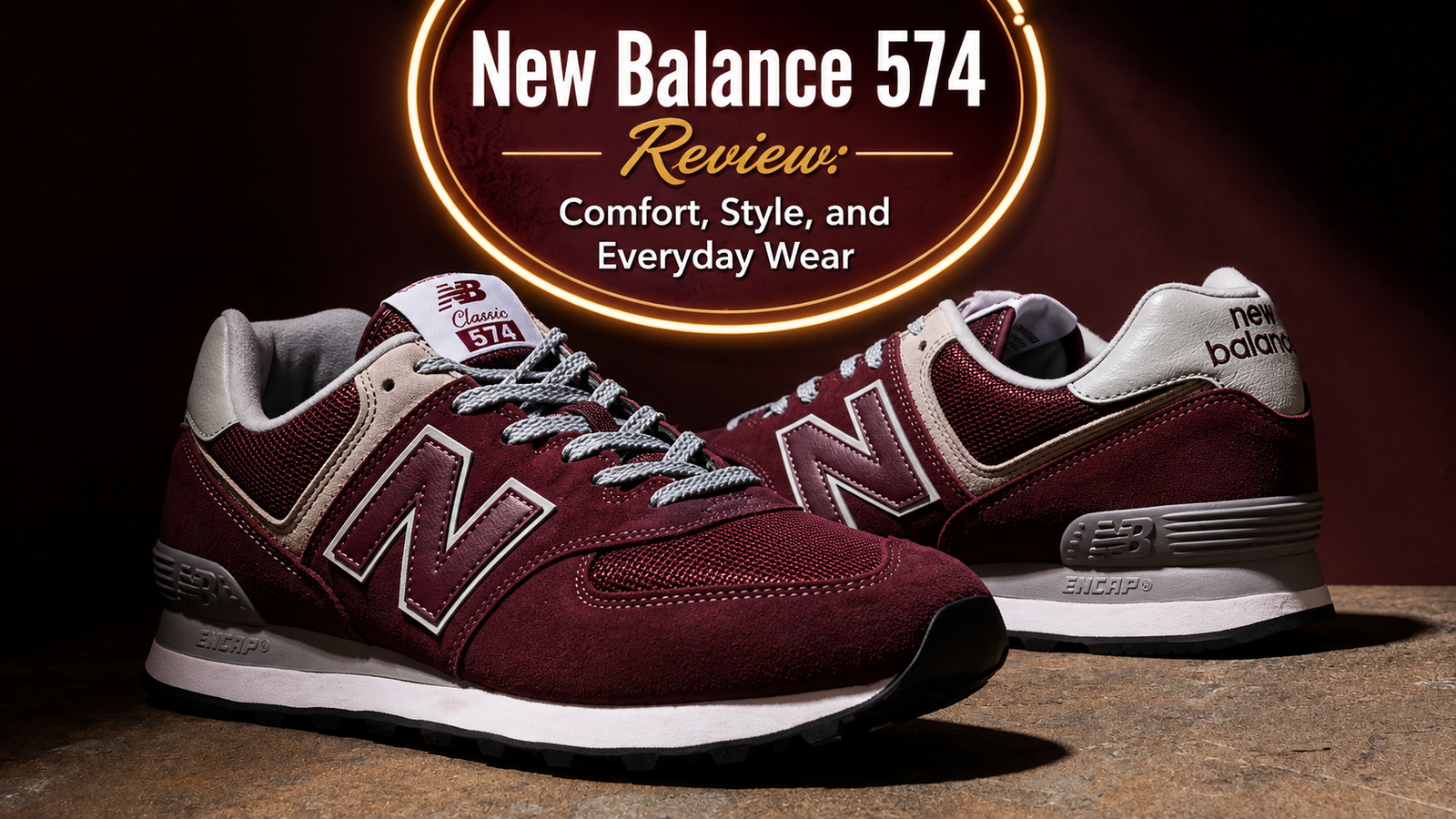
The New Balance 574 is one of those sneakers that does not need much introduction. Its familiar shape, large “N” logo, and retro-inspired design have made it a recognizable part of everyday footwear for decades. Unlike newer sneakers that often rely on flashy technology or constantly changing designs, the 574 has stayed relevant by doing something simpler: offering a comfortable, practical shoe that works with a wide range of outfits.
The appeal goes beyond appearance. The 574 combines a suede and mesh upper with New Balance’s ENCAP midsole cushioning, a rubber outsole, and a traditional lace-up design. New Balance describes the model as a versatile hybrid originally designed to handle different surfaces rather than focusing on one specialized purpose.
But does the classic design still make sense today? This review looks closely at the New Balance 574, including its comfort, fit, construction, walking experience, durability, styling options, and overall value.
New Balance 574 at a Glance
The 574 has a straightforward personality. It is a low-profile lifestyle sneaker with a noticeable retro running-shoe influence. The design feels familiar without looking outdated, which is one reason it continues to work with modern casual clothing.
New Balance currently describes the 574 as a shoe built around versatility rather than revolutionary technology. Its construction includes a suede and mesh upper, ENCAP cushioning, a rubber outsole, and a lace closure. The model is also offered in different widths, giving shoppers more flexibility when choosing a fit.
That combination explains much of its appeal. The sneaker can be worn for everyday errands, casual walks, school or college days, travel, and relaxed social occasions without looking out of place.
Design and Build
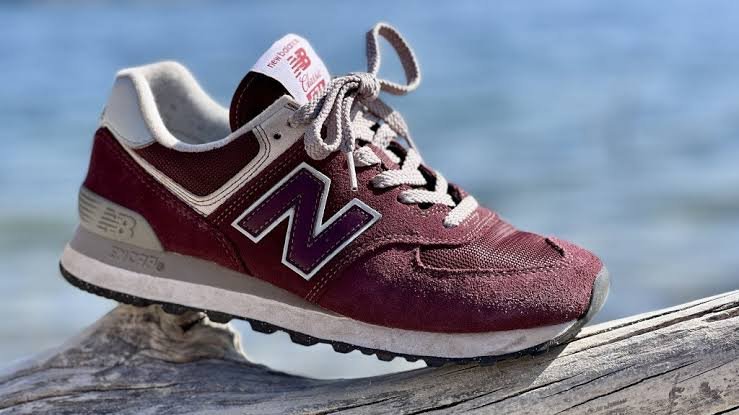
The first thing most people notice about the New Balance 574 is its classic shape. The upper has a layered appearance, with suede panels adding structure while mesh sections give the shoe a lighter visual feel.
The famous New Balance “N” branding sits prominently on the sides. Depending on the colorway, it can either blend into the design or provide a noticeable contrast.
The overall aesthetic is distinctly retro. However, the 574 does not look like a sneaker that has simply been pulled from an old archive. Its proportions have become familiar enough that the style now feels timeless.
Build quality is another important part of the shoe’s character. Independent testing found the 574’s suede quality and overall durability to be strong, while the outsole showed good resistance to everyday wear.
The result is a sneaker that feels more substantial than many lightweight fashion shoes.
Comfort
Comfort is one of the main reasons people continue to choose the New Balance 574.
The shoe uses ENCAP midsole cushioning, which New Balance describes as a combination of soft foam and a durable polyurethane rim designed to provide support.
The important thing to understand is that the 574 does not provide the extremely soft, springy sensation associated with some modern running shoes. Its cushioning has a firmer and more stable character.
Independent lab testing supports this observation. RunRepeat measured the 574’s primary midsole foam as relatively firm while also finding good shock absorption. Its testing recorded a heel shock-absorption score of 92, compared with an average of 88 among the shoes in its comparison group.
That combination makes the 574 interesting for everyday wear. It is not particularly bouncy, but it can feel dependable underfoot.
For someone walking around town, spending several hours on their feet, or wearing the same pair throughout the day, that stable sensation can be more useful than an overly soft ride.
Everyday Walking
The New Balance 574 is particularly well suited to casual walking.
Its relatively firm platform provides a stable base, while the cushioning helps reduce some of the impact associated with ordinary walking. Independent testing also found strong traction, with the 574 recording a heel traction coefficient of 0.55 compared with an average of 0.47 in the tested group.
The outsole design also contributes to the sneaker’s classic appearance. Although its pattern has a slightly rugged look, the 574 is primarily intended as an everyday urban shoe rather than a dedicated trail shoe.
The shoe’s stiffness is worth mentioning. Testing found it somewhat stiffer than the average casual sneaker, although still comfortable enough for longer walks.
This means the 574 may appeal more to people who enjoy a supportive, structured sneaker than those who want something extremely flexible.
Fit and Sizing
Fit can make or break any sneaker, and the 574 is no exception.
New Balance’s current product pages note that some versions of the 574 run small and may require going up from a normal size, so shoppers should check the specific model’s current sizing information before purchasing.
Another advantage is width availability. New Balance offers selected 574 versions in extended widths, including wider options.
Independent testing found the tested version to be generally true to size, but also noted that its measured width through the midfoot was relatively narrow while the toe area provided generous room across the front.
This illustrates why simply saying that a shoe “fits true to size” does not tell the whole story. Foot shape matters. Someone with a wider foot may benefit from one of the available wider versions, while another wearer may find the standard width perfectly comfortable.
The safest approach is to check the sizing information for the exact 574 version and consider both length and width.
Style and Outfit Versatility
One of the strongest qualities of the New Balance 574 is how easily it fits into different outfits.
With jeans, the sneaker creates an effortless casual look. A simple T-shirt or sweatshirt can complete the outfit without making the shoes feel overly prominent.
The 574 can also work with chinos or other clean casual trousers. Choosing a neutral color can make the sneaker particularly easy to combine with different clothing.
Color choice changes the personality of the shoe. Grey versions emphasize the traditional New Balance aesthetic, while darker colorways can create a more understated appearance. Brighter combinations can make the sneaker a more noticeable part of an outfit.
This versatility is not accidental. The 574 was designed around practicality and broad usability, and that philosophy has helped it move comfortably from its original running-shoe roots into everyday fashion. New Balance itself describes its versatility as a major reason for the model’s lasting popularity.
Durability
A classic sneaker is only worthwhile if it can handle regular use, and the New Balance 574 performs well in this area.
The suede and mesh construction gives the upper a structured feel, while the rubber outsole is designed for regular contact with urban surfaces. Independent testing found strong durability results for the upper and outsole, including good resistance to wear in several tested areas.
Of course, durability depends on how the sneaker is used.
Someone wearing the 574 occasionally on clean indoor surfaces should expect a different level of wear from someone using it every day in rough outdoor conditions. Weather, walking habits, cleaning methods, and how often the shoes are rotated can all influence their lifespan.
Basic care can help preserve the appearance. Dirt should be removed regularly, and suede sections should be treated carefully rather than aggressively scrubbed or soaked.
Grip and Stability
The 574’s grip is another practical strength.
Independent testing found traction above the average of the tested comparison group, including strong performance on wet concrete.
That does not mean the 574 is designed for every environment. It remains primarily a lifestyle sneaker, so extreme surfaces and demanding outdoor activities are outside its intended role.
For normal sidewalks, shopping areas, school or campus environments, and everyday city walking, however, the outsole provides a reassuring level of grip.
Stability is also helped by the relatively firm platform. RunRepeat’s testing gave the 574 strong results for torsional rigidity and found a structured heel counter.
Breathability
The suede and mesh upper gives the 574 some breathability, but it is not necessarily the first choice for extremely hot conditions.
Independent testing gave the shoe an average breathability result.
For normal everyday use, this should not be a major problem. However, people looking specifically for an ultra-light, highly ventilated summer sneaker may prefer a design that uses more open mesh and less layered material.
This is one of the trade-offs of the 574’s construction. The layered upper contributes to its recognizable appearance and durability, but it also makes the shoe feel more substantial than some modern lightweight sneakers.
Pros and Cons
The New Balance 574 has several clear strengths.
Pros
- Timeless design that works with many outfits
- Stable and supportive underfoot
- Good everyday comfort
- Strong traction for normal urban walking
- Durable construction
- Suede and mesh upper
- Multiple width options on selected versions
- Large selection of colorways
Independent testing also praised the model for all-day wear, durability, stability, and styling versatility.
There are a few limitations as well.
Cons
- The cushioning feels firmer rather than plush
- The shoe is somewhat stiff compared with softer casual sneakers
- Breathability is adequate rather than exceptional
- The fit can vary depending on foot shape and width
- Some current versions may run small, so checking the exact size guide is important
These are not necessarily deal-breakers. They simply show that the 574 has a particular personality.
Who Should Buy It?
The New Balance 574 makes the most sense for someone looking for a classic everyday sneaker rather than a specialized athletic shoe.
It is a good option for people who appreciate retro styling, want a shoe that can work with different casual outfits, and prefer a stable feel underfoot.
It can also be appealing to anyone who spends a lot of time walking but does not necessarily need a modern running shoe.
The model’s broad selection of widths is another advantage for shoppers who have difficulty finding a comfortable standard-width sneaker.
Who Should Look Elsewhere?
The 574 may not be the best choice for everyone.
If your priority is an extremely soft, highly responsive, or highly flexible ride, the 574’s firm construction may not match your preferences.
Likewise, runners looking for a dedicated performance running shoe should consider footwear specifically designed for running rather than treating the 574 as an athletic replacement.
The same applies to people who want an exceptionally breathable sneaker for very hot conditions. The 574’s layered construction is more focused on its classic look, structure, and everyday versatility.
Value
Value is one of the reasons the 574 has remained attractive.
Instead of trying to compete with premium sneakers through complicated technology, the model focuses on the basics: recognizable styling, reliable construction, cushioning, traction, and everyday usability.
New Balance’s own description emphasizes that the 574 was created to do many things well rather than act as a showcase for cutting-edge technology.
That philosophy still makes sense.
A sneaker does not necessarily need the newest foam or the most advanced construction to be useful. For everyday wear, a balanced combination of comfort, durability, and style can be more important.
Final Verdict
The New Balance 574 remains a strong choice because it understands what an everyday sneaker needs to do.
It looks distinctive without being difficult to style. It provides dependable cushioning without chasing an overly soft feel. Its firm platform offers stability, while the outsole delivers good traction for normal walking. The suede and mesh construction also gives it the substantial character that many fans associate with classic New Balance footwear.
Its biggest strength may actually be its balance.
The 574 is not trying to be the lightest sneaker, the softest sneaker, or the most technologically advanced sneaker. Instead, it combines several useful qualities into one familiar package. That approach has helped it remain relevant long after its original introduction.
For casual walking, everyday outfits, travel, errands, and general lifestyle wear, the New Balance 574 is still a dependable and versatile option.
If you prefer a sneaker with a classic appearance, firm support, practical durability, and easy styling, the 574 deserves serious consideration. Its long-running appeal is not simply nostalgia; the design continues to make sense because it delivers the everyday qualities people actually use.
Frequently Asked Questions
Is the New Balance 574 comfortable for everyday wear?
Yes. The 574 is designed as a versatile everyday sneaker, and independent testing found it suitable for prolonged walking and all-day use. Its cushioning is relatively firm, so it will feel different from very soft modern sneakers.
Does the New Balance 574 fit true to size?
Fit can vary by version and foot shape. Independent testing found the tested model generally true to size, while New Balance currently notes on some product pages that the model may run small. Checking the exact product’s size guide is recommended.
Is the New Balance 574 good for walking?
Yes. Its stable platform, cushioning, and good outsole traction make it well suited to everyday walking. It is best considered a lifestyle and casual walking shoe rather than a specialized performance running shoe.
How durable is the New Balance 574?
The 574 has a reputation for solid everyday durability. Independent testing found good results for the upper, heel padding, and outsole, although actual lifespan depends on frequency of use and conditions.
Can you wear New Balance 574 sneakers with different outfits?
Yes. Their classic silhouette works naturally with jeans, casual trousers, chinos, T-shirts, sweatshirts, and many other everyday combinations. This styling versatility is one of the model’s defining strengths.
Is the New Balance 574 a running shoe?
The 574 has roots in running footwear and was originally introduced as a hybrid road/trail design, but today’s 574 is primarily positioned as a lifestyle sneaker. For serious running, a dedicated modern running shoe is more appropriate.