






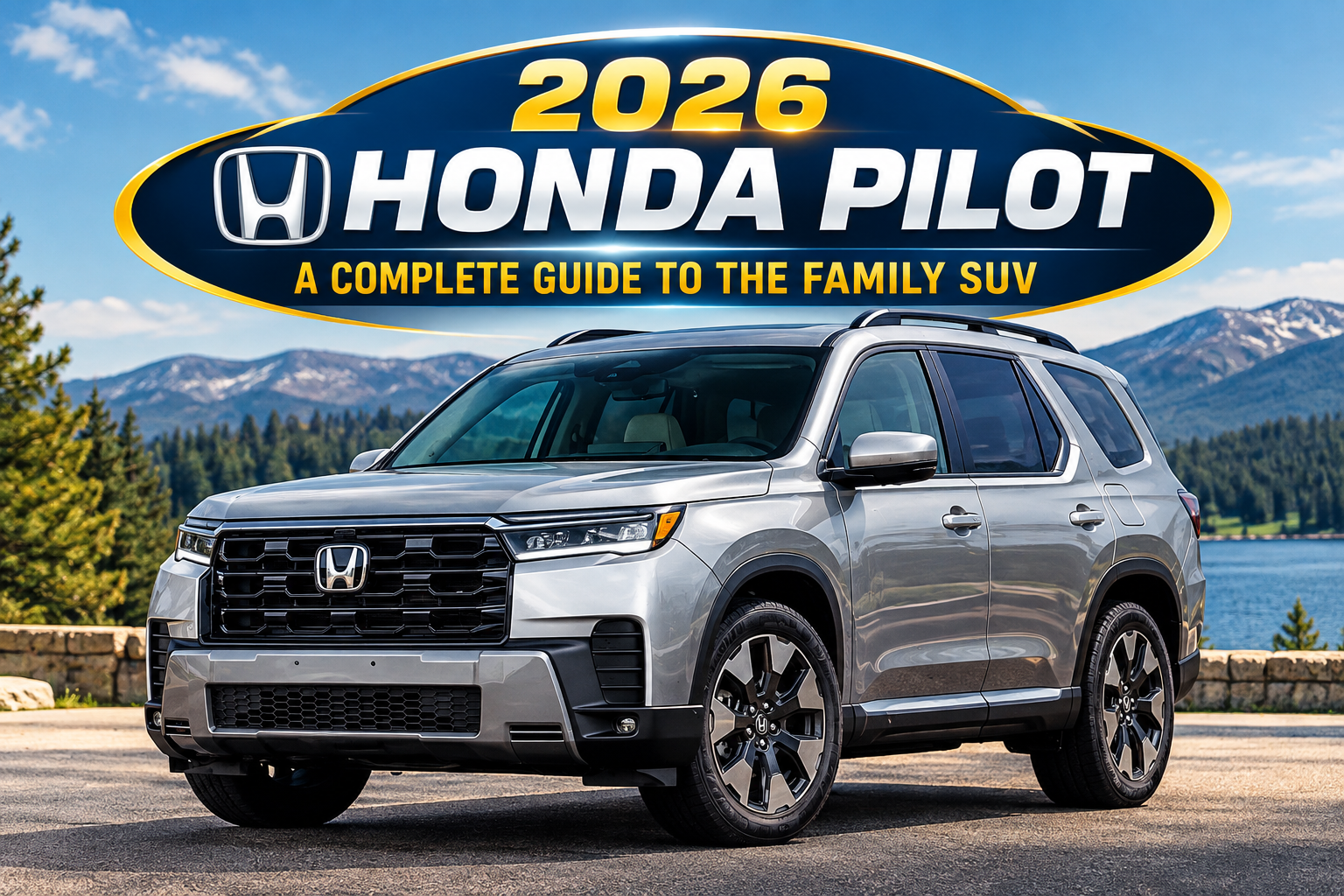
The 2026 Honda Pilot continues Honda’s approach to the three-row SUV by combining everyday comfort, useful cargo space, strong V6 power, and available all-wheel drive. It is designed primarily for families, but its towing ability and available TrailSport equipment also give it some extra versatility for drivers who want more than a basic people mover.
For 2026, the Pilot is offered in several trims, ranging from the Sport and EX-L to the more adventure-focused TrailSport and upscale Black Edition. Honda lists a starting MSRP of $42,395, while the highest Black Edition starts at $55,195, before destination charges, taxes, registration, and accessories.
BIO
| Label | Information |
|---|---|
| Model | 2026 Honda Pilot |
| Brand | Honda |
| Vehicle Type | Three-row midsize SUV |
| Seating | Up to 8 passengers |
| Engine | 3.5-liter V6 |
| Horsepower | 285 hp |
| Transmission | 10-speed automatic |
| Drivetrain | Front-wheel drive or AWD |
| Max Towing | Up to 5,000 pounds |
| Starting Price | $42,395 |
| Top Trim | Black Edition |
| Key Feature | Spacious and family-friendly cabin |
2026 Honda Pilot Overview
The Pilot is a three-row family SUV with seating for up to eight people in several configurations. Its standard V6 engine produces 285 horsepower and 262 lb-ft of torque, paired with a 10-speed automatic transmission. Front-wheel drive is available on lower trims, while Honda’s i-VTM4 all-wheel-drive system is available or standard depending on trim.
One of the Pilot’s biggest strengths is flexibility. A family can use the first two rows for passengers and fold the rear seats when extra cargo room is needed. Honda lists as much as 111.8 cubic feet of maximum cargo volume on some configurations, although the exact figure varies by trim and seating arrangement.
The 2026 Pilot also gives buyers several personalities to choose from. The Sport has a straightforward feature set, the EX-L adds more comfort, the TrailSport focuses on outdoor capability, and higher trims bring additional luxury and technology.
Exterior Design
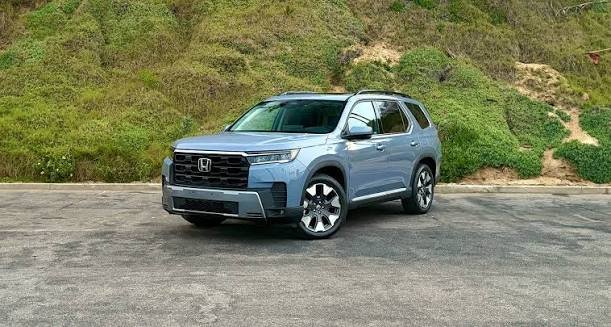
The Pilot has a substantial SUV shape that fits naturally into the three-row segment. Its approximately 200-inch length and 78.5-inch width give it a noticeable road presence while creating room for passengers inside.
Design details change as buyers move through the trim range. The Sport comes with 20-inch alloy wheels, while the TrailSport uses 18-inch wheels with all-terrain tires. Higher trims add features such as a panoramic moonroof, hands-free power tailgate, and distinctive exterior finishes.
The TrailSport is particularly easy to recognize. It has a more rugged appearance and is equipped with an off-road-tuned suspension, TrailWatch camera system, and all-terrain tires. These features give the Pilot a different character from the more road-oriented versions.
Interior and Comfort
Inside, the 2026 Honda Pilot focuses on space and practicality rather than an overly complicated cabin. The three-row layout makes it suitable for families who regularly need additional seating.
Depending on configuration, the Pilot can accommodate up to eight occupants. Honda also offers a stowable second-row center seat, allowing owners to change the second-row arrangement depending on whether they need additional seating or easier access between the seats.
Higher trims add more comfort-oriented equipment. The Touring includes leather-trimmed seats, heated front seats, a panoramic moonroof, second-row sunshades, and power front seats with driver’s memory settings.
The Black Edition takes the interior further with perforated leather-trimmed seating, quilted Ultrasuede accents, heated and ventilated front seats, heated second-row outboard seats, and a heated steering wheel.
For a family SUV, small practical details matter. Features such as multiple USB ports, tri-zone climate control, one-touch second-row seats, and hidden storage areas can make everyday trips easier.
Technology and Infotainment
Technology is another important part of the 2026 Pilot. Honda equips the range with a 12.3-inch color touchscreen and Google built-in on applicable trims. Wireless Apple CarPlay and Android Auto compatibility are also available across the lineup.
The system is designed to handle common tasks such as navigation, entertainment, smartphone integration, and vehicle information without requiring drivers to rely entirely on their phone.
The Sport already includes useful technology, while higher trims add more equipment. Touring models, for example, include a Bose premium sound system, wireless phone charging, a multiview camera system, and additional USB connectivity for passengers.
The Pilot also offers CabinTalk, an in-car communication system intended to make it easier for the driver to communicate with passengers in the rear rows.
Engine and Performance
Every 2026 Honda Pilot uses the same 3.5-liter V6 engine. Honda rates it at 285 horsepower at 6,100 rpm and 262 lb-ft of torque at 5,000 rpm. A 10-speed automatic transmission sends power to the wheels.
That powertrain gives the Pilot the kind of output expected from a midsize three-row SUV. It is intended to provide enough strength for everyday driving, highway trips, and towing without requiring a larger engine.
The Pilot also has selectable drive modes. Depending on trim and drivetrain, these can include Normal, Econ, Sport, Snow, Tow, Trail, and Sand modes. The Trail and Sand modes are particularly relevant to the TrailSport and other AWD-equipped configurations.
The 10-speed automatic transmission also gives the Pilot a broad range of gearing for different driving situations.
All-Wheel Drive
Honda’s i-VTM4 all-wheel-drive system is an important option for buyers who regularly drive in rain, snow, gravel, or other changing conditions.
The system is available on several trims and standard on certain higher versions. Honda describes it as providing intelligent torque control to improve stability and traction.
All-wheel drive also plays an important role in the TrailSport’s outdoor-focused character. However, buyers should remember that AWD does not turn the Pilot into a dedicated off-road vehicle. Its capability depends on the road, terrain, tires, driving conditions, and vehicle configuration.
Fuel Economy
Fuel economy varies depending on drivetrain and trim.
Honda lists the front-wheel-drive Pilot at 19 mpg city, 27 mpg highway, and 22 mpg combined. AWD versions of most trims are rated at 19 mpg city, 25 mpg highway, and 21 mpg combined, while the AWD TrailSport is rated at 18 mpg city, 23 mpg highway, and 20 mpg combined.
These figures place the Pilot in the range expected for a relatively large three-row SUV powered by a naturally aspirated V6.
Driving conditions, passenger load, weather, tire selection, and driving habits can all affect real-world fuel consumption, so EPA ratings should be treated as a standardized comparison rather than a guarantee of what every driver will achieve.
Safety and Driver Assistance
The 2026 Pilot includes a broad collection of driver-assistance features. Honda lists technologies such as Collision Mitigation Braking System, Road Departure Mitigation, Adaptive Cruise Control with Low-Speed Follow, Blind Spot Information with Cross Traffic Monitor, and a rearview camera.
The exact combination of parking and camera equipment changes with trim. Higher versions can include parking sensors and a multiview camera system.
For families, these technologies can be useful during highway driving, lane changes, parking, and maneuvering in busy areas. They are designed as driver-assistance features, however, so the driver remains responsible for paying attention and controlling the vehicle.
2026 Honda Pilot Trim Levels
Honda offers the 2026 Pilot in a broad range of trims, giving buyers considerable choice in equipment and price.
Sport
The Pilot Sport starts at $42,395. It includes the 285-horsepower V6, 20-inch alloy wheels, heated front seats, a power tailgate, a 10.2-inch digital instrument cluster, a 12.3-inch touchscreen, and Google built-in.
Front-wheel drive is available, while i-VTM4 AWD can be selected.
EX-L
The EX-L starts at $44,695 and adds a number of comfort features. Leather-trimmed seats, parking sensors, a wireless phone charger, and a stowable second-row center seat are among the highlights.
This trim can make sense for buyers who want a more comfortable cabin without moving immediately into the more expensive upper trims.
TrailSport
The TrailSport starts at $50,595 and is aimed at buyers who want a more adventure-oriented Pilot.
It includes all-terrain tires, 18-inch TrailSport wheels, an off-road-tuned suspension, and the TrailWatch camera system. It also has additional drive modes designed for different surfaces.
Ground clearance is listed at 8.3 inches for the AWD TrailSport, compared with 7.3 inches for the other listed configurations.
Touring
The Touring starts at $51,295. It brings several premium features, including a panoramic moonroof, Bose premium audio, a multiview camera system with TrailWatch, a hands-free power tailgate, and 20-inch wheels.
It is positioned toward buyers who want more technology and comfort for everyday family use.
Touring Blackout
The Touring Blackout starts at $52,495 and adds black 20-inch alloy wheels and black Honda badges while retaining many of the Touring model’s premium features.
Elite
The Elite starts at $53,695. Its equipment includes a head-up display, rain-sensing windshield wipers, heated and ventilated front seats, and heated second-row outboard seats.
Black Edition
At the top of the lineup, the Black Edition starts at $55,195.
It adds 20-inch gloss-black wheels, Black Edition exterior trim, a distinctive leather interior, a head-up display, heated and ventilated front seats, a panoramic moonroof, Bose audio, and other premium features.
2026 Honda Pilot Price
The 2026 Pilot starts at $42,395 for the Sport. The EX-L begins at $44,695, while the TrailSport starts at $50,595. Touring, Touring Blackout, Elite, and Black Edition start at $51,295, $52,495, $53,695, and $55,195 respectively.
Honda notes that these MSRP figures exclude tax, license, registration, accessories, and a $1,595 destination charge. Premium paint can also add an additional charge. Dealer pricing may vary.
That makes it important to compare the complete purchase price rather than looking only at the advertised starting MSRP.
Cargo Space and Practicality
Cargo flexibility is one of the Pilot’s most useful qualities.
Honda lists up to 87.0 cubic feet behind the first row on several trims, with maximum cargo volume reaching more than 111 cubic feet depending on configuration. The exact maximum ranges from 111.8 to 113.7 cubic feet across the listed trims.
The three-row design also gives families multiple ways to arrange the cabin. With all seats in use, there is still room for everyday items, while folding the rear rows creates considerably more space for larger loads.
The available power tailgate and hands-free access on higher trims are useful touches when loading groceries, luggage, sports equipment, or other family items.
Towing Capability
The Pilot is also designed to handle towing duties. Honda lists a maximum towing capacity of up to 5,000 pounds when properly equipped.
That gives the Pilot useful versatility beyond transporting passengers. A properly configured model can be used for certain trailers, recreational equipment, and other loads within its rated limits.
Towing capacity can depend on the vehicle’s configuration and equipment, so buyers should check the specific vehicle’s rating and follow Honda’s towing requirements before attaching a trailer.
2026 Honda Pilot vs. Other Three-Row SUVs
The Pilot competes in a busy segment that includes models such as the Toyota Grand Highlander, Kia Telluride, Hyundai Palisade, and Ford Explorer.
The differences between these SUVs are not limited to horsepower. Buyers should compare seating layouts, cargo space, fuel economy, towing ratings, drivetrain options, technology, safety equipment, warranty coverage, and pricing.
The Pilot’s combination of a V6 engine, available AWD, three-row seating, and towing capacity gives it a broad range of uses. The TrailSport also gives buyers an option specifically designed around outdoor-oriented driving.
For someone shopping in this class, the best way to narrow the choices is to identify which features matter most: passenger space, fuel economy, technology, towing, off-road equipment, or premium comfort.
Is the 2026 Honda Pilot Good for Families?
The Pilot’s basic layout makes it naturally suited to family use. Three rows, flexible seating, substantial cargo capacity, multiple USB ports, available second-row sunshades, and tri-zone climate control all address common needs for passengers traveling together.
The available second-row center seat is another practical feature. Families can configure the second row differently depending on whether they need maximum seating or easier movement through the cabin.
Long-distance travel is another area where the Pilot’s equipment can be useful. Higher trims offer premium audio, a panoramic moonroof, heated seats, additional charging options, and extra camera technology.
Who Should Consider the 2026 Honda Pilot?
The 2026 Honda Pilot is aimed at buyers who need more passenger and cargo flexibility than a typical two-row SUV can provide.
It can suit families who regularly carry several passengers, drivers who take frequent road trips, and people who need an SUV capable of towing within its rated limits.
The TrailSport provides another option for drivers who spend more time on outdoor trips and want features such as all-terrain tires, increased ground clearance, and off-road-oriented drive modes.
At the other end of the range, the Elite and Black Edition focus more heavily on comfort and premium equipment.
Final Thoughts
The 2026 Honda Pilot remains a versatile three-row SUV built around practical family transportation. Its 285-horsepower V6, 10-speed automatic transmission, available i-VTM4 AWD, seating for up to eight, and large cargo area give it a wide range of everyday uses.
The lineup also gives buyers room to choose based on lifestyle. The Sport offers a lower entry point, the EX-L adds comfort, the TrailSport brings a more rugged setup, and the upper trims provide additional luxury and technology.
With pricing ranging from $42,395 to $55,195 before destination charges and other costs, the 2026 Pilot covers a fairly broad portion of the three-row SUV market.
For buyers considering one, the most important step is to compare the individual trims carefully. The differences in drivetrain, seating configuration, technology, comfort features, and outdoor capability can make one version considerably more suitable for a particular family’s needs than another.
Frequently Asked Questions
What is the 2026 Honda Pilot?
The 2026 Honda Pilot is a three-row midsize SUV designed for families, with seating for up to eight and a 285-horsepower V6 engine.
How much does the 2026 Honda Pilot cost?
The 2026 Honda Pilot starts at $42,395 for the Sport trim, before destination charges, taxes, registration, and other costs.
How many people can the 2026 Honda Pilot seat?
Depending on the configuration, the Pilot can seat up to eight passengers, making it practical for larger families and group travel.
Does the 2026 Honda Pilot have all-wheel drive?
Yes. The 2026 Pilot offers Honda’s i-VTM4 all-wheel-drive system on several trims, with AWD standard on some higher-level versions.
How much can the 2026 Honda Pilot tow?
When properly equipped, the 2026 Honda Pilot can tow up to 5,000 pounds, providing useful capability for trailers and recreational equipment.