





Introduction
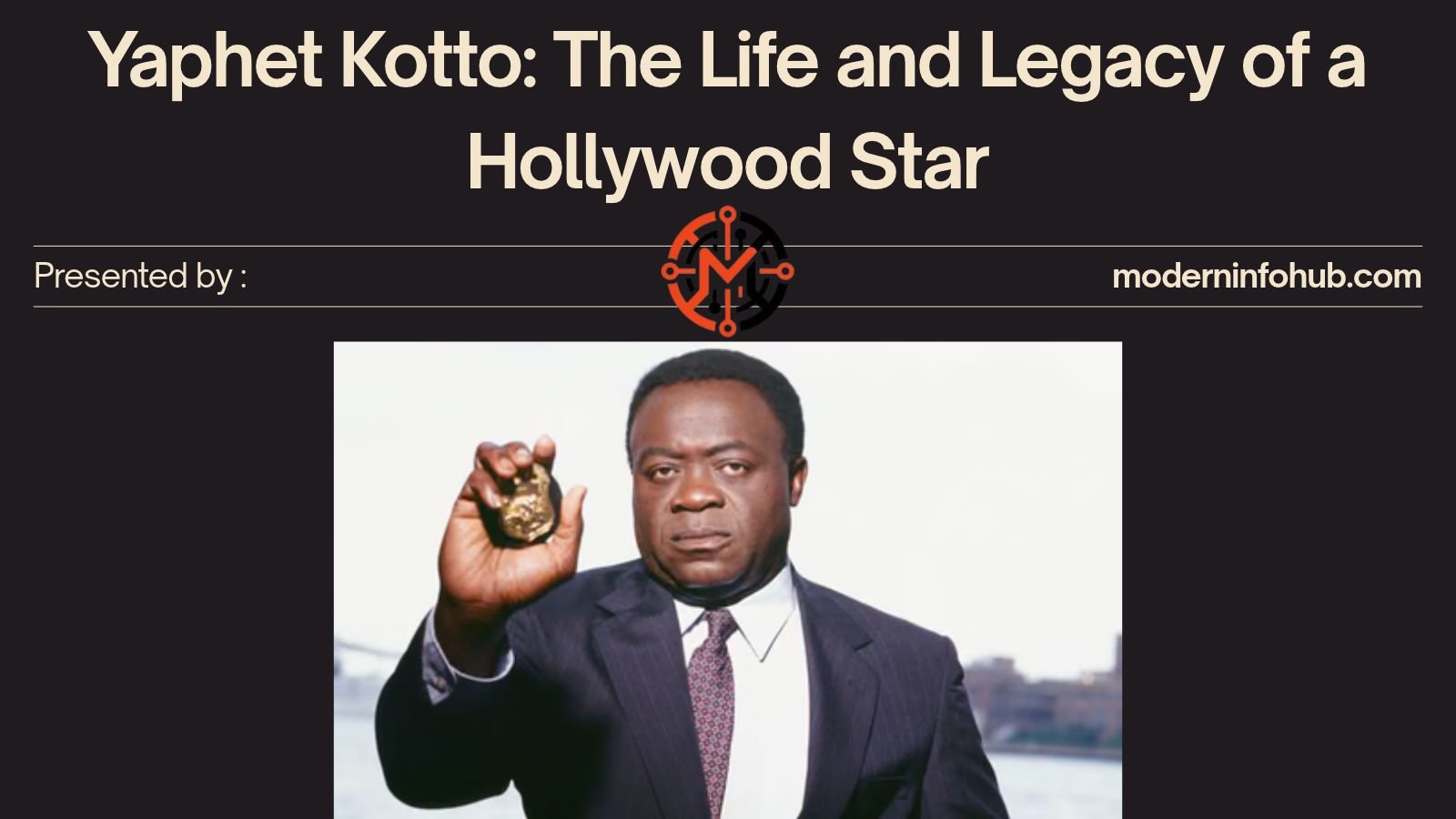
Yaphet Kotto was an American actor whose powerful screen presence, memorable performances, and remarkable range made him one of the most recognizable character actors of his generation. Over a career that spanned several decades, he appeared in films, television dramas, and stage productions, earning respect for his ability to portray complicated characters with authority and emotional depth.
Many viewers remember Yaphet Kotto for playing Dr. Kananga and Mr. Big in the James Bond film Live and Let Die (1973), engineer Dennis Parker in Alien (1979), and Lieutenant Al Giardello in the television series Homicide: Life on the Street. These roles demonstrated his versatility and helped establish his place in entertainment history.
However, his story extends beyond these famous performances. His early interest in acting, theater experience, and determination to build a lasting career helped shape his journey through Hollywood. He also worked during a period when Black actors frequently faced limited opportunities and stereotypical roles.
Yaphet Kotto passed away in March 2021 at the age of 81, but his performances continue to attract new audiences. His life offers an interesting look at the dedication, talent, and persistence required to build a lasting acting career.
BIO
| Label | Information |
|---|---|
| Full Name | Yaphet Frederick Kotto |
| Known As | Yaphet Kotto |
| Profession | Actor |
| Date of Birth | November 15, 1939 |
| Birthplace | New York City, New York, USA |
| Nationality | American |
| Ethnic Background | African and Caribbean roots |
| Date of Death | March 15, 2021 |
| Age at Death | 81 years |
| Height | Approximately 6 ft 3 in (190 cm) |
| Spouse | Tessie Sinahon (married in 1998) |
| Children | Six |
| Famous Works | Alien, Live and Let Die, Homicide: Life on the Street |
Who Was Yaphet Kotto?
Yaphet Frederick Kotto was born on November 15, 1939, in New York City, New York. He became known for his work as a film, television, and stage actor, particularly for portraying strong, intelligent, and sometimes intimidating characters.
Unlike performers who became famous through one leading role, Kotto built his reputation through a wide variety of performances. He could play a determined police officer, a complex antagonist, a working-class laborer, or a professional facing a difficult situation. His distinctive voice and commanding presence made him recognizable even when he appeared alongside major Hollywood stars.
Kotto became particularly prominent during the 1970s, when he appeared in several influential films. His work in Live and Let Die brought him international attention, while Alien introduced him to generations of science-fiction and horror fans.
He later achieved considerable recognition on television through Homicide: Life on the Street, where he played Lieutenant Al Giardello. The character allowed him to demonstrate a more measured and thoughtful side of his acting.
His career lasted for decades, and his performances covered multiple genres, including crime dramas, science fiction, action films, and television mysteries. His ability to adapt to different stories helped make him a respected figure in American entertainment.
Yaphet Kotto’s Early Life and Family Background
Yaphet Kotto grew up in New York City, including the Bronx, where he spent much of his childhood with his maternal grandparents after his parents separated. His family background included Caribbean and African roots, and his father was associated with Cameroon.
His upbringing formed an important part of his personal story. Growing up in New York exposed him to different communities, cultures, and experiences, while his interest in performance eventually led him toward acting.
As a teenager, Kotto became fascinated by the craft of portraying characters. One particularly important influence was Marlon Brando’s performance in On the Waterfront (1954). Kotto later described the impact that seeing Brando had on his decision to pursue acting.
The performance helped him recognize that acting could communicate emotions and personal struggles in a convincing way. Rather than treating acting simply as a path to fame, he became interested in the work required to make a character believable.
Kotto began studying at Actors Mobile Theater Studio when he was around 16. This training gave him an opportunity to develop his skills and understand the discipline required for stage performance.
His early years were not an immediate journey to Hollywood success. Like many actors, he had to learn his craft, seek opportunities, and prove that he could handle demanding roles. His theater training became an important foundation for the career that followed.
Yaphet Kotto’s Journey Into Acting
Kotto began his professional acting journey on stage before becoming widely known in film and television. One of his early significant stage roles was Shakespeare’s Othello, a character that demands emotional control, intensity, and a strong understanding of human relationships.
The experience helped him develop the confidence and presence that later became central to his screen performances. Theater also taught him how to maintain a character throughout a scene and communicate complex emotions through voice, movement, and expression.
His early stage work led to further opportunities. In the 1960s, he appeared in productions that allowed him to strengthen his reputation as a serious performer. He also became involved with Broadway, including the play The Great White Hope, in which he replaced James Earl Jones as the central character, the boxer Jack Jefferson.
These experiences helped establish Kotto as an actor capable of handling challenging material. He was not limited to action-oriented roles or characters who relied on physical strength. His theater background gave him the tools to portray vulnerability, frustration, intelligence, and personal conflict.
His film career began with an appearance in 4 for Texas (1963), followed by a credited role in Nothing but a Man (1964). The latter film explored the experiences of a Black man navigating work, family, and racial prejudice in the United States.
Although Kotto was still building his career, these early projects introduced him to filmmakers and audiences who appreciated performances grounded in realism. They also helped prepare him for the more prominent roles that arrived during the following decade.
Yaphet Kotto’s Rise to Hollywood Fame
Kotto’s career gained momentum during the late 1960s and early 1970s. He appeared in productions that demonstrated his ability to work across different genres, including the heist film The Thomas Crown Affair (1968).
His breakthrough came with Across 110th Street, a crime film released in 1972. Kotto played Lieutenant Pope, a police officer involved in an investigation shaped by crime, racial tension, and competing interests.
The role helped bring him greater attention and showed that he could carry an important part in a serious crime drama. His performance suited the film’s realistic tone, allowing him to portray a character operating within a complicated social environment.
Kotto’s appearance and acting style often led casting directors to consider him for authoritative or intimidating characters. However, he brought more to these roles than physical presence. His performances frequently suggested that the people he portrayed had their own motivations, histories, and personal conflicts.
During this period, Black actors were still fighting for more varied and substantial opportunities in Hollywood. Many were offered narrowly defined parts, making it difficult to demonstrate the full range of their abilities.
Kotto continued to work within the opportunities available to him while bringing individuality to his characters. His career showed that a supporting role could become memorable when performed with intelligence and conviction.
Yaphet Kotto in Live and Let Die
One of the most important milestones in Yaphet Kotto’s career was his appearance in Live and Let Die (1973), the James Bond film starring Roger Moore in his first outing as the famous British secret agent.
Kotto played Dr. Kananga, a Caribbean dictator and criminal mastermind who also operates under the identity of Mr. Big. The character is central to Bond’s investigation, and Kotto’s performance provides the film with a formidable antagonist.
Playing two identities within the same story gave Kotto an opportunity to demonstrate his range. Dr. Kananga and Mr. Big are connected, but their different presentations help create the mystery surrounding the character.
Kotto approached the role with a controlled performance that balanced intelligence, confidence, and menace. Rather than relying entirely on exaggerated gestures, he gave the character a sense of authority that made him a convincing opponent for Bond.
The film also holds a place in the history of the James Bond franchise because Kotto became the first Black actor to portray a major Bond villain. His casting represented a notable moment in the series, even as the film reflected some of the racial and cultural stereotypes common in popular entertainment of that era.
For Kotto, the role brought international recognition and introduced his work to a much wider audience. Although he played many other important characters throughout his career, Dr. Kananga and Mr. Big remain among his most frequently remembered performances.
Yaphet Kotto’s Memorable Role in Alien
Another defining moment in Kotto’s career came with Alien (1979), directed by Ridley Scott. The science-fiction horror film follows the crew of the commercial spaceship Nostromo as they encounter a dangerous extraterrestrial organism.
Kotto played Dennis Parker, the ship’s chief engineer. Parker is a practical working professional responsible for helping keep the spacecraft operating. His character contributes to the film’s atmosphere of uncertainty as the crew attempts to understand and survive the threat aboard their ship.
Unlike the theatrical villain in Live and Let Die, Parker is an ordinary working man placed in an extraordinary situation. Kotto’s performance emphasizes the character’s directness, frustration, and concern for the crew.
His interactions with fellow crew member Brett, played by Harry Dean Stanton, give the film a believable workplace dynamic. Their conversations about duties, repairs, and compensation make the Nostromo feel like a real working environment rather than simply a setting for a science-fiction adventure.
That realism is one reason Alien remains so effective. The characters are not presented as flawless heroes. They have disagreements, personal concerns, and different responses to danger.
Kotto’s performance helped establish that grounded atmosphere. He made Parker feel like a recognizable person whose professional responsibilities continue even when the situation becomes increasingly difficult.
The film became a major influence on science-fiction and horror cinema, and Kotto’s role remains an important part of its ensemble cast. His performance continues to be appreciated by viewers revisiting the film decades after its release.
Other Notable Yaphet Kotto Movies
Although Live and Let Die and Alien are among Kotto’s best-known films, his career included many other noteworthy performances. These roles demonstrate why he was valued as a versatile character actor rather than simply associated with one genre.
In Blue Collar (1978), Kotto starred alongside Richard Pryor and Harvey Keitel. Directed by Paul Schrader, the film follows three Detroit auto workers whose financial difficulties and frustrations with their workplace lead them into conflict with corrupt union officials.
Kotto played Smokey James, a worker whose circumstances reveal the pressures facing working-class people. The film explores race, economic hardship, workplace power, and the ways financial insecurity can strain friendships.
His performance is an important example of his ability to portray ordinary people facing difficult choices. Smokey is not a conventional action hero or a larger-than-life villain. He is a man dealing with a system that offers few easy answers.
Kotto also appeared in Brubaker (1980), a prison drama starring Robert Redford. The film examines corruption and abuse within a prison system, continuing the actor’s involvement in stories about institutional power and individual struggles.
In The Running Man (1987), he joined the cast of a dystopian action film starring Arnold Schwarzenegger. The movie imagines a future in which televised entertainment turns human survival into a public spectacle. Kotto’s appearance added to the film’s ensemble of memorable characters.
Another important role came in Midnight Run (1988), where he played FBI Special Agent Alonzo Mosely. The film follows a bounty hunter transporting an accountant across the country while several groups attempt to capture them.
Kotto’s portrayal of Mosely brought humor and frustration to the pursuit. His character’s professional determination repeatedly clashes with the unpredictable situation surrounding the investigation.
These films show the breadth of his career. Whether appearing in a serious drama or an action-oriented production, Kotto brought a distinctive personality to his roles and helped make supporting characters feel essential to the story.
Yaphet Kotto’s Television Career
Film was a major part of Kotto’s reputation, but television also gave him opportunities to portray complex characters. Throughout his career, he appeared in numerous television productions, including Gunsmoke, Hawaii Five-O, The A-Team, Murder, She Wrote, and Law & Order.
One of his notable television performances came in Raid on Entebbe, a 1976 television film based on the Israeli operation to rescue hostages held at Entebbe Airport in Uganda.
Kotto portrayed Ugandan leader Idi Amin. The role required him to represent a real historical figure whose political position and actions were central to the events depicted in the film.
His performance earned him a Primetime Emmy nomination in 1977 for Outstanding Performance by a Supporting Actor in a Comedy or Drama Special. The nomination was an important professional recognition of his work.
Kotto later achieved lasting television recognition through Homicide: Life on the Street, the crime drama that premiered in 1993. He played Lieutenant Al Giardello, the experienced shift commander overseeing detectives in a Baltimore homicide unit.
The series became known for its serious tone, character-focused storytelling, and attention to the difficult realities of police investigations. Instead of relying solely on dramatic action, it frequently explored the emotional and ethical challenges faced by its characters.
As Giardello, Kotto portrayed a leader who could be firm without losing sight of the human consequences of the detectives’ work. His character provided a steady presence in a workplace filled with pressure, disagreements, and difficult decisions.
He remained part of the series throughout its seven-season run, which concluded in 1999. He also returned for the television film Homicide: The Movie in 2000.
The role introduced Kotto to viewers who may not have known his earlier film work. It also demonstrated how effectively he could develop a character over several years rather than relying on the limited screen time of a supporting film role.
Yaphet Kotto’s Personal Life and Family
Away from the screen, Yaphet Kotto maintained a family life that was an important part of his personal story. He was married three times and had six children.
His first marriage was to Rita Ingrid Dittman, and they had three children together. His second marriage was to Antoinette Pettyjohn, with whom he had three daughters. Later in life, he married Tessie Sinahon in 1998.
Kotto eventually lived in the Philippines, where he spent his later years with his wife. His life away from Hollywood was less visible than his screen career, and he generally remained known to the public primarily through his acting work.
His personal background also included a strong interest in his family heritage and spiritual identity. In 1999, he published an autobiography titled The Royalty: A Spiritual Awakening, in which he discussed his life, family background, and personal beliefs.
As with many public figures, some details of his ancestry were based on his own accounts. Those claims should be distinguished from independently established historical records.
His family remembered him as more than the intimidating characters he sometimes played. In public tributes following his death, his wife described him with affection and expressed the deep personal loss his passing represented.
These details offer a fuller picture of Kotto as a person whose life included family relationships, personal reflection, and experiences beyond the film industry.
Yaphet Kotto’s Acting Style and Influence
Yaphet Kotto developed an acting style that relied on a combination of physical presence, careful delivery, and emotional control. He could command attention without needing to dominate every moment of a scene.
His voice and facial expressions helped him communicate authority, but his strongest performances also revealed vulnerability and uncertainty. This combination made many of his characters feel more complicated than their initial appearances suggested.
In Live and Let Die, he played a powerful antagonist who believed he controlled the situation. In Alien, he portrayed a working engineer whose practical concerns made him feel like a real member of the spaceship’s crew. In Homicide: Life on the Street, he became a thoughtful supervisor responsible for guiding a group of detectives through difficult investigations.
These differences demonstrate the breadth of his talent. Kotto did not need to play the same kind of character in every production, even when casting directors frequently approached him for authoritative figures.
His career also reflected the challenges faced by Black actors in American film and television. During much of his working life, opportunities for Black performers were often restricted by industry assumptions about which stories they could lead and which characters they could portray.
Kotto’s work did not eliminate those barriers, but his memorable performances helped establish the value of complex, substantial roles for Black actors. He brought individuality to characters who might otherwise have been written as simple antagonists or supporting figures.
His influence can also be seen in the way audiences remember ensemble films. A supporting performer may not always receive the largest share of screen time, yet a distinctive performance can become one of the most important parts of a film’s identity.
Kotto understood how to make those moments count. His work remains relevant because it combines strong character choices with a believable sense of human experience.
Yaphet Kotto’s Final Years and Death
During his later years, Kotto gradually stepped away from regular film and television acting. His final film appearance came in Witless Protection (2008), a comedy featuring Larry the Cable Guy.
He later returned to the world of Alien through the 2014 video game Alien: Isolation, in which he voiced Dennis Parker. The project allowed him to revisit a character associated with one of his most famous films.
Kotto died in the Philippines in March 2021 at the age of 81. His wife announced his passing, and news of his death prompted tributes from admirers and people connected to the entertainment industry.
His death marked the end of a career that had crossed several generations of film and television. However, his work remained available to audiences through classic films, television episodes, and later projects connected to his best-known roles.
For many fans, remembering Kotto means returning to Alien, Live and Let Die, or Homicide: Life on the Street. For others, it means discovering a performer whose career included far more than these familiar titles.
His final years were quieter than the period when he appeared regularly in major productions, but his earlier performances continued to define his place in entertainment history.
Yaphet Kotto’s Lasting Legacy in Hollywood
Yaphet Kotto’s legacy rests on the quality and variety of his performances. He worked in films that became important parts of popular culture and appeared in television dramas remembered for their strong writing and realistic characters.
His role in Live and Let Die gave the James Bond franchise one of its most recognizable antagonists. His work in Alien helped create the believable crew dynamics that made the film’s frightening events so effective. His portrayal of Lieutenant Al Giardello introduced his acting to a new generation of television viewers.
Beyond individual roles, Kotto represented a particular kind of performer: an actor who could strengthen a production without requiring himself to be the central focus of every scene.
His performances often made audiences curious about the people he portrayed. Even when a character was difficult, intimidating, or morally complicated, Kotto brought enough detail to make the role worth watching.
His career also reminds viewers that Hollywood history is shaped by more than leading stars. Character actors help create the atmosphere, relationships, and conflicts that give films their emotional weight. Kotto’s work is a strong example of how memorable those contributions can become.
New audiences continue to encounter his performances through classic cinema and television. His characters remain recognizable because they were built around more than surface appearances. They reflected human concerns, professional responsibilities, personal ambitions, and difficult choices.
Although he is no longer alive, Yaphet Kotto remains an important figure in the history of American acting. His career demonstrates the value of versatility, discipline, and individuality in an industry that can often place performers into narrow categories.
Frequently Asked Questions About Yaphet Kotto
1. Who was Yaphet Kotto?
Yaphet Kotto was an American actor best known for his roles in Alien, Live and Let Die, and the television series Homicide: Life on the Street.
2. When was Yaphet Kotto born?
Yaphet Kotto was born on November 15, 1939, in New York City, New York.
3. How old was Yaphet Kotto when he died?
Yaphet Kotto was 81 years old when he died in March 2021 in the Philippines.
4. What was Yaphet Kotto’s most famous movie?
Some of his most famous films include Live and Let Die (1973) and Alien (1979), both of which remain popular with audiences.
5. Did Yaphet Kotto have children?
Yes, Yaphet Kotto had six children from his first two marriages. He later married Tessie Sinahon in 1998.
Conclusion
Yaphet Kotto built a remarkable acting career through dedication, versatility, and a distinctive screen presence. From his early theater training in New York to his memorable performances in Live and Let Die, Alien, and Homicide: Life on the Street, he established himself as a performer capable of bringing depth to a wide range of characters.
His journey also reflected the challenges faced by Black actors during a period of significant change in Hollywood. Through his work, he demonstrated that supporting characters could be intelligent, complicated, and central to a story’s lasting impact.
Kotto’s legacy is not limited to a single film or television role. It lives on through the many performances that introduced him to audiences across different generations.
For anyone exploring classic Hollywood films or influential television dramas, his body of work offers a rewarding reminder of what a skilled character actor can bring to the screen. Yaphet Kotto remains remembered not only for the roles he played but also for the conviction and individuality he brought to each performance.