






Businesses need more than financial targets to measure success. They also need clear commitments that demonstrate whether their services are delivering real benefits to customers. Outcome Delivery Incentives are designed to connect company performance with measurable results by rewarding improvements and applying financial consequences when agreed standards are missed. The approach is particularly important in regulated industries, including water and wastewater services in England and Wales. Understanding how these incentives work helps businesses, investors, and customers see how performance, accountability, and service quality are connected.
Quick Overview
| Field | Details |
|---|---|
| Topic | Outcome Delivery Incentives |
| Common abbreviation | ODIs |
| Main purpose | Encourage measurable service improvements |
| Key mechanism | Performance-based rewards and penalties |
| Relevant regulator | Ofwat |
| Main industry | Water and wastewater |
| Regulatory framework | PR14, PR19 and PR24 |
| Main beneficiaries | Customers and the environment |
| Measurement approach | Performance commitments and targets |
What Are Outcome Delivery Incentives?
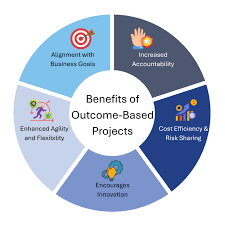
Outcome Delivery Incentives are financial or reputational mechanisms that encourage companies to achieve agreed performance commitments. They connect measurable service standards with rewards for exceeding expectations and consequences for falling below established targets.
The framework is particularly associated with Ofwat, the economic regulator for water and wastewater companies in England and Wales.
For example, a water company might commit to reducing leakage, improving drinking water quality, or responding to customer complaints more efficiently. If it performs better than its agreed target, it may receive an additional financial reward. If it falls short, it could face a financial penalty or another consequence.
The central idea is straightforward: companies should be accountable for the quality of outcomes they deliver, not simply the amount of money they spend.
Ofwat introduced this approach during its 2014 price review and developed it further through subsequent regulatory reviews.
How Outcome Delivery Incentives Work in Modern Business
The framework begins with identifying outcomes that matter to customers and establishing measurable performance commitments.
Companies and regulators then determine the targets, measurement methods, and financial consequences associated with those commitments.
A typical process includes five stages:
- Identify important outcomes: Determine which service improvements customers and stakeholders value most.
- Establish performance commitments: Set measurable standards that companies are expected to achieve.
- Define incentive arrangements: Decide what rewards or penalties apply to different performance levels.
- Measure actual performance: Collect reliable information and compare results with agreed targets.
- Apply the consequences: Calculate applicable rewards, penalties, or reputational outcomes.
For instance, a water provider may establish a leakage-reduction commitment. Its actual performance is measured against the agreed target, and the relevant incentive is calculated according to the applicable regulatory arrangements.
This creates a direct relationship between service delivery and accountability.
Why Are These Incentives Important?
Traditional business performance measurements often focus on spending, revenue, and operational efficiency. However, these figures do not always show whether customers receive better services.
Outcome Delivery Incentives provide another way to evaluate business performance by connecting financial consequences to results that customers can actually experience.
There are several reasons why this approach matters.
1. Better Customer Service
Companies have a financial reason to improve the services they provide. Targets involving reliability, response times, water quality, and service interruptions can encourage improvements that directly affect customers.
2. Greater Accountability
Measurable commitments make it easier to evaluate whether companies are fulfilling their responsibilities. Performance can be assessed against established standards instead of relying entirely on company statements.
3. Improved Operational Performance
Companies may explore new technologies, improve maintenance procedures, and redesign processes to achieve better results.
4. Protection for Customers
Underperformance payments can help return financial benefits to customers when companies fail to meet agreed commitments, subject to the relevant regulatory arrangements.
5. Environmental Improvements
Incentives can encourage companies to reduce pollution, manage water resources responsibly, and improve environmental performance.
These benefits depend on properly designed targets, reliable measurements, and meaningful customer engagement.
Different Types of Outcome Delivery Incentives
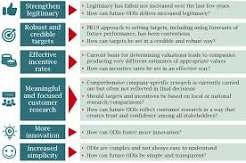
Not every performance commitment uses the same financial arrangement. Companies can operate under different incentive structures depending on the outcome being measured.
Four common types are particularly important.
.
.
Underperformance-Only Incentives
These arrangements apply when a company performs worse than its agreed target or falls below an established performance threshold.
The company may face a financial penalty designed to reflect the failure to deliver the expected service outcome.
Outperformance-Only Incentives
These incentives reward companies for achieving better results than their agreed performance commitments.
For example, a water company that reduces leakage beyond its target may qualify for an additional payment, depending on its regulatory arrangements.
Combined Underperformance and Outperformance Incentives
This structure includes both rewards and penalties.
Companies can receive financial benefits when they exceed their targets but face financial consequences when their performance falls below expectations.
This creates motivation to maintain consistent improvements rather than simply avoiding poor results.
Non-Financial Incentives
Some performance commitments do not involve direct financial payments.
Instead, companies may experience reputational consequences depending on their performance. Strong results can improve public confidence, while poor performance may attract criticism and greater scrutiny.
United Utilities describes these four incentive categories in its performance commitment documentation.
The Role of Ofwat in Performance-Based Regulation
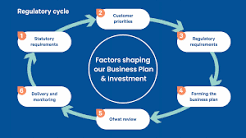
Ofwat plays a central role in establishing the regulatory framework for water and wastewater companies in England and Wales.
Its responsibilities include setting price controls, reviewing company business plans, and determining how service commitments should be assessed.
The regulatory process has developed through several important price reviews:
| Price review | Regulatory period |
|---|---|
| PR14 | 2015–2020 |
| PR19 | 2020–2025 |
| PR24 | 2025–2030 |
During these reviews, Ofwat developed its approach to performance commitments and the financial consequences associated with achieving or missing targets.
Its PR24 methodology explains how incentives should encourage companies to deliver benefits for customers and the environment. The framework also considers the balance between rewarding improvements and protecting customers against poor performance.
Practical Examples of Outcome-Based Performance Rewards
Understanding the framework becomes easier when looking at practical examples.
Consider a water company responsible for maintaining a reliable supply of clean water.
Its performance commitments might include reducing leakage, limiting pollution incidents, preventing sewer flooding, and responding to customer problems.
If the company exceeds an agreed leakage-reduction target, it may qualify for an outperformance payment. If it experiences more pollution incidents than its commitment allows, an underperformance payment may apply.
Ofwat’s December 2016 announcement provides a historical example. Severn Trent Water achieved better-than-committed results in several areas, including pollution incidents, sewer flooding, and leakage. Ofwat reported a performance reward worth £18.8 million.
The same announcement described a £1.7 million penalty for South West Water after it missed its commitments, mainly relating to significant wastewater pollution incidents.
These examples demonstrate how performance-based regulation can connect measurable service outcomes with financial consequences.
Challenges Businesses Should Consider

Although performance-based incentives can encourage improvement, designing an effective system requires careful planning.
Choosing the Right Performance Measures
Poorly selected targets may encourage companies to focus on easy-to-measure activities rather than meaningful customer benefits.
Performance measures should reflect the actual quality of services and the outcomes stakeholders value.
Avoiding Unintended Behaviour
Companies might concentrate on achieving rewarded targets while overlooking other important responsibilities.
A balanced framework should consider multiple performance areas rather than relying on a single measurement.
Managing Financial Risks
Large rewards or penalties can create financial uncertainty. Companies need transparent calculations and clearly defined limits to understand their potential exposure.
Maintaining Reliable Data
Accurate performance information is essential. Weak reporting systems or inconsistent measurement methods can undermine confidence in the entire framework.
Involving Customers
Customer engagement helps regulators and companies understand which service improvements matter most. Without meaningful consultation, targets may not reflect public priorities.
These considerations are important when designing Outcome Delivery Incentives that are fair, measurable, and beneficial to customers.
How to Develop an Effective Incentive Framework
Businesses considering performance-based arrangements can follow several practical principles.
Start with clear objectives. Define the specific service improvements the organization wants to achieve.
Use measurable targets. Every commitment should have a clear measurement method and an agreed performance level.
Connect incentives with meaningful outcomes. Rewards and penalties should reflect the importance of the results being measured.
Maintain transparency. Employees, customers, and stakeholders should understand how performance is evaluated.
Review performance regularly. Monitoring helps organizations identify problems and make improvements before they become more serious.
Consider long-term value. Incentives should encourage sustainable improvements rather than short-term gains that create problems later.
A well-designed framework should motivate better performance without encouraging unnecessary spending, poor decision-making, or neglect of other responsibilities.
What Is Confirmed and What Remains Important to Understand?
The regulatory purpose of Outcome Delivery Incentives is established through Ofwat’s published price review methodology and company performance documents.
However, there is no single universal payment rate or incentive structure that applies to every business. The arrangements depend on the relevant regulator, performance commitment, measurement rules, and applicable price control.
It is therefore important to examine the specific regulatory documents before estimating potential rewards or penalties.
Conclusion
Outcome Delivery Incentives connect business performance with measurable improvements in customer service and environmental outcomes. Their effectiveness depends on clear targets, reliable information, fair financial arrangements, and meaningful accountability. Ofwat’s regulatory framework demonstrates how rewards and penalties can encourage companies to deliver better results while protecting customer interests. For modern businesses, the broader lesson is that successful performance measurement should focus on the value organizations actually deliver.
ALSO READ: GlaadVoice.com Review: Website Features and User Experience
Frequently Asked Questions About Outcome Delivery Incentives
1. What are Outcome Delivery Incentives?
Outcome Delivery Incentives are financial or reputational arrangements linked to measurable performance commitments. They reward companies for exceeding agreed service targets and may impose consequences when performance falls below expectations. They are particularly relevant to regulated water and wastewater companies in England and Wales.
2. Who introduced Outcome Delivery Incentives?
Ofwat introduced its outcome delivery incentive framework during the PR14 price review in 2014. The regulator subsequently developed the approach through PR19 and PR24, strengthening the connection between company performance, customer outcomes, and environmental improvements.
3. What is the main purpose of these incentives?
Their main purpose is to encourage companies to deliver better services and meet commitments that matter to customers. They also establish financial accountability by connecting performance with rewards or penalties.
4. What are the four main types of incentives?
The four common types are underperformance-only, outperformance-only, combined underperformance and outperformance, and non-financial incentives. Each arrangement creates different consequences depending on whether a company meets, exceeds, or misses its performance commitments.
5. How do customers benefit from performance-based incentives?
Customers can benefit through better service reliability, improved environmental performance, and greater company accountability. Underperformance payments may also provide financial protection when companies fail to meet agreed standards, depending on the applicable regulatory arrangements.
6. Do all businesses use this incentive framework?
No. The specific term is strongly associated with regulated utility performance in the United Kingdom, particularly the water industry. Other businesses may use similar performance-based reward systems, but their arrangements are not necessarily part of Ofwat’s regulatory framework.