





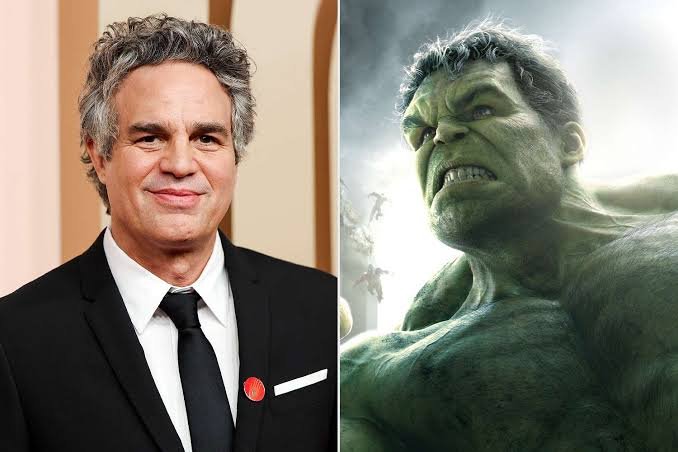
Mark Ruffalo Hulk is one of the most recognizable versions of Bruce Banner in the Marvel Cinematic Universe. When Ruffalo first appeared as the character in The Avengers in 2012, he brought a different personality to the scientist behind the green giant. Rather than treating Bruce Banner simply as the quiet man who could suddenly become the Hulk, Ruffalo helped make him a more layered character whose intelligence, humor, fear, and emotional struggles were just as important as his strength.
Over several Marvel films, Bruce Banner changed dramatically. He went from a scientist who tried to keep the Hulk under control to a character who eventually found a way to live alongside his powerful alter ego. That journey reached an important stage in Avengers: Endgame, where Banner appeared as Smart Hulk, combining his intelligence with the Hulk’s physical abilities.
Ruffalo’s portrayal also gave Marvel the opportunity to explore Banner outside of traditional Hulk battles. His relationships with Tony Stark, Natasha Romanoff, Thor, Steve Rogers, and other Avengers helped establish him as an essential member of the team.
BIO
| Label | Information |
|---|---|
| Full Name | Mark Alan Ruffalo |
| Known For | Bruce Banner / Hulk |
| Character | Bruce Banner |
| Marvel Role | Hulk |
| MCU Debut | The Avengers (2012) |
| First Hulk Film in MCU | The Avengers |
| Character Type | Scientist and Superhero |
| Alter Ego | The Hulk |
| Superhero Team | The Avengers |
| Notable Film | Avengers: Endgame |
| Hulk Version | Professor Hulk |
| Character Trait | Intelligent, powerful, and compassionate |
Who Is Bruce Banner?
Bruce Banner is a brilliant scientist whose life changes after exposure to gamma radiation. Marvel describes him as a character caught between the soft-spoken scientist he has always been and the powerful Hulk driven by rage.
That contrast is at the heart of the character. Bruce represents intelligence, patience, and scientific thinking, while the Hulk represents enormous physical power and emotions that Bruce has difficulty controlling.
In the MCU, however, Banner’s relationship with the Hulk develops over time. The two sides of his personality are not always presented as completely separate. As the story progresses, Banner begins to understand that the Hulk is part of him rather than simply a problem that needs to disappear.
This gives Ruffalo’s version of Bruce Banner an interesting emotional journey. He is not only trying to stop the Hulk from causing destruction. He is also trying to understand himself.
Mark Ruffalo Joins Marvel
Mark Ruffalo took over the role of Bruce Banner for The Avengers, following earlier cinematic versions played by Eric Bana and Edward Norton. His first MCU appearance came at an important point for Marvel because The Avengers brought several established heroes together in one story.
Ruffalo’s Banner was introduced as a scientist living away from the spotlight and attempting to keep his condition under control. He was not presented as someone eager to become a superhero. In fact, much of his character’s appeal came from the fact that he understood the danger associated with losing control.
That approach gave Ruffalo room to make Banner feel human. His performance often depended on small reactions rather than dramatic speeches. Banner could appear nervous, uncomfortable, sarcastic, or quietly amused while standing beside some of the most powerful characters in the MCU.
The result was a Bruce Banner who felt like a scientist first and a superhero second.
The Avengers
The Avengers established Ruffalo’s version of Banner and quickly showed why he was valuable to the team.
Banner’s scientific knowledge became useful to the Avengers, particularly when the group needed someone capable of understanding complex problems. His relationship with Tony Stark also introduced the idea of the two characters being intellectual equals in certain situations.
But the most memorable part of Banner’s role was his relationship with the Hulk.
During the Battle of New York, the Hulk became one of the Avengers’ most powerful weapons. The transformation demonstrated the scale of the character’s abilities, while Banner’s interactions with the team showed that he was gradually becoming more comfortable around people who understood what he could do.
The film also helped establish one of the most important aspects of Ruffalo’s performance: Bruce Banner could be funny without losing the seriousness of his situation.
That balance became a defining part of his MCU portrayal.
Age of Ultron
In Avengers: Age of Ultron, Banner’s story became more personal.
The film explored his growing relationship with Natasha Romanoff, also known as Black Widow. Their connection gave audiences a different view of Banner. He was no longer simply the scientist trying to avoid his transformation. He was someone considering whether he could build a life in which he did not have to constantly run from the Hulk.
The movie also examined the danger of Banner losing control.
One of the film’s major action sequences involves the Hulk facing Tony Stark’s Hulkbuster armor. The confrontation showed just how difficult it could be for the Avengers to stop the Hulk once Banner’s anger became overwhelming.
For Banner, the consequences were significant. The experience reinforced his fear that the Hulk could hurt people and made his struggle with his alter ego even more complicated.
By the end of the film, Banner’s story had moved beyond simply controlling his transformation. He had begun questioning whether he could safely live among other people at all.
Thor: Ragnarok
When Bruce Banner returned in Thor: Ragnarok, his story had taken an unexpected turn.
After the events of Age of Ultron, Banner had been absent for a considerable period. Instead of immediately returning to his familiar scientific role, he had become closely connected with the Hulk.
The film used humor to explore the differences between Bruce and Hulk while also showing that their relationship was changing.
Thor’s friendship with the Hulk became an important part of the story, particularly because Thor viewed the Hulk as a powerful ally rather than something to fear. Banner, meanwhile, had to confront the possibility that the Hulk might have his own identity and preferences.
This created one of the most interesting developments in Ruffalo’s performance. Bruce was no longer simply fighting against the Hulk. He was beginning to recognize that the Hulk had been living his own life.
The film also helped establish a more humorous side of the character. Ruffalo could move between Bruce’s nervous personality and the Hulk’s confidence without making either side feel completely disconnected from the other.
Infinity War
Avengers: Infinity War brought Bruce Banner back into the center of the MCU’s larger conflict.
At the beginning of the story, Banner returns to Earth with knowledge of the threat posed by Thanos. However, he faces a major problem: the Hulk does not want to come out.
This creates an unusual situation for a character who had previously relied on the Hulk’s strength during major battles.
Banner must instead use his own intelligence and work alongside the Avengers without being able to depend on his most powerful physical form.
Marvel’s behind-the-scenes material from Infinity War also identifies Ruffalo as the actor playing both Hulk and Bruce Banner, emphasizing the continued importance of the two sides of the character.
Banner eventually fights using the Hulkbuster armor, demonstrating that his intelligence can be just as valuable as his physical strength.
His struggle in Infinity War is important because it prepares the character for the next major stage of his development.
The Rise of Professor Hulk
One of the biggest changes in Bruce Banner’s story happens between Infinity War and Avengers: Endgame.
When Banner appears in Endgame, he has found a way to combine the intelligence of Bruce Banner with the physical characteristics and strength of the Hulk.
This version is often referred to as Smart Hulk or Professor Hulk.
Instead of constantly fighting against himself, Banner has accepted both sides of his identity. He can speak normally, think scientifically, and interact comfortably with other people while remaining in Hulk form.
This represents a major change from the Bruce Banner audiences met in The Avengers.
The Marvel production team explained that creating Smart Hulk involved balancing Ruffalo’s facial and performance characteristics with the digital Hulk design. The visual-effects team also incorporated more humanity into Hulk’s appearance because the character represented a combination of Banner and Hulk.
The change is more than visual, though. It represents the emotional conclusion of a conflict that had followed Banner for years.
Banner in Endgame
Professor Hulk plays an important role in Avengers: Endgame.
The character is now comfortable enough with himself to interact with ordinary people without trying to hide. He can sit in public, talk with strangers, work with his teammates, and still possess the physical strength that made the Hulk such a formidable Avenger.
This version of Banner is also more relaxed.
There is humor in his behavior, but the character has not forgotten what happened before. His confidence comes from understanding himself rather than pretending the Hulk does not exist.
His scientific knowledge remains central to the Avengers’ plan, particularly when the team begins exploring time travel.
The film therefore makes an important point about Banner: his greatest contribution is not simply his strength. It is the combination of his mind and his power.
That combination makes Professor Hulk different from both the earlier Banner and the earlier Hulk.
Life After Endgame
Ruffalo’s Bruce Banner continued to appear in the MCU after the original Avengers saga.
He made an appearance in Shang-Chi and the Legend of the Ten Rings, connecting the film to the wider Marvel universe. His later appearance in She-Hulk: Attorney at Law gave audiences a closer look at Smart Hulk and allowed Marvel to explore Banner’s relationship with Jennifer Walters.
Marvel’s official information for She-Hulk: Attorney at Law confirms Ruffalo’s involvement as Smart Hulk alongside Tatiana Maslany as Jennifer Walters. The series was released in 2022 and consisted of nine episodes.
His role in She-Hulk was particularly interesting because Banner was no longer the only person in his family circle dealing with Hulk-related powers. Jennifer’s transformation created a different perspective on what it means to live with extraordinary abilities.
The story also allowed Banner to take on more of a mentor role.
His Relationship With She-Hulk
Bruce Banner’s connection with Jennifer Walters is significant because the two characters share a family relationship in Marvel’s stories.
Jennifer becomes She-Hulk after receiving Bruce’s blood in the comics, while the MCU adapts the basic connection differently for its television storyline. Marvel describes Jennifer Walters as Bruce Banner’s cousin and presents her as the central character of She-Hulk: Attorney at Law.
Ruffalo’s appearance helped connect the series to the larger Hulk mythology.
Instead of focusing entirely on battles, the story explored how someone with Hulk abilities might deal with everyday responsibilities. Banner’s experience made him a natural person to guide Jennifer through some of the challenges associated with her transformation.
It also showed how much Bruce himself had changed.
The anxious scientist who once tried to disappear from society had become someone capable of helping another person understand the unusual situation he had spent years struggling with.
How Ruffalo Differs From Earlier Versions
Mark Ruffalo was not the first actor to play Bruce Banner in a live-action Hulk film.
Eric Bana portrayed Banner in Hulk in 2003, while Edward Norton played the character in The Incredible Hulk in 2008.
Each version had its own tone and interpretation.
Ruffalo’s portrayal became closely connected to the ensemble nature of the MCU. Rather than building an entire film around Bruce Banner’s personal story, Marvel placed him among characters such as Iron Man, Thor, Captain America, Black Widow, and Hawkeye.
That meant Ruffalo had to make Banner work in both quiet character scenes and large-scale superhero sequences.
His version also placed considerable emphasis on humor and relationships. Banner could be deeply concerned about the Hulk while still participating naturally in the Avengers’ conversations.
That made him feel like a member of the team rather than an isolated character.
The Evolution of His Hulk
The most interesting part of the mark ruffalo hulk journey is how much the character changes.
In The Avengers, Banner is cautious and uncertain. He knows what the Hulk can do but does not fully trust himself.
In Age of Ultron, his struggle becomes more personal. He begins thinking about whether there is a future in which he can live without constantly fearing his own transformation.
In Thor: Ragnarok, the relationship between Banner and Hulk becomes more complicated. Hulk has effectively developed a stronger identity of his own.
In Infinity War, Banner is forced to confront a new problem when Hulk refuses to emerge.
Finally, in Endgame, Banner reaches a compromise.
He does not destroy the Hulk.
He does not suppress Bruce.
Instead, he accepts both.
That is arguably the central idea behind his MCU character arc: acceptance replaces conflict.
His Most Memorable Moments
Ruffalo’s time as Bruce Banner and Hulk includes several memorable scenes across the MCU.
His first major transformation in The Avengers remains an important introduction to the character. The Battle of New York then established how powerful Hulk could be when fighting alongside the Avengers.
The Hulkbuster battle in Age of Ultron showed the destructive potential of the character and the lengths the Avengers might need to go to stop him.
Thor: Ragnarok added a different dimension by exploring the Hulk’s personality and his relationship with Thor.
Infinity War focused more heavily on Banner’s vulnerability because he could not simply rely on Hulk.
Then Endgame presented Smart Hulk, giving the character a completely different personality and appearance.
Together, these moments show how Marvel gradually expanded the character rather than keeping him in exactly the same role.
Why His Bruce Banner Stands Out
Ruffalo’s Bruce Banner stands out because the character is not defined only by superhuman strength.
He is a scientist, teammate, friend, and sometimes an unwilling hero. His intelligence is just as important as his ability to transform.
The humor also plays a major role.
Ruffalo’s performance often allows Banner to react to the extraordinary events around him with an ordinary human sense of awkwardness. That contrast works particularly well in the Avengers films, where Banner frequently finds himself surrounded by larger-than-life personalities.
At the same time, his performance leaves room for more serious moments.
Banner’s fear of hurting others, his difficulty controlling the Hulk, and his eventual acceptance of himself give the character emotional weight.
His Impact on the MCU
Bruce Banner became an important part of the MCU’s scientific and superhero worlds.
His knowledge connects him with characters such as Tony Stark, while his Hulk identity makes him one of the Avengers’ strongest fighters.
Marvel’s own character material emphasizes the unusual combination of Banner’s scientific personality and the Hulk’s physical power.
That combination is what makes the character useful in different situations.
He can contribute through science, strategy, diplomacy, or physical strength. Professor Hulk takes that idea even further by bringing these qualities together in a single form.
Ruffalo’s portrayal also helped the MCU move the character beyond a simple hero-versus-monster story.
The Legacy of Mark Ruffalo Hulk
The mark ruffalo hulk era represents one of the MCU’s more gradual character transformations.
Bruce Banner begins as someone who is afraid of what happens when he loses control. Over time, he learns that fighting against the Hulk is not necessarily the answer.
The journey eventually leads to Professor Hulk, a version of the character who accepts both his intelligence and his strength.
That evolution gives Ruffalo’s Bruce Banner a clear beginning, middle, and major turning point. His story is not simply about becoming stronger. It is about understanding himself.
From The Avengers through Avengers: Endgame and his later MCU appearances, Ruffalo helped establish Bruce Banner as more than the person behind the Hulk. He became a character whose scientific mind, personal relationships, humor, and emotional growth were all important parts of his place in the Marvel universe.
For that reason, Mark Ruffalo’s portrayal remains closely associated with the modern MCU version of Bruce Banner and the Hulk.
FAQs
Who does Mark Ruffalo play in Marvel?
Mark Ruffalo plays Bruce Banner and the Hulk in the Marvel Cinematic Universe. He first appeared as Banner in The Avengers in 2012.
When did Mark Ruffalo become the Hulk?
Mark Ruffalo first played Bruce Banner in The Avengers (2012), taking over the role after Edward Norton.
What is Professor Hulk?
Professor Hulk is the version of Bruce Banner introduced in Avengers: Endgame. He combines Banner’s intelligence with the Hulk’s physical strength and appearance.
How many Marvel movies has Mark Ruffalo appeared in?
Ruffalo has appeared as Bruce Banner or Hulk in several MCU films, including The Avengers, Age of Ultron, Thor: Ragnarok, Infinity War, and Endgame.
Why is Mark Ruffalo’s Hulk different?
Ruffalo’s portrayal focuses strongly on Banner’s personality, humor, intelligence, and emotional growth, while also exploring his changing relationship with the Hulk.