





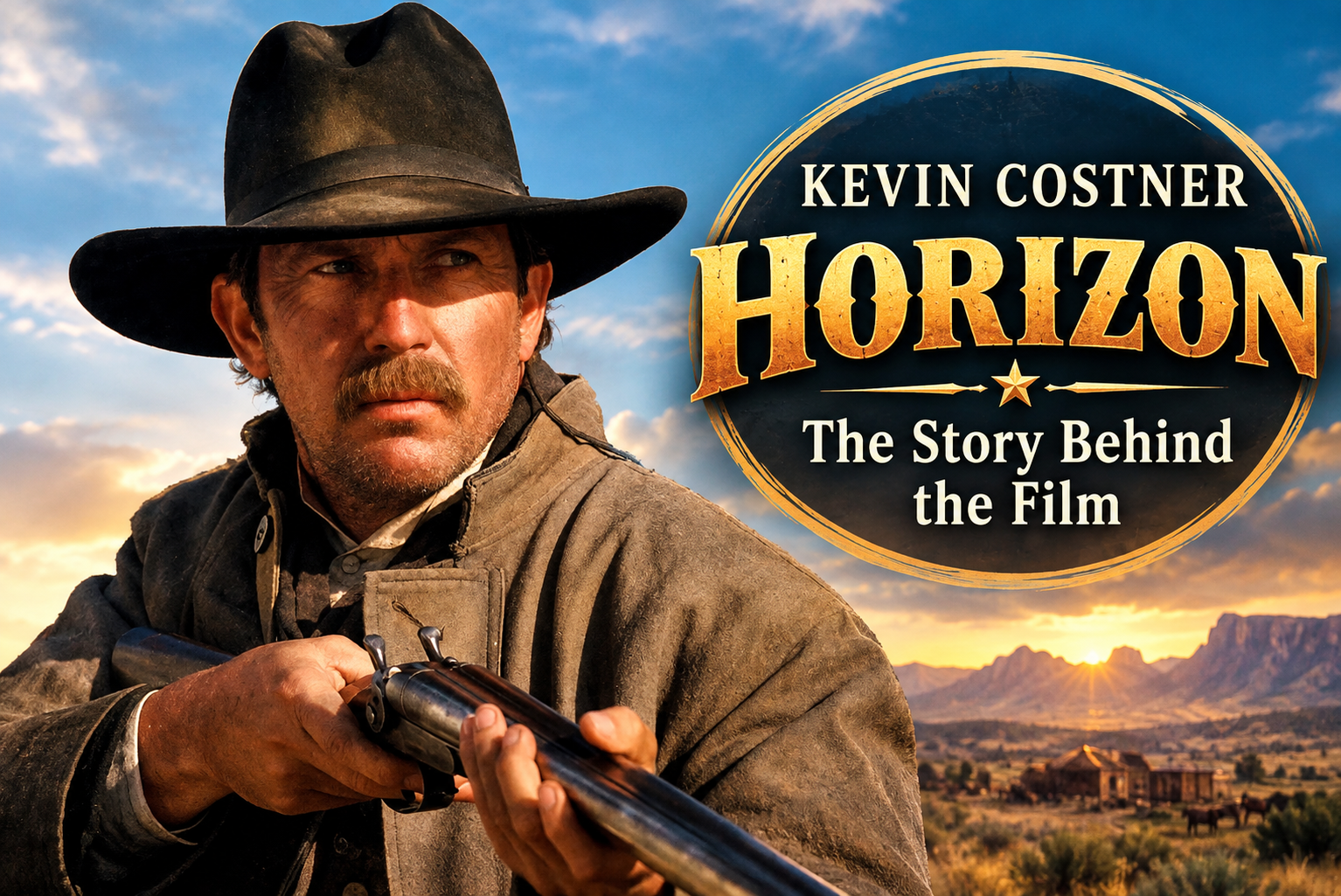
Kevin Costner Horizon is more than another Western movie. Horizon: An American Saga is a large-scale filmmaking project that Costner spent decades developing, eventually turning it into a planned multi-chapter story about expansion, conflict, survival, and the people caught between competing visions of the American West.
The project is particularly personal for Costner because he directed, co-wrote, produced, and starred in it. He also committed a substantial amount of his own money to getting the first film made. The result is a Western built around several connected groups of characters rather than a single hero.
BIO
| Label | Information |
|---|---|
| Film Title | Horizon: An American Saga |
| Main Star | Kevin Costner |
| Character | Hayes Ellison |
| Genre | Western, Drama |
| Director | Kevin Costner |
| Writers | Kevin Costner, Jon Baird, Mark Kasdan |
| Setting | American West |
| Historical Period | Around the Civil War era |
| Original Idea | Developed by Costner in 1988 |
| Chapter 1 Release | June 28, 2024 |
| Main Theme | Expansion, survival, family, and conflict |
| Planned Scope | Multi-chapter Western saga |
| Production Focus | Frontier life and connected characters |
Kevin Costner and the Western
Kevin Costner has a long history with Western storytelling. His connection to the genre stretches from films such as Dances with Wolves and Open Range to his later television work in Yellowstone.
His interest in Horizon was not something that appeared suddenly. According to Costner’s director statement presented by the Venice Film Festival, he first developed the idea in 1988 and began actively pursuing its production in 2003, after completing Open Range. Over the following years, the concept grew into a four-film saga with writer Jon Baird.
That long development period helps explain why Horizon feels like a personal project rather than a conventional studio Western. Costner had spent years imagining the world, characters, and historical period before the first chapter finally reached audiences.
What Is Horizon About?
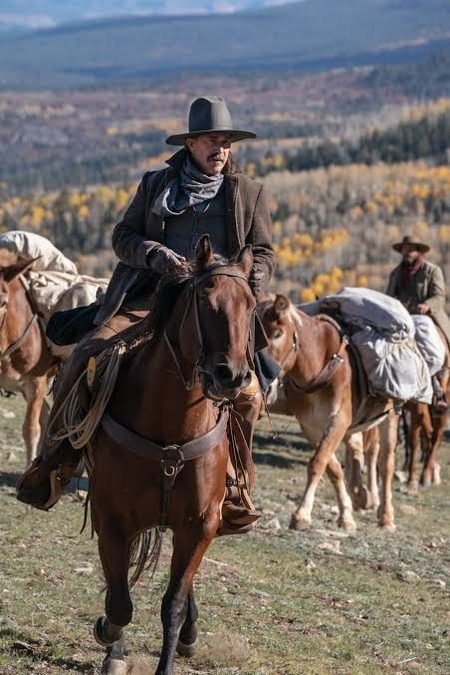
Horizon: An American Saga is a fictional story set during a major period of American expansion around the Civil War. The overall saga covers approximately 15 years, moving through the years before and after the 1861–1865 conflict.
Rather than following one family or one community from beginning to end, the story moves between different groups. Settlers, soldiers, Indigenous communities, immigrants, ranchers, and other frontier characters become part of the larger narrative.
At the center is the idea of a developing settlement called Horizon. The story asks what happens when people arrive in a place believing they can build a new life while other people already have deep connections to the land.
That creates a conflict that is larger than a traditional Western adventure. The film looks at ambition, migration, family, survival, community, loss, and the consequences of expansion.
The Story Behind the Project
One of the most interesting parts of Kevin Costner Horizon is how long the idea remained with him.
Costner’s own account shows that the project took decades to move from an idea toward production. He continued working toward it even while building a major acting and directing career elsewhere.
The decision to finally make Horizon required a major personal commitment. In a 2024 interview with The Associated Press, Costner explained that the first production cost more than $100 million and that he used his Santa Barbara property as part of the financing effort.
That financial commitment became an important part of the film’s story before audiences even saw it.
For Costner, the project represented an opportunity to make the kind of Western he had been thinking about for many years. Instead of waiting indefinitely for a traditional studio structure to support the idea, he took a more independent approach.
Kevin Costner’s Role
Costner’s involvement in Horizon extends well beyond acting.
He directed the film, co-wrote it, produced it, and played the character Hayes Ellison. The project therefore brought several parts of his filmmaking career together at once.
For a filmmaker known for Westerns, directing Horizon also represented a return to the large-scale historical storytelling associated with his earlier work.
Costner has directed only a small number of feature films. His directing credits include Dances with Wolves, The Postman, and Open Range. Horizon became his fourth feature as a director.
The film therefore carries a connection to the filmmaking style he established decades earlier while allowing him to explore the American West from a broader range of perspectives.
The Cast of Horizon
One of the defining features of Horizon is its large ensemble cast.
Sienna Miller plays Frances Kittredge, while Sam Worthington plays Trent Gephart. Jena Malone portrays Ellen Harvey, and Costner plays Hayes Ellison. The cast also includes Luke Wilson, Abbey Lee, Michael Rooker, Danny Huston, Giovanni Ribisi, Isabelle Fuhrman, Will Patton, Tatanka Means, Owen Crow Shoe, Jamie Campbell Bower, and others.
The large cast is important because Horizon is not structured around a single storyline.
Each character represents a different experience of frontier life. Some characters are trying to establish homes and communities, while others are dealing with family conflicts, violence, migration, business interests, or the changing political landscape.
This approach gives the film a wider scope than a Western centered entirely on one central hero.
A Story Told Through Many Perspectives
Costner has described Horizon as a story concerned with the different people involved in the expansion of the American West.
The film does not present the frontier simply as an empty place waiting to be discovered. Indigenous communities already live there, while settlers arrive with their own ambitions and expectations.
The story also includes Chinese immigrant characters, reflecting another part of the history of migration in the American West. Costner discussed the importance of showing different communities and the tensions that could develop between them.
This gives the film a more complicated historical backdrop. The West becomes a place where different cultures, economic interests, and personal ambitions meet.
The Importance of the Frontier
The frontier is one of the most important elements of Kevin Costner Horizon.
In many traditional Westerns, the frontier can appear as a place of freedom and opportunity. Horizon explores that idea while also examining the consequences of expansion.
People arrive because they believe the West can offer a better future. They want land, homes, businesses, security, and a chance to start again.
But those hopes exist alongside conflict.
For Indigenous people, the arrival of settlers represents pressure on established communities and territory. For settlers, the journey can mean hardship and uncertainty. For businesses and other powerful interests, the growing frontier can represent economic opportunity.
These competing viewpoints are part of what gives the story its larger historical purpose.
How Horizon Was Developed
The development of Horizon was unusually long.
Costner has said the original idea dates back to 1988, while serious efforts to bring it into production began in 2003. The project eventually developed into a four-film plan.
The long development period allowed Costner and his collaborators to build a story that could move beyond a single film.
Instead of trying to fit every character and historical development into one conventional movie, the saga could spread its story across multiple chapters.
That structure also explains the unusually long running time of the first film. Chapter 1 runs for just over three hours, giving Costner room to introduce its many characters and storylines.
Filming the American West
The visual scale of Horizon is central to its identity.
The American West provides more than a background for the characters. Wide landscapes, settlements, travel routes, and open country help establish the physical challenges faced by the people in the story.
Costner has long used landscapes as an important part of his Western filmmaking. In Horizon, that approach becomes even more significant because the story follows people trying to establish themselves in unfamiliar territory.
The visual environment helps communicate the distance between communities and the difficulty of traveling through the frontier.
Chapter 1
Horizon: An American Saga – Chapter 1 introduced audiences to the central world of the saga.
The story begins in 1859, with surveyors identifying land in what becomes the Horizon settlement. The settlement is subsequently attacked, forcing survivors to deal with the consequences and search for new ways forward. Other storylines follow characters facing their own dangers and difficult choices.
The film therefore works as an introduction to a much larger narrative.
Rather than resolving every major storyline, Chapter 1 establishes characters and conflicts that were intended to continue into later installments.
The first chapter premiered at the 2024 Cannes Film Festival before its U.S. theatrical release on June 28, 2024.
The Ambition of a Four-Part Saga
Costner originally envisioned Horizon as a four-film story.
At Cannes in 2024, he explained that scripts for the later chapters were already prepared and that some work on Chapter 3 had begun.
The four-part concept is important because the story was designed to develop over time rather than deliver a complete beginning, middle, and ending in a single movie.
That structure allows characters to change as the frontier changes around them.
It also reflects Costner’s interest in showing the West as a long process rather than a single moment in history.
The Challenge of Releasing Chapter 2
The ambitious plan faced a major challenge after the first chapter reached theaters.
Chapter 2 had originally been scheduled for an August 16, 2024 theatrical release. After the first film’s box-office performance fell short of expectations, New Line Cinema postponed that release to give audiences more time to discover the first chapter.
This became one of the most important developments in the history of the project.
The first two films had been made close together, but the commercial response to Chapter 1 changed the planned release strategy.
Chapter 2 later screened at the 2024 Venice Film Festival, where it was shown out of competition. The Venice program listed Costner as director and included many of the returning cast members.
The Risk Behind Horizon
The production and release history demonstrate just how ambitious the project was.
Costner had invested heavily in the film, while the story itself required a large cast, extensive production work, and multiple installments.
The project also arrived at a time when audiences had many entertainment choices and the traditional Western had to compete with established franchises and other major releases.
The first chapter’s commercial performance created additional pressure around the future of the saga. Reuters reported in September 2024 that Costner remained committed to completing the project even while acknowledging the financial and logistical difficulties surrounding later chapters.
That makes the production story almost as interesting as the fictional one.
What Makes Horizon Different?
One of the clearest differences between Horizon and many traditional Westerns is its ensemble structure.
The story is not simply about a lone cowboy traveling through the frontier. Instead, it follows communities and individuals whose lives intersect as the region develops.
Another difference is its historical scope.
The story takes place around the Civil War and follows the transformation of the American West over a much longer period. This gives Costner an opportunity to explore how individual decisions can become part of larger historical changes.
The film also gives significant attention to women, Indigenous communities, immigrants, soldiers, settlers, and other groups rather than focusing exclusively on male frontier heroes.
Costner’s Vision
Costner’s vision for Horizon is closely connected to his interest in character-driven Westerns.
In interviews surrounding the film’s release, he emphasized behavior, character, and the experiences of ordinary people caught in extraordinary circumstances. He also discussed the importance of women within the story and the need to consider Indigenous perspectives.
That approach helps explain why Horizon spends considerable time establishing characters before moving deeper into the larger conflict.
The film is interested in how people behave when they are under pressure and how their choices affect families and communities.
Is Horizon Based on a True Story?
No. Horizon: An American Saga is a fictional story.
However, it is set against real historical circumstances surrounding the American Civil War and westward expansion.
The characters are fictional, but the film uses the historical period as the foundation for its story. This distinction is important because the film is not intended to be a direct retelling of one documented historical event.
Instead, it uses fictional characters to explore broader experiences associated with the period.
Why the Film Matters to Kevin Costner
For Costner, Horizon represents a continuation of a filmmaking interest that has followed him for much of his career.
His connection to Westerns is well established, but Horizon is different because of the amount of time and personal investment behind it.
The project began as an idea decades before audiences saw the finished film. Costner then spent years developing it, financing it, directing it, and building a large cast around the story.
That history makes the film an important chapter in his career regardless of how the larger saga ultimately develops.
Final Thoughts
Kevin Costner Horizon is the product of a decades-long creative ambition.
From an idea first developed in 1988 to a major multi-chapter production, Horizon: An American Saga reflects Costner’s continued interest in the American West and his desire to tell a broad, character-driven story.
The film explores migration, family, survival, community, cultural conflict, and the complicated history of westward expansion. Its large cast and interconnected storylines give it a scope that reaches beyond a traditional Western adventure.
The project’s production and release history also became part of its story. Costner made a significant personal financial commitment, Chapter 1 faced a difficult theatrical response, and the planned release of Chapter 2 was changed. Even so, Costner continued to express his commitment to the larger saga.
Ultimately, Horizon is best understood as a long-form Western vision that Costner carried for decades before bringing it to the screen. Whether viewed through its characters, historical setting, filmmaking ambition, or unusual production journey, the project offers a revealing look at why the American West has remained such an important part of Kevin Costner’s career.