







Ciarán Hinds has built the kind of acting career that develops quietly but leaves a lasting impression. Over more than five decades, the Belfast-born actor has moved comfortably between theatre, television, and film, taking on characters that range from historical figures and dramatic leads to intimidating authority figures and warm family men.
Unlike actors who become associated with a single type of role, Hinds has continually changed direction. He has appeared in major Hollywood productions, acclaimed independent films, television dramas, fantasy franchises, and Irish productions. His credits include Excalibur, Road to Perdition, Munich, There Will Be Blood, In Bruges, Harry Potter and the Deathly Hallows – Part 2, Game of Thrones, The Terror, and Belfast. The Irish Film & Television Academy has recognized his career with multiple IFTA Awards, including its Lifetime Achievement Award in 2026.
His journey is particularly interesting because theatre was an important part of his foundation. Long before becoming familiar to international audiences, Hinds developed his craft on the stage. That experience helped shape the controlled, thoughtful performances that later became one of his trademarks.
BIO
| Label | Information |
|---|---|
| Full Name | Ciarán Hinds |
| Born | February 9, 1953 |
| Birthplace | Belfast, Northern Ireland |
| Nationality | Irish |
| Profession | Actor |
| Education | Royal Academy of Dramatic Art |
| Career Began | 1970s |
| Film Debut | Excalibur (1981) |
| Known For | Belfast, Game of Thrones, Rome |
| Harry Potter Role | Aberforth Dumbledore |
| Game of Thrones Role | Mance Rayder |
| Oscar Recognition | Nominated for Belfast |
| Major Honor | IFTA Lifetime Achievement Award (2026) |
Early Life in Belfast
Ciarán Hinds was born in Belfast, Northern Ireland, on February 9, 1953. He grew up in a family that valued education and culture, and his early years in Belfast later became especially meaningful when he appeared in Kenneth Branagh’s Belfast.
Hinds came of age during a difficult period in Northern Ireland’s history. The Troubles began when he was a teenager, and the social and political atmosphere of Belfast became an important part of the generation to which he belonged.
His connection to Branagh is particularly notable. The two grew up in Belfast at roughly the same time and lived only a short distance from one another. Years later, that shared background became part of the story behind Belfast, Branagh’s semi-autobiographical film. The Academy’s interview with Hinds described how reading the script immediately brought back memories of his childhood and community.
Rather than becoming defined by his hometown, however, Hinds eventually used his experiences as part of a much broader artistic journey.
Discovering Acting
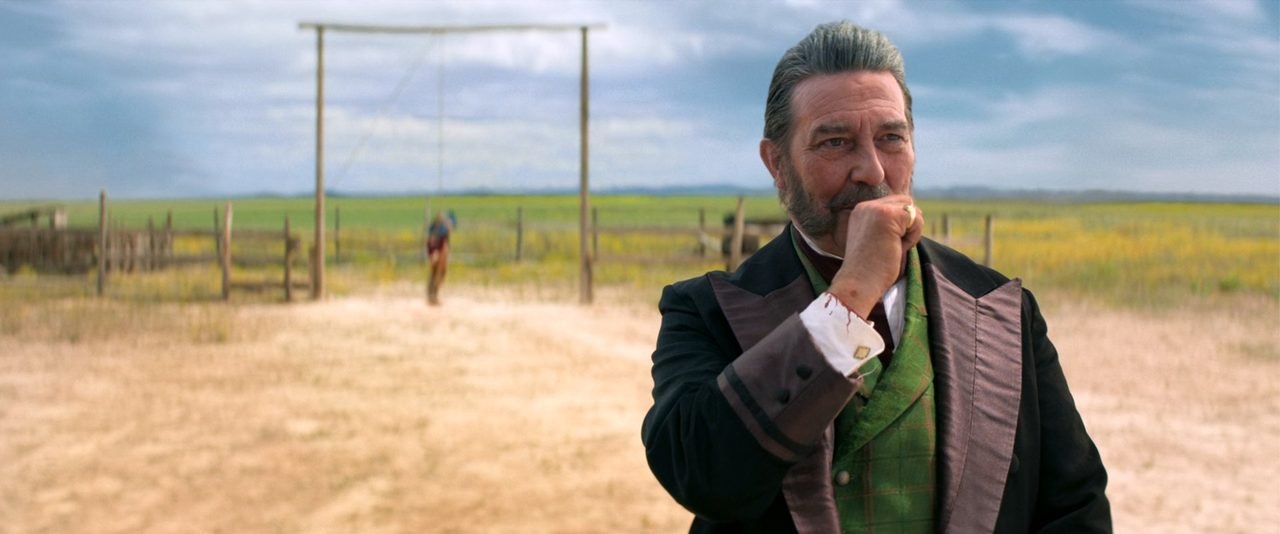
Hinds did not begin his professional career as an international film star. His route into acting was built through training and theatre.
He studied at the Royal Academy of Dramatic Art in London, one of Britain’s most respected institutions for actor training. After completing his studies, he began professional work at the Glasgow Citizens Theatre in 1976.
Theatre provided Hinds with an environment where performance depended heavily on voice, timing, movement, concentration, and an understanding of character. These skills would remain visible throughout his later film career.
His stage work eventually included performances with important institutions such as the Abbey Theatre, the Druid Theatre, and the Royal Shakespeare Company. He also developed a strong reputation for classical theatre, including Shakespearean work. In 1993, he played the title character in Sam Mendes’ Royal Shakespeare Company production of Richard III.
This background helps explain why Hinds often seems completely comfortable with dialogue-heavy scenes. His performances rarely depend on exaggerated gestures. Instead, he can communicate authority, uncertainty, humor, or tension through a small change in expression or tone.
Moving Into Film
Hinds made his film debut in John Boorman’s Excalibur in 1981. The film gave him an early opportunity to work within a large-scale fantasy production, but it was only the beginning of a long and varied screen career.
During the following years, he continued balancing film work with theatre. His early screen appearances included projects such as The Cook, the Thief, His Wife & Her Lover, Persuasion, and Jane Eyre.
These performances helped establish a pattern that would remain throughout his career: Hinds was rarely the actor whose presence depended on being the central star. He became the performer audiences remembered because he could make a supporting character feel complete.
That quality became especially valuable as filmmakers increasingly cast him in complex historical dramas, crime stories, literary adaptations, and large productions.
Building a Film Career
One of the strengths of Ciaran Hinds’ filmography is its variety. He has worked with directors including Steven Spielberg, Paul Thomas Anderson, Martin Scorsese, Sam Mendes, Kathryn Bigelow, Martin McDonagh, and Kenneth Branagh.
His roles in Road to Perdition, Munich, and There Will Be Blood placed him alongside some of the industry’s most respected filmmakers and performers.
In Road to Perdition, directed by Sam Mendes, Hinds was part of a crime drama led by Tom Hanks and Paul Newman. The film demonstrated his ability to fit naturally into a serious ensemble without competing for attention.
His work in Munich, directed by Steven Spielberg, further showed his strength in historical drama. Spielberg’s film required a large ensemble cast to portray complicated political and personal circumstances, and Hinds became another strong presence within that group.
Then came Paul Thomas Anderson’s There Will Be Blood, a film widely regarded as one of the major American dramas of its era. Hinds’ appearance was relatively brief compared with the film’s central performances, but it added another respected title to his growing filmography.
Captain Wentworth in Persuasion
One of Hinds’ earlier memorable performances came in the television adaptation of Jane Austen’s Persuasion, where he played Captain Frederick Wentworth.
The role demonstrated his ability to handle period drama with restraint. Austen adaptations require actors to communicate complicated emotions without turning every moment into a dramatic declaration. Hinds’ performance benefited from exactly that kind of control.
His work in period pieces became a recurring part of his career. Whether playing a romantic lead, a historical figure, or a supporting character, he often brought a sense of seriousness and lived experience to the role.
Edward Rochester in Jane Eyre
Hinds also portrayed Edward Rochester in the 1997 television adaptation of Jane Eyre.
Rochester is a challenging character because he needs to be commanding and mysterious while still allowing the audience to understand his emotional vulnerability. Hinds approached the character with the seriousness that became characteristic of his work.
The role also highlighted his ability to carry literary material without making it feel overly theatrical. His theatre background was an advantage, but his performances generally remained grounded rather than overly formal.
Road to Perdition and Hollywood Recognition
Road to Perdition was an important film in Hinds’ international career.
Directed by Sam Mendes and featuring Tom Hanks, Paul Newman, Jude Law, and Daniel Craig, the 2002 crime drama gave Hinds an opportunity to work within a major Hollywood production while retaining the understated style that had defined much of his earlier work.
The film also represented an important stage in his transition from respected theatre and television actor to familiar international screen performer.
He did not need to become a conventional leading man to build recognition. Instead, filmmakers increasingly relied on him for roles that required experience, credibility, and a strong screen presence.
Munich and Historical Drama
Steven Spielberg’s Munich was another significant project in Hinds’ career.
The film explored the aftermath of the 1972 Munich Olympics attack and followed a group involved in a dangerous political mission. Hinds appeared alongside actors including Eric Bana, Daniel Craig, Geoffrey Rush, and Mathieu Kassovitz.
Historical dramas often depend on an ensemble cast because the story must feel larger than any single character. Hinds has repeatedly excelled in this environment.
His performances can give a film the impression that a character has a life beyond the scenes shown on screen. That quality is one reason he has remained such a dependable supporting actor.
There Will Be Blood
Paul Thomas Anderson’s There Will Be Blood is another important entry in the Ciaran Hinds filmography.
The film starred Daniel Day-Lewis as Daniel Plainview and explored ambition, wealth, religion, and power in the American oil industry. Hinds appeared in a supporting role within the film’s larger world.
Although his screen time was not comparable with Day-Lewis’ central performance, his involvement placed him in one of the most critically celebrated films of the 2000s.
It also demonstrated something important about his career: Hinds has consistently chosen projects where the quality of the overall production matters more than the size of his individual role.
The Phantom of the Opera
Hinds appeared as Firmin in the 2004 film adaptation of The Phantom of the Opera.
The musical required a very different style from the restrained historical dramas and serious films that had become part of his reputation. His involvement showed another side of his versatility.
He could move between dialogue-driven drama and a large musical production without appearing out of place.
This flexibility has been central to his longevity. His career has never depended on one genre.
Harry Potter and the Deathly Hallows
A new generation of viewers became familiar with Hinds when he appeared as Aberforth Dumbledore in Harry Potter and the Deathly Hallows – Part 2.
Aberforth is the brother of Albus Dumbledore and an important figure during the final part of the story. Hinds brought a rougher and more guarded quality to the character, distinguishing Aberforth from the more polished image audiences associated with Albus.
The role placed him inside one of the world’s most successful film franchises and introduced his work to millions of younger viewers.
His appearance also illustrates how easily he could move between serious literary drama and mainstream fantasy filmmaking.
Ciaran Hinds in Game of Thrones
Hinds took on another major fantasy role when he played Mance Rayder in HBO’s Game of Thrones.
Mance Rayder is the leader of the Free Folk beyond the Wall. The character needs to feel authoritative without appearing like a traditional king, and Hinds’ performance suited that balance.
His version of Mance is calm, experienced, and intelligent. He does not need to dominate every scene physically because his authority comes from the way he speaks and interacts with others.
The role gave Hinds another connection to a hugely popular television franchise and reinforced his reputation for playing powerful characters without relying on exaggerated performances.
The Terror and Television Work
Hinds continued his television success with projects such as The Terror, while also appearing in other acclaimed series.
Earlier in his television career, he played Julius Caesar in HBO’s Rome. The Irish Film & Television Academy lists his performance in Rome among the roles that earned him an IFTA Award for Best Actor in a Lead Role in Television.
His television work has been particularly diverse. He has played historical figures, political characters, family members, crime figures, and fantasy leaders.
This range demonstrates that his career has not simply moved from film to television as a secondary option. Television has been an important part of his artistic work.
Belfast and His Oscar Nomination
The most personally significant film of Hinds’ later career may be Belfast.
Directed by Kenneth Branagh, the 2021 film tells a semi-autobiographical story inspired by Branagh’s childhood in Belfast. Hinds plays Pop, the grandfather of the young central character.
The role was deeply connected to Hinds’ own background. He and Branagh had grown up in Belfast around the same period, and Hinds said that reading the screenplay immediately brought him back to his roots.
As Pop, Hinds brings humor, affection, frustration, and vulnerability to a character who represents an older generation watching his family navigate a changing world.
His performance received major international recognition. He was nominated for the Academy Award for Best Supporting Actor, along with BAFTA and Golden Globe nominations. The Academy’s official record confirms his Oscar nomination for Belfast at the 94th Academy Awards in 2022.
For Hinds, the Oscar nomination was his first. It was a remarkable recognition for an actor who had already spent decades working across theatre, film, and television.
His Work in Irish Television
Hinds has also maintained a strong connection with Irish productions.
In Kin, he played a powerful family patriarch in a crime drama centered on an Irish family. The performance earned him an IFTA Award for Best Actor in a Supporting Role in Drama in 2022.
He later appeared in The Dry, where he played a very different kind of father. The contrast between these characters illustrates one of his greatest strengths: he can portray authority without repeating the same personality.
The Irish Film & Television Academy lists his IFTA recognition for The Dry among his later achievements.
Voice Work in Frozen
Hinds’ career has also extended into animation.
He lent his voice to Grand Pabbie in Disney’s Frozen franchise. Voice acting requires a different approach from live-action performance because the actor must create character largely through vocal rhythm, tone, and delivery.
Hinds’ distinctive voice made him particularly well suited to such work.
The role also shows how broad his audience has become. His filmography can reach viewers through serious adult dramas, major fantasy franchises, television series, and family animation.
A Career Built on Range
What makes Ciaran Hinds particularly interesting is not simply the number of productions on his résumé. It is the distance between many of those productions.
He has appeared in Shakespearean theatre, Jane Austen adaptations, historical dramas, crime films, fantasy franchises, animated movies, prestige television, and Irish family dramas.
He has worked with filmmakers such as Steven Spielberg, Paul Thomas Anderson, Martin Scorsese, Sam Mendes, and Kenneth Branagh.
That variety requires more than technical ability. It requires an actor who can adapt to different directors, genres, ensembles, and styles.
Hinds’ theatre background has clearly contributed to that adaptability. His performances tend to be carefully measured, but they rarely feel mechanical. Even when a character has only a few scenes, he often gives the impression of a much larger personal history.
Awards and Recognition
Hinds’ career has received substantial recognition in Ireland and internationally.
For Belfast, he received an Academy Award nomination, a BAFTA nomination, and a Golden Globe nomination for his supporting performance. He also won an IFTA Award for the role.
His other IFTA-winning performances include The Mayor of Casterbridge, Rome, Kin, and The Dry. The Irish Film & Television Academy records these awards as part of his career achievements.
In 2026, the IFTA honored Hinds with its Lifetime Achievement Award for his contribution to Irish and international screen work across five decades. The academy described his career as an extraordinary and varied body of work spanning film and television.
The award is particularly fitting because Hinds’ career represents a long relationship between Irish performance traditions and international cinema.
Recent and Continuing Work
Even after decades in the industry, Hinds has continued taking on new projects.
The Irish Film & Television Academy notes that his recent credits include Small Things Like These, In the Land of Saints and Sinners, The Dry, and other international productions. The academy also lists 2026 projects including Is This Thing On?, Midwinter Break, and Netflix’s adaptation of East of Eden.
His continued activity is significant because many actors gradually reduce their workload after such a long career. Hinds, however, has continued moving between film and television while maintaining connections to both Irish and international productions.
What Makes Ciaran Hinds Stand Out?
The simplest answer is versatility, but that word alone does not fully explain his appeal.
Hinds has a strong voice and recognizable presence, but he rarely allows those qualities to overwhelm the character. His performances tend to be controlled rather than showy.
His theatre training also gives him a strong command of dialogue. Whether he is playing a historical figure, a family patriarch, a fantasy leader, or an ordinary father, his delivery usually feels deliberate and believable.
Another important quality is his ability to support an ensemble. Hinds can share a scene with major stars without disappearing into the background, while also avoiding the temptation to turn every appearance into a showcase for himself.
That balance has helped him remain useful to filmmakers across several generations.
Ciaran Hinds’ Lasting Legacy
Ciaran Hinds’ career is a reminder that an actor does not need to spend decades as a conventional leading man to become one of the industry’s most respected performers.
His body of work has been built through character after character, production after production, and collaboration after collaboration.
From Belfast theatre to the Royal Shakespeare Company, from Excalibur to Belfast, and from Rome to Game of Thrones, his career has covered an extraordinary range of storytelling.
His Oscar nomination for Belfast gave international recognition to a performance rooted in his own connection to Belfast. His IFTA Lifetime Achievement Award in 2026 provided another important acknowledgment of everything that came before it.
Perhaps the most fitting description comes from the consistency of his work. Hinds has never needed to dominate a production to make an impression. He brings intelligence, warmth, authority, and restraint to his characters, allowing the role to speak for itself.
Frequently Asked Questions
How old is Ciaran Hinds?
Ciarán Hinds was born on February 9, 1953, in Belfast, Northern Ireland. His career has now extended across more than five decades.
What is Ciaran Hinds best known for?
He is widely known for films and television productions including Belfast, Game of Thrones, Rome, Harry Potter and the Deathly Hallows – Part 2, Munich, Road to Perdition, and There Will Be Blood.
Was Ciaran Hinds nominated for an Oscar?
Yes. Hinds received an Academy Award nomination for Best Supporting Actor for his performance as Pop in Belfast. The nomination came at the 94th Academy Awards in 2022.
What character did Ciaran Hinds play in Game of Thrones?
Hinds played Mance Rayder, the leader of the Free Folk beyond the Wall.
Was Ciaran Hinds in Harry Potter?
Yes. He played Aberforth Dumbledore, the brother of Albus Dumbledore, in Harry Potter and the Deathly Hallows – Part 2.
What role did Ciaran Hinds play in Belfast?
Hinds played Pop, the grandfather of Buddy, in Kenneth Branagh’s Belfast. The role earned him an Oscar nomination as well as BAFTA and Golden Globe nominations.
Has Ciaran Hinds won an IFTA Award?
Yes. His IFTA-winning performances include The Mayor of Casterbridge, Rome, Kin, Belfast, and The Dry. In 2026, he also received the IFTA Lifetime Achievement Award.
Final Thoughts
Ciaran Hinds has developed a rare kind of career: one built not around celebrity, but around craft, consistency, and character.
His journey from Belfast and the theatre to internationally recognized film and television productions reflects the depth of his training and his willingness to take on very different roles. His best performances are not necessarily the loudest ones. Instead, they are often the performances that give a story weight, credibility, and emotional depth.
From Persuasion and Jane Eyre to Munich, There Will Be Blood, Game of Thrones, and Belfast, Hinds has continued to demonstrate why strong character acting can remain powerful across generations.
His 2026 IFTA Lifetime Achievement Award is therefore more than another honor. It recognizes a career that has connected Irish theatre, international cinema, television drama, and generations of audiences. For anyone exploring the work of Ciaran Hinds, his filmography offers much more than a list of credits—it provides a portrait of an actor who has spent more than fifty years making every character count.