






When people think of Liam Neeson today, they often picture the commanding actor behind memorable dramatic and action roles. But the story of Liam Neeson young is much more than a simple journey to Hollywood.
Before becoming an internationally recognized film star, Neeson spent years working on stage, taking smaller screen roles, and building his craft. His path was not an overnight success. It developed gradually through theater, television, and increasingly important film roles.
Born in Ballymena, Northern Ireland, in 1952, Neeson grew up far from the world of Hollywood. His early years included school, sport, different jobs, and a growing interest in performance. Eventually, acting became the profession that changed his life.
His journey from a young man in Northern Ireland to an internationally respected actor shows how much persistence and experience can matter in a long career.
BIO
| Label | Information |
|---|---|
| Full Name | William John Neeson |
| Known As | Liam Neeson |
| Born | June 7, 1952 |
| Birthplace | Ballymena, Northern Ireland |
| Nationality | Irish |
| Early Career | Theater actor |
| First Major Film | Excalibur (1981) |
| Theater Work | Lyric Players’ Theatre and Abbey Theatre |
| Breakthrough Film | Schindler’s List (1993) |
| Breakthrough Role | Oskar Schindler |
| Academy Award | Best Actor nomination |
| Acting Style | Drama, action, and thriller |
| Career Highlight | International movie stardom |
Liam Neeson’s Early Life
Liam Neeson was born William John Neeson on June 7, 1952, in Ballymena, County Antrim, Northern Ireland. His father, Bernard Neeson, worked as a school caretaker, while his mother, Katherine, was a cook.
He grew up in Ballymena and attended local schools. His early life was quite different from the glamorous image associated with movie stars. Long before international fame, Neeson was simply a young man trying to determine what direction his life would take.
His interests were not limited to acting. As a young person, he developed an interest in boxing and became a successful amateur boxer. He also considered other career paths before deciding to pursue acting professionally.
That variety of experiences became an important part of his story. Neeson did not enter the entertainment business as someone who had spent his entire childhood preparing for Hollywood.
A Young Liam Neeson Loved Movies
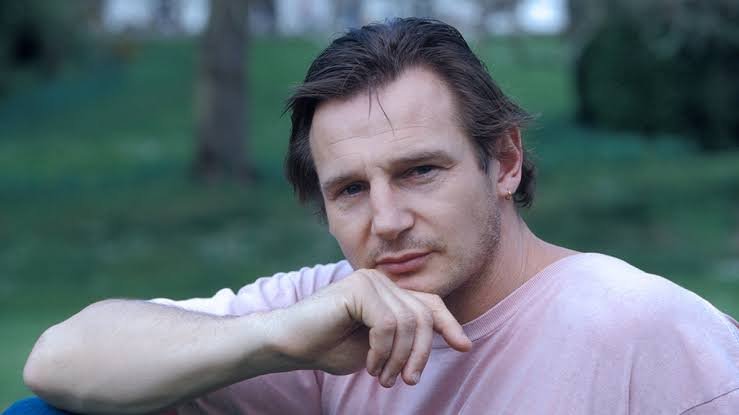
Although his professional career developed later, movies were already important to Neeson when he was young.
In a BAFTA interview, Neeson recalled enjoying movies as a child, particularly Saturday matinees and cowboy westerns. He described the experience of watching films as something that could transport audiences into another world.
That childhood connection with movies is interesting when looking back at his career. The young viewer who enjoyed films eventually became the person standing in front of the camera.
Still, there was a long road between those early movie memories and becoming a professional actor.
Liam Neeson Before Acting
Before acting became his career, Neeson explored several different directions.
He studied at Queen’s University Belfast and considered academic and professional paths outside entertainment. He also worked a variety of jobs, including employment as a forklift operator for Guinness. Biographical accounts also describe work as a truck driver and other occupations during this period.
His early working life gave him experiences that were very different from the controlled environment of a film set.
That background is part of what makes Liam Neeson young an interesting subject. His career was not built from a straightforward plan that began in childhood. Instead, acting gradually became the direction he wanted to follow.
The Beginning of His Acting Career
Neeson’s professional acting career began in the 1970s.
In 1976, he joined the Lyric Players’ Theatre in Belfast, an important step that gave him the opportunity to develop his skills in professional theater. He spent about two years with the company before moving to Dublin.
His early stage work was especially important because theater required actors to build performances without the advantages of film editing.
Neeson gained experience performing in front of live audiences and working with established theatrical productions. These years helped him develop the voice, presence, and discipline that later became noticeable in his film performances.
His professional stage debut came in a production of The Risen People, according to biographical records of his early career.
Liam Neeson and the Abbey Theatre
After his time in Belfast, Neeson moved to Dublin and continued developing his career.
He became associated with the Abbey Theatre, Ireland’s national theatre, where he performed in a range of productions. His stage work included classic and contemporary plays, giving him opportunities to play very different types of characters.
One particularly important performance came in Of Mice and Men, in which Neeson played Lennie Small.
That performance would prove significant because filmmaker John Boorman saw Neeson on stage. Boorman was impressed enough to cast him as Sir Gawain in his 1981 film Excalibur.
It was one of those career moments that can change an actor’s direction.
Liam Neeson’s First Major Film Opportunity
Excalibur
Released in 1981, Excalibur gave the young Neeson one of his first major opportunities on film.
Directed by John Boorman, the movie retold the legend of King Arthur and featured a large ensemble cast. Neeson played Sir Gawain, a member of Arthur’s court.
The role was not yet the kind of leading performance that would make Neeson a household name, but it was an important step.
More importantly, the production introduced him to a much larger film audience and demonstrated that his stage presence could translate to cinema.
For a young actor still establishing himself, that opportunity mattered.
Building Experience During the 1980s
The 1980s were a period of steady development for Neeson.
After Excalibur, he continued working in film and television while also maintaining his connection to acting. Instead of immediately becoming a major star, he accumulated experience through a series of different roles.
Among the notable films from this period were The Bounty, The Mission, and Suspect. Biographical records identify these projects as important parts of his development during the 1980s.
The Bounty
In The Bounty (1984), Neeson worked alongside major actors including Mel Gibson and Anthony Hopkins.
The production gave him another opportunity to work within a high-profile cast and gain experience on a larger film.
For an actor still building his reputation, appearing alongside established performers could provide valuable exposure.
The Mission
In 1986, Neeson appeared in The Mission, directed by Roland Joffé and featuring Robert De Niro and Jeremy Irons.
The film was a major production, and Neeson’s involvement continued his gradual movement toward more substantial international cinema.
His career at this point was becoming broader. He was no longer simply a young stage actor from Northern Ireland. He was becoming an established screen performer.
Moving Toward Hollywood
Neeson’s career gradually expanded beyond Britain and Ireland.
He appeared in television projects and films while continuing to take roles that allowed him to work with increasingly recognized filmmakers and performers.
In 1986, he also appeared in Miami Vice, giving him exposure to American television audiences.
The following year, Neeson moved to Hollywood to pursue larger opportunities.
This was relatively late compared with many actors who attempt to establish themselves in American entertainment. Neeson was already in his mid-30s.
That fact is important when discussing Liam Neeson young because his story does not fit the common idea that successful actors must become famous while they are teenagers or in their early twenties.
His career developed over time.
Suspect and Growing Recognition
One of Neeson’s notable late-1980s roles came in Suspect, released in 1987.
The film starred Cher and Dennis Quaid, with Neeson playing a significant supporting role. It helped increase his visibility among American audiences and critics.
He followed that with other projects, including The Dead Pool in 1988.
These roles were part of a gradual progression. Neeson was gaining experience, working with better-known performers, and becoming increasingly familiar to international audiences.
However, the defining breakthrough of his career was still ahead.
Liam Neeson’s Breakthrough Role
Schindler’s List
The biggest transformation in Neeson’s career came with Steven Spielberg’s Schindler’s List.
Released in 1993, the film told the story of Oskar Schindler, a German industrialist who helped save Jewish people during the Holocaust.
Neeson played Schindler, giving a performance that required a very different approach from the smaller roles he had played earlier.
The film became a major critical and awards success. At the 1994 Academy Awards, Schindler’s List received 12 nominations and won seven awards, including Best Picture and Best Director.
Neeson himself was nominated for Best Actor for his performance.
He did not win the award that year; Tom Hanks won for Philadelphia. But the nomination represented a major recognition of Neeson’s work and marked a new stage in his career.
Why Schindler’s List Changed His Career
Before Schindler’s List, Neeson had already built a substantial body of work.
But the role of Oskar Schindler demonstrated that he could carry a major dramatic film and portray a complicated historical figure with considerable emotional weight.
The performance also placed him alongside some of the most respected filmmakers and actors in the industry.
After the film, Neeson had a different level of visibility. He was no longer simply a character actor with an interesting screen presence.
He had become a leading man.
Liam Neeson’s Acting Style
One reason Neeson was able to move successfully between theater, drama, historical films, and later action movies was his ability to bring authority to his performances.
His early theater experience gave him a strong foundation.
Stage acting requires concentration, vocal control, physical awareness, and the ability to communicate emotion to an audience. Those skills can become valuable on screen, where even small changes in expression or voice can affect a scene.
Neeson’s physical presence also became part of his screen identity. However, his career shows that his success was not based only on appearance.
His early roles demonstrate a willingness to take different kinds of characters and work within different genres.
Important Early Liam Neeson Movies
Several films help explain how Neeson developed before becoming an internationally famous star.
Excalibur — 1981
His role as Sir Gawain introduced him to a major feature film and connected him with director John Boorman.
The Bounty — 1984
The film gave him the chance to work with major performers such as Mel Gibson and Anthony Hopkins.
The Mission — 1986
Working with Robert De Niro and Jeremy Irons placed Neeson within another internationally recognized production.
Suspect — 1987
The courtroom drama helped him gain further recognition among American audiences.
The Dead Pool — 1988
His appearance in the fifth Dirty Harry film gave him another opportunity to work within a popular American movie franchise.
Schindler’s List — 1993
This became the defining early milestone of his career and earned him his first Academy Award nomination for Best Actor.
Together, these films show a steady progression rather than an instant rise to fame.
From Young Actor to Established Star
Looking at Liam Neeson young provides useful context for understanding his later career.
He did not arrive in Hollywood with decades of fame behind him. He spent years learning his craft and taking whatever opportunities came his way.
His path moved from local theater to Dublin stages, then to British and Irish productions, and eventually to American cinema.
That progression helped him build a broad range of experience.
By the early 1990s, he had already spent many years working as an actor. When Schindler’s List arrived, he was able to draw on that experience for one of the most demanding performances of his career.
The Importance of His Theater Background
Neeson’s theater background should not be overlooked when discussing his development.
His time with the Lyric Players’ Theatre and the Abbey Theatre gave him an opportunity to work on stage before becoming a major film actor.
This foundation helped him understand character, dialogue, timing, and physical performance.
It also meant that by the time he reached larger film productions, he was not an inexperienced performer.
He had already spent years learning how to work professionally.
That experience helps explain why his transition from stage to screen was so successful.
What Made His Early Journey Different?
There is something distinctive about Neeson’s rise.
He was not a traditional child star. He did not become famous through a teenage television role. Instead, he developed his career gradually.
He tried different jobs, explored education, participated in sport, worked in theater, and eventually moved into increasingly important film roles.
His first major film opportunity came when he was already approaching 30. His move to Hollywood happened later still.
This makes his career a useful example of how acting success can develop at different stages of life.
Liam Neeson’s Legacy
By the time Neeson became widely recognized around the world, he had already spent years building his craft.
The young actor from Ballymena had become an experienced performer capable of handling historical drama, literary adaptations, thrillers, action films, and character-driven stories.
His later career would take him into many different genres, but the foundation was established much earlier.
The journey began with local theater and small opportunities rather than instant international fame.
Conclusion
The story of Liam Neeson young is ultimately a story about gradual growth.
Born in Ballymena in 1952, Neeson spent his early years exploring different interests and career possibilities before entering professional theater. His work with the Lyric Players’ Theatre and the Abbey Theatre helped establish the foundation for his acting career.
His appearance in Excalibur gave him an important early film opportunity, while movies such as The Bounty, The Mission, and Suspect helped him build experience and recognition.
Then came Schindler’s List.
His portrayal of Oskar Schindler earned an Academy Award nomination for Best Actor and changed the scale of his career.
What makes Neeson’s journey particularly interesting is that his success was built over many years. His early theater work, varied jobs, and gradual move into film all contributed to the actor audiences would eventually recognize around the world.
Looking back at his younger years makes it clear that his movie stardom was not an overnight achievement. It was the result of experience, persistence, and years spent developing his craft.