




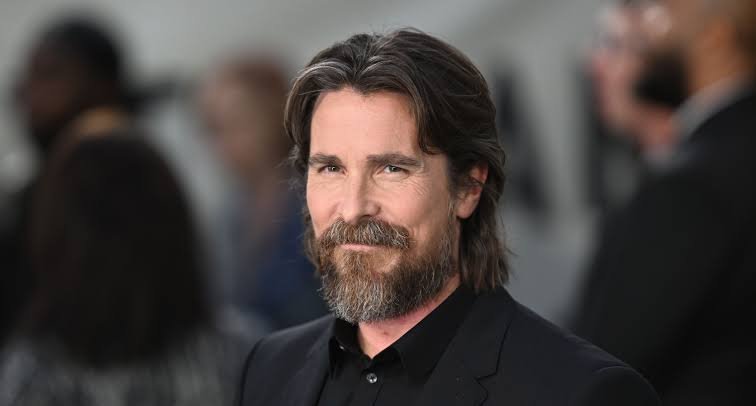
Christian Bale has built a career that is difficult to place in a single category. He has played superheroes, historical figures, troubled characters, athletes, businessmen, and complicated real-life personalities. What connects many of these performances is his willingness to approach each character differently rather than simply repeating a familiar screen persona.
Born on January 30, 1974, in Pembrokeshire, Wales, Bale began acting professionally while he was still a child. His major early breakthrough came with Steven Spielberg’s Empire of the Sun in 1987, when Bale was only a young teenager. From there, he gradually moved into more demanding adult roles before becoming internationally famous as Bruce Wayne and Batman in Christopher Nolan’s trilogy.
His career also includes acclaimed performances in American Psycho, The Machinist, The Fighter, American Hustle, The Big Short, Vice, and Ford v Ferrari. Along the way, he earned an Academy Award and established himself as one of the most versatile actors of his generation.
Christian Bale at a Glance
BIO
| Detail | Information |
|---|---|
| Full Name | Christian Charles Philip Bale |
| Born | January 30, 1974 |
| Birthplace | Pembrokeshire, Wales |
| Profession | Actor and producer |
| Career Began | As a child performer |
| Major Breakthrough | Empire of the Sun |
| International Breakthrough | American Psycho |
| Famous Role | Bruce Wayne / Batman |
| Academy Award | Best Supporting Actor |
| Notable Director Collaboration | Christopher Nolan |
| Major Films | The Dark Knight, The Fighter, Ford v Ferrari |
Early Life
Christian Bale was born in Wales to English parents and grew up in a family that moved frequently. His early exposure to performance eventually led him toward acting, and he began working professionally while still young.
One of his earliest professional appearances was in a television commercial, followed by stage work. By the time he reached his early teenage years, he had already gained enough experience to audition for major film projects.
That early start gave Bale something unusual: experience in front of cameras before adulthood. However, early fame also brought attention that he was not necessarily comfortable with. His experience as a young actor helped shape his later preference for concentrating on his work rather than constantly seeking celebrity attention.
Empire of the Sun
The major turning point in Bale’s childhood career came with Empire of the Sun, Steven Spielberg’s 1987 war drama.
Bale played Jim Graham, a British boy living in Shanghai whose comfortable life is disrupted during World War II. The role required him to carry much of the emotional weight of the story, and his performance attracted considerable critical attention.
The scale of the opportunity was remarkable. Contemporary accounts note that thousands of young actors auditioned for the part before Bale was selected.
The film established something that would remain important throughout Bale’s career: an ability to communicate complicated emotions without relying heavily on dialogue.
At the same time, sudden recognition at such a young age was difficult. Bale later described the experience of becoming recognizable as a young teenager as uncomfortable, and he became more selective about public attention.
Building an Adult Career
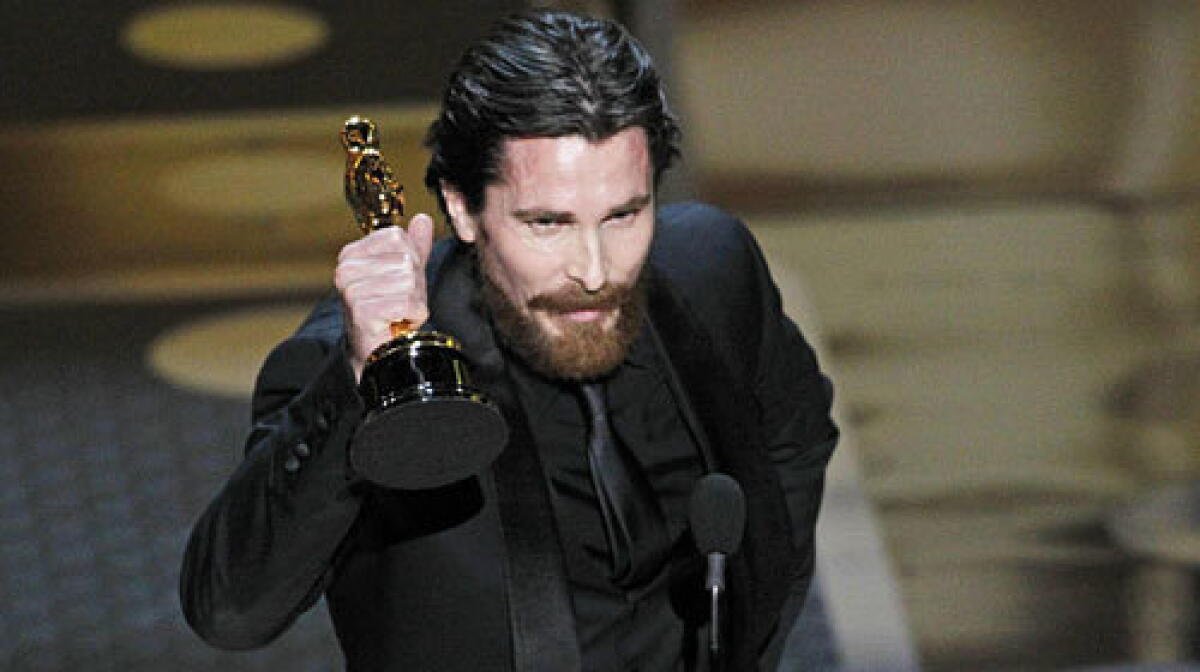
After Empire of the Sun, Bale avoided becoming defined only as a former child star. He continued working through the late 1980s and 1990s, appearing in projects such as Newsies, Little Women, The Portrait of a Lady, Velvet Goldmine, and A Midsummer Night’s Dream.
These films gave him opportunities to explore different kinds of characters rather than immediately settling into one Hollywood image. His career during this period was not built around blockbuster after blockbuster. Instead, it developed gradually.
That approach became important because it allowed Bale to move between genres. He could work in period dramas, independent films, musicals, literary adaptations, and mainstream productions.
By the end of the 1990s, he had become an experienced adult actor, but his biggest transformation as a Hollywood performer was still ahead.
American Psycho
In 2000, Bale played Patrick Bateman in American Psycho, directed by Mary Harron.
The film became one of the defining performances of his career. Bateman is a wealthy New York professional whose polished appearance contrasts with the disturbing behavior at the center of the story. Bale’s performance deliberately plays with that contrast, moving between controlled professionalism, dark humor, and instability.
The role demonstrated that Bale could carry a challenging film almost entirely through character performance. It also showed his ability to make a character fascinating without asking the audience to approve of him.
American Psycho became particularly important because it changed the way many viewers saw Bale. He was no longer simply the talented child actor from Empire of the Sun. He was becoming an adult performer capable of leading provocative films.
The Machinist
A few years later, Bale took on one of the most demanding roles of his career in The Machinist.
He played Trevor Reznik, a factory worker struggling with severe psychological problems and a growing sense that something is seriously wrong in his life.
The film is built around uncertainty and atmosphere, and Bale’s performance is central to that effect. His preparation for the role involved a dramatic physical change that received widespread attention. However, the more important part of the performance was his ability to communicate Trevor’s exhaustion, isolation, and confusion.
The film reinforced Bale’s reputation for committing deeply to difficult characters. It also demonstrated that his acting was not dependent on conventional leading-man roles.
Becoming Batman
In 2005, Christian Bale took on perhaps the most commercially significant role of his career: Bruce Wayne and Batman in Batman Begins.
Directed by Christopher Nolan, the film approached Batman as a character shaped by fear, loss, responsibility, and determination. Bale’s Bruce Wayne was therefore more than a costumed superhero. The performance focused heavily on the person behind the mask.
DC describes Batman Begins as an exploration of Bruce Wayne’s origins and his transformation into Batman, with Bale leading a cast that included Michael Caine, Liam Neeson, Gary Oldman, Morgan Freeman, and Cillian Murphy.
Bale returned as Batman in The Dark Knight in 2008 and The Dark Knight Rises in 2012.
The trilogy became one of the most influential superhero film series of its era. Bale’s performance helped establish a grounded interpretation of Bruce Wayne, while Nolan’s films gave the character a serious dramatic setting.
The Dark Knight
The Dark Knight remains one of the central films in Bale’s career.
The movie expanded the world established in Batman Begins and placed Bruce Wayne under increasing moral and personal pressure. Bale’s performance works partly because he allows the character to feel conflicted rather than invincible.
The film also gave Bale the opportunity to work opposite a memorable performance from Heath Ledger as the Joker. Their contrasting approaches created one of the movie’s strongest dramatic relationships.
For Bale, the importance of Batman was not simply the popularity of the character. The role gave him the opportunity to build a complete character arc across three films.
The Fighter
In 2010, Bale delivered another career-defining performance in The Fighter.
He played Dicky Eklund, a former boxer whose life has become complicated by personal struggles and family problems. The performance required Bale to step away from the controlled image associated with Batman and portray a much more unpredictable and vulnerable personality.
His work earned him the Academy Award for Best Supporting Actor. The Academy’s official database lists The Fighter as his winning performance, alongside later nominations for American Hustle, The Big Short, and Vice.
The award was an important recognition because it confirmed something critics had been observing for years: Bale could move successfully between major commercial films and character-driven dramas.
American Hustle
Bale reunited with director David O. Russell for American Hustle in 2013.
He played Irving Rosenfeld, a complicated con artist caught between personal relationships and a dangerous criminal investigation. The character was intentionally different from the physically imposing image Bale had developed through Batman.
His performance earned an Academy Award nomination for Best Actor.
The film also highlighted Bale’s talent for creating characters who can be funny, flawed, sympathetic, and frustrating at the same time.
The Big Short
In The Big Short, Bale portrayed Michael Burry, an investor who became known for recognizing problems within the U.S. housing market before the financial crisis.
The role required Bale to portray a character who is socially unconventional and intensely focused on numbers and financial information.
Rather than making Burry a traditional dramatic hero, Bale gave him an unusual personality and distinctive mannerisms. The performance earned another Academy Award nomination.
The film itself used humor and accessible explanations to explore a complicated financial subject, and Bale’s performance helped give the story a memorable central figure.
Vice
Bale continued his interest in real-life characters with Vice, directed by Adam McKay.
In the film, he portrayed Dick Cheney, the former vice president of the United States. The performance involved significant physical and vocal changes and earned Bale another Academy Award nomination for Best Actor.
The role demonstrated another aspect of his approach: rather than simply imitating a public figure, he built a character around voice, posture, movement, and personality.
His work in Vice also earned major recognition beyond the Academy Awards, including a Golden Globe win.
Ford v Ferrari
In 2019, Bale starred as Ken Miles in Ford v Ferrari, alongside Matt Damon.
The film tells the story of the competition surrounding Ford’s effort to challenge Ferrari at the 24 Hours of Le Mans. Bale’s Miles is passionate, technically knowledgeable, outspoken, and intensely committed to racing.
The performance works because Bale gives Miles a strong personality without reducing him to a simple sports hero. His relationship with Carroll Shelby, played by Damon, provides much of the film’s emotional center.
Ford v Ferrari also showed that Bale could return to a more traditional crowd-pleasing drama after several films centered on controversial political or financial figures.
Thor: Love and Thunder
Bale later entered another major franchise with Thor: Love and Thunder, released in 2022.
He played Gorr the God Butcher, giving the Marvel character a markedly different presence from his earlier roles. The part allowed Bale to work within a more fantastical and comedic environment while still giving the character emotional motivation.
It was another reminder of the range of projects Bale has been willing to explore throughout his career.
His Acting Style
One reason Christian Bale stands out is his ability to change his approach according to the character.
He does not have one recognizable screen personality that appears in every movie. Instead, his performances often involve changes in voice, accent, movement, posture, and temperament.
The British Film Institute has highlighted the range of approaches across his career, from the experimental intensity of American Psycho and The Machinist to more naturalistic performances and large-scale roles such as Batman.
His work is also notable for his attention to physical and behavioral details. However, the most interesting part of his performances is usually not the transformation itself. It is the way he uses those changes to make a character feel distinct.
His Best Roles
Several performances stand out when looking across Christian Bale’s career.
Jim Graham in Empire of the Sun remains remarkable because of how much responsibility Bale carried at such a young age.
Patrick Bateman in American Psycho became a defining role because of its combination of controlled comedy, unsettling behavior, and precise character work.
Trevor Reznik in The Machinist demonstrated his willingness to disappear into a psychologically troubled character.
Bruce Wayne and Batman in Nolan’s trilogy made him an international star and gave him one of the most recognizable roles in modern cinema.
Dicky Eklund in The Fighter brought him an Academy Award and showed his ability to combine humor, vulnerability, and dramatic intensity.
Michael Burry in The Big Short highlighted his skill at portraying unconventional real people.
Ken Miles in Ford v Ferrari showed his ability to bring energy and warmth to a more traditional dramatic role.
Awards and Recognition
Christian Bale’s career has received substantial recognition from major award organizations.
His Academy Award win came for The Fighter, while he also received Oscar nominations for American Hustle, The Big Short, and Vice.
His awards history reflects the variety of his film choices. His recognition has not been limited to one genre or one type of character.
That variety is arguably more significant than any individual award. Over several decades, Bale has repeatedly been recognized for performances that look very different from one another.
Christian Bale and Christopher Nolan
The partnership between Christian Bale and Christopher Nolan became one of the most important actor-director collaborations of Bale’s career.
Their work together began with Batman Begins and continued through The Dark Knight and The Dark Knight Rises. Nolan’s approach to Batman gave Bale room to portray Bruce Wayne as a psychologically complicated character rather than simply an action hero.
The success of the trilogy also helped reshape expectations for superhero movies, particularly in terms of character development, tone, and dramatic storytelling.
Life Away From the Spotlight
Although Bale has spent much of his life in the public eye, he has generally maintained a relatively private public image.
That separation between his professional and personal life has allowed his film work to remain the main focus of public discussion. His career has therefore been driven more by performances than by constant celebrity appearances.
He has also been involved in charitable work. One notable project involved his long-term effort to establish housing designed to help keep siblings in foster care together. The project eventually moved toward construction in California, reflecting an interest that extended well beyond his film career.
Why Christian Bale’s Career Stands Out
Christian Bale’s career is unusual because it combines blockbuster success with challenging character work.
Many actors become closely associated with one type of role. Bale has repeatedly moved in the opposite direction. He went from a child actor in Empire of the Sun to Patrick Bateman, then Trevor Reznik, Batman, Dicky Eklund, Michael Burry, Dick Cheney, Ken Miles, and Gorr.
Those characters have little in common on the surface.
That variety is the strongest evidence of his range. Bale has spent decades demonstrating that audiences can see him in a film without immediately knowing exactly what kind of performance they are going to get.
Christian Bale’s Legacy
Christian Bale’s legacy is likely to be defined by versatility as much as by individual movies.
For some viewers, he will always be remembered as Batman. For others, Patrick Bateman or Dicky Eklund may be the performance that best represents his talent. Still others may point to The Machinist, The Big Short, Vice, or Ford v Ferrari.
The important point is that all of these answers can be reasonable.
His career has crossed generations, genres, and filmmaking styles. From a young performer in Spielberg’s Empire of the Sun to an Oscar-winning adult actor and major franchise star, Bale has continually challenged expectations about what his next role might look like.
Frequently Asked Questions
What is Christian Bale best known for?
Christian Bale is best known for playing Bruce Wayne and Batman in Christopher Nolan’s The Dark Knight trilogy, as well as for acclaimed performances in American Psycho, The Machinist, The Fighter, and The Big Short.
What was Christian Bale’s breakthrough movie?
Empire of the Sun was Bale’s major early breakthrough. Steven Spielberg cast him as Jim Graham, a young British boy caught up in World War II.
Has Christian Bale won an Academy Award?
Yes. Bale won the Academy Award for Best Supporting Actor for his performance as Dicky Eklund in The Fighter.
How many Batman movies did Christian Bale make?
Christian Bale played Batman in three Christopher Nolan films: Batman Begins, The Dark Knight, and The Dark Knight Rises.
What are Christian Bale’s most acclaimed roles?
Among his most recognized performances are Patrick Bateman in American Psycho, Trevor Reznik in The Machinist, Bruce Wayne in The Dark Knight trilogy, Dicky Eklund in The Fighter, Michael Burry in The Big Short, and Dick Cheney in Vice.
Why is Christian Bale considered a versatile actor?
Bale has successfully worked across superhero films, psychological dramas, historical films, crime stories, biographical dramas, and comedies. His characters often differ significantly in voice, behavior, appearance, and personality.
Conclusion
Christian Bale’s career is a story of constant reinvention.
He began as a young performer in Empire of the Sun, gradually developed into a respected adult actor, and eventually became one of Hollywood’s most recognizable stars through the Batman trilogy. At the same time, he continued accepting challenging roles that demanded something completely different from him.
His Academy Award-winning performance in The Fighter, along with acclaimed work in American Psycho, The Machinist, American Hustle, The Big Short, Vice, and Ford v Ferrari, demonstrates the breadth of his career.
What makes Christian Bale especially interesting is not simply the number of successful films he has made. It is the distance between the characters. He has repeatedly stepped away from what audiences expect and created something new.
That willingness to take risks, combined with years of experience and a serious commitment to character, has made Christian Bale one of the most distinctive actors of modern cinema.