






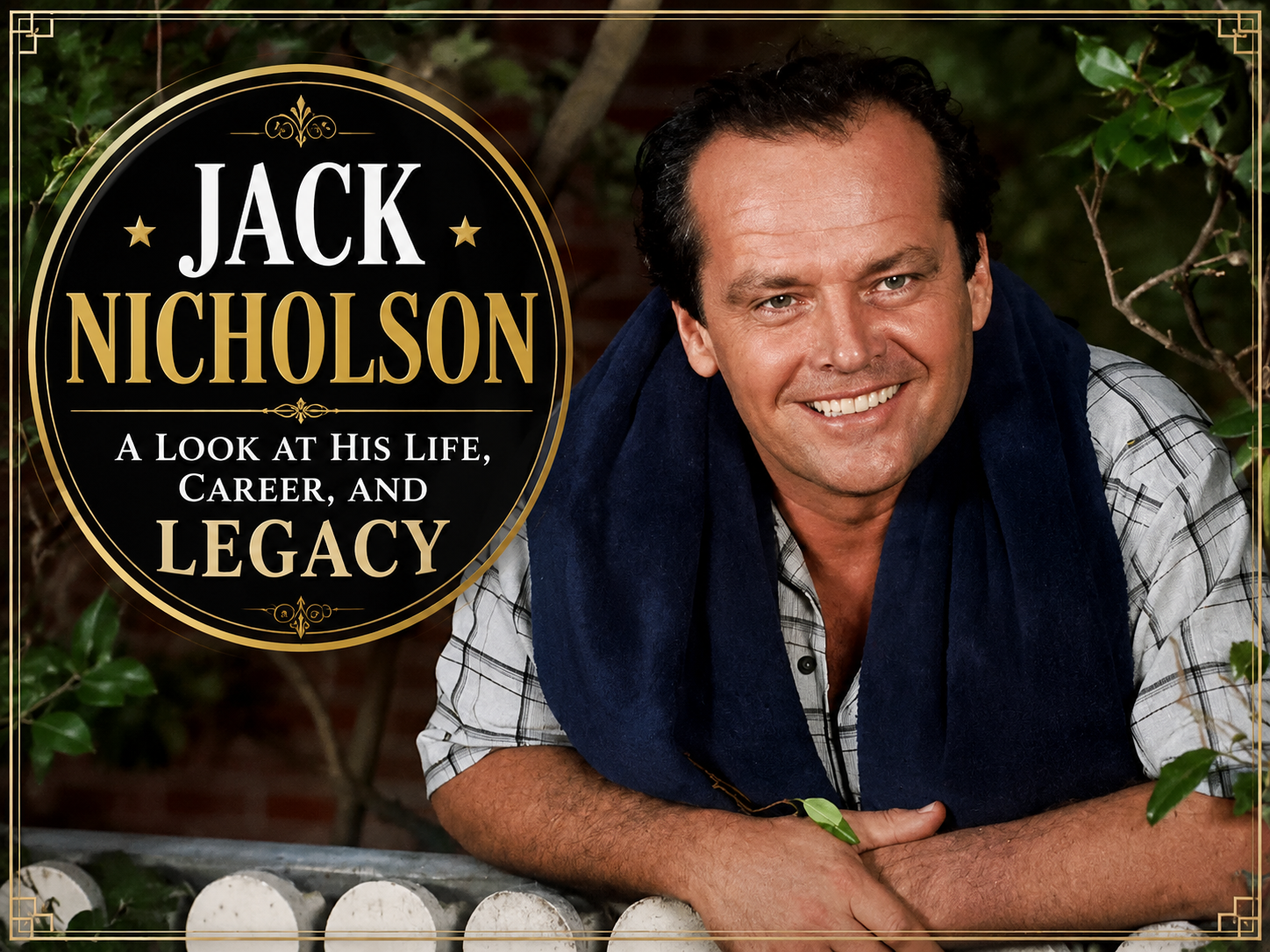
Jack Nicholson is one of the most recognizable actors in American cinema. Over a career spanning more than five decades, he became known for performances that could be charming, funny, unsettling, rebellious, or deeply dramatic. Few actors have moved so comfortably between different kinds of characters while maintaining such a distinctive presence on screen.
From Easy Rider and Five Easy Pieces to Chinatown, One Flew Over the Cuckoo’s Nest, The Shining, Batman, and As Good as It Gets, Nicholson built a filmography filled with memorable performances. His work earned him three Academy Awards and 12 Oscar nominations, making him the most nominated male performer in the acting categories in Academy history.
But Jack Nicholson’s story is about more than awards. His career reflects major changes in American filmmaking, from the independent and countercultural movies of the late 1960s to the major Hollywood productions of later decades. His ability to make complicated characters feel human helped establish a style that audiences could recognize almost instantly.
BIO
| Label | Information |
|---|---|
| Full Name | John Joseph Nicholson |
| Known As | Jack Nicholson |
| Born | April 22, 1937 |
| Birthplace | Neptune City, New Jersey, USA |
| Profession | Actor, Filmmaker |
| Career Start | 1950s |
| Film Debut | The Cry Baby Killer (1958) |
| Breakthrough | Easy Rider (1969) |
| Famous Roles | Randle McMurphy, Jack Torrance, The Joker |
| Academy Awards | 3 Wins |
| Oscar Nominations | 12 Acting Nominations |
| Last Film Role | How Do You Know (2010) |
Early Life and Childhood
Jack Nicholson was born on April 22, 1937, in Neptune, New Jersey, and grew up in nearby Manasquan. His early family history was complicated, and for many years he believed that the people he knew as his parents were his parents. His mother, Ethel May, worked as a hairdresser and was also an oil painter, while John Nicholson worked as a department-store window dresser.
Nicholson’s childhood did not immediately point toward a future as one of Hollywood’s biggest stars. Like many young people who eventually enter entertainment, he first had to find his direction. His interest in movies gradually developed into a desire to work in the industry.
After finishing school, Nicholson moved toward California and began looking for opportunities in Hollywood. The early years were far removed from the fame that would eventually come. He worked behind the scenes and took small acting parts while learning how the movie business operated.
Those early experiences proved valuable. Nicholson was not an overnight success. His career developed gradually, giving him time to understand acting, filmmaking, and the kinds of characters that suited his personality.
Jack Nicholson’s Early Career
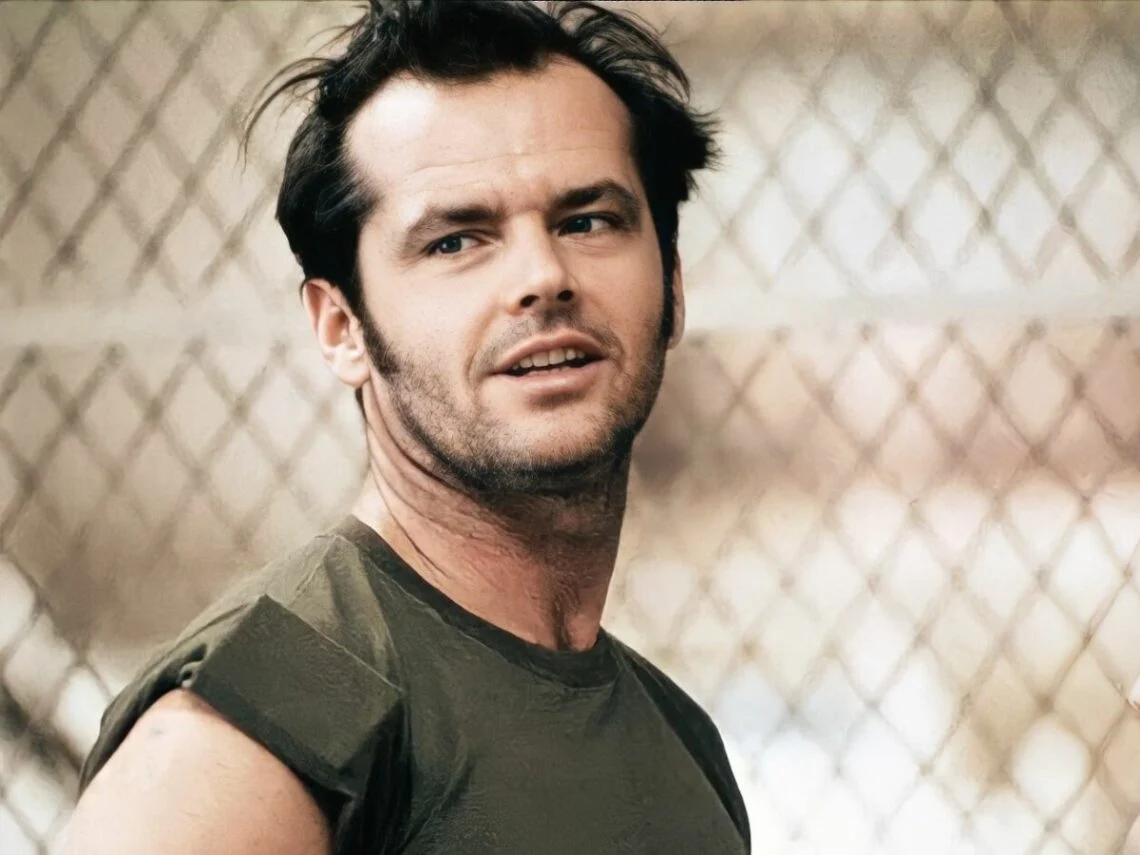
Nicholson made his film debut in 1958 in The Cry Baby Killer. During the following decade, he appeared in a variety of movies and television projects, often taking roles that were much smaller than the parts that would later define his reputation.
He also became involved with filmmaker Roger Corman, working on several low-budget productions. These projects gave Nicholson valuable experience and allowed him to develop as both an actor and writer.
His early career was important because it placed him in the middle of a changing Hollywood. Traditional studio filmmaking was beginning to make room for younger filmmakers and actors who wanted to tell stories that felt more contemporary.
Nicholson’s performances fit naturally into that changing environment. He had a relaxed quality that could quickly become intense, and he often seemed more interested in complicated people than conventional heroes.
The Breakthrough With Easy Rider
The major turning point came with 1969’s Easy Rider. Nicholson played George Hanson, a lawyer whose encounter with the film’s central characters gives the story one of its most memorable performances.
The movie became closely associated with the counterculture of the late 1960s, and Nicholson’s performance received major attention. The Academy nominated him for Best Supporting Actor for the role.
More importantly, Easy Rider changed how audiences and filmmakers viewed Nicholson. He was no longer simply another working actor trying to establish himself. He had demonstrated that he could take a supporting character and give it enough personality to become one of the film’s highlights.
The success opened the door to bigger and more challenging roles.
Five Easy Pieces and a New Hollywood Star
In 1970, Nicholson starred in ** Five Easy Pieces ** as Robert Eroica Dupea. The role became one of the defining performances of his early career.
Robert is an intelligent but restless man who has separated himself from his privileged background. Nicholson brought an unusual mixture of frustration, humor, vulnerability, and detachment to the character.
The performance earned Nicholson another Academy Award nomination, this time for Best Actor.
The film also helped establish an important part of Nicholson’s screen identity. He did not need to play traditional heroes. His characters could be flawed, uncertain, difficult, or even self-destructive, yet audiences could still understand what was happening beneath the surface.
That quality would become central to his career.
The Last Detail and Chinatown
Nicholson continued building his reputation through the early 1970s. In The Last Detail, he played a Navy officer assigned to escort a young prisoner. His performance earned him the Best Actor award at the Cannes Film Festival in 1974.
Then came one of his most celebrated films: ** Chinatown (1974)**.
Nicholson played private investigator J. J. Gittes, a character caught in a complicated mystery involving corruption, money, and powerful people. His performance combined confidence with vulnerability and helped make the film a classic of American cinema.
The Academy nominated Nicholson for Best Actor for Chinatown, adding another major achievement to a rapidly growing list of acclaimed performances.
One Flew Over the Cuckoo’s Nest
If Chinatown confirmed Nicholson’s status as a major star, ** One Flew Over the Cuckoo’s Nest (1975)** took his career to another level.
Nicholson played Randle McMurphy, a rebellious man who enters a psychiatric institution and clashes with the strict authority represented by Nurse Ratched.
The role allowed Nicholson to combine humor, anger, confidence, and vulnerability. McMurphy could be entertaining one moment and deeply serious the next, making the character feel unpredictable and alive.
Nicholson won the Academy Award for Best Actor for the performance. The film itself became a major critical and commercial success and won Best Picture.
The performance remains one of the clearest examples of what made Nicholson special. He could dominate a scene without making the character feel artificial.
The Unforgettable Shining Performance
In 1980, Nicholson took on one of the most recognizable roles of his career in Stanley Kubrick’s The Shining.
Nicholson played Jack Torrance, a writer who takes a job caring for an isolated hotel during the winter. The role was very different from some of his earlier dramatic performances, requiring a heightened and increasingly disturbing portrayal.
Although the film’s reception evolved over time, The Shining became an enduring part of popular culture. Nicholson’s facial expressions, voice, and physical presence helped make Jack Torrance one of the most recognizable characters associated with his career.
The performance also demonstrated that Nicholson could bring his particular intensity into psychological horror just as effectively as he could into drama or comedy.
Another Oscar for Terms of Endearment
Nicholson’s success continued into the 1980s. In ** Terms of Endearment (1983)**, he played retired astronaut Garrett Breedlove.
The role showed another side of the actor. Instead of relying primarily on confrontation or dramatic intensity, Nicholson used humor and warmth to create a character who was rough around the edges but emotionally engaging.
He won the Academy Award for Best Supporting Actor for the performance.
This victory gave Nicholson his second Academy Award and demonstrated the range that had become one of his greatest strengths.
Jack Nicholson as the Joker
In 1989, Nicholson took on a role that introduced him to a new generation: the Joker in Tim Burton’s Batman.
Rather than presenting the character as a purely frightening villain, Nicholson brought humor, theatricality, and unpredictability to the performance. His interpretation became one of the most recognizable versions of the character in film.
The role also showed Nicholson’s ability to turn even a larger-than-life comic-book character into a performance built around personality.
His Joker became an important part of his popular image and helped connect his classic film career with the blockbuster era of Hollywood.
A Few Good Men and the 1990s
Nicholson continued appearing in major films throughout the 1990s. One of his most memorable performances from the decade came in ** A Few Good Men (1992)**, where he played Colonel Nathan R. Jessup.
The courtroom drama gave Nicholson an opportunity to play a powerful military officer whose confidence becomes central to the film’s conflict. His performance earned another Academy Award nomination.
He later appeared in films such as The Evening Star, Mars Attacks!, and other projects that allowed him to move between drama and comedy.
As Good as It Gets
In 1997, Nicholson delivered another major performance in ** As Good as It Gets**.
He played Melvin Udall, a successful but difficult novelist whose behavior creates problems for the people around him. The character is deliberately complicated, and the story follows his gradual movement toward greater empathy and connection with others.
Nicholson won the Academy Award for Best Actor for the role at the 1998 ceremony.
This was his third acting Oscar and his second Best Actor win. It also demonstrated that Nicholson remained capable of creating commercially successful and critically respected performances decades after his breakthrough.
Later Career
Nicholson continued working in major productions during the 2000s. His films included About Schmidt, Anger Management, Something’s Gotta Give, The Departed, and The Bucket List.
His performance in About Schmidt earned him another Academy Award nomination for Best Actor. The role was quieter than some of the performances associated with his earlier career, focusing on an ordinary man dealing with retirement, loss, and questions about the direction of his life.
In The Departed, directed by Martin Scorsese, Nicholson returned to a darker and more unpredictable type of character. The film featured an ensemble cast that included Leonardo DiCaprio and Matt Damon.
His final credited film appearance was ** How Do You Know (2010)**.
Jack Nicholson’s Acting Style
One reason Jack Nicholson became so memorable is that his performances rarely felt interchangeable.
His voice, facial expressions, timing, and body language gave even relatively simple lines a distinctive quality. He could be relaxed and conversational in one scene before becoming intense in the next.
Another strength was his willingness to play flawed characters. Nicholson did not build his career solely around perfect heroes. His characters often had weaknesses, complicated motivations, or difficult personalities.
That approach made his performances feel unpredictable. Audiences could be unsure whether a character would make a joke, become angry, show vulnerability, or challenge someone in the scene.
That unpredictability became part of the Jack Nicholson appeal.
Awards and Achievements
Nicholson’s awards record reflects the breadth of his career. The Academy’s official database records 12 acting nominations, beginning with Easy Rider and continuing through About Schmidt.
He won three Oscars:
- Best Actor — One Flew Over the Cuckoo’s Nest
- Best Supporting Actor — Terms of Endearment
- Best Actor — As Good as It Gets
He also received major recognition from organizations such as the Golden Globes, BAFTA, and Cannes Film Festival. The Cannes Film Festival lists his Best Actor award for The Last Detail in 1974.
His 12 Academy Award acting nominations are particularly notable because they span several decades. They include performances from the late 1960s through the early 2000s, showing how long he remained a major presence in American cinema.
Why Jack Nicholson Remains Important
Nicholson’s influence is not based on a single movie or character. It comes from the consistency and variety of his work.
He succeeded during different eras of Hollywood and worked with filmmakers who had very different approaches to cinema. His filmography includes independent projects, serious dramas, psychological films, comedies, crime stories, blockbusters, and character-driven movies.
He also helped demonstrate that audiences would follow a leading actor into complicated stories. A Nicholson character did not always have to be likable to be interesting.
That quality remains important because modern audiences continue to revisit his best films. Chinatown, One Flew Over the Cuckoo’s Nest, The Shining, Batman, and As Good as It Gets remain particularly associated with his legacy.
Jack Nicholson’s Most Memorable Roles
Several characters stand above the rest when discussing Nicholson’s career.
Randle McMurphy represents his rebellious dramatic side. The character’s conflict with institutional authority became one of his defining performances.
J. J. Gittes showed Nicholson as a confident but vulnerable detective navigating a dangerous mystery.
Jack Torrance revealed his ability to create a memorable psychological horror performance.
The Joker demonstrated his talent for combining comedy, theatricality, and menace.
Melvin Udall showed that Nicholson could portray an unpleasant personality while still creating a character capable of change.
These roles are very different, yet each carries the unmistakable qualities that audiences associate with Nicholson.
Life Beyond the Screen
Nicholson has generally kept much of his private life separate from his professional achievements. Over the decades, public attention has naturally followed him because of his celebrity status, but his most enduring contribution remains his body of film work.
Unlike many actors who continually seek to remain at the center of popular culture, Nicholson’s later years have been comparatively private.
His decision to appear less frequently only strengthened the sense that his main chapter in Hollywood had already been written through the films he made.
Jack Nicholson’s Legacy
Jack Nicholson’s career is ultimately a story about longevity, versatility, and individuality.
He began with small roles and gradually became one of Hollywood’s most respected performers. He worked through periods of enormous change in American cinema, adapting without losing the qualities that made him recognizable.
His three Academy Awards are an important part of that story, but they do not fully explain his legacy. What makes Nicholson memorable is the collection of performances: the rebellious outsider, the troubled detective, the unstable writer, the powerful military officer, the eccentric villain, and the complicated romantic lead.
Few actors have created so many characters that remain instantly recognizable decades after their films were released.
Jack Nicholson’s legacy is therefore larger than any single award or movie. It is found in the lasting impression he left on American film and in the way his performances continue to give audiences something new to notice.
From Easy Rider to The Departed, Nicholson built a career that crossed generations and genres. His work showed that a great screen actor does not have to fit neatly into one category. Sometimes the most memorable performances come from characters who are complicated, unpredictable, and unmistakably human.
That is why Jack Nicholson remains one of the defining figures of modern Hollywood.
Frequently Asked Questions
1. What is Jack Nicholson best known for?
Jack Nicholson is best known for iconic performances in films such as One Flew Over the Cuckoo’s Nest, Chinatown, The Shining, Batman, and As Good as It Gets.
2. How many Oscars has Jack Nicholson won?
Jack Nicholson has won three Academy Awards—two for Best Actor and one for Best Supporting Actor. The Academy records 12 acting nominations for him.
3. What was Jack Nicholson’s first major breakthrough?
His role as George Hanson in Easy Rider became an important breakthrough. The performance earned him his first Academy Award nomination for acting.
4. What are Jack Nicholson’s most famous roles?
Among his best-known roles are Randle McMurphy in One Flew Over the Cuckoo’s Nest, Jack Torrance in The Shining, the Joker in Batman, and J. J. Gittes in Chinatown.
5. What makes Jack Nicholson’s acting style unique?
Nicholson is recognized for his expressive delivery, distinctive screen presence, strong comic timing, and ability to portray complicated characters with both intensity and personality.