







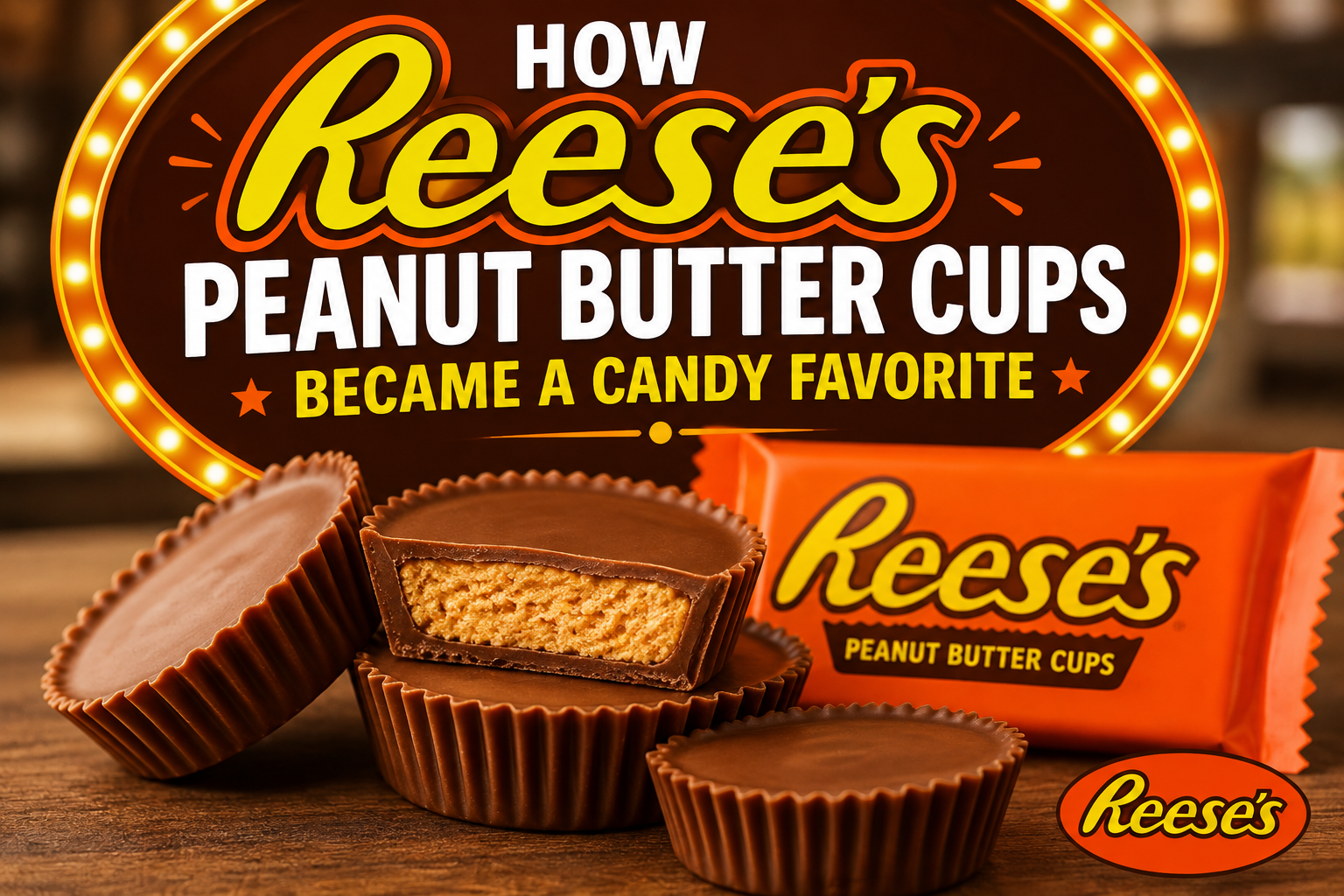
Some candies are popular for a few years and then disappear from shelves. Others become part of everyday life and remain familiar across generations. Reese’s Peanut Butter Cups belong firmly in the second group. Their simple combination of chocolate and peanut butter has made them one of the most recognizable candy products in the United States.
What makes their story especially interesting is that the product did not begin as a huge confectionery brand. It started with H.B. Reese, a former employee of the Hershey Chocolate Company, who developed the candy in 1928. According to Hershey’s own historical records, Reese created the cups in the basement of his home in Hershey, Pennsylvania.
Nearly a century later, the basic idea remains remarkably familiar: a chocolate coating surrounding a peanut butter center. The brand has expanded into different sizes, shapes, flavors, and formats, but the original pairing continues to be at the heart of its identity.
BIO
| Label | Information |
|---|---|
| Product | Reese’s Peanut Butter Cups |
| Brand | Reese’s |
| Creator | H.B. Reese |
| Introduced | 1928 |
| Product Type | Chocolate candy |
| Main Ingredients | Peanut butter and chocolate |
| Original Location | Hershey, Pennsylvania |
| Current Owner | The Hershey Company |
| Classic Shape | Round cup |
| Main Flavor | Chocolate and peanut butter |
| Product Varieties | Minis, Big Cups, seasonal cups |
| Brand Appeal | Familiar taste and long history |
The Story Behind Reese’s
The history of Reese’s Peanut Butter Cups begins with Harry Burnett Reese, better known as H.B. Reese. Before becoming a candy maker, Reese worked for Milton S. Hershey in Hershey, Pennsylvania. Hershey’s historical account says Reese came to the area in 1917 and worked as a dairy farmer for Hershey.
Reese eventually became interested in making candy himself. His connection to Hershey was important because it gave him access to chocolate while he developed his own business. Rather than simply copying an existing candy bar, Reese built his product around a combination that would eventually become his signature: peanut butter covered with chocolate.
In 1928, he created the first Reese’s Peanut Butter Cups in his basement. That small beginning eventually developed into a major candy business. Hershey’s current brand history still identifies H.B. Reese as the creator of the cups.
The early story is a good reminder that successful products do not always start with massive factories or complicated ideas. Sometimes the foundation is simply a familiar ingredient combination presented in a form people enjoy.
A Simple Combination
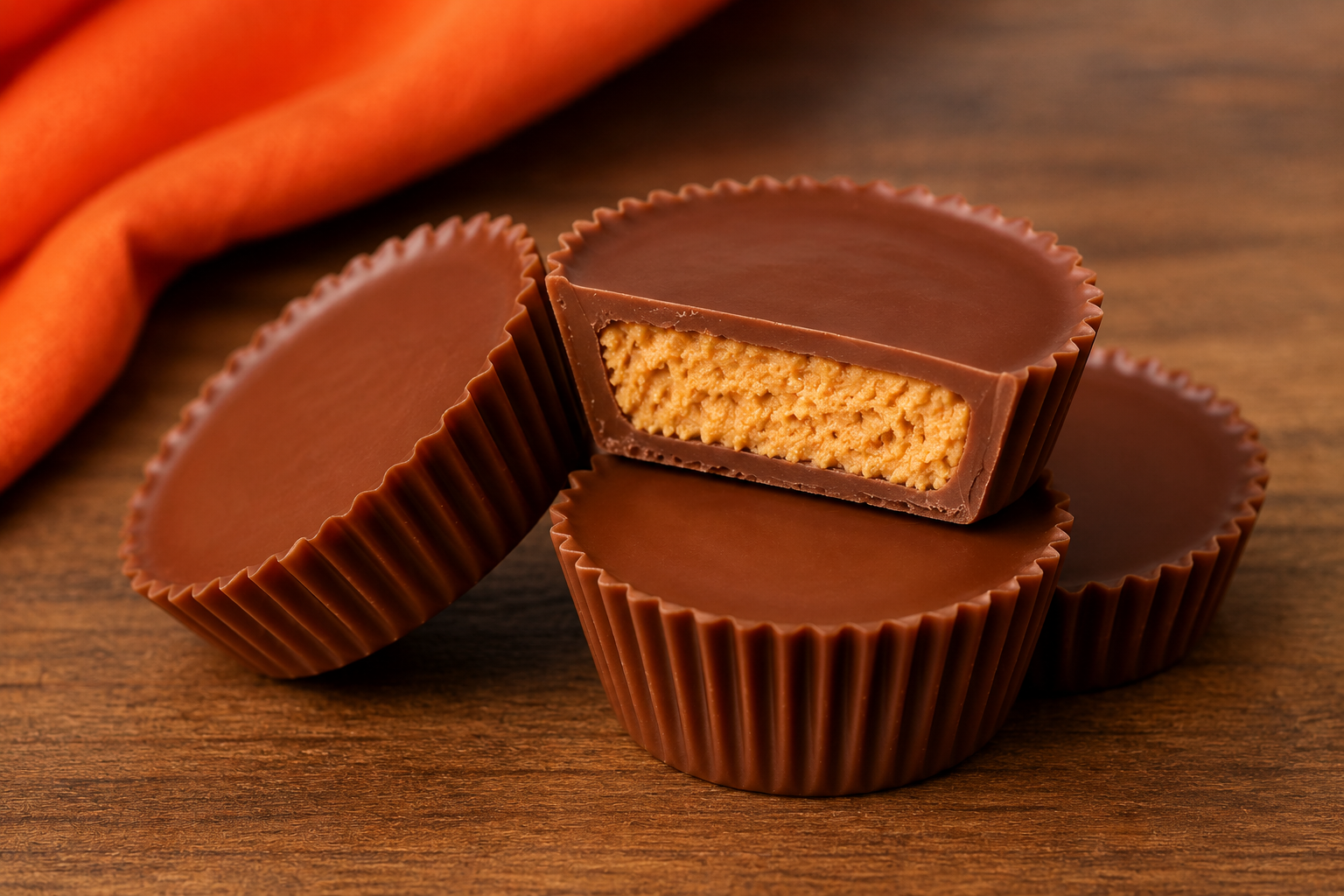
The appeal of Reese’s Peanut Butter Cups starts with their basic construction. A layer of chocolate surrounds a peanut butter center, creating a contrast between two familiar flavors.
Chocolate brings sweetness and a smooth, rich character. Peanut butter contributes a roasted peanut flavor and a creamy texture. Together, they create a combination that feels more distinctive than either ingredient alone.
That simplicity has helped the product remain recognizable. Consumers do not need to learn what the candy is or figure out what flavor to expect. The name, packaging, shape, and ingredients all communicate the same basic idea.
The Hershey Company says the classic cups continue to use freshly roasted peanuts combined with milk chocolate. The company describes this core recipe as an important part of maintaining the traditional Reese’s experience.
From Small Business to Major Brand
H.B. Reese’s candy business grew considerably after the original cups were introduced. The relationship between Reese and Hershey also remained important to the development of the brand.
Hershey’s history notes that Milton Hershey supported Reese’s venture and supplied him with milk chocolate. That connection gave the young candy business a strong relationship with one of the major chocolate makers of the era.
The Reese family continued operating the business after H.B. Reese’s death. According to Hershey, his six sons took over the family business in 1956. They later sold the company to The Hershey Company in 1963.
That acquisition became a major turning point. Reese’s could now benefit from Hershey’s larger manufacturing, distribution, and marketing capabilities while maintaining its recognizable identity.
Why the Cups Stand Out
There are many chocolate candies available, so being memorable matters. Reese’s Peanut Butter Cups have several characteristics that make them easy to recognize.
The first is their shape. The familiar cup form is closely associated with the brand. The second is the orange packaging, which has become strongly connected with Reese’s in stores and advertising.
The third is the flavor combination itself. Chocolate and peanut butter are both familiar foods, but putting them together in a small cup gives the combination a distinct identity.
Finally, the product is easy to understand. A consumer can recognize the candy and its main flavor profile almost immediately. That kind of familiarity can be valuable for a brand that wants to remain relevant for decades.
The Chocolate and Peanut Butter Pairing
The success of Reese’s is closely connected to the contrast between its two main components.
Chocolate and peanut butter offer different taste and texture characteristics. Chocolate provides a sweet, smooth coating, while the peanut butter center has a roasted nut flavor and a thicker texture.
This contrast gives each bite some variety without making the candy complicated.
The pairing also has broad familiarity in American food culture. Peanut butter is commonly used in sandwiches, desserts, cookies, and other snacks, while chocolate is one of the world’s most established confectionery flavors. Bringing the two together was therefore an accessible idea rather than an unusual one.
The strength of the combination has allowed Reese’s to build many later products around the same flavor foundation.
Different Reese’s Varieties
Although the original cup remains the best-known product, the Reese’s line has expanded substantially over the years.
Hershey currently says the broader Reese’s product line includes more than 100 types of products, including candy, spreads, cookies, cereals, and different forms of cups. The cups themselves are available in different chocolate styles, sizes, and formats.
Some variations stay very close to the original. Others introduce additional ingredients or different textures.
There are miniature versions for smaller portions, larger cups for people who want more of the same combination, and seasonal shapes that appear around particular holidays.
This variety gives the brand room to experiment without abandoning its central identity.
Seasonal Shapes
One of the clever ways Reese’s has kept the product familiar while giving it a different appearance is through seasonal shapes.
Holiday versions can change the traditional cup into forms associated with occasions such as Halloween, Easter, or Christmas. The exact shape may change, but consumers still recognize the familiar chocolate-and-peanut-butter concept.
Seasonal products also create a reason for consumers to notice the brand at different times of the year. Instead of being associated with only one shopping occasion, Reese’s can appear repeatedly as holidays and celebrations change.
That approach helps connect the candy with traditions and gift-giving moments while keeping the original flavor at the center.
Reese’s and Halloween
Halloween has become one of the most visible occasions for Reese’s products. Individually wrapped pieces and smaller cup formats make the candy particularly recognizable during the holiday.
The orange packaging also works naturally with Halloween’s familiar visual environment.
For many people, seeing Reese’s in a Halloween candy bowl or assortment has become part of the seasonal experience. The connection is not limited to children receiving candy; adults also encounter the brand when buying treats for guests, parties, or trick-or-treaters.
The association demonstrates how a candy brand can become connected not only with taste but also with specific moments on the calendar.
The Role of Marketing
Good products still need to be recognized, remembered, and repeatedly noticed. Marketing has played an important role in keeping Reese’s visible.
The Hershey Company says television commercials for Reese’s Peanut Butter Cups first aired in the United States in 1970.
Over the decades, the brand has continued using advertising to highlight the relationship between chocolate and peanut butter. Its marketing often focuses on the distinctive pairing rather than trying to make the product seem overly complicated.
That consistency matters. When a brand keeps returning to the same recognizable idea, consumers can quickly understand what it represents.
Reese’s has also appeared in major advertising moments. In 2024, Hershey described Reese’s as the number-one candy brand in the United States and brought the brand back to the Big Game advertising stage.
Keeping the Original Idea Relevant
One of the biggest challenges for an established candy brand is staying interesting without losing its identity.
Reese’s has approached this by keeping the traditional cup at the center while experimenting with new products.
The company has introduced variations involving different textures, fillings, shapes, and combinations. Examples highlighted by Hershey include Reese’s PB&J Cups, Caramel Cups, Chocolate Lava products, and more recent innovations.
This strategy gives longtime fans something familiar while also giving curious consumers new versions to try.
The classic cup acts as the foundation. New products can then build from that foundation rather than replacing it.
The Brand Today
Today, Reese’s is much larger than the original peanut butter cup. The product family includes cups, bars, pieces, seasonal products, cookies, spreads, cereals, and other variations.
Yet the original product continues to define the brand.
Hershey says Reese’s cups are still made around the same basic combination of peanut butter and chocolate. The company has also emphasized that its facilities use the same iconic cup recipe while allowing recipe adjustments for different shapes, sizes, and innovations.
That balance between consistency and experimentation is important. Consumers who want the familiar taste can choose the traditional cup, while those looking for something different have many other options.
New Ideas From a Familiar Brand
Innovation has become an important part of Reese’s continued growth.
Rather than moving completely away from the original formula, new products generally use the familiar chocolate-and-peanut-butter foundation as a starting point. This makes the products easier for existing fans to understand.
A recent example is Reese’s OREO Cups, which combine Reese’s peanut butter and chocolate concept with OREO cookie elements. The Hershey Company reported in 2026 that the product had generated more than $188 million in retail sales since launch, describing it as Reese’s leading innovation for 2025.
The example shows how a classic product can remain relevant by connecting its established flavor with another well-known snack.
Why People Keep Coming Back
The lasting popularity of Reese’s Peanut Butter Cups is not based on one factor alone.
The flavor is important, but so are familiarity, availability, branding, product variety, and consistency.
Someone who enjoyed Reese’s as a child can recognize the same basic product years later. At the same time, a younger consumer can encounter a different version through seasonal products or newer combinations.
That creates a useful balance between nostalgia and discovery.
The brand also benefits from being flexible. Reese’s can be a small everyday treat, part of a holiday assortment, a movie-night snack, or an ingredient in desserts. Its familiar flavor works in many casual food situations.
A Lasting Candy Legacy
The story of Reese’s is ultimately a story about a simple idea that proved remarkably durable.
H.B. Reese created his peanut butter cups in 1928, starting a business that would eventually become part of The Hershey Company. His sons continued the family business before it was sold to Hershey in 1963.
From there, the brand expanded while keeping its central identity intact.
The familiar combination of chocolate and peanut butter remains the reason many people recognize Reese’s immediately. New sizes, shapes, flavors, and collaborations have added variety, but they have generally continued to build around the same foundation.
That may be the biggest reason Reese’s Peanut Butter Cups became a candy favorite. The product is simple enough to understand, distinctive enough to remember, and flexible enough to keep evolving.
Frequently Asked Questions
When were Reese’s Peanut Butter Cups created?
H.B. Reese created Reese’s Peanut Butter Cups in 1928. Hershey’s records identify him as a former Hershey employee who developed the cups in his basement in Hershey, Pennsylvania.
Who created Reese’s Peanut Butter Cups?
The candy was created by Harry Burnett Reese, known as H.B. Reese. He had previously worked for Milton S. Hershey before developing his own candy business.
Who owns Reese’s today?
Reese’s is made by The Hershey Company. H.B. Reese’s sons sold the family business to Hershey in 1963.
What makes Reese’s Peanut Butter Cups different?
Their defining feature is the combination of a chocolate coating with a peanut butter center. The familiar cup shape, packaging, and long history also contribute to the product’s recognizable identity.
Are there different Reese’s Peanut Butter Cups?
Yes. Reese’s offers cups in multiple sizes and formats, including miniature versions, larger cups, seasonal shapes, and products using different chocolate or additional ingredients. The wider Reese’s product family includes more than 100 types of products.
Why are Reese’s Peanut Butter Cups so popular?
Their popularity comes from a combination of factors, including the familiar chocolate-and-peanut-butter flavor, strong brand recognition, wide availability, seasonal products, and the company’s continued introduction of new variations.
Final Thoughts
Reese’s Peanut Butter Cups have come a long way from the small candy business started by H.B. Reese in 1928. What began as a straightforward combination of peanut butter and chocolate developed into one of the best-known names in American candy.
The product’s history is especially interesting because its core idea has remained remarkably consistent. While the brand has introduced new shapes, sizes, flavors, and related products, the original peanut butter cup continues to provide the foundation.
That combination of familiarity, variety, and a distinctive chocolate-and-peanut-butter flavor explains why Reese’s has remained relevant for generations. It is a classic example of how a simple food idea can become a lasting part of popular candy culture.
Frequently Asked Questions
1. When were Reese’s Peanut Butter Cups invented?
Reese’s Peanut Butter Cups were created by H.B. Reese in 1928. Reese was a former employee of the Hershey Chocolate Company.
2. Who owns Reese’s Peanut Butter Cups?
Reese’s is made by The Hershey Company. H.B. Reese’s sons sold the family candy business to Hershey in 1963.
3. What makes Reese’s Peanut Butter Cups popular?
The familiar combination of peanut butter and milk chocolate is the main feature of the classic cups. Their distinctive shape and long history have also helped make them widely recognizable.
4. Are there different types of Reese’s Cups?
Yes. The brand offers different sizes, shapes, and flavors, including Minis, Big Cups, seasonal varieties, and newer combinations such as Reese’s OREO Cups.
5. Where are Reese’s Peanut Butter Cups made?
Hershey says it continues to make Reese’s Peanut Butter Cups at its chocolate facilities in Hershey, Pennsylvania.