







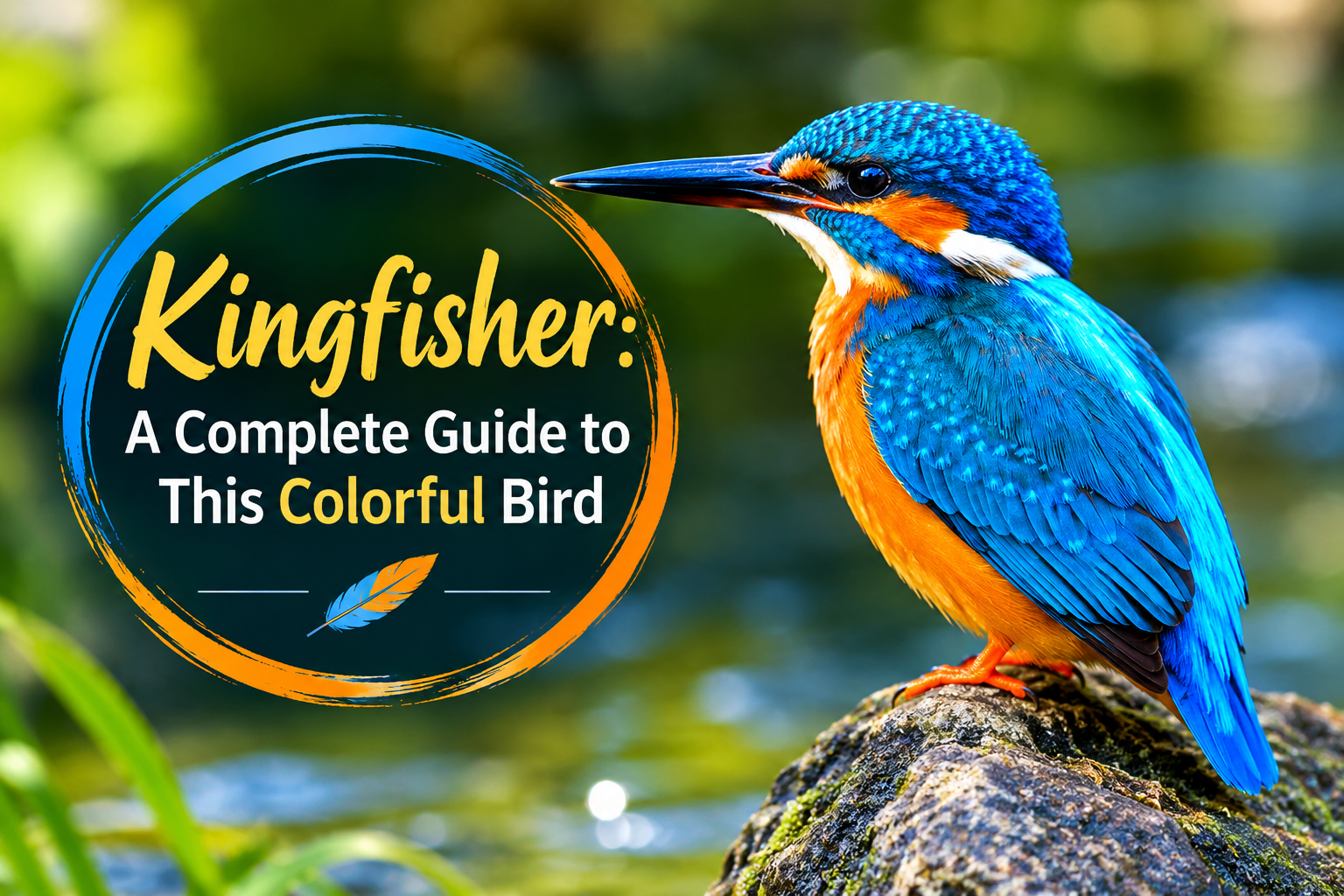
The kingfisher is one of the most recognizable birds associated with rivers, lakes, streams, and wetlands. Its bright plumage, large bill, quick movements, and remarkable fishing ability have made it a favorite among birdwatchers around the world. Although many people picture a small blue bird perched beside a river when they hear the name kingfisher, the group actually includes a wide variety of species with different colors, sizes, habitats, and hunting behaviors.
Kingfishers belong to the family Alcedinidae and are part of the order Coraciiformes. Different species are found across large parts of Africa, Asia, Europe, Australia, and the Americas. Some depend heavily on fish and clear water, while others have diets that include insects, crustaceans, amphibians, reptiles, and other small prey.
Their ability to spot prey, dive with precision, and return to a perch makes them particularly interesting birds to observe. This guide explores the appearance, habitat, diet, behavior, breeding habits, different types, and conservation of kingfishers.
BIO
| Label | Information |
|---|---|
| Common Name | Kingfisher |
| Scientific Family | Alcedinidae |
| Bird Type | Perching bird |
| Main Habitat | Rivers, streams, lakes, and wetlands |
| Geographic Range | Africa, Asia, Europe, Australia, and the Americas |
| Diet | Fish, insects, crustaceans, and small animals |
| Key Feature | Large pointed bill |
| Body Size | Varies by species |
| Colors | Blue, green, orange, white, and chestnut |
| Hunting Style | Diving and catching prey |
| Nesting | Many species use earthen burrows |
| Conservation | Status varies by species |
| Notable Species | Common, Belted, Ringed, and Green Kingfisher |
What Is a Kingfisher?
A kingfisher is a bird belonging to the kingfisher family, Alcedinidae. The family includes many species that have adapted to different environments. While several are strongly associated with freshwater habitats, not every kingfisher depends on catching fish.
One of the most recognizable features of these birds is their strong, pointed bill. In fish-eating species, the bill is well suited for grabbing slippery prey from the water. Their compact bodies and powerful wings also help them move quickly between perches and hunting areas.
Kingfishers are often solitary outside the breeding season. Many species establish territories around suitable feeding and nesting areas, particularly when food and safe nesting locations are limited.
What Does a Kingfisher Look Like?
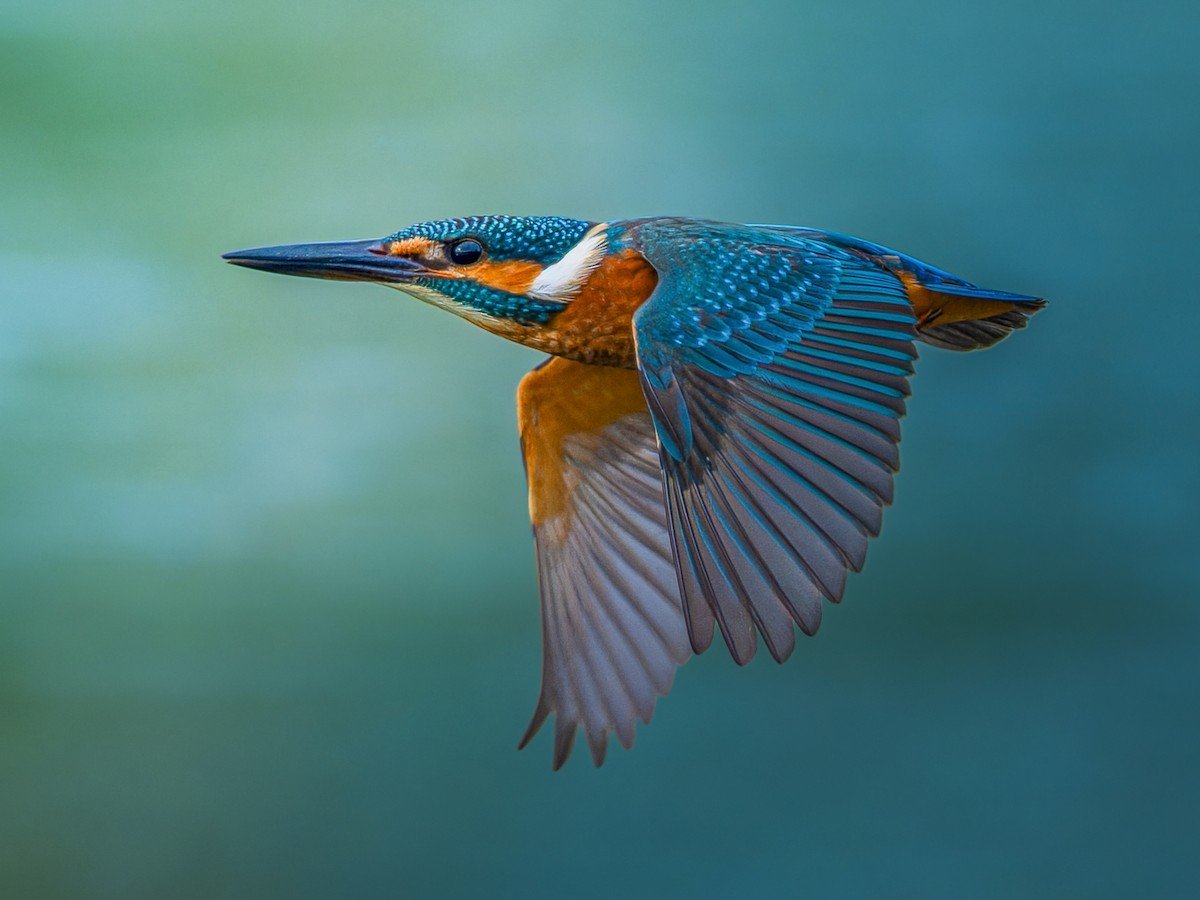
The appearance of a kingfisher varies considerably from one species to another. Some have brilliant blue or green upperparts, while others display combinations of chestnut, white, black, turquoise, or gray.
The body is generally compact, with a relatively large head and a prominent bill. These proportions give many kingfishers a distinctive profile even when they are seen from a distance.
Size and Body Shape
There is no single size that represents every kingfisher. Some species are small and delicate, while others are considerably larger and have heavy bills.
Their body shape reflects their lifestyle. Species that regularly hunt in water often have strong bills and quick, direct flight. Birds that live farther from open water may have somewhat different proportions and feeding adaptations.
Colors and Markings
Bright coloration is one of the reasons kingfishers attract so much attention. Depending on the species, feathers may appear blue, turquoise, green, orange, chestnut, white, or combinations of these colors.
The Green Kingfisher, for example, has green upperparts and white markings, while males have a reddish breast. The Belted Kingfisher has a blue-gray appearance with a distinctive chest band, and the Ringed Kingfisher combines blue-gray and chestnut tones.
Color patterns can be useful for identification, but habitat, size, bill shape, and behavior are also important when identifying a species.
Where Do Kingfishers Live?
Kingfishers occupy a wide range of environments. Many species live near rivers, streams, ponds, lakes, wetlands, and coastal areas where they can find food.
Water quality can be particularly important for fish-eating species. Clear or relatively open water allows a hunting bird to see potential prey beneath the surface.
Some kingfishers prefer large rivers and lakes, while others are comfortable around smaller streams and wooded waterways. The Green Kingfisher, for instance, can use creeks, brooks, streams, ponds, and other freshwater habitats when suitable food and perches are available.
Kingfishers may also use human-made structures as hunting perches. Branches, posts, wires, bridges, and other elevated locations can provide a useful view of the water.
Kingfishers Around the World
Different kingfisher species occur across several continents, and their lifestyles can vary significantly.
In North America, the Belted Kingfisher is widely associated with rivers, lakes, ponds, and shorelines. In Central and South America, species such as the Ringed Kingfisher and Green Kingfisher occupy a variety of freshwater environments.
Other kingfishers occur throughout Africa, Europe, Asia, and Australia. The diversity of the group shows how successfully these birds have adapted to different climates and ecosystems.
The famous European Common Kingfisher, for example, is strongly associated with waterways and is known for its vivid blue-and-orange appearance. Other species have evolved to live in forests, open habitats, mangroves, or coastal environments.
What Do Kingfishers Eat?
The diet of a kingfisher depends on its species and habitat. Fish are an important food source for many kingfishers, but they are not the only prey these birds consume.
Depending on the species, a kingfisher may eat small fish, crustaceans, aquatic insects, amphibians, reptiles, and other small animals. Some also take terrestrial insects and other prey when opportunities arise.
The availability of food strongly influences where a kingfisher chooses to live. A waterway with abundant prey and suitable hunting perches can provide the resources needed to support a territory.
How Does a Kingfisher Hunt?
The hunting technique of a kingfisher is one of its most impressive characteristics.
A typical fishing sequence begins with the bird sitting on a perch above or near the water. It watches carefully for movement below the surface. When suitable prey is spotted, the bird launches itself toward the water.
Some species dive almost vertically, while others approach at an angle. The bird uses its bill to seize the prey and then quickly returns to a perch.
The exact technique differs among species. Belted Kingfishers can dive into the water to capture fish and crayfish, while Green Kingfishers usually make short dives from low perches and often enter the water only with the head and bill.
Kingfishers may also strike larger prey against a perch before swallowing it. This behavior helps them handle prey that is difficult to consume immediately.
Kingfisher Behavior and Lifestyle
Many kingfishers spend much of their time alone. During breeding periods, pairs come together and cooperate around nesting and raising young.
Territorial behavior is common. A suitable stretch of river or shoreline can provide everything a pair needs, including food, hunting perches, and a nesting location.
Calls are another important part of kingfisher behavior. Some species produce loud rattling sounds that can reveal their presence before the bird is visible.
The Belted Kingfisher is particularly well known for its distinctive rattling call. Its flight and vocalizations often make it easier to detect along waterways.
Kingfishers can also be highly alert. When another bird or potential threat enters their territory, they may give warning calls, chase intruders, or display other defensive behaviors.
Kingfisher Breeding and Nesting
One unusual feature of many kingfishers is that they do not construct a conventional cup-shaped nest.
Instead, several species excavate burrows in earthen banks. The tunnel usually leads to a chamber where the eggs are laid.
Both adults may participate in digging the burrow. The location is often selected near water but high enough to reduce the risk of flooding.
Eggs and Incubation
The number of eggs and incubation period vary among species. Belted Kingfishers commonly lay between five and eight eggs, with incubation lasting roughly three to four weeks.
Green Kingfishers generally lay fewer eggs, while Ringed Kingfishers also use burrows and raise their young in chambers at the end of tunnels.
After hatching, the young depend entirely on their parents for food. Adults make repeated trips to bring prey back to the nest.
The nesting burrow can accumulate remains of fish, insects, and other prey. These materials are a natural part of the nesting environment rather than a traditionally built nest.
Types of Kingfishers
There are many kingfisher species, each with its own characteristics. Some of the better-known examples include:
Common Kingfisher: Known for its vivid blue upperparts and orange underparts, this species is strongly associated with waterways in parts of Europe, Asia, and North Africa.
Belted Kingfisher: Found across much of North America, it has a blue-gray body, large head, prominent bill, and distinctive breast markings.
Ringed Kingfisher: A large species found mainly in Central and South America, recognized by its powerful bill and blue-gray and chestnut coloration.
Green Kingfisher: A smaller species associated with freshwater habitats in the Americas. It often hunts quietly from low vegetation along streams.
Laughing Kookaburra: Despite its name and different lifestyle, the kookaburra belongs to the kingfisher family. It is especially famous for its loud, laughter-like call and is native to Australia.
These examples demonstrate why the term kingfisher describes a diverse group rather than one single type of bird.
How Long Do Kingfishers Live?
The lifespan of a kingfisher varies by species and individual circumstances. Survival can be affected by food availability, habitat quality, predators, weather, disease, and human disturbance.
Young birds face greater risks than adults because they are inexperienced and depend on their parents during their early development.
Researchers can learn about kingfisher survival through banding, observations, and records of individual birds. Such information helps scientists understand population changes and identify potential conservation concerns.
Why Are Kingfishers Important to the Ecosystem?
Kingfishers are part of the food web in the ecosystems where they live. Fish-eating species interact directly with aquatic food chains, while species that consume insects and other prey connect different parts of the ecosystem.
Their presence can also provide useful information about habitat conditions. A kingfisher needs appropriate food, suitable hunting areas, and safe places to reproduce. When waterways become heavily polluted, altered, or disturbed, these resources may become harder to find.
Protecting healthy rivers, streams, wetlands, and surrounding vegetation therefore benefits kingfishers as well as many other species.
Threats Facing Kingfishers
Although some kingfisher species remain widespread and relatively common, local populations can be affected by environmental changes.
Habitat loss is an important concern. The removal of riverbank vegetation, destruction of wetlands, and modification of waterways can reduce feeding and nesting opportunities.
Water pollution can also affect aquatic ecosystems and the availability of suitable prey. Changes in water flow, dams, excessive development, and other forms of human disturbance may alter habitats that kingfishers depend upon.
Nesting sites are another consideration. Species that excavate burrows in natural banks require suitable soil and relatively safe locations. Frequent disturbance near nesting areas can cause birds to abandon otherwise suitable habitat.
The conservation status of individual species differs, so threats should be considered on a species-by-species and region-by-region basis.
How Can We Help Protect Kingfishers?
Protecting kingfishers begins with protecting the habitats they use.
Keeping waterways clean, preserving wetlands, maintaining natural riverbanks, and protecting vegetation along streams can help support healthy bird populations.
People who enjoy birdwatching can also contribute by observing from a respectful distance. Nesting birds should not be disturbed simply to obtain a closer view or photograph.
Conservation organizations and local environmental programs can also play an important role by restoring degraded waterways and protecting important wetland and river habitats.
Even small improvements in habitat quality can benefit many species at the same time.
How to Spot a Kingfisher in the Wild
Finding a kingfisher often requires patience. Start by looking near suitable waterways, especially places with clear water and convenient perches.
Bare branches extending over a river, lake, pond, or stream can be good places to watch. Kingfishers may sit quietly for several minutes before suddenly flying toward the water.
Listening can be just as useful as looking. Some species have loud and distinctive calls that make them easier to locate.
Avoid approaching nesting banks or repeatedly disturbing a bird. A quiet observation point is usually more rewarding and gives the bird space to behave naturally.
Interesting Kingfisher Facts
Kingfishers are not all fish specialists. Their diets differ considerably between species.
Many kingfishers nest in burrows. Instead of building a traditional nest, they excavate tunnels in suitable soil.
Their bills are highly specialized. In many species, the large bill is essential for catching and handling prey.
Some kingfishers use human-made perches. Wires, bridges, posts, and other structures can provide useful hunting positions.
Kingfishers have impressive eyesight. Their ability to locate prey from above the water is central to their hunting strategy.
Not every kingfisher looks blue. Species can display green, orange, chestnut, white, gray, and other colors.
The family includes kookaburras. These well-known Australian birds are members of the kingfisher family even though their lifestyle differs from that of many fishing species.
Frequently Asked Questions About Kingfishers
Are kingfishers rare?
It depends on the species and location. Some kingfishers are widespread and relatively common, while others have more restricted ranges or face greater conservation pressures.
What do kingfishers eat?
Many species eat fish, but their diets can also include crustaceans, aquatic insects, amphibians, reptiles, and other small prey.
Where do kingfishers make their nests?
Many kingfishers excavate burrows in earthen banks near rivers, streams, lakes, or other suitable habitats. Nesting locations vary between species.
Can kingfishers swim?
Kingfishers are not swimming birds. They generally capture aquatic prey by diving into the water and then quickly returning to a perch.
How does a kingfisher catch fish?
A kingfisher often watches from a perch, spots prey, dives toward the water, and grabs the fish with its bill. The exact diving technique varies by species.
Where can you find kingfishers?
Kingfishers occur across many parts of the world. Suitable locations include rivers, streams, lakes, ponds, wetlands, coastal areas, and other habitats depending on the species.
Why are kingfishers important?
Kingfishers are part of aquatic and terrestrial food webs. Protecting the habitats they depend on can also help maintain healthy waterways and support many other forms of wildlife.
Conclusion
The kingfisher is much more than a colorful bird beside a river. It represents a diverse family of birds with specialized hunting skills, unusual nesting habits, distinctive calls, and remarkable adaptations.
From the familiar Belted Kingfisher of North America to the Green Kingfisher of the Americas and the many species found across Africa, Asia, Europe, and Australia, these birds have adapted to a wide variety of environments.
Their dependence on suitable food, clean waterways, natural vegetation, and safe nesting areas also highlights the importance of healthy habitats. Learning about kingfishers can make birdwatching more rewarding while increasing appreciation for the rivers, wetlands, forests, and other ecosystems these birds call home.
Whether you are an experienced birder or simply curious about wildlife, watching a kingfisher pause on a branch before making a sudden dive is a memorable reminder of how closely bird behavior is connected to the natural world.