








Burberry is one of the names most closely associated with British fashion. Its familiar check pattern, distinctive trench coats, and strong connection to British heritage have made the brand recognizable far beyond the United Kingdom. Yet the story of Burberry began with a much simpler idea: creating clothing that could protect people from unpredictable weather.
Founded by Thomas Burberry in 1856, the company gradually developed from a small outfitting business in Basingstoke into an international luxury fashion house. Along the way, it introduced important fabric innovations, developed outerwear for explorers and military personnel, and created designs that eventually became part of everyday fashion.
What makes Burberry particularly interesting is the way its history connects practical clothing with luxury design. Its most famous products were not originally created simply as fashion statements. They were designed to solve real problems. That combination of usefulness, craftsmanship, British identity, and recognizable design has helped the brand remain relevant for generations.
BIO
| Label | Information |
|---|---|
| Brand Name | Burberry |
| Founded | 1856 |
| Founder | Thomas Burberry |
| Origin | Basingstoke, England |
| Brand Type | British luxury fashion house |
| Known For | Trench coats and outerwear |
| Signature Fabric | Gabardine |
| Gabardine Introduced | 1879 |
| Iconic Pattern | Burberry Check |
| Famous Design | Heritage Trench Coat |
| Brand Symbol | Equestrian Knight Design |
| 2026 Milestone | 170th anniversary |
The Beginning of Burberry
The history of Burberry begins in 1856, when Thomas Burberry opened his first shop in Basingstoke, Hampshire. He was only 21 years old and had previously worked as a draper’s apprentice. His early business served the local community with clothing and fabrics.
The company developed at a time when reliable outdoor clothing was becoming increasingly important. Britain’s changing weather created a demand for garments that could provide protection without being excessively uncomfortable.
Thomas Burberry became interested in finding better solutions rather than simply following existing methods. This interest in practical innovation would eventually become one of the defining characteristics of the company.
From the beginning, the philosophy was relatively straightforward: clothing should help people deal with the weather while still allowing them to move comfortably. That principle would influence many of Burberry’s most important developments in the decades that followed.
Thomas Burberry and Gabardine
One of the biggest turning points in the company’s history came in 1879, when Thomas Burberry developed gabardine.
At the time, waterproof clothing could be heavy, stiff, and uncomfortable. Traditional methods often relied on rubberized, oiled, or waxed materials. Burberry looked for a different approach: a fabric that could offer weather protection while remaining lighter and more breathable.
The result was gabardine, a tightly woven fabric that became central to Burberry’s outerwear. The material was patented in 1888.
Gabardine was important because it changed the way people thought about protective clothing. Rather than treating weather protection and comfort as completely separate concerns, the fabric attempted to provide both.
This innovation helped establish Burberry as more than a traditional clothing retailer. It became a company associated with textile development and functional design.
The importance of gabardine can still be seen in the Burberry story today. The company continues to associate its heritage outerwear with the material and has continued exploring new versions of gabardine for contemporary designs.
Burberry’s Connection to British Heritage
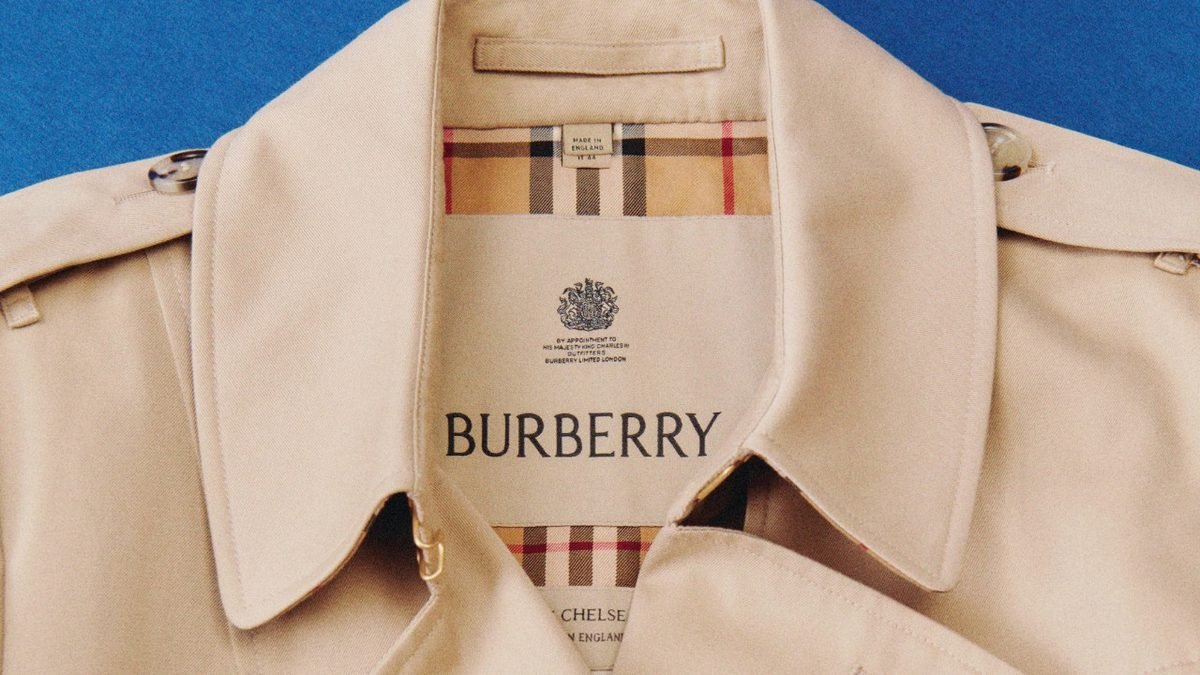
Burberry’s identity developed alongside Britain’s outdoor culture. Its early garments were designed for activities where protection from wind and rain mattered, including motoring, cycling, walking, and exploration.
This practical background gave the brand a character that was different from fashion houses built primarily around formal clothing or evening wear.
Burberry’s relationship with exploration also became an important part of its heritage. Explorers used Burberry gabardine during expeditions, helping demonstrate the fabric’s usefulness in difficult environments.
In 1893, Norwegian explorer Fridtjof Nansen took Burberry gabardine on an Arctic expedition. Later, other explorers associated with major polar expeditions also used Burberry clothing and equipment.
These stories contributed to the image of Burberry as a company whose products were created for movement, adventure, and unpredictable conditions. The connection between fashion and exploration remains an important part of the brand’s historical identity.
The Burberry Trench Coat Story
The Burberry trench coat is arguably the single design most closely associated with the company.
Its development was connected to the practical requirements of military clothing during the early twentieth century. Before the trench became a fashion icon, its design was shaped by the need to provide protection and mobility.
In 1912, Thomas Burberry patented the Tielocken coat, a design considered a predecessor to the trench coat. It used a strap-and-buckle fastening and had a relatively streamlined construction.
During the First World War, Burberry developed trench coats for military use. Details such as epaulettes, D-rings, a gun flap, and a storm shield were included for practical reasons.
The coat’s design therefore reflected the circumstances in which it was originally worn. Many of the details that people now recognize as part of the classic trench coat have roots in this functional history.
Burberry states that more than 500,000 of its coats were worn by members of the armed forces during the First World War. After the war, the garment gradually moved beyond its military origins and became part of civilian fashion.
Why the Trench Coat Became a Fashion Icon
The trench coat’s appeal comes partly from its versatility.
Unlike highly seasonal fashion pieces, a well-designed trench can work across different settings. It can be worn with formal clothing, casual outfits, or everyday city clothing. Its shape is recognizable without being overly complicated.
The coat also carries a sense of history. Wearing a classic trench is not simply about the garment’s appearance; the design connects contemporary fashion with more than a century of British outerwear history.
Burberry continues to produce heritage trench coats in Yorkshire, with traditional features such as belts, epaulettes, and the recognizable check lining. The company has also developed different cuts and contemporary interpretations, showing how the original idea can evolve without completely losing its identity.
The Famous Burberry Check
The Burberry Check is another defining element of the brand.
The check became particularly recognizable as a lining and later developed into a major visual signature. It eventually appeared across scarves, accessories, clothing, and other products.
One interesting moment in the check’s history occurred in 1967. According to Burberry’s corporate history, a buyer at the company’s Paris store used the check lining from a coat to wrap luggage and create an umbrella cover while preparing a fashion presentation. This helped inspire the development of check accessories.
Over time, the pattern moved from being a relatively subtle interior detail to becoming one of the most recognizable visual elements in luxury fashion.
Its success comes from its simplicity. The pattern is distinctive without requiring a large logo. For many people, seeing the familiar combination of lines and colors is enough to immediately associate an item with Burberry.
The Equestrian Knight Design
The Burberry identity is also closely connected with the Equestrian Knight Design, often abbreviated as EKD.
The design emerged from a public competition around the beginning of the twentieth century. It features a mounted knight carrying a banner with the Latin word “Prorsum,” meaning “Forward.”
The symbolism fits the company’s history. Burberry had built its reputation around innovation, exploration, movement, and protective clothing. The Equestrian Knight therefore became more than a decorative emblem; it represented the company’s forward-looking character.
Like the check and trench coat, the knight design has been reinterpreted over time. Its presence across different periods demonstrates how Burberry has used recognizable heritage elements while allowing its visual identity to change with fashion.
Burberry Becomes a Global Brand
Burberry’s growth extended beyond Britain during the late nineteenth and twentieth centuries.
The company opened its first London store at 30 Haymarket in 1891, establishing a significant presence in the capital. It later expanded internationally, including the opening of a Paris store in 1909.
Its reputation for outerwear helped the company build an identity that traveled well. A coat designed to handle Britain’s weather could appeal to customers in many other parts of the world.
By the mid-1960s, Burberry had become a major British export brand. The company states that by 1965, one in five coats exported from Britain was a Burberry product.
That statistic illustrates how far the company had moved from its beginnings as a small shop in Hampshire.
Burberry Through the Decades
The twentieth century brought significant changes in fashion, culture, and consumer behavior. Burberry had to adapt while maintaining the qualities that had made the brand recognizable.
Its military associations gradually became part of fashion history rather than simply functional history. The trench coat moved into everyday wardrobes, while the company’s fabrics and outerwear continued to evolve.
In 1972, Burberry acquired a factory in Castleford, Yorkshire, strengthening its connection with British manufacturing. The company continues to associate its heritage trench coats with Yorkshire craftsmanship.
Burberry also received Royal Warrants during its history. In 1919, the company was granted a Royal Warrant by King George V as a tailor, and in 1990 it received another as an outfitter from the Prince of Wales.
These milestones contributed to the company’s association with British tradition and craftsmanship.
Burberry’s Influence on Modern Fashion
Burberry’s influence extends beyond individual products.
The brand demonstrated that functional outerwear could become luxury fashion. The trench coat is perhaps the clearest example. A garment originally connected with military requirements eventually became a sophisticated wardrobe staple.
The same principle applies to gabardine. What began as a solution to the practical problems of rainwear became part of a luxury fashion vocabulary.
Burberry also helped establish a recognizable British aesthetic built around outerwear, tailoring, understated details, and weather-conscious design.
Its heritage has given designers a large archive to work with. Instead of abandoning historical references, Burberry can reinterpret them for changing tastes.
That balance between old and new is one reason the brand has remained culturally relevant.
From Classic Heritage to Modern Burberry
Modern Burberry is not exactly the same company that existed a century ago. Fashion changes, customers change, and luxury brands have to respond to new expectations.
The challenge for Burberry has been to preserve recognizable elements while preventing the brand from feeling frozen in the past.
The trench coat remains important, but its proportions, fabrics, colors, and styling can change. The check can be used prominently or more subtly. Heritage symbols can be placed within contemporary collections.
This approach allows Burberry to use its history as a foundation rather than treating history as a limitation.
The company’s current heritage strategy continues to emphasize the trench, gabardine, check, and British identity while exploring new interpretations of these familiar ideas.
What Makes Burberry Different?
Several qualities help distinguish Burberry from other luxury fashion houses.
First is its history of innovation. The company did not begin by simply creating decorative luxury clothing. Its early reputation was built around solving practical problems.
Second is its strong connection to outerwear. Many fashion houses are known primarily for handbags, shoes, couture, or jewelry. Burberry has a particularly strong association with coats and weather-resistant clothing.
Third is its recognizable visual language. The check, trench coat, and Equestrian Knight Design provide several ways for customers to identify the brand.
Finally, there is the British connection. Burberry has spent generations building an identity connected with British weather, exploration, craftsmanship, and culture.
Together, these characteristics create a brand identity that is difficult to separate from its history.
Popular Burberry Products
Although the trench coat remains the best-known Burberry product, the company has developed a much broader range.
Trench coats continue to represent the core of the brand’s heritage. Different silhouettes and fits allow the classic design to work for different preferences.
Scarves have also become strongly associated with Burberry, particularly styles featuring the famous check.
Handbags and accessories provide another way for the brand to incorporate its visual identity into modern wardrobes.
Clothing has expanded the company beyond traditional outerwear, allowing Burberry to participate in contemporary fashion collections.
The brand has also developed fragrances and other lifestyle products, creating a broader luxury offering while retaining recognizable elements of its identity.
Burberry and Craftsmanship
Craftsmanship is particularly important to Burberry’s heritage because the company’s reputation was built on clothing designed to perform.
A trench coat requires attention to construction, fabric, hardware, stitching, and finishing. Small details can affect how a coat fits, moves, and protects the wearer.
Burberry’s heritage trench coats are associated with Yorkshire manufacturing, and the company describes specialist tailors hand-finishing these garments.
This emphasis on craftsmanship helps explain why the trench coat has remained important for so long. It is not dependent solely on seasonal fashion trends. Its design is based on a combination of construction, functionality, and visual identity.
Burberry and British Culture
Few luxury fashion brands have such a clear connection with British identity.
Burberry’s story includes rural clothing, London stores, military outerwear, exploration, British manufacturing, and weather-resistant design. These elements have combined to create a distinctive cultural image.
The brand’s appeal is therefore not only about individual products. It is also about the idea of British style that those products represent.
The trench coat, for example, can suggest London streets, rainy weather, traditional tailoring, and understated elegance without needing elaborate decoration.
That cultural association has helped Burberry remain recognizable even as fashion trends have changed.
Burberry’s Digital and Fashion Evolution
Luxury fashion has changed considerably with the growth of digital shopping, social media, and global online audiences.
Burberry has had to communicate its heritage in a world where customers may encounter the brand through digital campaigns before ever entering a physical store.
This creates an interesting challenge. Heritage can be valuable, but younger audiences may not automatically connect with historical references.
For Burberry, the answer has involved presenting familiar elements in new ways. The trench coat can be photographed and styled differently. The check can appear in new collections. Historical symbols can be reinterpreted rather than simply repeated.
The objective is to make the brand’s history feel connected to the present rather than locked in the past.
Protecting a Luxury Legacy
Maintaining a long-established luxury brand is not always easy.
A company with a famous history must answer two questions at the same time: What should remain unchanged, and what needs to evolve?
Burberry’s greatest assets are also responsibilities. The trench coat, check, and British identity are valuable because customers recognize them. But relying too heavily on familiar designs can make a brand feel predictable.
That is why innovation remains important.
Burberry’s history shows that its strongest periods often came when it combined recognizable heritage with new ideas. Gabardine was innovative in the nineteenth century. The trench became a new kind of functional garment in the twentieth century. Contemporary interpretations continue that process in the twenty-first century.
Why Burberry Still Matters Today
Burberry remains significant because its story is larger than a collection of famous fashion products.
The company demonstrates how a practical idea can develop into a lasting cultural identity. Thomas Burberry’s early interest in improving protective clothing eventually contributed to a global luxury brand.
The trench coat still carries the company’s history. Gabardine still connects modern outerwear with nineteenth-century textile innovation. The check continues to provide an immediately recognizable visual signature.
At the same time, Burberry continues to experiment with contemporary design and new interpretations of its heritage.
In 2026, the company is celebrating its 170th anniversary, a milestone that highlights just how long its story has continued. Its current corporate history still presents protection, British heritage, and innovation as central parts of the brand’s identity.
The Lasting Legacy of Burberry
The story of Burberry is ultimately a story about evolution without losing identity.
Thomas Burberry began with a small shop and an interest in making better clothing for Britain’s weather. His development of gabardine transformed that idea into a significant textile innovation. The company’s outerwear later became associated with explorers and military personnel before moving into everyday fashion.
The trench coat became a symbol of this journey. What began as functional protective clothing became one of the most recognizable garments in modern fashion.
The Burberry Check followed a similar path, developing from an interior lining into a global visual signature.
Today, Burberry stands at the intersection of British heritage, luxury fashion, craftsmanship, and innovation. Its history provides a strong foundation, but its continued relevance depends on its ability to interpret that history for new generations.
That may be the most important reason Burberry has endured. Its identity has never depended on one moment or one trend. Instead, it has been built through decades of practical invention, recognizable design, cultural connections, and a willingness to adapt.
For a brand founded in 1856, that is an impressive legacy—and one that continues to shape the way people think about British luxury fashion.
Frequently Asked Questions About Burberry
1. When was Burberry founded?
Burberry was founded in 1856 by Thomas Burberry in Basingstoke, England. The company began with a focus on practical clothing designed to protect people from British weather.
2. What is Burberry best known for?
Burberry is best known for its trench coats, gabardine fabric, distinctive Check pattern, and strong British identity. The trench coat remains one of its most recognizable designs.
3. What is Burberry gabardine?
Gabardine is a lightweight, breathable, weather-resistant fabric invented by Thomas Burberry in 1879. It became an important part of the brand’s outerwear heritage.
4. Why is the Burberry trench coat famous?
The Burberry trench developed from functional outerwear associated with military use during the First World War. Its practical details and enduring design later helped turn it into a major fashion icon.
5. What makes Burberry a British luxury brand?
Burberry combines British heritage, craftsmanship, outerwear expertise, and recognizable design codes such as the trench coat and Check. These elements have shaped its identity for generations.